Introduction to TCP/IP
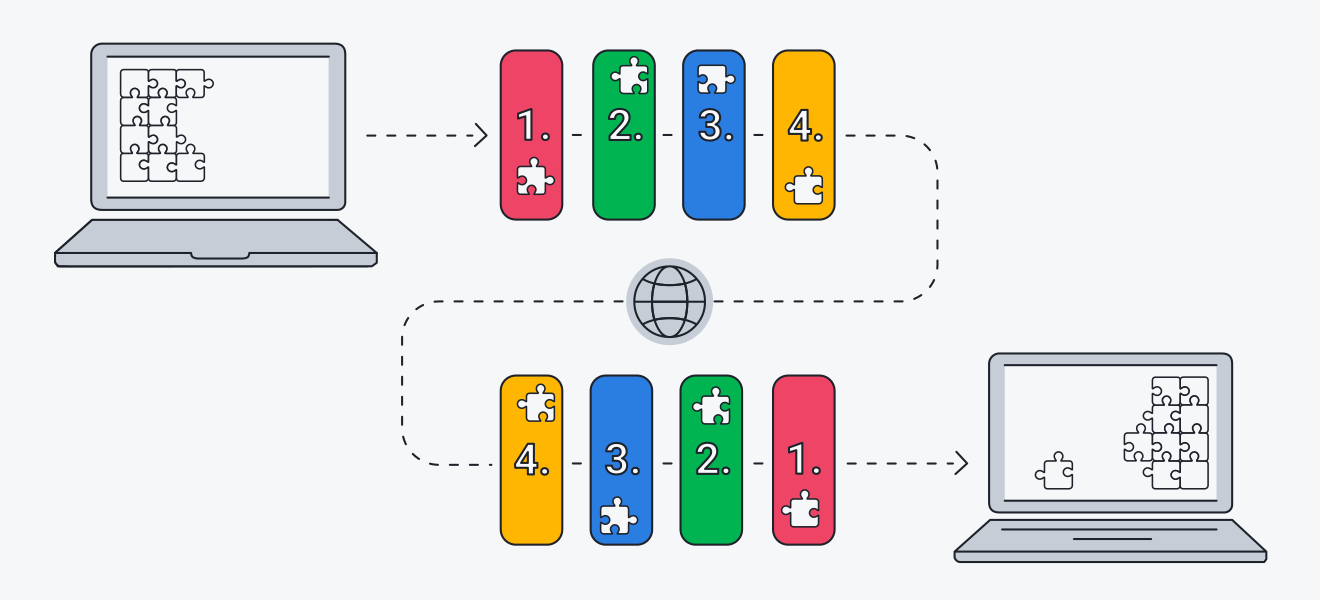
TCP/IP refers to Transmission Control Protocol/Internet Protocol. It is a group of communication protocols that are used to connect network devices across the internet. Initially created by the United States Department of Defense, TCP/IP was adopted as a standard protocol suite for contemporary networking, which superseded earlier systems such as the OSI model in real-world applications.
TCP/IP is extremely important in cloud computing as it helps ensure trusted and efficient data transmission. Whether it's linking virtual machines, file transmission, or accessing cloud applications, TCP/IP protocols make it all work perfectly.
In any Cloud Computing Course in Noida, you will encounter use cases where data travels between different networked systems—be it in a public cloud, private cloud, or hybrid model. TCP/IP is what makes that happen.
Central cloud activities such as:
Launch of web applications
Uploading or downloading files
Hosting databases
API connections
Running virtual machines
all depend on TCP/IP protocols one way or another.
Overview of the TCP/IP Model
The TCP/IP model has four layers, in contrast to the OSI model with seven. These four layers are:
Application Layer
Transport Layer
Internet Layer
Network Access Layer (also referred to as Link Layer)
Each layer is responsible for certain things and deals with certain protocols.
1. Application Layer
Purpose:
This is the highest layer of the TCP/IP model and most closely interacts with the user. It offers interface services for network access by end-user applications. Whenever you look at a website, send an email, or engage in a VoIP call—this layer is working.
Key Protocols:
HTTP/HTTPS – Web browsing
FTP/SFTP – File transfers
SMTP, IMAP, POP3 – Email services
DNS – Domain name resolution
Telnet, SSH – Remote login services
Usage in Cloud Computing:
Accessing cloud apps such as Google Drive or Microsoft 365.
SSH access to virtual servers.
Domain name resolution for cloud-hosted websites.
2. Transport Layer
Function:
It handles end-to-end communication between devices. It guarantees error-free delivery of data, in order, and without duplication.
Key Protocols:
TCP (Transmission Control Protocol) – Connection-oriented, reliable communication.
UDP (User Datagram Protocol) – Connectionless, fast communication (used for streaming, gaming, etc.).
Usage in Cloud Computing:
Secure and reliable connections with cloud services.
Supporting real-time applications like Zoom, Skype over UDP.
Maintaining data integrity during large file uploads/downloads.
3. Internet Layer
Function:
This layer routes data packets over networks to their destination, independent of the route used.
Key Protocols:
IP (Internet Protocol) – Provides addressing and routing.
ICMP (Internet Control Message Protocol) – Error reporting and diagnostics (ping).
ARP (Address Resolution Protocol) – Converts IP addresses to MAC addresses.
Application in Cloud Computing:
Routing data from your device to cloud servers.
Assigning public or private IP addresses within virtual networks.
Tracing network problems with ICMP utilities.
4. Network Access Layer (Link Layer)
Role:
This is the hardware layer. It consists of protocols and hardware used to physically move data over a network. It specifies how bits are mapped into electrical signals and propagated over the medium (such as Ethernet, Wi-Fi).
Main Protocols:
Ethernet – Wired LANs
Wi-Fi (IEEE 802.11) – Wireless communication
PPP, DSL, FDDI – Other network access technologies
Usage in Cloud Computing:
Data transfer between physical devices and routers prior to reaching cloud destinations.
Configuring virtual switches and network interfaces in cloud VMs.
Comparison: TCP/IP vs OSI Model
Most Cloud Computing Courses Noida will mention both models, although TCP/IP is more commonly used. Here's a quick comparison:
TCP/IP Model OSI Model Description
Application Layer Application, Presentation, Session Merges 3 OSI layers into 1
Transport Layer Transport Layer Similar in both
Internet Layer Network Layer Focuses on routing as well, like the previous one
Network Access Layer Data Link + Physical Layers Focus on hardware transmission
Advantages of TCP/IP Model
Scalability – Suitable for small LAN and large WAN.
Interoperability – Supports various hardware and software.
Robust Protocol Suite – Proven and widely used.
Base of Internet and Cloud – Support pillar of world communication.
Real-World Use Cases of TCP/IP in Cloud
Amazon Web Services (AWS): VPC (Virtual Private Cloud) supports creation of segregated networks with TCP/IP.
Microsoft Azure: Utilizes TCP/IP to configure network security groups, routing tables, and virtual networks.
Google Cloud Platform (GCP): Deploys APIs, Kubernetes clusters, and virtual machines based on TCP/IP layers.
These vendors create enormous cloud infrastructures where TCP/IP determines how all data is routed between clients and servers.
Security and TCP/IP Layers
Cloud security makes use of the TCP/IP layers as well:
HTTPS in Application Layer encrypts web traffic.
SSL/TLS protocols operate between the Application and Transport Layers to encrypt data.
Firewalls inspect packets at Internet and Transport Layers.
VPNs function at the Network Layer to offer secure tunneling.
Why Students in Noida Should Learn TCP/IP
If you’re pursuing a Cloud Computing Course in Noida, mastering TCP/IP can open up roles such as:
Cloud Architect
Network Engineer
DevOps Engineer
Cloud Security Specialist
Infrastructure Analyst
Noida, which is a hotspot for IT and tech firms such as HCL, Adobe, and Infosys, has excellent demand for networking and cloud infrastructure professionals.
How to Become Expert in TCP/IP in a Cloud Computing Course in Noida
Search for a course that encompasses:
Hands-on Wireshark, TCPDump labs
Real-life scenarios on AWS/Azure/GCP
Projects on network setup, VPNs, and firewalls
Certifications like CompTIA Network+, AWS Certified Cloud Practitioner, or CCNA
Final Thoughts
Grasping the TCP/IP layers is important for all cloud computing experts. These protocols are not only theoretical—they are operational tools that make everything from viewing YouTube to deploying enterprise-class apps on the cloud possible.
Pursuing a Cloud Computing Course in Noida with a focus on networking basics such as TCP/IP provides you with a strong technical background and makes you a highly employable professional in today's digital-first economy.
Ready to launch your cloud career? Select a course with hands-on practice of networking fundamentals, and begin learning TCP/IP today!