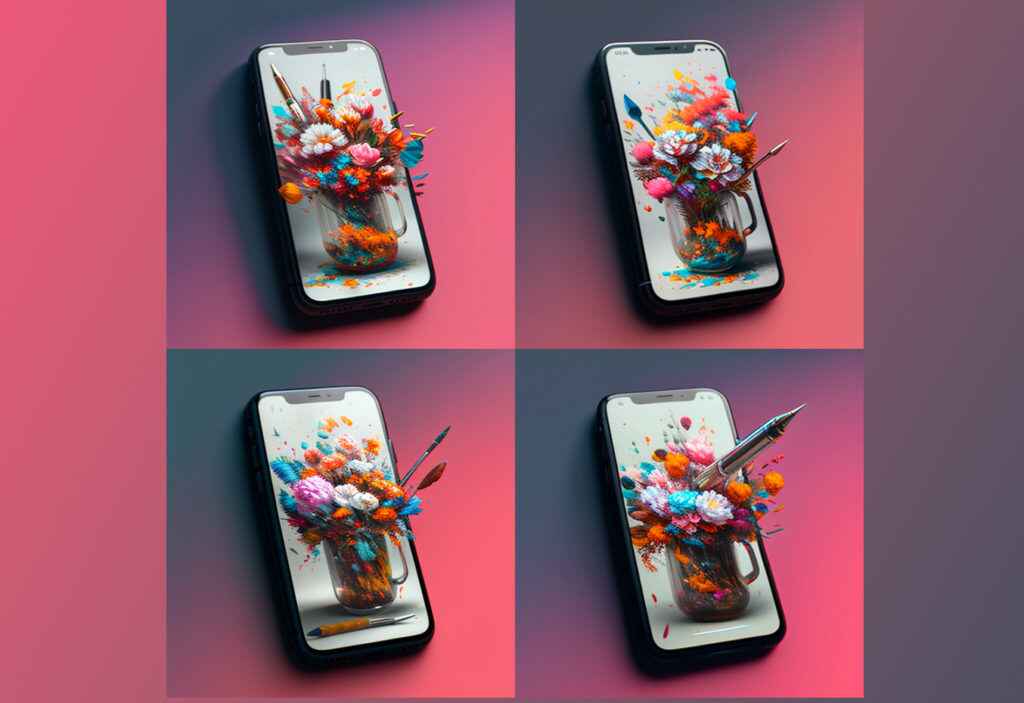
In this blog, we’re going to take a closer look at Text-to-Image Models: How AI Generates Photos From Text. We’ll explore how they work, their fundamental architectures, the benefits and challenges they present, their real-world applications, and the future opportunities they hold. Whether you’re just starting out in AI or you’re an aspiring researcher, this guide will help you grasp one of the most significant AI technologies of our time.
What Are Text-to-Image Models?
Text-to-Image models are a type of generative model that takes a natural language prompt (like “a cat wearing sunglasses sitting on a chair”) and transforms it into a matching image. These models utilize Natural Language Processing (NLP) and Computer Vision techniques to translate textual meaning into visual forms.
For instance:
- Input: “a futuristic car flying over a city at night”
- Output: A computer-generated image that vividly illustrates this scene.
This entire process relies heavily on deep learning, particularly using models such as Generative Adversarial Networks (GANs), Variational Autoencoders (VAEs), and more recently, Transformers and Diffusion Models.
How Do Text-to-Image Models Work?
Let’s break down how Text-to-Image models operate into three main stages:
1. Text Encoding
First off, the input text gets transformed into a numerical format using language models like BERT or GPT. This step is crucial as it captures the essence of the text's meaning.
2. Latent Space Mapping
Next, the encoded text is mapped into what we call a latent space. This is a compact mathematical representation that helps the model grasp abstract features such as colors, textures, and the structure of objects.
3. Image Generation
Finally, a generative model, like GANs or Diffusion Models, takes over to create an image that corresponds to the latent space representation derived from the text.
Modern models such as DALL·E, MidJourney, and Stable Diffusion utilize diffusion techniques, which refine noisy images step by step until they perfectly match the provided description.
Core Architectures Behind Text-to-Image Models
Several key architectures drive text-to-image generation:
1. GANs (Generative Adversarial Networks)
- These were the pioneers in early text-to-image work.
- They operate with a generator and discriminator setup.
- Examples include StackGAN and AttnGAN.
2. VAEs (Variational Autoencoders)
- They excel at learning latent representations.
- However, they often produce somewhat blurry images.
3. Transformers
- They’ve revolutionized the field with models like CLIP (Contrastive Language–Image Pretraining).
- This helps in aligning images with textual prompts effectively.
4. Diffusion Models
- Currently, this is the most advanced architecture available.
- It works by gradually denoising images to produce high-quality outputs.
- Notable examples are Stable Diffusion and DALL·E 2.
Why Are Text-to-Image Models Important?
- Bridging Creativity and AI: They empower anyone to create unique art, regardless of their artistic skills.
- Enhancing Industries: These models are making waves in fashion, interior design, advertising, and gaming.
- Accessibility: They allow non-artists to visualize abstract concepts in an instant.
- Personalization: They can tailor content to meet specific user needs.
- Cost-Effective: They help cut down on the need for pricey photoshoots and design teams.
Applications of Text-to-Image Models
1. Entertainment & Media
Think concept art, movie storyboarding, and animations that bring stories to life.
2. Fashion & E-Commerce
Imagine generating product mockups just from a few words describing them.
3. Education & Training
Visual aids, illustrations, and simulations can be created to enhance learning experiences.
4. Healthcare
Medical imaging research can benefit from using descriptive prompts to generate visuals.
5. Marketing & Advertising
Quickly whip up ad creatives tailored to specific target audiences.
6. Architecture & Interior Design
Instantly create room layouts and design concepts that inspire.
Challenges in Text-to-Image Models
Despite their power, these models face some hurdles:
- Bias in Training Data: They can unintentionally reinforce stereotypes.
- Copyright Issues: The art they generate might look too similar to existing works.
- Computational Cost: Training and running these models demands high-end GPUs.
- Quality Variations: Sometimes, the outputs don’t quite match the prompts.
- Ethical Concerns: There’s a risk of misuse for creating fake or harmful content.
The Future of Text-to-Image Models
The next wave of text-to-image systems is set to:
- Deliver greater accuracy with complex descriptions.
- Allow for real-time interactive generation.
- Venture into 3D and VR environments.
- Implement ethical safeguards to prevent misuse.
- Seamlessly integrate with everyday tools like design software, chat platforms, and educational apps.
- For students and professionals, mastering these models can unlock exciting career opportunities in AI research, creative industries, and product development.
Why Learn Text-to-Image Models?
Text-to-image AI isn’t just a passing trend; it’s a game-changing technology for your career. There’s a growing demand for roles in AI engineering, research, data science, and digital creativity.
If you’re looking to enhance your skills, consider courses like the Artificial Intelligence Course in Noida. They offer hands-on experience with deep learning, GANs, and advanced AI concepts, ensuring you get industry-relevant training that prepares you for lucrative AI roles.
Conclusion
Text-to-Image Models: How AI Generates Photos From Text marks a groundbreaking change in the way we create and engage with content. From GANs to diffusion-based systems, these models showcase how artificial intelligence is stepping in as a co-creator in the realms of art, design, and much more.
Despite challenges like bias, ethical dilemmas, and high computational costs, the potential they offer far surpasses the negatives. With applications that stretch across various industries—from marketing and education to healthcare and fashion—these models are truly reshaping the concept of creativity.
For students and professionals looking to dive into the AI landscape, mastering these models can open doors to innovative career paths. With the right training from reputable institutions like Artificial Intelligence Course in Noida, learners can develop solid expertise in one of the most thrilling areas of modern technology.
The future of text-to-image generation isn't just about automation; it's about empowering people with endless creative possibilities.
FAQs on Text-to-Image Models
Q1. What are text-to-image models in AI?
Text-to-image models create images from text descriptions using deep learning techniques such as GANs, Transformers, and Diffusion Models.
Q2. Which are the most popular text-to-image models today?
Some of the top models include DALL·E, MidJourney, and Stable Diffusion.
Q3. What skills are needed to learn text-to-image generation?
Essential skills include Python programming, familiarity with deep learning frameworks (like TensorFlow/PyTorch), natural language processing (NLP), and knowledge of GANs and diffusion architectures.
Q4. Are there ethical concerns with these models?
Absolutely, concerns revolve around bias in training data, the potential for misuse in spreading misinformation, and copyright issues.
Q5. How do Text-to-Image models benefit businesses?
They help lower design costs, accelerate content creation, enhance marketing efforts, and offer customization options for clients.
Q6. Where can I learn Text-to-Image models professionally?
You can look into structured training programs like the Artificial Intelligence Course in Noida.