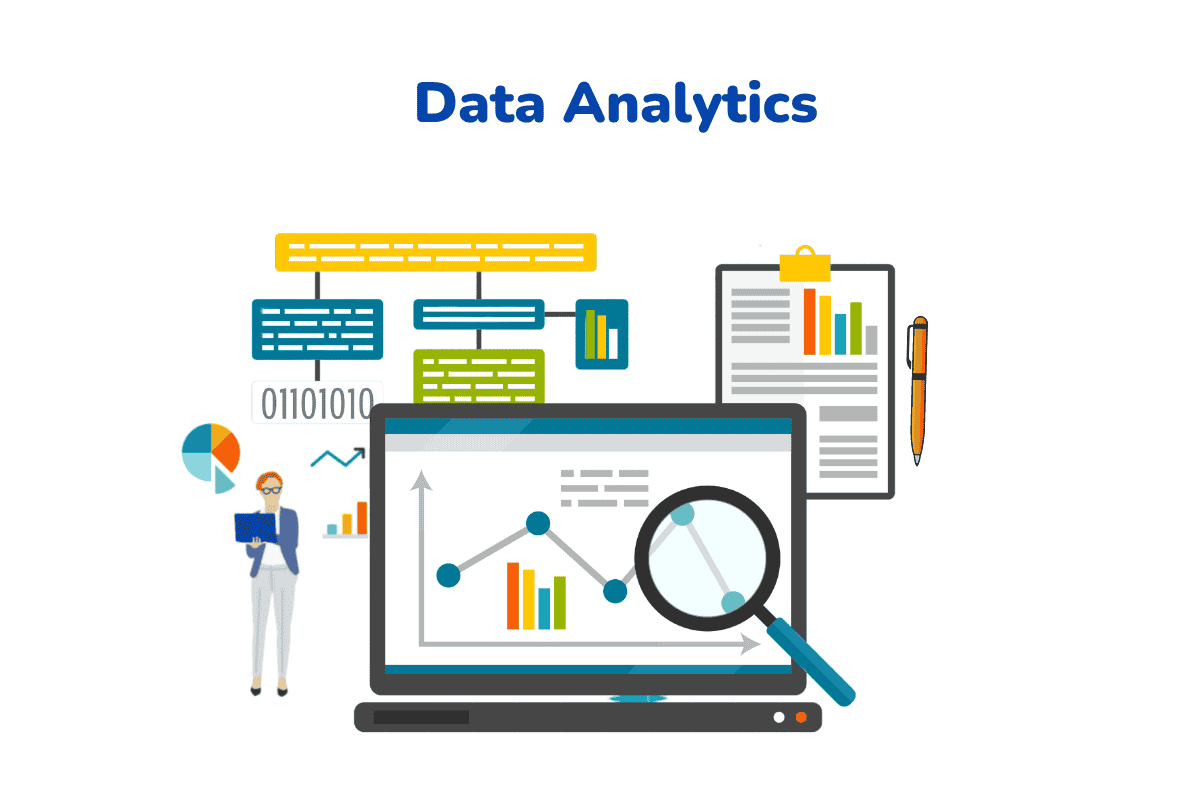
This article provides information on some of the best free learning resources available to self-learners. Whether you prefer interactive online courses or blogs, video lectures, or community forums, these sites offer knowledge, practice, and assistance for those who are looking to build their confidence in data analytics.
Why Self-Learning in Data Analytics Matters
Self-learning is a very effective way to develop skills, especially in technical fields like data analytics. Self-learning is user driven, which is a huge advantage. Rather than being bound to a classroom, with self-learning learners have some flexibility in their learning beyond just when and where, in the sense they can go where they want and learn as much or as little as they please based on their interests, needs, or goals. Self-learners have many online free resources to choose from, and those that are driven and determined are capable of finding them without any cost and still get as good of quality study materials, sample and practice projects or assignments, or global communities that often cost thousands of dollars.
Self-learning encourages problem solving and independent thinking, both qualities that every data analyst should have! As long as self-learners use free study materials and practice consistently, they can achieve comparable results to those who hold paid certifications.
Ways to Start for Free
One of the best things a beginner can do to start to learn data analytics or study all together is to have some level of structure through an online course. Many courses will map out a path for the learner, which can be beneficial if a learner just wants to learn from beginner material to advanced in a clear sequence. Many reputable universities and online course providers have free introductory programs that allow learners to demonstrate their ability to work with data, visualize data, and analyze data once they complete the course.
Free online courses are great for learning, but they also extend beyond just learning the theory. Many of the courses online use quizzes, assignments, or projects related to any level of data analytics. Completing these requirements not only develops the technical knowledge aspect, but also builds certainty and confidence to apply the requirements to practice.
Exploring Data Analytics Through Video Tutorials
For a more visual and hands-on mode of learning, video tutorials are a great option. Video content can make complex concepts more manageable to understand by providing explanatory material in relatively small bites, often with demonstrations using actual software or coding environments. Realistically, video is perfect for beginners, as learners can easily become overwhelmed by text-heavy materials.
Thousands of free video tutorials of many different data analytics tools (including Excel, SQL, Python and R) can be found on the most popular video platforms. Learners can curate their own learning pathway with simply the right set of playlists. Because you can pause, rewind and revisit an explanation a video can provide a high level of adaptability for many different learning styles.
Blogs and Articles for Broader Perspectives
Blogs are vital for learners to stay connected to trends, tools and industry best practices that they may not typically gain from lectures or course materials. While structured learning provides a strong foundation of knowledge, blogs often represent trainers and professionals' opinions of practical issues, case studies and current issues in the field of data analytics. Blogs also provide self-learners with a much broader perspective on their learning as it also provides context, demonstrating linkages between theoretical learning and industry.
Blogs create awareness of issues, common pitfalls, practical applications and shortcuts - pure experiential learning. Staying engaged with reputable and consistent blogs can also motivate learners and provide a professional outlook on the subject.
Open-Source Tools and Documentation
A critical aspect of learning data analytics is practicing with real tools. Luckily, most of the data analytics tools and programming languages are freely available in open source versions. For example, some of the most used libraries in both Python and R are for data cleaning, data analysis, and data visualization.
The official documentation for the tools may be another free resource that learners waste not utilizing. For a novice, documentation may seem very technical, but often offers information about direct functionality with examples to implement practically. After learners spend a little bit of time reading and exploring the documentation into the, they actually may become better problem solvers as learners.
Free Datasets Available to Practice
Only practicing theory will not create expertise in data analytics. True learning occurs when developed concepts are applied to real datasets. Luckily, there are more places offering free datasets from many disciplines such as health-related examples, finance, sports, and sociology. In the process, learners will discover the variability of data, what needs to be cleaned, and what real projects may become.
Developing a portfolio using free data also gives practitioners a way to highlight and showcase what they can do. Often practitioners want to move from their portfolio into a real job, so this gives one length to show the skills learned in their self-directed autonomous journey.
Communities and Forums for Peer Learning
Learning about data analytics in a vacuum can be difficult at times. Online forums and communities help ameliorate this issue by providing a venue through which learners can connect with each other either to ask questions or to share knowledge & experience. There are typically both learners and experienced professionals in these communities, allowing for networking opportunities as well as the opportunity for mentorship.
Communicating in forums and other discussion groups provides learners with exposure to different perspectives and approaches to solving problems. In addition, participating in these communities helps build confidence and communication skills both of which are relevant for careers in analytics.
Podcasts and webcasts for continuous learning In addition to formal learning, self-learners can listen to podcasts or participate in webcasts. Podcasts and webcasts typically feature field experts who share their experiences, discuss emerging trends, and provide career advice. Podcasts and webcasts tend to be free or low-cost, and thus provide an inexpensive means of keeping up with a rapidly-evolving field such as data analytics.
Hearing experts speak about their experience also allows learners to gain an understanding of what data analytics means across a variety of industries. From these experiences, learners might become inspired to study in some of the narrower areas of analytics, like marketing analytics, financial analytics, or healthcare analytics, to name just a few.
Practice Through Free Project Challenges
Applying concepts to projects is one of the best ways to solidify learning. There are a number of platforms that offer free challenges to engage learners by working toward solutions for real-world problems. These projects allow the learner to push their technical skills while building analytical thinking, creativity, and ultimate decision-making, all while being completely outside their usual delivery mechanisms.
Working on projects also allows for some confidence to develop in implementing end-to-end work using data, meaning a learner can collect data, clean the data, visualize the data, and report their findings using a project. Completing some of these challenges gives learners skills that map directly to what they would deliver in a workplace.
Developing a Structured Learning Path
There are many free resources available and taking advantage of those requires a level of discipline. A self-learner has to create pathways that build knowledge sequentially. For example, a self-learner can take a pathway starting with courses on basic statistics and Excel, next taking courses on SQL and Python, to finally taking courses on data visualization and machine learning; which represents a sequential pathway.
A structured path will help self-learners with issues related to the great breadth of learning on this subject by helping them to avoid becoming overwhelmed. The self-learner will also be better able to achieve their goals by explicitly defining and framing their goals along with timelines, milestones and overall consistency to achieve mastery over time.
Challenges of Self-Learning and How to Overcome Them
While self-learning presents some flexibility and cost savings, self-directed learning does present challenges as well. One of the biggest challenges is remaining motivated to continue the pursuit of knowledge without some external pressure to perform. A self-learner will undoubtedly face challenges in figuring out which resources to work through considering the overwhelming number of possibilities online.
To help mitigate issues of maintaining motivation, self-learners can keep a study timetable, set specific and achievable goals, and frequently monitor progress. Finding peer groups or study partners can also help maintain motivation. Most importantly, self-learners should learn to expect mistakes and embrace them as the learning process unfolds, while developing their skills over time.
The Future Scope of Data Analytics
As organizations and companies are increasingly relying on data-driven solutions, the scope of data analysts will only continue to increase. With new areas of exploration (artificial intelligence, machine learning, and big data analysis), the realm of analytics is significantly more than it was just five to ten years ago. For self-learners, this means there is plenty of scope to explore and opportunities to specialize and develop.
From my perspective, mastering data analytics through free, self learning methods does not only provide an opportunity for self-development, it can also open avenues of meaningful social invention to the world.
Frequently Asked Questions (FAQs)
Q1. Can I become a data analyst through only free resources?
Yes, if you are consistently priced and regularly practice, you can become a data analyst through the use of free resources. There are numerous free courses and tutorials on every conceivable topic related to data analysis, as well as free datasets to work with, all of which provide immense learning opportunities that can be comparable to paid programs.
Q2. As a self-learner, how long will it take to learn data analysis?
It completely depends on your own commitment as well as previous knowledge. Some people may be able to commit enough time in their lives in order to build a strong foundation within 6-months - to - 12-months of continuous study and practice.
Q3. What should a beginner learn first?
Beginners should learn Excel, basic statistics, then SQL and Python. These items are the core tools of data analysis and allow a beginner to establish a fundamental basis for more advanced learning in the future.
Q4. How important is it for a self-learner to have a portfolio?
A portfolio is crucial to show prospective employers what you can do practically. As an example, if you work on free datasets or work on project challenges those are all excellent methods of building your portfolio so that it showcases the power you can apply (using the knowledge).
Conclusion
You no longer need to attend or pay for expensive programs just to become competent in data analytics. If you possess enough determination and consistency, you can harness the power of free online courses, video tutorials, blogs, open-source tools, datasets, forums, and projects to build solid skills to confront point-in-time problems. Your self-learning will be comprised of theoretical knowledge and practical application, which can be helpful when having to confront future challenges.
In our ever-evolving knowledge-driven world, self-learning is not merely an option, it is a formidable approach to acquiring the skills needed to affect future careers. By utilizing all of the plentiful and free resources available to us, anyone can step into the realm of data analytics and create boundless possibilities.