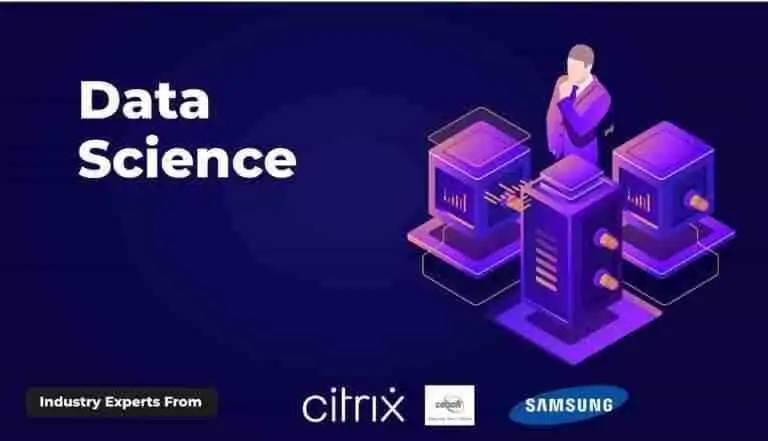
This blog explores the top libraries you’ll use in a Delhi-based data science course, their applications, and why they are critical for your learning journey.
Why Libraries Are Essential in Data Science
Libraries are integral to data science for several reasons:
- Efficiency: They save time by providing pre-written functions and modules.
- Consistency: Standard libraries ensure code reliability and accuracy.
- Functionality: Offer specialized tools for data analysis, machine learning, visualization, and AI.
- Learning Curve: Help students focus on solving problems rather than coding everything from scratch.
In Delhi’s data science courses, libraries are incorporated into both hands-on projects and theoretical learning, preparing students for real-world applications.
Core Python Libraries in Data Science
Python is the most popular programming language in data science. Key libraries include:
1. NumPy
- Purpose: Numerical computing and array operations
- Applications: Handling large datasets, performing mathematical operations, and matrix computations
- Why Important: NumPy forms the foundation for most machine learning and AI workflows.
-
2. Pandas
- Purpose: Data manipulation and analysis
- Applications: Cleaning datasets, transforming data, and handling missing values
- Why Important: Pandas allows students to efficiently organize and explore real-world data.
3. Matplotlib and Seaborn
- Purpose: Data visualization
- Applications: Creating charts, graphs, and plots to interpret data trends
- Why Important: Visualization is key to understanding insights and communicating results effectively.
4. Scikit-learn
- Purpose: Machine learning
- Applications: Implementing regression, classification, clustering, and model evaluation
- Why Important: It simplifies the application of algorithms, making it easier for students to experiment with real datasets.
5. TensorFlow and PyTorch
- Purpose: Deep learning and AI
- Applications: Neural networks, image recognition, NLP, and predictive modeling
- Why Important: These libraries enable students to implement complex AI models and prepare for advanced industry tasks.
R Libraries for Statistical Analysis (Optional)
Some Delhi courses also introduce R, especially for statistical modeling and visualization:
- ggplot2: For advanced data visualization
- dplyr: For data manipulation and transformation
- caret: For building and evaluating machine learning models
R libraries are particularly useful for learners focusing on analytics-heavy roles or academic research.
Data Visualization and Business Intelligence Libraries
Visualizing data is crucial for interpreting results and making business decisions. In Delhi courses, students often use:
- Plotly: For interactive charts and dashboards
- Bokeh: For real-time data visualization
- Dash (by Plotly): To create web-based analytical applications
These libraries enhance the presentation aspect of data science, allowing students to showcase their insights in professional formats.
Libraries for Natural Language Processing (NLP)
Analyzing text and unstructured data is an essential skill in modern data science. Common NLP libraries include:
- NLTK (Natural Language Toolkit): Tokenization, text classification, sentiment analysis
- SpaCy: Advanced NLP tasks like named entity recognition and dependency parsing
- TextBlob: Simple library for text analysis and sentiment detection
Delhi students working on social media data, reviews, or chatbots often use these tools for practical NLP projects.
Libraries for Big Data and Cloud Integration
Handling large-scale datasets requires specialized tools:
- PySpark: For distributed data processing using Spark
- Dask: Parallel computing and large dataset handling
- Google Cloud and AWS SDKs: To integrate cloud storage and computing services
These libraries prepare students for enterprise-level data science projects and scalable analytics solutions.
Additional Libraries for Advanced Applications
- OpenCV: For computer vision projects such as image recognition
- LightGBM and XGBoost: For gradient boosting and high-performance predictive models
- Shap and LIME: For model interpretability and explaining AI predictions
Using these libraries, Delhi students gain hands-on experience in real-world scenarios, enhancing both skillset and employability.
How Delhi Data Science Courses Integrate Libraries
Top data science institutes in Delhi ensure learners:
- Start with foundational libraries like NumPy, Pandas, and Matplotlib
- Progress to machine learning libraries like Scikit-learn, TensorFlow, and PyTorch
- Work on projects using NLP, computer vision, and cloud-based libraries
- Get hands-on experience with real datasets and practical problem-solving exercises
This structured approach ensures that students not only learn library functions but also understand when and how to apply them effectively.
Benefits of Mastering These Libraries
1. Hands-On Skills: Apply theoretical knowledge to practical projects.
2. Efficiency: Complete data tasks faster with reliable pre-built functions.
3. Industry Readiness: Familiarity with standard libraries is often a job requirement.
4. Portfolio Development: Build project portfolios demonstrating your expertise in Python, ML, AI, and visualization.
5. Versatility: Libraries enable application in multiple domains, from finance to healthcare, e-commerce, and government analytics in Delhi.
Tips for Learning Libraries Effectively
- Practice Regularly: Work on sample datasets and coding exercises
- Integrate Libraries in Projects: Apply multiple libraries in real-world scenarios
- Understand the Logic: Don’t just memorize functions—understand how they work
- Refer to Documentation: Official library documentation helps solve doubts and explore advanced features
- Collaborate: Working on group projects enhances learning and problem-solving
Consistent practice ensures that learners gain mastery and confidence, preparing them for data science roles in Delhi and beyond.
Conclusion
Mastering libraries is an essential part of a data science course in Delhi. From Python and R libraries to NLP, visualization, and big data tools, these resources enable students to perform complex analyses, build AI models, and visualize actionable insights.
By learning and applying these libraries through hands-on projects, real-world datasets, and practical exercises, students not only gain technical proficiency but also develop industry-ready skills. Mastery of libraries enhances career opportunities, prepares learners for diverse data science roles, and equips them to tackle challenges across startups, corporate companies, and government projects in Delhi.
Choosing a Delhi-based data science course ensures structured exposure, mentorship, and project experience, making the mastery of these libraries both achievable and highly rewarding.