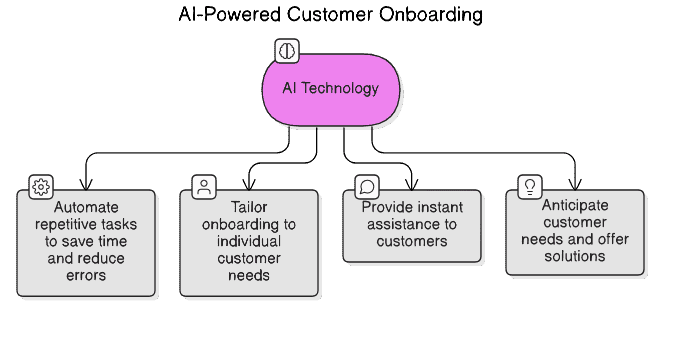
Traditional onboarding often involves repetitive manual tasks—filling out forms, verifying documents, answering FAQs, sending welcome emails, or scheduling training sessions. These steps are important, but they can be time-consuming for both businesses and customers.
This is where Artificial Intelligence (AI) course comes in. By automating onboarding workflows, AI can make the process faster, more personalized, and cost-efficient—without losing the human touch.
In this article, we’ll explore how AI can revolutionize customer onboarding, share practical applications, discuss the technologies involved, and highlight how Uncodemy’s AI, Data Science, and Cloud Computing courses can help you gain the skills needed to implement these solutions.
Why Customer Onboarding Needs Automation
Here are some common problems businesses face with manual onboarding:
- Lengthy Processes → Customers lose interest if sign-ups take too long.
- Errors & Inconsistency → Human data entry can be inaccurate.
- High Costs → Training and manual support require staff and time.
- Lack of Personalization → Customers want tailored experiences, not generic steps.
Automation powered by AI addresses these issues by combining speed, accuracy, and personalization.
How AI Automates Onboarding
AI can automate multiple stages of onboarding. Let’s break it down step by step.
1. Smart Data Collection
Instead of customers filling endless forms, AI can auto-complete details using document scanning, predictive text, or integrations.
- OCR (Optical Character Recognition) → Extracts information from scanned IDs or contracts.
- NLP (Natural Language Processing) → Helps understand typed input or chat queries.
Example: A banking app scans a customer’s PAN card and autofills personal details instantly.
2. Intelligent Document Verification
KYC (Know Your Customer) processes are usually tedious. AI makes them instant:
- AI-based ID Verification → Matches photo ID with live selfies.
- Fraud Detection → Machine learning algorithms spot inconsistencies.
Result: Faster approvals and reduced fraud risk.
3. Personalized Welcome Journeys
AI can segment customers based on their profiles, then create unique onboarding journeys.
- New users may get a guided tour.
- Advanced users may receive feature deep-dives.
- Businesses may see case studies relevant to their industry.
Tech Behind It: Machine learning analyzes user behavior and recommends the right onboarding flow.
4. Chatbots & Virtual Assistants
AI chatbots can handle FAQs, account setup, and troubleshooting 24/7.
- Conversational AI → Handles natural language queries.
- Integration with CRM → Stores and recalls customer interactions.
Example: A SaaS platform bot guides users through setting up dashboards without waiting for a human agent.
5. Automated Training & Demos
Instead of manual workshops, AI-driven platforms can recommend tutorials, videos, or product simulations based on user needs.
- Adaptive learning → AI adjusts content difficulty based on customer progress.
- Interactive walkthroughs → Show customers features in real-time.
6. Predictive Engagement
AI can predict when a customer might face difficulties or lose interest and trigger proactive support.
- Churn Prediction → Algorithms analyze usage patterns to identify disengaged users.
- Timely Nudges → Automated reminders, tips, or offers to re-engage customers.
7. Feedback & Continuous Improvement
AI analyzes customer feedback to improve the onboarding process.
- Sentiment Analysis → Finds positive/negative tones in customer responses.
- Trend Detection → Identifies common issues across users.
Tools & Technologies for AI-Driven Onboarding
Here are the main categories of tools businesses can use:
- AI Chatbots → Dialogflow, Microsoft Bot Framework, ChatGPT APIs.
- Document Verification → Onfido, Jumio.
- Automation Platforms → Zapier with AI integrations, UiPath.
- Data Analytics → Power BI, Tableau, AI dashboards.
- Custom AI Models → TensorFlow, PyTorch for advanced cases.
💡 If you want to build these tools yourself, Uncodemy’s AI & Machine Learning Course covers model development, while the Full Stack Web Development Course helps you integrate them into real-world applications.
Real-World Examples
1. Banking & FinTech → AI verifies documents, reduces fraud, and speeds up account creation.
2. E-commerce → Personalized onboarding emails and product recommendations.
3. Healthcare Apps → AI bots guide patients in filling health history forms.
4. SaaS Platforms → Smart walkthroughs help users adopt features quickly.
5. Insurance → Claims and policy documents auto-verified using AI.
Benefits of AI in Onboarding
- Speed → Faster setup means customers see value quicker.
- Accuracy → Reduced errors in data and verification.
- Cost Efficiency → Less need for large onboarding teams.
- Personalization → Tailored onboarding improves engagement.
- Scalability → Onboard 100 or 100,000 customers with the same efficiency.
Challenges & How to Overcome Them
- Data Privacy Concerns → Use secure, GDPR-compliant platforms.
- Over-reliance on Automation → Keep a human fallback for complex cases.
- Implementation Cost → Start small, scale with cloud-based AI tools.
💡 Uncodemy’s Cloud Computing Course covers AWS, Azure, and DevOps so you can scale AI onboarding securely and cost-effectively.
Future of AI in Onboarding
As AI evolves, we can expect:
- Hyper-personalized journeys → AI tailoring every step uniquely.
- Voice-based onboarding → Customers onboarded via smart assistants.
- AI-driven relationship building → Predicting customer needs before they even ask.
- Integration with AR/VR → Interactive virtual onboarding environments.
Career Benefits of Learning AI for Onboarding
- Rising Demand → AI specialists are needed across industries.
- Diverse Roles → From AI Engineers to Product Managers.
- Freelance Potential → Many startups need onboarding automation solutions.
- Portfolio Boost → Building an AI onboarding project demonstrates real business value.
💡 Courses to Explore at Uncodemy:
- Artificial Intelligence & Machine Learning → Build AI-powered onboarding bots.
- Data Science Course → Analyze customer data for better segmentation.
- Full Stack Development → Implement onboarding flows in apps.
- Cloud Computing Course → Deploy onboarding systems at scale.
Conclusion
Customer onboarding is no longer just a set of manual steps—it’s the make-or-break phase of customer experience. With AI, businesses can streamline onboarding, reduce costs, improve accuracy, and deliver highly personalized journeys.
From document verification to AI chatbots, predictive nudges, and feedback analysis, automation ensures customers feel supported from day one.
For professionals, learning how to build and deploy these AI-driven systems is a career game-changer. By enrolling in Uncodemy’s AI, Data Science, Web Development, and Cloud Computing courses, you can master the skills needed to design automation solutions that make a real impact.
The future belongs to companies that onboard customers effortlessly—and to professionals who can make that future possible.