How to learn REST Architecture and APIs
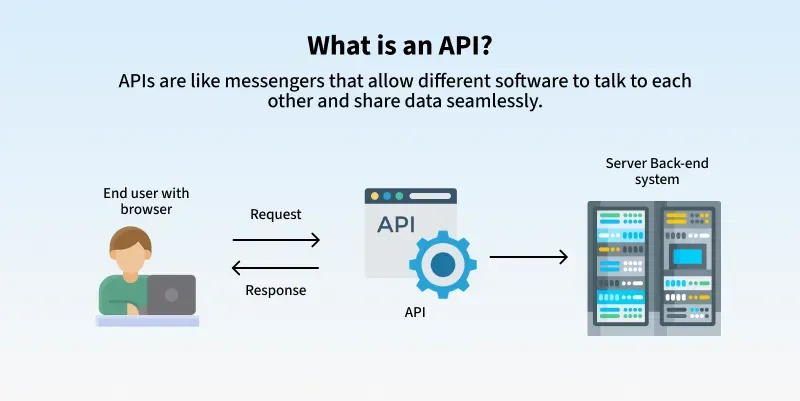
Representational state transfer (REST) is an architectural style of software or client- and server-side software interactions over a computer network. It offers a list of restrictions to improve the performance, scalability, simplicity as well as reliability of the systems. REST is a collection of rules that describe how to design a networked software system, as opposed to a specification.
Constraints of REST Fundamental Architecture
Stateless: The server has no way of retaining any state between two or more requests by two or more clients.
Client-server: The server and client are decoupled so the development of each can be independent.
Cacheable:The data fetched by the server can be cached either by the client or the server.
Uniform interface: The server is offering a consistent interface to access the resources but does not define its representation.
Layered system: Server resources can be accessed in an indirect manner by dereferencing them by another layer of clients such as proxies or load balancers.
Code on demand (op): The server can send executable code to the channel such as JavaScript in a single page application.
They are architectural restrictions that a REST web service follows and uses API to make their data available publicly on web URLs. Let me give an example, when getting information about users in GitHub you can use the JSON REST API, since this API has the path /users/<username> you can access the user with API call https://api.github.com/users/<username>. REST API is retrieved by sending an HTTP request to a URL and the response is processed.
HTTP Methods and Status Codes Common Status Common Methods
REST APIs wait to hear the HTTP which is used to identify the operation to get carried out on the web service resources. A resource may be any information contained in the web service and that can be read and written to with HTTP requests on the REST API.
Some of the most popular HTTP protocols with Rest APIs are:
GET: a method used to retrieve a resource that exists. It is read-only and must not alter a resource.
POST: This is used when it is needed to create a new resource.
PUT: Is used to replace the values of a resource completely with the new information.
PATCH: Employed to do a partial update of an already existing resource, the difference is that it only changes the values that are included in the JSON in the request.
DELETE: It is used in order to delete a resource.
A REST API represents an HTTP response after processing an HTTP request, which is composed of an HTTP status code that gives information on the effective implementation of a request. The codes assist in error handling by applications or showing that something has been achieved successfully.
The most common HTTP status codes are
200 OK: Shows that an action has been successful.
Created: This means that a resource was created.
204 No Content: Shows a successful request, where there is no content in the response.
Bad Request: Bad request.
404 Not Found This is a response that states that what is requested was not found, and they were referring to the resource requested.
415 Unsupported Media Type: Represents the fact that the data format of the request is not supported by the server.
422 Unprocessable Entity: Represents that the data provided in an appropriately formatted request had unsound information or lacked information.
500 Internal Server Error: It means that there is a server problem in processing the request.
API endpoints API endpoints API endpoints API endpoints API endpoints API endpoints URLs that a RESTful web service exposes and which are to be used by client applications to access the resources of a web service. E.g., a CRM system may be designed so that the following endpoint will retrieve a list of customers /customers and /customers/<customer_id> access an individual customer.
Consumption of Python REST API
The requests library has been a common choice made by Python programmers to make HTTP requests and to work with REST APIs, hiding the complexity. You can install it by using pip.
[In the form of an example of how this works, to be able to retrieve a to-do item that currently has an ID of 1 through JSONPlaceholder, you would execute:
To read information, requests.get() will be used.
params = {"url" : " https://jsonplaceholder.typicode.com/todos/1"}
import requests
Output {'id': 1, 'title': sunt aut facere repellat necessitatibus et aut officiis debitis aut rerum necessitatibus saepe eveniet ut et. 'user Id': 1, 'complete': False}
response = requests.get(api_url)
print(response.json())
jsonplaceholder_url = “https://jsonplaceholder.typicode.com/posts/ ”
print(response.status_code) # 200
print(response.headers) # application/json; charset=utf-8
To see the data, you can use the.json() method of the response to put the data in the form of JSON. It is also possible to see metadata in the response.status_code and response.headers.
api_response=requests.post(api_url,data=todo)
In order to generate a new asset, request.post() is employed, and as a Python dictionary is usually passed to the argument json, the header Content-Type is automatically set to application/json.
import requests
Copy Code
Result: id:201,userId:1,comment: "Buy milk",completed: false

todo = { "userId" : 1, "title" : "Buy milk", "completed" : False}
PATCH request
Copy Code
print(response.json())

output: {'user Id': 1, "title": 'Biz Mola Mere fanati Cheese Budaya', "completed": False, 'id':201

print(response.status_code) # 201
example: PATCH request.
To modify a current resource, put requests can be used. PUT requests do not preserve the existing values of the resource, and as such any data sent with the request will replace the previous values. PIF requests The result of a PUT fails are usually 200 status codes.
explain: PATCH request.
Part of a resource may be updated using requests.patch(). As opposed to PUT, PATCH will only transmit changes to the values of the JSON sent in the request.
An example is DELETE Request.
The requests.delete() is called to delete a resource, and the API URL that is passed the resource ID. Upon deletion, the API will most likely return the empty object in JSON and a 204 No Content status code.
Development of REST API in Python
Creating RESTs API comprises identifying the resources, state and defining endpoint, selection of data exchange format, as well as the design of the suitable response in case of success or errors.
The API Design Significant Sequences
Identify Resources: Resources should be denoted as nouns in the plural form (e.g., customers, transactions) and options are provided to nesting resources.
Define Endpoints: Resources should be used to identify the API endpoints so that they do not include verbs since the action is represented with the HTTP method.
Pick Data Interchange Format: JSON Squared, JSON is well-suited to REST APIs because it is like a dictionary in Python, and it supports nesting complicated data.
Design Success Responses: The responses to API should be in a uniform format and compatible with the proper HTTP status code. In the case of GET requests, 200 OK should be sent, whereas, POST requests, with a generated new resource should reply with 201 Created.
Design Error Responses: The response to error should contain the description of the error as well as corresponding status code to help the user have a context.
Common Python Frameworks To Make APIs
There are a number of Python frameworks that can be used to create REST APIs, and when it comes to the benefits and drawbacks, they all have them.
Flask: Python micro-framework which can be employed to develop web application and REST APIs. It process HTTP requests and forwards to the functions passed. Flask automatically converts Python dictionaries to JSON, so a list of dictionaries require the use of jsonify().
Django REST Framework: A Django plugin, that provides REST API to an existing Django project. It applies model serializers to serialize Django models to JSON as API. ModelViewSet uses standard HTTP methods to have default views of common operations with REST API.
FastAPI: New, efficient, web framework specifically designed to create APIs, taking advantage of Python type hints and the inbuilt capability to do async operations. FastAPI takes the advantage of using Pydantic models to create data structure and type enforcement, Auto-generating JSON and validating incoming JSON.
BP API Compliant Implementation
To achieve robust and maintainable applications during the integration of APIs through the Python program, care should be taken to ensure proper practices.
Error Handling: It is best practice to always handle errors and exception handling of API requests to avoid application crashes. Exceptions could be intercepted by use of try-except and give constructive error messages.
Rate returns: Most APIs put restrictions on requests in order to avoid the abuse of the functions thus one should respect to prevent disruption of services.
Documentation: Effective, easy to maintain documentation of the client and understandable API code are the requirements of modern REST APIs.
Unique Keys: Each tool having a different script should use distinct keys, which comes in handy when debugging.
Know API Type and Authentication: Find out what kind of API it is (e.g. REST, SOAP) and what way is used to authenticate it.
Pagination and Tools: Ensure API pagination is available on large datasets and know about any associated limitations to the tools you would like to use.
Data Mapping: Proper mapping of the data between your application and the API should be done.
Uncodemy Python API Integration Project Courses
Upon those who are interested in upgrading their knowledge and practical skills in Python API integration, Uncodemy can provide the courses on those themes. The question of whether Uncodemy has a dedicated course in Python to work on API integration projects appears to be negative, but in their Data Science Certification course, the lecturers have specific sections addressing Python, machine learning, AI, and cloud integration, which are essential when developing an API.Data Science Certification by Uncodemy is revised to 2026 and focused on outcomes and quality that means that the curriculum can change according to the latest industry needs and cover real projects with practical and realistic cases. The Education includes having an expert coach at leading tech companies. You can get tips, advice and participate in an interview simulation. Also, Uncodemy Artificial Intelligence (AI) Training Course trains Python with Django, AWS Cloud Deployment, CI/CD Pipelines and RESTful API Design which are directly related to the mentioned API integrations building. There are also Uncodemy promotions that touch upon such topics as API Usage and External API Integration, during which one visits the topic of the advanced API.
Such courses have the capacity to offer powerful background and experience to people undertaking API integration projects using Python.