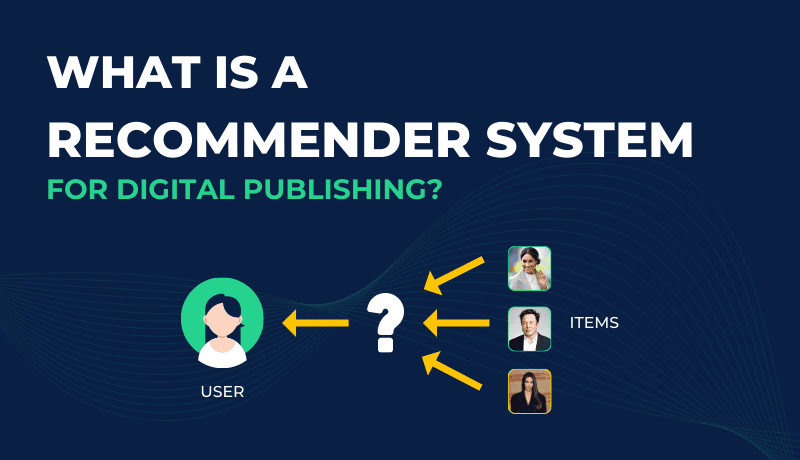
Recommender systems are crucial for enhancing customer engagement and boosting sales across nearly every digital sector. In this blog, we’ll explore the ins and outs of recommender systems, including their various types, how they work, their applications, pros and cons, and what the future might hold in 2026.
If you’re excited about creating such impactful systems, enrolling in a Data Science Course in Noida (uncodemy.com) can equip you with the skills to design, train, and deploy recommender systems like a pro.
Introduction to Recommender Systems
A Recommender System is a branch of Artificial Intelligence (AI) and Data Science that delivers personalized content to users based on their previous actions, preferences, or profiles of similar users.
These systems utilize machine learning, natural language processing, and predictive modeling to figure out what a user might be interested in next. For example:
- Netflix suggests films that are similar to what you’ve already watched.
- Amazon recommends items based on what you’ve browsed.
- Spotify creates playlists tailored to your musical tastes.
Without these recommender systems, the user experience would be bland and inefficient, making it tough for businesses to keep their customers coming back.
Why Are Recommender Systems Important?
- Enhanced User Experience – They provide users with personalized recommendations, making it easier and quicker to find what they want.
- Increased Sales & Revenue – Businesses see a boost in conversions thanks to tailored offers that resonate with customers.
- Customer Retention – By creating personalized experiences, companies foster long-lasting relationships with their users.
- Efficient Content Discovery – These systems help users stumble upon new content they might not have found on their own.
- Competitive Advantage – Companies with superior recommendation engines tend to outshine their rivals.
Types of Recommender Systems in Data Science
Recommender systems come in various forms, tailored to different needs:
1. Content-Based Filtering
- This approach zeroes in on the attributes of items.
- For instance, if you enjoy an action movie, the system will suggest more action films.
- Algorithms sift through keywords, metadata, and tags linked to the items.
2. Collaborative Filtering
- This method relies on the preferences of users with similar tastes.
- Types include:
1. User-User Filtering: “Users like you also enjoyed this.”
2. Item-Item Filtering: Recommends items that are often bought together.
- A classic example is Amazon’s “Customers who bought this also bought…”
3. Hybrid Systems
- These systems blend content-based and collaborative filtering.
- They help overcome challenges like cold-start issues.
- Netflix is a great example, using hybrid systems to improve recommendation accuracy.
4. Knowledge-Based Systems
- These rely on explicit information about items and user needs.
- They're particularly useful in areas where historical data is scarce.
- For example, travel booking sites suggest destinations based on user preferences.
5. Deep Learning-Based Recommenders
- These utilize neural networks to deliver personalized suggestions.
- They can manage vast amounts of unstructured data, including text, video, and images.
- A prime example is YouTube’s recommendation system.
How Do Recommender Systems Work?
Recommender systems operate through a well-defined process:
1. Data Collection
- Gathering user behavior data (like clicks, purchases, and ratings).
- Analyzing content attributes (such as genre, tags, and categories).
2. Data Storage & Processing
- Utilizing databases and big data technologies, including Hadoop or Spark.
3. Model Building
- Employing machine learning algorithms like Decision Trees, SVD, KNN, and Neural Networks.
4. Prediction & Recommendation
- Algorithms work their magic to deliver personalized results in real-time.
5. Feedback Loop
- Continuously learning from user feedback to enhance accuracy.
Real-World Applications of Recommender Systems
Recommender systems are all around us. Here are some popular examples:
- E-Commerce: Platforms like Amazon, Flipkart, and eBay suggest products.
- Streaming Services: Netflix, Disney+, Spotify, and YouTube recommend content.
- Social Media: Instagram and Facebook suggest posts and friends.
- Healthcare: Offering personalized medicine and treatment recommendations.
- Education: Sites like Coursera recommend courses tailored to your interests.
- Finance: Banks provide investment plan suggestions.
Challenges and Future of Recommender Systems in Data Science
Recommender systems have made impressive strides in recent years, but they still encounter a number of challenges that will influence their future growth. Here are some of the main hurdles:
- Cold Start Problem: When a new user or item joins the system, there’s often not enough data to provide accurate recommendations. This makes it tough to personalize suggestions in the early stages.
- Scalability Issues: With the surge of big data and millions of users and items, delivering real-time recommendations at scale demands a lot of computational power and finely-tuned algorithms.
- Bias and Fairness: Recommender systems can sometimes mirror and even amplify existing biases found in the data. For instance, if popular items are over-recommended, it can overshadow niche products, leading to an echo chamber effect. Addressing fairness and diversity in recommendations is a significant area of research.
- Privacy Concerns: Since recommendations often depend on sensitive user data like browsing history, purchases, or personal preferences, balancing data privacy with the need for personalized results is a crucial challenge.
Looking to the future, recommender systems are likely to evolve in several exciting ways:
- Hybrid Models that blend collaborative, content-based, and deep learning techniques to tackle individual shortcomings.
- Context-Aware Recommendations, where systems adjust based on factors like time, location, device, or even the user’s mood.
- Explainable Recommendations, which aim to make the system more transparent by clearly outlining why a specific item is suggested.
- Integration with Generative AI, allowing for highly personalized, human-like interactions that go beyond simple recommendations.
This mix of opportunities and challenges ensures that recommender systems will continue to be a vital part of Data Science applications, constantly adapting to deliver more accurate, ethical, and user-friendly experiences.
Advantages of Recommender Systems
- Personalized Experience – Users appreciate content that feels tailored just for them.
- Time-Saving – Cuts down on browsing time by highlighting relevant items.
- Increased Engagement – Keeps users interested for longer periods.
- Business Growth – Encourages upselling and cross-selling opportunities.
- Data-Driven Insights – Aids businesses in understanding user behavior patterns.
Disadvantages of Recommender Systems
- Cold-Start Problem – Challenges in recommending for new users or items.
- Data Privacy Concerns – Sensitive user data can be at risk if not managed properly.
- Over-Specialization – Users might miss out on a variety of content.
- Scalability Challenges – High computational costs arise with large datasets.
- Bias in Recommendations – Algorithms can sometimes reinforce existing biases.
Future of Recommender Systems in 2026 and Beyond
The future of recommender systems is set to take off in 2026 and beyond, driven by some exciting new technologies:
- Explainable AI (XAI): This will make recommendations clearer and easier to understand.
- Context-Aware Systems: Imagine getting suggestions based on where you are, the time of day, or even your mood.
- Voice & Conversational Interfaces: Think about how seamlessly these systems will work with Alexa, Siri, and chatbots.
- Augmented Reality (AR) Shopping: Picture trying on products virtually in a personalized AR experience.
- Federated Learning: This will help enhance recommendations while keeping your data private.
By 2026, we can expect recommender systems to become even more intuitive, truly grasping our preferences and becoming vital for every digital business.
Career Opportunities in Recommender Systems
The need for data scientists and AI engineers who specialize in recommender systems is on the rise. Here are some key positions you might consider:
- Data Scientist
- Machine Learning Engineer
- AI Specialist
- Business Intelligence Analyst
- Product Recommendation Specialist
If you're looking to dive into this field, signing up for a Data Science Course in Noida (uncodemy.com) is a fantastic idea. This program will equip you with real-world applications, algorithms, and hands-on projects to prepare you for the industry.
Conclusion
Recommender systems are at the heart of personalization in today’s digital economy. Whether in e-commerce or healthcare, they’re transforming user experiences and helping businesses flourish. While challenges like data privacy and algorithmic bias remain, the future is bright with advancements in AI, deep learning, and context-aware technologies.
If you’re eager to excel in this captivating field, a Data Science Course in Noida (uncodemy.com) can provide you with the technical skills and practical experience needed to thrive in building and deploying recommender systems.
Frequently Asked Questions (FAQs)
Q1. What are recommender systems in simple terms?
Recommender systems are smart tools powered by AI that help suggest products, movies, or content to users based on what they like and how they behave.
Q2. What are the most common types of recommender systems?
The main types include content-based filtering, collaborative filtering, hybrid systems, knowledge-based systems, and those that use deep learning.
Q3. Where are recommender systems used?
You can find them in e-commerce, streaming services, social media platforms, education, healthcare, and finance.
Q4. What are the limitations of recommender systems?
They face challenges like the cold-start problem, issues with scalability, risks to data privacy, and the potential for biased recommendations.
Q5. How can I build a career in recommender systems?
Consider enrolling in a professional Data Science Course in Noida (uncodemy.com) to dive into machine learning, AI, and hands-on projects related to recommender systems.