What Is a Class in Java? Structure and Syntax
Mr. Bambam Kumar Yadav/ 3 days ago - 15
- 11 min read
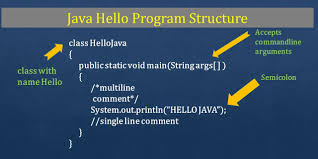
This article is full of examples. It’ll show you what a class means in Java, how it's put together, what it looks like, and how it's used in the real world. We'll also go over some more complex ideas, good ways to use them, and answer common questions. It's all made to be easy to understand and useful for school and work.
What Is a Class in Java?
Okay, so in Java, a class is like a plan you use to make objects. It says what properties (data) and actions (methods) the objects will have. Think of a Car class; it describes things all cars have, such as wheels, an engine, and color.
Here's the breakdown:
- A class is just an idea of what an object should be, not a real thing.
- An object is the real, workable thing you create from a class. Each one has its own special values.
Think of it this way: if a class is like a house blueprint, then each object is an actual house built from that plan. You can build lots of houses from one plan, and each house can have different stuff, such as color, location, and owner - but they're all based on the same basic structure.
Why Are Classes Important in Java?
Java is an object-oriented language, which basically means:
- Everything is made up of classes and objects.
- Classes help you reuse code, keep things organized, and make your program bigger.
- Big or difficult programs get easier to handle because of this nice, clean structure.
At Uncodemy’s Java class, you'll see that everything, including data, networks, apps, and how things are put together, uses classes as a base.
Basic Structure of a Java Class
Okay, so here's what makes up a class in Java:
1. Class Declaration
You kick things off with the `class` keyword and then give your class a name. Usually, that name starts with a capital letter.
2. Fields (Variables)
These are the variables that hold the data for your class. Each object made from the class can have its own values for these variables.
3. Methods (Functions)
Methods say do what the class can do--the actions, behaviors.
4. Constructors
These are methods that get things rolling when you create a new object. They set up the initial values for your fields.
5. Blocks, Inner Classes, Enums, etc.
As you get more advanced, you might see classes with static blocks, inner classes, constants, and other stuff.
Objects: Bringing Classes to Life
Think of a class as a blueprint. It doesn't *do* anything until you build something from it, which we call an object. Objects take up space in the computer's memory, and each one holds its own data.
You can make lots of objects from the same blueprint. They will each have their own set of data, but they can all do the same things.
For example, you could have five different Car objects. They might be different colors or models, but they all know how to accelerate and stop.
Detailed Example
First, you set up your class – let's say it's called Book.
It'll have these things:
Title
Author
Price
And it can do these things:
Read
GetInfo
When you make a new Book, you'll need to give it a title, author, and price when you create it.
Second, you make the actual Book objects:
Book 1: Python Basics by Alex costs 500.
Book 2: Java Mastery by Priya costs 650.
So, each book has its own specific info (like title, author, etc.), but they're both based on the same Book class blueprint.
How Classes are Used in Java in Everyday Life
- Representing things: Like students, products, users, or orders—basically anything that has properties and actions.
- Making apps with a graphical interface: Things like buttons, windows, and menus are all built using classes.
- For networking: Stuff like connections, requests, and responses are all set up as classes.
- In games: Think of characters, levels, and scores—they're made using classes.
- For big business systems: Users, permissions, and transactions are all handled with classes.
In Uncodemy’s Java course, you’ll find a lot of hands-on examples, like creating e-commerce sites or banking apps, all using well-organized classes.
Advanced Concepts
1. Access Modifiers
Control how class members (fields and methods) can be accessed:
- private: Only within the class itself
- public: Accessible from anywhere
- protected: Accessible in subclasses and within the same package
- Default (no modifier): Accessible only within the same package
2. Static vs Instance Members
- Instance variables/methods: Belong to each object; unique for every instance
- Static variables/methods: Belong to the class itself; only one copy shared among all instances
3. Inheritance
A new class (subclass/child) can “inherit” fields and methods from another (superclass/parent), promoting code reuse and hierarchy (e.g., “Car” is a subtype of “Vehicle”).
4. Encapsulation
Keeping fields private and providing methods (getters/setters) to access or modify them ensures better security and flexibility.
5. Polymorphism and Abstraction
- Polymorphism: Lets you use a single interface to represent different underlying data types.
- Abstraction: Hides complex details, exposing only relevant features to the outside world.
All these are deeply covered in Uncodemy’s Java programming course to prepare you for advanced development and interviews.
Best Practices for Java Classes
One class per file: Make sure the file name matches the class name.
Keep data safe: Set fields to private unless you need to get to them directly.
Pick good names: It makes code easier to get now and later.
Make classes small: Stay focused; keep each class doing one thing well.
Add comments: Explain complex parts and public stuff.
Use inheritance wisely: Only inherit if something truly is a type of something else.
Don't overuse static: Stick to using static for shared stuff that doesn't change.
Java Class Structure Elements & Purposes
| Part | Description | Example Purpose |
|---|
| Class Name | Identifier for your template | Student |
| Fields | Data attributes for class/objects | String name; int age; |
| Methods | Actions or functions | enrollCourse(), printInfo() |
| Constructor | Setup on object creation | Student(name, age, id) |
| Static blocks | Class-level initialization | For setting up static databases |
| Nested Classes | Class within a class | Helper or data-structuring classes |
| Access Modifiers | Control visibility and use | private, public, protected |
| Getters/Setters | Encapsulated data access | getName(), setAge() |
Conclusion
A Java class? It's way more than just code—it's what makes Java programming work. If you get how classes are built, what the rules are, and how they're supposed to act, you can make software that's strong, can grow, and isn't a pain to keep up.
In Uncodemy’s Java course, we get students thinking about classes right away. This gives them a base for more advanced coding, code that's easy to read and change, and fast ways to build things.
When you start a new project, ask yourself: What are the main things I'm dealing with? What do they have in common? How can I make this into a Java class? Do this, and you'll not only get Java, but you'll also be ready for whatever comes next in your career.
Frequently Asked Questions (FAQs)
Q1: Can Java programs be written without classes?
No. Every Java program is written within at least one class. Even the entry point (public static void main) is inside a class.
Q2: How are classes different from objects?
A class defines the structure and behavior; an object is a unique instance using that structure.
Q3: What is a constructor?
A special method that is called when creating an object; it initializes object properties.
Q4: What are getters and setters?
Methods for accessing (get) and modifying (set) private fields—essential for encapsulation.
Q5: How does Uncodemy’s Java programming course teach classes?
Via hands-on assignments, visual diagrams, code reviews, pair programming exercises, and real-world mini-projects, students graduate able to write, structure, and troubleshoot robust, scalable Java programs.












