What Is a Perceptron? A Beginner’s Guide to the Basics of Neural Networks
In the rapidly evolving world of artificial intelligence (AI), understanding foundational concepts is crucial for anyone aspiring to build a career in this field. One such foundational concept is the perceptron, the simplest form of an artificial neural network. This guide delves deep into the perceptron, its components, workings, and its significance in the broader context of neural networks.
One kind of artificial neuron that is used as a foundation for more intricate neural networks is the perceptron. Frank Rosenblatt first presented it in 1958 as a binary classifier that could identify if an input was a member of a particular class. The perceptron is a key idea in artificial intelligence and machine learning because it replicates how biological neurons process information.
Components of a Perceptron
A perceptron is made up of various essential parts:
Inputs: The characteristics or variables that the model considers when concluding are known as inputs.
Weights: A weight is given to each input, signifying its significance in the process of making decisions.
Summation Function: The weighted sum of the inputs is determined by the summation function.
Activation Function: The perceptron's output is determined by passing the summation function's result through an activation function.
Output: The perceptron's ultimate classification or judgment.
How a Perceptron Works
The steps by which the perceptron functions are as follows:
Input Reception: Multiple inputs, each of which represents a feature of the data, are received by the perceptron.
Weight Assignment: The corresponding weight is multiplied by each input.
Summation: The total of the weighted inputs is calculated.
Activation: An activation function, usually a step function, receives the sum and returns a binary result (0 or 1).
Output Generation: The perceptron generates an output by classifying the input data by the activation function's result.
Through training, the perceptron's weights are adjusted to increase accuracy as it makes decisions based on the input data.
Types of Perceptrons
Perceptrons can be divided into different groups according to how complex they are:
Single-layer perceptron- The most basic type is the single-layer perceptron, which has just one layer of output nodes linked to the input features. It can solve problems that are linearly separable.
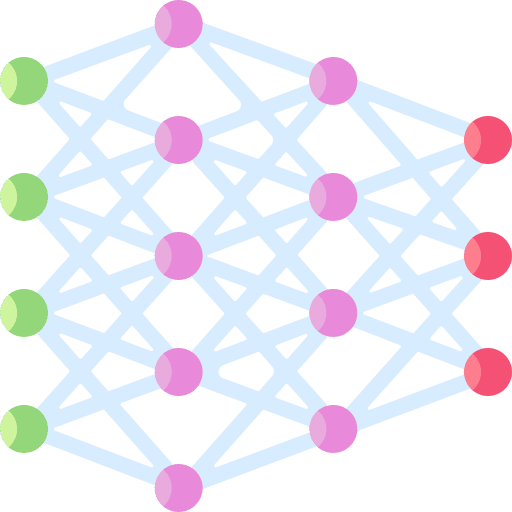
Multi-Layer Perceptron (MLP)- The more intricate Multi-Layer Perceptron (MLP) structure has one or more hidden layers in between the input and output layers. MLPs serve as the foundation for deep learning models and are capable of handling nonlinear problems.
Training a Perceptron
A perceptron's weights are changed during training to reduce prediction error. Usually, the perceptron learning algorithm is used for this:
Initialization: Give each input a random weight.
Prediction: Make a prediction using the current weights.
Error Calculation: Calculate the error by comparing the expected and actual results.
Weight Update: Using a learning rate to regulate the update's magnitude, modify the weights in accordance with the error.
Iteration: Continue doing this for a number of epochs until the perceptron reaches an accuracy level that is satisfactory.
This iterative process enables the perceptron to learn from data and improve its performance over time.
Applications of Perceptrons
Perceptrons are simple, but they have many useful uses:
Binary Classification: Perceptrons work well for tasks like sentiment analysis and spam detection, where data can be divided into two different categories.
Pattern Recognition: They are helpful in speech and picture recognition tasks because they can spot patterns in data.
Function Approximation: Perceptrons can be used as a basis for more complex models by approximating simple functions.
Limitations of Perceptrons
Perceptrons are fundamental, but they have some drawbacks:
Linear Separability: Only problems with linearly separable data can be resolved by single-layer perceptrons. They have trouble with non-linear, more complicated problems.
Inability to Solve XOR Problem: The XOR problem, which necessitates a non-linear decision boundary, is a well-known illustration of a problem that a single-layer perceptron is unable to resolve.
Limited Complexity: More sophisticated architectures are required for tasks requiring the modeling of intricate relationships in data, as perceptrons are not capable of doing so.
Evolution to Multi-Layer Perceptrons
Researchers created multi-layer perceptrons (MLPs) to get around the drawbacks of single-layer perceptrons. Because MLPs have one or more hidden layers, they can solve more complicated problems and model non-linear relationships. They serve as the foundation for deep learning, which makes progress possible in domains like autonomous systems, computer vision, and natural language processing.
Importance in AI Education
Anyone taking an AI course needs to understand perceptrons. They offer a starting point for understanding deeper learning ideas and increasingly intricate neural network architectures. Learners who have a strong foundation in perceptrons are better prepared to construct and train neural networks.
Real-World Examples
There are several real-world uses for perceptrons and their sophisticated counterparts:
Healthcare: Classifying medical images to help with disease diagnosis.
Finance: Using pattern recognition to identify fraudulent transactions.
Retail: Forecasting consumer preferences and behavior for focused advertising.
Transportation: Processing sensor data to improve the navigation of autonomous vehicles.
These uses highlight the usefulness of perceptrons in addressing real-world issues.
The Role of Bias in Perceptrons
The bias is a crucial component of a perceptron's architecture. It serves as an extra parameter that makes it possible to move the activation function to the left or right, which can be very important for learning. The accuracy of the perceptron's fit to the data decreases in the absence of bias, particularly if the data does not pass through the origin. The perceptron becomes more flexible and can model a greater variety of functions and make better decisions by modifying the bias.
Activation Functions: Beyond the Step Function
Modern neural networks have adopted a range of activation functions to introduce non-linearity and improve learning, whereas the traditional perceptron uses a step function as its activation mechanism:
Sigmoid function: The sigmoid function is appropriate for probabilistic interpretations since it produces values between 0 and 1.
Hyperbolic Tangent (tanh): The hyperbolic tangent, or tanh, centers the data and frequently speeds up convergence by producing outputs between -1 and 1.
ReLU (Rectified Linear Unit): The Rectified Linear Unit, or ReLU, encourages sparsity and lessens the vanishing gradient issue by producing zero for negative inputs and the input itself for positive inputs.
An important factor in model design is the activation function selection, which has a big influence on the neural network's performance and rate of convergence.
Perceptron Learning Algorithm: A Closer Look
Depending on the prediction error, the iterative Perceptron Learning Algorithm modifies the weights and bias. Here's a detailed explanation:
Initialization: Assign bias and weights at random.
Input Processing: Use the current weights and bias to calculate the output for every training example.
Error Calculation: Calculate the error by comparing the actual label with the expected output.
Weight and Bias: 1. Nothing changes if the prediction is accurate.
2. If not, use the following formula to modify the weights and bias:
Iteration: Continue the procedure over several epochs until the perceptron converges or reaches a satisfactory level of accuracy.
Perceptron in the Broader Landscape of Machine Learning
Even though the perceptron is among the most basic types of neural networks, its fundamental value, rather than its complexity, makes it significant. It popularized the idea of using weight updates to learn from data, which is still at the heart of almost all machine learning models today. More sophisticated algorithms were developed on top of this original framework as machine learning progressed. The idea of error-based learning, which started with the perceptron, has persisted through decision trees, support vector machines, and deep learning.
The way the perceptron updates weights to minimize classification errors is actually the conceptual basis for many contemporary methods, including gradient descent, backpropagation, and cost functions. In AI, it is now commonplace to assume that a model can "learn" from its errors.
Understanding the Learning Rate in Perceptrons
The learning rate is a crucial hyperparameter in perceptron training. This establishes how much each update modifies the weights. An excessively high learning rate could cause instability by causing the model to overshoot the ideal solution. A very low learning rate, on the other hand, could lead to slow convergence, which would make it take a long time for the model to find the best solution, or not find one at all.
For the perceptron to be effective, the learning rate must be balanced. It’s also a concept that learners carry with them as they progress to more complex neural networks, where adaptive learning rates and optimization algorithms like Adam or RMSprop build upon this simple foundation.
Final Thoughts
A key component of artificial intelligence education is still the perceptron neural network. Its impact on contemporary AI techniques is indisputable, and becoming proficient in it is a must for any prospective AI specialist.
Starting with the perceptron gives you the skills and self-assurance you need to move on to more complicated subjects, regardless of whether you're just starting out in AI or want to solidify your theoretical underpinnings. Make sure the curriculum stresses experiential learning with clear instruction on perceptrons and their practical applications if you're thinking about enrolling in an AI course in Noida.