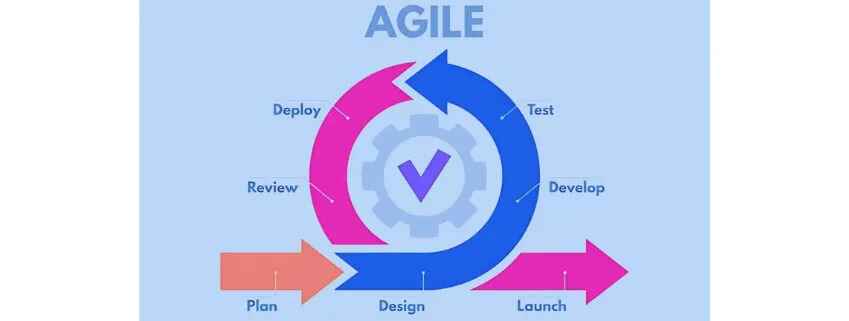
In the fast-changing world of software development and project management, you may often hear the word Agile. But what exactly does it mean? Why are companies around the globe adopting Agile practices, and how does it really impact teams, projects, and even career growth?
In this blog, we’ll break down Agile methodology in a simple, practical, and humanized way. We’ll cover its core principles, benefits, different frameworks, real-life applications, and also answer some frequently asked questions. By the end, you’ll not only understand Agile but also know why it has become such a crucial part of today’s digital work culture.
What Is Agile?
Agile is a project management and software development approach that focuses on flexibility, collaboration, customer feedback, and continuous improvement. Unlike traditional methods (like Waterfall), where everything is planned in detail from start to finish, Agile encourages small, iterative steps called sprints or iterations.
In simple terms, Agile is about:
Delivering work in small, manageable chunks.
Gathering feedback early and often.
Adapting to changes quickly.
Putting customer satisfaction at the center.
Think of Agile like cooking: instead of preparing the entire feast before serving, you cook and serve one dish at a time. Guests can taste, give feedback, and you can adjust the next dish accordingly. This way, everyone stays happy and engaged throughout the process.
Why Agile Was Introduced?
Before Agile, most organizations used the Waterfall model. In Waterfall:
1. You gather requirements.
2. You design.
3. You develop.
4. You test.
5. You deliver.
This sounds structured, but here’s the problem:
Customers often had to wait months (or even years) before seeing the final product.
If requirements changed mid-way, adapting was costly and difficult.
Projects often failed because what was delivered didn’t match what the customer really wanted.
Agile came as a solution to these problems by focusing on early delivery, adaptability, and collaboration.
The Agile Manifesto
Agile officially started with the Agile Manifesto (2001), created by 17 software experts. They emphasized four key values:
1. Individuals and interactions over processes and tools.
2. Working software over comprehensive documentation.
3. Customer collaboration over contract negotiation.
4. Responding to change over following a plan.
And from these values, 12 Agile principles were defined, such as delivering early, welcoming changes, and ensuring sustainable development.
Key Characteristics of Agile
Here are the main features that define Agile:
Iterative Development: Work is done in short cycles (sprints).
Flexibility: Easy to adapt to new requirements.
Collaboration: Strong teamwork between developers, testers, and clients.
Customer Feedback: Regular reviews ensure alignment with client needs.
Transparency: Daily stand-ups and progress boards make everything visible.
Popular Agile Frameworks
Agile is not just one process it’s a mindset. Several frameworks implement Agile principles in different ways. Let’s look at the most popular ones:
1. Scrum
Divides work into sprints (usually 2–4 weeks).
Roles: Product Owner, Scrum Master, Development Team.
6. Better Team Collaboration – Strong communication across roles.
Agile vs Waterfall: A Quick Comparison
Feature
Agile
Waterfall
Approach
Iterative & flexible
Sequential & rigid
Delivery
Small increments regularly
Final delivery at end
Adaptability
Easy to adapt to changes
Hard and costly to adapt
Customer Involvement
Continuous
Only at beginning & end
Testing
Done throughout development
Done after coding is complete
Real-Life Applications of Agile
Agile isn’t limited to IT—it’s used in many industries today:
Software Development – Building apps, websites, tools.
Marketing – Agile marketing campaigns based on quick feedback.
Education – Iterative teaching methods and e-learning platforms.
Healthcare – Agile processes in patient management and software systems.
Startups – Rapid prototyping and testing product-market fit.
Challenges of Agile
Agile is powerful, but it’s not perfect. Some challenges include:
Requires experienced teams to manage iterations.
Needs continuous customer involvement.
Scaling Agile across large organizations can be tricky.
Without discipline, Agile projects may lose direction.
Career Opportunities in Agile
Learning Agile can boost your career significantly. Companies worldwide look for professionals skilled in Agile frameworks. Some common roles include:
Scrum Master
Agile Coach
Product Owner
Business Analyst
Project Manager
Even if you’re a developer or tester, understanding Agile practices makes you more valuable in the job market.
FAQs on Agile Methodology
Q1. What is Agile in simple words? Agile is a flexible way of managing projects where work is divided into smaller parts, delivered quickly, and improved based on feedback.
Q2. Is Agile only for software development? No. Agile principles are now used in marketing, education, healthcare, HR, and even construction projects.