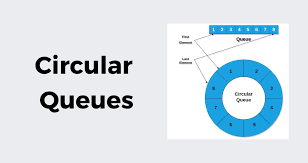
What Is Circular Queue? Explanation and Implementation
Have you ever thought about how your computer handles multiple tasks at the same time without forgetting what needs to be done next? Or how streaming services manage thousands of user requests without failing? The answer often lies in efficient data structures like circular queues. They work behind the scenes to keep everything organized.
What Is Circular Queue? Explanation and Implementation
Mr. Bambam Kumar Yadav/ 3 days ago
15
11 min read
Understanding what a circular queue is and how it functions is crucial for anyone who takes programming and data structures seriously. This concept connects theoretical computer science with real-world applications. It is an important topic in programs like the Uncodemy Data Structure course in Noida, where students learn to use these powerful tools in practical situations.
Understanding the Foundation: What Is Circular Queue?
To understand what a circular queue is, let’s begin with a simple analogy. Picture a round table at a restaurant where diners sit in a circle. When someone finishes their meal and leaves, the next person can take that spot. The table never "fills up" in a straight line because it wraps around; the last seat connects back to the first seat.
A circular queue works on this same idea. Unlike a regular linear queue, where elements are added at one end and removed from the other in a straight line, a circular queue links the last position to the first position, forming a circular layout. This circular setup solves the space-wasting issue that linear queues often encounter.
When you ask what a circular queue is, you are really asking about a more efficient version of the typical queue data structure. It keeps the basic FIFO (First In, First Out) principle while improving memory usage with its circular design.
The Problem with Linear Queues
Before we explore circular queues and their benefits, let's first understand why they are needed. Traditional linear queues have a major flaw: when elements are removed from the front, that space becomes wasted, even if the queue isn’t actually full.
Imagine a parking lot with spaces numbered 1 to 10. Cars enter and park in order, and when they leave, they exit from the front. After several cars have come and gone, you might have cars parked in spaces 6, 7, 8, 9, and 10, while spaces 1 to 5 are empty. A linear queue would see this lot as "full" and won't allow new cars, even though there are clearly empty spaces.
This problem becomes serious in situations where memory is limited or when handling continuous data streams. Students in programs like the Uncodemy Data Structure course in Noida learn to spot these issues and implement better solutions, such as circular queues, to make better use of resources.
How Circular Queues Solve the Problem
When we look at what a circular queue is, its design makes things clear. Instead of seeing the queue as a straight line with a clear start and finish, we think of it as a circle where the last spot connects back to the first.
Using our parking lot example, a circular queue lets new cars park in the empty spaces at the front when the previously occupied spots become free. This design means that when we reach the end of the available space, we loop back to the beginning and keep using the spaces that have opened up.
This setup gets rid of false "queue full" messages that can happen with linear queues. A circular queue is only full when every position is taken, making it much better for memory use. This efficiency is important in embedded systems, operating system scheduling, and buffer management applications.
Key Operations and Implementation
Understanding what is circular queue is involves mastering its core operations. The fundamental operations remain similar to linear queues – enqueue (insertion) and dequeue (removal) – but with the added complexity of managing the circular nature.
Here's a complete implementation in C that demonstrates these concepts:
                    c
                    #include
                    #include

                    #define MAX_SIZE 5

                    typedef struct {
                        int items[MAX_SIZE];
                        int front;
                        int rear;
                        int count;
                    } CircularQueue;

                    void initialize(CircularQueue* queue) {
                        queue->front = 0;
                        queue->rear = -1;
                        queue->count = 0;
                    }

                    int isEmpty(CircularQueue* queue) {
                        return queue->count == 0;
                    }

                    int isFull(CircularQueue* queue) {
                        return queue->count == MAX_SIZE;
                    }

                    void enqueue(CircularQueue* queue, int value) {
                        if (isFull(queue)) {
                            printf("Queue is full! Cannot enqueue %d\n", value);
                            return;
                        }

                        queue->rear = (queue->rear + 1) % MAX_SIZE;
                        queue->items[queue->rear] = value;
                        queue->count++;
                        printf("Enqueued: %d\n", value);
                    }

                    int dequeue(CircularQueue* queue) {
                        if (isEmpty(queue)) {
                            printf("Queue is empty! Cannot dequeue\n");
                            return -1;
                        }

                        int value = queue->items[queue->front];
                        queue->front = (queue->front + 1) % MAX_SIZE;
                        queue->count--;
                        printf("Dequeued: %d\n", value);
                        return value;
                    }

                    void display(CircularQueue* queue) {
                        if (isEmpty(queue)) {
                            printf("Queue is empty\n");
                            return;
                        }

                        printf("Queue contents: ");
                        int index = queue->front;
                        for (int i = 0; i < queue->count; i++) {
                            printf("%d ", queue->items[index]);
                            index = (index + 1) % MAX_SIZE;
                        }
                        printf("\n");
                    }

                    int main() {
                        CircularQueue queue;
                        initialize(&queue);

                        enqueue(&queue, 10);
                        enqueue(&queue, 20);
                        enqueue(&queue, 30);
                        display(&queue);

                        dequeue(&queue);
                        enqueue(&queue, 40);
                        display(&queue);

                        return 0;
                    }
The magic happens in the modulo operation (% MAX_SIZE), which creates the circular behavior. When the rear or front pointer reaches the end of the array, it wraps around to the beginning.
Real-World Applications
When students ask what a circular queue is during their studies, instructors often use real-world examples to show its importance. Circular queues are common in computing, often operating behind the scenes to keep things running smoothly.
Operating systems use circular queues for scheduling processes. When your computer runs multiple programs at the same time, the OS keeps a circular queue of processes waiting for CPU time. Once a process finishes its time slice, it moves to the back of the queue, and the next process gets its turn. This circular structure ensures fair scheduling and efficient use of resources.
Network routers use circular queues to handle data packets. When data travels through the internet, routers use these structures to temporarily store packets while they figure out the best path. The circular design helps prevent packet loss during busy periods by managing buffer space effectively.
Multimedia applications, like video streaming and online gaming, depend on circular queues for buffer management. When you watch a video online, circular queues help manage the incoming data stream, ensuring smooth playback even when network conditions change.
Performance Analysis
Understanding circular queues involves looking at how they perform compared to other data structures. Circular queues have a constant time complexity of O(1) for both enqueue and dequeue operations. This efficiency makes them ideal for applications that need frequent insertions and deletions.
When we examine space usage, we see a major benefit of circular queues. They use the same amount of memory as linear queues but do so more efficiently by avoiding wasted space. This efficiency becomes crucial as the amount of data increases.
Cache performance is another factor that is often missed when exploring circular queues. The circular access pattern can influence cache locality, which may affect performance during high-frequency operations. Recognizing these details aids in making better design choices.
Common Pitfalls and Debugging Tips
Students learning about circular queues often face specific challenges that need attention. One common issue is index management errors, which usually come from incorrect modulo calculations or improper initialization.
Handling boundary conditions requires careful attention in circular queues. The wrap-around behavior creates edge cases that aren’t present in linear structures. Testing with both full and empty queues, along with wrap-around situations, is crucial for strong implementations.
Visual debugging techniques can be very helpful when working with circular queues. Drawing the circular structure and tracking pointer movements can help identify logical errors that might not be obvious from just looking at the code.
Integration with Other Data Structures
Applications often combine circular queues with other data structures to create effective hybrid solutions. Hash tables that use circular queues for collision resolution provide efficient key-value storage with consistent performance.
Tree structures can include circular queues for level-order traversal algorithms. The queue manages nodes at each level, ensuring a systematic exploration of the tree. This combination shows how understanding circular queues helps in mastering complex algorithms.
Graph algorithms frequently use circular queues for breadth-first search implementations. The queue keeps track of unexplored nodes, and the circular design allows for efficient memory use during large graph traversals.
Frequently Asked Questions (FAQs)
What is the main difference between linear and circular queues?
A: The key difference is that circular queues connect the last position back to the first, eliminating space wastage that occurs in linear queues when elements are dequeued from the front.
How do you detect if a circular queue is full?
A: A circular queue is full when the count of elements equals the maximum capacity, or when (rear + 1) % size equals front in implementations without a count variable.
Can circular queues grow dynamically?
A: Standard circular queues have fixed sizes, but dynamic implementations can resize by allocating new memory and copying elements while maintaining the circular property.
What happens when front and rear pointers meet?
A: When front and rear pointers are equal, the queue could be either empty or full, which is why many implementations use a count variable or reserve one empty space to distinguish between these states.
Are circular queues thread-safe?
A: Basic circular queue implementations are not thread-safe. Concurrent access requires additional synchronization mechanisms like mutexes or atomic operations.
Why use the modulo operation in circular queues?
A: The modulo operation ensures that indices wrap around to the beginning when they reach the array size, creating the circular behavior that gives this data structure its name.