Learning about For Loop in Python
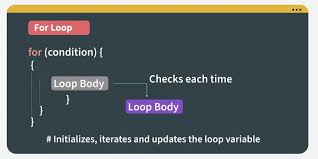
The Python for loop is an iteration that goes through items of an iterable entity, which includes a list, a tuple, a dictionary, a set or a string. This is referred to as iteration where the code in the scope of the loop keeps on executing until the stipulated condition is no longer met. In contrast to other programming languages, in Python there is no need to specify the index, instead, this feature makes the use of for loop more readable and concise compared to other programming languages.
As an example, working with data in Python, the processing of values one by one with the for loop could speed up a certain activity such as cleaning or analysis considerably. At every iteration, one iteration variable automatically comes to be which is used to denote the present item then usable in the code block within the loop.
Simple Form of a For Loop
The simple structure of the for loop in Python is not complex and involves the for keyword, iteration variable, the in keyword and the sequence of the elements to iterate separated by a colon and a block of code in an indented way.
for: This keyword starts the for loop.
variable: This is a loop variable which temporarily stores the current value of the sequence in the course of iteration. You may call this variable whatever descriptive you want.
in- This keyword relates the variable to sequence.
sequence: This is the iterable item-such as a list, tuple, dictionary, set or a string-the loop is going to go through.
The indentation block after the for loop statement is run until the end of the sequence.
Loops Using range Function
The range() function is common with the for loops in the specification of the exact number of times to be traversed or to create a series of numbers. It generates an iterable that returns numbers and its default position starts at 0 by default and continues with an increment value of 1 and stops before the target number.
range(stop): Produces the numbers starting at 0 to (but not including) stop.
Copy Code
python

i = range(5):

print(i)

This loop will display values into 0-4.
range(start, stop): Produces a range of numbers starting with start and continuing up to (but not including) stop.
Copy Code
python

i in the range of 3-8

print(i)

This will bring out 3-7 numbers.
range(start, stop, step): Returns numbers starting with start, and continue up to (but not including) stop with an increment of step.
Copy Code
python

x = range (0, 9, 3):

print(x)
Here this will print 0, 3, 6. Step can also be repeated backward, by the negation of value.
It is necessary to mention that the range() is an inbuilt Python command and not a component of the for loop syntax.
Iteration over Various Data Structures
Python has very powerful for loops that are able to loop thru different types of data structures:
Strings
Strings are iterable meaning that you can run through each character consecutively and one at a time.
Copy Code
for char in "Hello":

    print(char)
Lists
Ordered lists are the lists of items that can be modified. To manipulate or process one-by-one items of a list, for loops are usually employed.
numbers =
for number in numbers:
print(number * ) # Example of manipulating list items
Tuples
Tuples are like lists; they are unchangeable. It is also possible to loop through a tuple with a loop similar to the loop through a list.
Dictionaries
Dictionaries are key-value sets that are not ordered. A dictionary supports looping by either keys or values and both are possible (keys and values).
Sets
Sets constitute lists of distinct objects not sorted in any way. Iterating through a set represents looping through a list, but sets do not have any order.
Nested For Loop
The loop within a loop is called a nested loop. The inner loop is executed in its totality in every cycle of the outer loop. It is especially handy when dealing with multi-dimensional data-structures, such as lists of lists (e.g., matrices).
This will go through, and print each item in the nested lists.
Loop Control Statements
There are a number of statements to manage loop flows that are provided by Python:
break Statement
The break statement helps you to stop the loop early in case some set-condition is met. When a break is met the loop ceases, and after the loop continuation of execution moves to the first statement following the loop.
continue Statement
The continue statement terminates the current execution of the loop and continues to execute the next loop and skips all the code lying after it in the current execution.
pass Statement
The pass statement is a reserved place holder of future code. Without contents in a for loop, passing over pass inhibits the error.
else For Loops Block
An optional else block also exists in Python in the for loop. The code under the block of the else code only runs when the loop runs to the end of the items (i.e., it is not broken into with a break statement).
This will print 0, 1 and 2 and end by printing Done. In case a break statement was called in order to stop the loop, the else block would not run.
Overall Best Practices and Techniques
enumerate() Function
The enumerate() function is quite valuable in case one intends to cycle through a sequence and the associated index.
List Comprehensions
List comprehensions offer a succinct technique to generate lists, usually being readable and efficient on simple transformations or filtering when compared to general purpose iteration using a traditional for loop.
Generators
A special kind of iterable is the generator, which returns items lazily, saving memory, convenience especially with very large datasets.
Best Practices and Errors Handling Functions
In case of the usage of for loops in functions, one must be able to deal with the exceptions without causing a crash. Their best practices would involve planning functions to be single responsibility, doing all unnecessary calculations outside of the loop, and list comprehensions when possible. Type hints and code comments and proper docstrings promo code understandability. The good practice is also to test thoroughly and with cases on the boundaries.
Python learning by Uncodemy
Individuals seeking to enhance their knowledge on Python such as for loops and other basic options can enjoy courses in Python available in Uncodemy. Uncodemy is a learning institution that specializes in teaching Python programming, data science and machine learning.
Uncodemy focuses on practical education because the main goal is real-life projects and case studies and students can create a worthy portfolio. They provide courses on the basic tools and technologies and their study would allow students to possess the latest abilities and skills required by employers. The courses will be flexible; alternatively, there are offline and online options.
The major characteristics of the Python classes by Uncodemy are:
Broad Curriculum: Includes the services of Python Conditional Statement, Loops, File Handling, Data Types, Functions, Numpy, Pandas, and Matplotlib, and Object Oriented Programming (OOP).
Practical experience: A practical experience component is a fundamental element, which uses real world projects.
Adaptable Learning: Learners have an option of offline studies like classes and online studies at home.
Placement Assistance: Uncodemy is job placement oriented as the students get to find the right job opportunities once the course is completed. Then through different companies they assist in this transition.
Quality Trainers:Trainers are quality professionals in the best companies.
Multi-Series: Courses are available in many cities such as Noida, Delhi, Mohali, Gurgaon and many more and quality education is available everywhere.
Both theoretical knowledge about coding and practical skills in the field can be achieved through joining Python courses offered at Uncodemy, a good direction on a successful career in the world of technology.