Grab a beverage of your choice, because we’re going to unpack machine learning in a friendly, straightforward way no PhDs required.
Chapter 1: So, What Is Machine Learning, Really?
At its simplest, machine learning is a type of artificial intelligence (AI) that gives computers the ability to learn from data and improve from experience without being explicitly programmed for every single task.
Still sound too techie? Here’s a real-world analogy:
Imagine you’re teaching a child to recognize cats. You show them hundreds of pictures. Each time, you say, “This is a cat” or “This is not a cat.” Eventually, they start recognizing cats on their own. That’s machine learning in action—but instead of a child, it’s an algorithm, and instead of you, it’s a dataset.
Chapter 2: The Origins and Rise of Machine Learning
Machine learning isn’t a brand-new buzzword. The concept has been around since the 1950s. The term was coined by Arthur Samuel in 1959 while working at IBM. Back then, he created a program that learned to play checkers better than him over time.
Fast forward to today, and ML is everywhere. With better algorithms, more powerful computers, and tons of data at our fingertips, machine learning has evolved from academic theory to real-world necessity. Think self-driving cars, fraud detection, language translation—all powered by ML.
Chapter 3: How Does Machine Learning Work?
Let’s simplify. At its core, machine learning follows this basic loop:
1. Input data: Tons of data are fed into the system.
2. Pattern recognition: The algorithm tries to spot patterns in that data.
3. Prediction: Based on those patterns, it makes predictions or decisions.
4. Feedback loop: If the prediction is wrong, the algorithm tweaks itself. If it’s right, it reinforces that behavior.
Think of it like learning to ride a bike:
- Data: You fall a few times (failures).
- Pattern recognition: You learn what not to do (like turning too sharply).
- Feedback: You adjust your balance next time.
-
Just like a person learning through trial and error, ML models improve as they see more examples.
Chapter 4: Types of Machine Learning (No Math, Promise!)
Machine learning isn’t one-size-fits-all. There are a few different types, each with its own style of learning:
1. Supervised Learning
You train the model using labeled data. Think of it as giving a student an answer key.
- Example: Email spam detection. You give the system a bunch of emails labeled as "spam" or "not spam," and it learns what to look for.
2. Unsupervised Learning
The model finds patterns on its own without labeled data. It’s more like giving a student a puzzle with no instructions.
- Example: Market segmentation. It might group your customers based on purchasing behavior without you telling it what to look for.
3. Reinforcement Learning
This is like teaching a dog with treats. The algorithm learns through rewards and punishments.
- Example: Video game AI that improves as it plays more games, learning to win over time.
Chapter 5: Common Use Cases in Everyday Life
1. Streaming Recommendations
Ever wonder how Netflix knows what to suggest next? ML looks at what you watch, what others like you watch, and finds patterns to recommend your next binge.
2. Voice Assistants
Siri, Alexa, and Google Assistant use machine learning to understand what you’re saying and respond accurately (or at least try to).
3. Spam Filters
Remember when spam used to flood your inbox? Machine learning filters out junk mail based on patterns it’s learned from millions of emails.
4. Finance
Banks use ML to detect fraud. If a purchase doesn’t match your usual spending habits, ML may flag it.
5. Healthcare
ML helps doctors diagnose diseases from medical scans and predict patient outcomes more accurately.
6. Self-Driving Cars
These cars use ML to understand road signs, avoid pedestrians, and make real-time decisions.
Chapter 6: Why Does It Matter?
Machine learning is reshaping industries. Here’s why it’s not just a tech trend, but a business and life transformer:
- Efficiency: Automates repetitive tasks.
- Accuracy: Improves decisions with data-driven insights.
- Scalability: Handles massive amounts of data no human could process alone.
- Personalization: Offers better customer experiences (think Spotify playlists or personalized ads).
Chapter 7: But Is It All Sunshine and Rainbows?
Let’s be real—machine learning isn’t flawless.
1. Bias in Data
If the training data is biased, the outcomes will be too. That’s how you end up with facial recognition software that doesn’t work well for all skin tones.
2. Privacy Concerns
ML often needs lots of personal data. That raises questions about how data is collected, stored, and used.
3. Black Box Problem
Some models are so complex even their creators can’t fully explain how they make decisions.
4. Job Displacement
Automation powered by ML can replace some jobs, especially those involving repetitive tasks.
But don’t worry—it’s also creating new kinds of jobs (more on that soon).
Chapter 8: Who Uses Machine Learning?
It’s not just tech giants.
- Startups use ML for personalization and efficiency.
- Retailers predict customer behavior.
- Healthcare providers diagnose faster.
- Finance companies forecast markets.
- Governments analyze infrastructure and manage public safety.
-
Basically, anyone with data can benefit from ML.
Chapter 9: Getting Started with Machine Learning (Even If You’re Not a Coder)
Interested in dipping your toes in ML? Good news: You don’t have to be a computer scientist.
Tools to Explore:
- Google Teachable Machine (great for beginners)
- Kaggle (for hands-on projects and datasets)
- Microsoft Azure ML Studio
- IBM Watson Studio
Beginner Courses:
All you need is curiosity, a laptop, and a willingness to learn.
Chapter 10: The Future of Machine Learning
What’s next?
- Explainable AI: Making ML decisions more transparent
- Federated Learning: Training algorithms across decentralized devices (hello, privacy!)
- Quantum Machine Learning: Sounds sci-fi, but it’s already in motion
- Better ethics in AI: Ensuring ML is fair, inclusive, and beneficial for all
-
Machine learning is evolving faster than ever, and we’re just scratching the surface.
Final Thoughts: Demystifying the Hype
Machine learning isn’t magic. It’s pattern recognition, scaled up. It’s not about replacing humans, but enhancing what we can do. As it becomes more integrated into our lives, understanding the basics isn’t just for techies—it’s for everyone. In fact, more people are getting curious enough to explore things like an Artificial Intelligence course in Noida or other beginner-friendly programs to understand how these technologies actually work behind the scenes.
So next time someone brings up ML at a dinner party, you can lean back, smile, and say, "Oh yeah, I know what that is. It’s like teaching a dog new tricks—but with data." And who knows? That curiosity might even lead you to dive deeper into AI and machine learning yourself."
FAQs About Machine Learning
Q1: Is machine learning the same as AI?
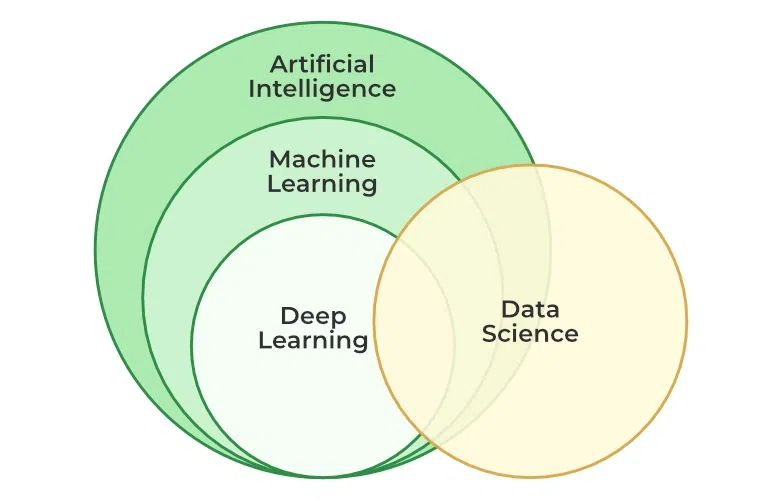
Not exactly. ML is a subset of AI. AI is the broader concept; ML is one way to achieve it.
Q2: Do I need to code to learn ML?
Basic programming knowledge helps, but you can start with tools that require little to no coding.
Q3: Can ML make mistakes?
Absolutely. ML is only as good as the data it’s trained on. Garbage in = garbage out.
Q4: Is machine learning dangerous?
It depends how it’s used. Ethical, responsible use is key. Transparency, fairness, and privacy matter a lot.
Q5: How can I start a career in machine learning?
Start by learning the basics, then move to coding, real-world projects, and specialized courses. Try Uncodemy’s Machine Learning Course in Noida for a practical, job-ready approach.