What Is MVC Architecture in Full Stack Projects?
Mr. Bambam Yadav / 1 week - 0
- 9 min read
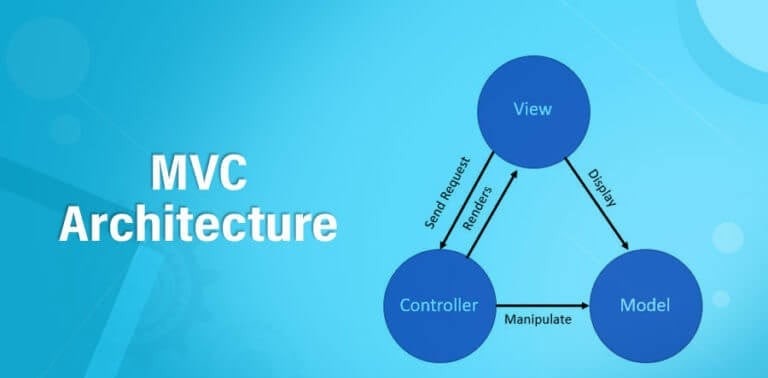
First, what is MVC… really?
MVC stands for Model-View-Controller. But forget the textbook definitions for a second. Think of it like splitting your app into three separate teams that don’t get in each other’s way.
- Model:These folks manage the data. Think of them like your app’s librarians. They know where everything is, how it’s structured, and they keep things consistent.
- View: This is what your user sees. The UI, the buttons, the pages. These are your app’s decorators—they don’t care how the data got there, they just make sure it looks good.
- Controller:This crew handles requests and responses. Like bouncers at a club, they decide who gets in, who gets data, and what happens when users click or type something.
Each has its role. No one steps on anyone else’s toes. That’s the idea.
Why this matters in real life
If you’re just slapping together a portfolio page, MVC probably feels like overkill. But start building something real say, a blog with user accounts, permissions, likes, comments—and you’ll hit a wall if everything lives in one giant file.
And let’s be honest: most self-taught devs or bootcamp grads start out writing code like that. It works. Until it doesn't. Until you add a new feature and something unrelated breaks. Or you onboard someone new and can’t even explain where the logic lives.
That’s when you realize structure matters. And MVC isn’t a fancy acronym—it’s a lifeline.
How it plays out in a full-stack project
Let’s say you’re building a basic blog platform. You’ve got users who write posts and leave comments. Sounds easy, right?
Here’s how you’d break that down with MVC:
Models:
These aren’t just database tables. They also know their own rules. A Post might need a title and body. A Comment must be linked to a User and a Post. This is where your validation, relationships, and data logic live.
Views:
- Homepage
- Single post page
- User profile
- Comment form
This is what your front-end team (or your front-end brain) works with. Whether you’re using React, Angular, or server-rendered templates—this layer just wants data so it can show it.
Controllers:
- GET /posts
- POST /comments
- DELETE /posts/:id
These are your API endpoints or route handlers. They take requests from the user (like submitting a comment), talk to the model to do the work (like saving it to the database), and then tell the view what to show.
Clean. Predictable. Scalable.
Okay but how do you actually learn this?
That’s where Uncodemy’s full stack development courses make a real difference. Instead of just showing you a bunch of code and asking you to follow along like a robot, they push you to build stuff from scratch. And when you build things from scratch, structure becomes your best friend.
Let’s say you’re working on a task manager in one of their Node + React tracks. Here’s what happens:
- You define a Task model that stores title, due date, and completion status.
- You set up a route POST /tasks that uses a controller function to validate input and store it using the model.
- Then your React front end fetches the tasks and renders them with a component like TaskList.
And Uncodemy makes you do this in pieces. First the data, then the logic, then the UI. That forces you to think in MVC terms without calling it out all the time.
Why MVC feels like extra work at first—but saves your butt later
Let’s be honest: at the start, MVC feels like overhead. Why split things into three files when you could write it all in one?
Here’s why:
- You’ll change things. A lot.
- You’ll forget what you wrote. Even more.
- If you're on a team, others will try to make sense of your code.
MVC keeps things organized. When your app grows from 3 files to 300, the structure keeps you sane.
And when you’re learning from a course like Uncodemy’s, you’ll actually feel this shift happen. That moment when you realize:
“Oh wait—I don’t need to touch the model to fix this layout bug. I just need to adjust the view.”
That clarity? That’s MVC doing its job.
Real-life MVC in action: Uncodemy project example
One project that hits hard is their e-commerce backend.
- You build Product, User, Order models that define everything from price to inventory count.
- You create API routes like POST /cart and GET /products/:id using controller functions.
- The frontend (React, Angular, or plain HTML) fetches this data and updates the UI.
You’re not just building features. You’re learning how real apps get built.
What happens if you skip MVC?
Chaos. Straight up.
You write some logic in your front-end component, then again in your route handler. You forget where that one validation rule is. You duplicate code and don’t even realize until something breaks.
Soon you’re too scared to touch anything. Or worse—you rewrite everything.
MVC isn’t perfect, but it stops your code from becoming a dumpster fire.
MVC Pitfalls Most Beginners Make
- Overloading Controllers: Many developers start treating controllers like dumping grounds for all logic. Don’t do this. Your controller should orchestrate, not do the heavy lifting. Business logic belongs in the model.
- Ignoring Views: It’s tempting to just throw raw data into the view layer. But a sloppy UI reflects a sloppy structure. Your view’s job is to present information cleanly, not do data manipulation.
- Forgetting Separation of Concerns:This is the golden rule. If your controller is accessing the database directly, or your view is modifying data, something’s gone sideways.
MVC in Frontend-Heavy Projects
Things get interesting when you introduce frameworks like React, Vue, or Angular. They blur the lines a bit:
- React typically handles the view. But when combined with Redux or Context API, you start introducing parts of the Model and Controller.
- APIsact as the Controller. Your backend is now fully decoupled.
- Backend Models stay the same—handling validation, business rules, and database interaction.
The core idea of MVC is still alive—it just gets stretched across client and server. You still split responsibilities. You still avoid mixing data logic with UI code.
Testing Gets Easier with MVC
Here’s where things click for a lot of developers.
Because MVC separates concerns:
- You can unit test models without needing the view or controller.
- You can write integration tests for controllers.
- You can use snapshot or UI testing tools for views.
And if something fails, you know exactly where to look. You don’t have to dig through 500 lines of spaghetti code.
How Senior Devs Think About MVC
Veteran developers use MVC, but they also know when to bend it. For example:
- They might create service layers to offload business logic from controllers.
- They sometimes group files by feature instead of layer (feature folders).
- They write reusable components that follow MVC internally.
The point isn’t to follow MVC like a religion. It’s to understand the principles so you can adapt them to different architectures.
MVC in Uncodemy Capstone Projects
Here’s where things get practical.
Uncodemy’s capstone projects are not simple to-do apps. You’ll build things like:
- Real-time chat apps
- Inventory management systems
- Full-blown e-commerce platforms
And every time, the structure follows MVC—even when they don’t spell it out.
You’ll define data models (MongoDB, SQL, or even Firebase), build APIs using Express or Django, and write clean UI components in React or Angular. The separation becomes second nature.
Final Words
MVC isn’t sexy. It’s not some new hot trend. But it’s the backbone of every large-scale application that doesn’t fall apart under pressure.
If you’re learning full stack dev and you’re serious about building real, production-grade apps—understand MVC. Use it. Stretch it. Break it. Learn from it.
And if you want to build projects that actually prepare you for real dev work, Uncodemy’s courses are the ones worth your time. You won’t just memorize MVC—you’ll live it.
That’s where growth happens.