What Is Storage Class in C?
-
Mr. Bambam Kumar Yadav/ 3 days ago
- 15
- 11 min read
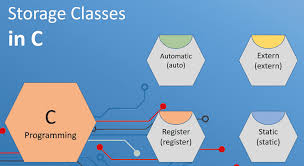
Storage classes in C might seem abstract at first, but they are practical and
logical once you grasp their purpose. Think of them as different types of parking spots for your
variables. Some are temporary spaces that disappear when you leave, others are permanent spaces
that last throughout your program's run, and some are shared spaces that multiple parts of your
program can access. Each storage class has its own set of rules about where variables can be
used, how long they exist, and what their default values are.
The Foundation: Understanding What Is Storage Class in C
When you ask what is storage class in C, you're essentially asking about the
fundamental mechanism that controls three critical aspects of every variable in your program:
its storage duration (how long it exists), its linkage (where it can be accessed from), and its
scope (where in your code it's visible). These three properties work together to determine
exactly how each variable behaves throughout your program's execution.
Storage duration refers to the period during which a variable occupies memory.
Some variables exist only while a particular function is executing, while others persist for the
entire duration of your program. Linkage determines whether a variable can be accessed from
other source files or is restricted to the current file. Scope defines the region of your
program where a variable name is valid and can be used.
The beauty of C's storage class system lies in its flexibility and control.
Unlike some programming languages that make these decisions for you, C gives you explicit
control over how your variables are stored and accessed. This control comes with responsibility
– you need to understand what each storage class does and choose the right one for each
situation.
Students in Uncodemy's C programming course in Noida often discover that
mastering storage classes is like gaining a superpower in C programming. Suddenly, mysterious
behaviors make sense, program organization becomes clearer, and debugging becomes much more
straightforward. The investment in understanding what is storage class in C pays dividends
throughout your entire programming journey.
The Four Storage Classes: A Comprehensive Overview
C has four distinct storage classes, each serving specific purposes and
situations. These are auto, register, static, and extern. Understanding these differences is
important for effective C programming. Each storage class uses a different method for managing
variable storage and accessibility.
The auto storage class is the default behavior for local variables. When you
declare a variable inside a function without any storage class specifier, it becomes an auto
variable. These variables exist only while their enclosing function is running, and they are
stored in the program's stack memory. Auto variables do not have guaranteed initial values; they
contain whatever random data happens to be in memory unless you explicitly initialize them.
Register variables suggest to the compiler that a particular variable should be
stored in a CPU register for faster access. However, this is just a suggestion. The compiler may
ignore it if registers are not available or if it decides that using a register would not
improve performance. Register variables share most characteristics with auto variables, but
cannot have their address taken with the & operator.
Static variables come in two types: local static and global static. Local static
variables keep their values between function calls, making them useful when you need a variable
to remember its state. Global static variables are only visible within the current source file,
allowing for the creation of file-private global variables. All static variables are
automatically initialized to zero if you do not provide an explicit initial value.
External variables allow you to share variables across multiple source files.
When you declare a variable as extern, you are telling the compiler that the variable is defined
elsewhere, either in another source file or later in the current file. This mechanism supports
modular programming and is important for building larger applications from multiple source
files.
Practical Applications and Real-World Usage
Understanding what a storage class is in C becomes much clearer when you see
these concepts in real programming scenarios. Each storage class addresses specific problems and
allows for particular programming patterns commonly used in software development.
Consider a function that counts how many times it has been called. Using an auto
variable resets the counter to zero each time the function runs, which isn't helpful. A global
variable could work, but it might be accessible from other parts of the program where
modifications shouldn't happen. A local static variable offers the perfect solution; it keeps
its value between calls while remaining hidden from the rest of the program.
Register variables excel in performance-critical loops where a variable is
accessed frequently. While modern compilers are great at optimizing and often ignore register
hints, knowing about this storage class helps you think about performance in your code. This is
especially relevant in embedded or systems programming, where every CPU cycle counts.
File-scope static variables are vital for creating modules with internal states.
Imagine implementing a random number generator where you need to keep seed values that should be
accessible to all functions in the module but hidden from other parts of the program. Static
variables at file scope offer exactly this feature.
External variables are essential when building multi-file programs. Configuration
settings, shared data structures, and global state information often need to be accessed across
multiple source files. The external storage class provides a clear and organized way to share
this information while keeping module boundaries distinct.
Students in Uncodemy's C programming course in Noida work through numerous
practical exercises that demonstrate these usage patterns. This helps them develop an intuition
for choosing the right storage class in different situations.
Memory Management and Storage Classes
The connection between storage classes and memory management is crucial for
understanding storage class in C. Different storage classes use different parts of memory, which
significantly affects program performance, memory use, and possible bugs.
Auto and register variables usually use stack memory, which the program manages
automatically. When a function starts, the stack allocates space for its local variables. When
the function finishes, this space is reclaimed automatically. This management is convenient, but
it has limits. Stack space is often limited, and variables can't last beyond the function's
execution.
Static variables, whether local or global, use another part of memory known as
the data segment or BSS segment. This memory is allocated when the program starts and stays
allocated for the entire lifetime of the program. Static variables with initial values are
stored in the initialized data segment, while those without explicit initialization, or
initialized to zero, are in the BSS segment, which is set to zero automatically.
Extern variables don't directly define memory allocation. They are declarations
that point to variables defined elsewhere. The actual memory allocation relies on where the
variable is defined, but typically extern variables refer to static or global variables that use
the data segment.
Understanding these differences in memory layout helps explain many behaviors in
C programming. It clarifies why local variables contain garbage values unless they are
initialized, why static variables are set to zero automatically, and why you can't return
pointers to local variables from functions. These topics are thoroughly covered in Uncodemy's C
programming course in Noida, where students learn both the theoretical foundations and practical
effects of memory management.
Scope and Linkage: The Visibility Rules
The concepts of scope and linkage work closely with storage classes to determine
where variables can be accessed in your program. Understanding these rules is essential for
writing correct C programs and for avoiding subtle bugs that can be hard to find.
Scope refers to the area of your program where a variable name is valid. Block
scope applies to variables declared within braces. They are visible from the point of
declaration until the closing brace. Function scope applies to labels used with goto statements,
and it makes them visible throughout the entire function. File scope applies to variables
declared outside any function, making them visible from the point of declaration to the end of
the source file.
Linkage decides whether the same variable name in different scopes refers to the
same object. Internal linkage means the variable is visible only within the current translation
unit, or source file. External linkage means the variable can be accessed from other source
files. No linkage means each declaration creates a separate, independent variable.
The interaction between storage classes and linkage creates effective programming
patterns. Static variables at file scope have internal linkage, which creates global variables
that are private to the module. Extern variables have external linkage by default, allowing
sharing across files. Local static variables have no linkage, so each function gets its own copy
even if multiple functions use the same variable name.
These rules may seem complex at first, but they follow logical patterns that
become intuitive with practice. Students learning about storage classes in C through structured
programs like Uncodemy's C programming course in Noida benefit from guided exercises that show
these concepts in action, making the abstract rules clear and understandable.
Conclusion: Mastering Storage Classes for Better C Programming
Understanding storage classes in C is a key step in becoming a skilled C
programmer. These concepts determine how variables function, where you can access them, and how
long they last. This knowledge is essential for writing correct and efficient C programs.
The process of moving from grasping basic variable declarations to mastering the
intricate relationships between storage classes, scope, and linkage requires patience and
practice. However, this effort pays off significantly by enabling you to write clean,
maintainable, and accurate C code. Whether you are creating small programs or large, multi-file
applications, storage classes help you organize your data effectively.
Even as development tools and practices have advanced, modern C programming still
relies on these traditional concepts. The principles of storage classes are just as relevant
today as they were when C was first created, showcasing the language’s thoughtful design and
lasting usefulness.
For students enrolled in formal education programs like Uncodemy's C programming
course in Noida, mastering storage classes paves the way for more advanced topics like dynamic
memory allocation, multi-file program organization, and systems programming. A strong
understanding of storage classes lays a solid foundation for continued learning throughout your
programming career.
Keep in mind that storage classes are not just theoretical concepts; they are
practical tools that address real programming challenges. The time you spend understanding these
concepts will benefit you in every C program you write, from simple utilities to complex system
software.
Frequently Asked Questions (FAQs)
Q: What happens if I don't specify a storage class?
A: Local variables default to auto storage class, while global variables default
to extern (external linkage) unless explicitly made static.
Q: Can I change a variable's storage class after declaring it?
A: No, storage class is determined at declaration time and cannot be changed. You
would need to declare a new variable with the desired storage class.
Q: Why do static variables initialize to zero automatically?
A: Static variables are stored in memory segments that are automatically zeroed
by the operating system when the program loads, unlike stack memory used for auto variables.
Q: Is the register storage class still useful in modern C?
A: Modern compilers typically ignore register hints and perform better
optimization automatically, but understanding register storage class helps with reading legacy
code.
Q: How do storage classes affect multi-threaded programs?
A: Static and global variables are shared between threads, while auto variables
are thread-specific. Thread-local storage provides per-thread static variables in C11 and later.












