🌀 What Is Tail Recursion? Pros and Use Cases Explained
If you're diving into programming, especially functional or recursive approaches, you might have stumbled upon the term "tail recursion." It's a concept that comes up often in computer science interviews, programming courses, and when optimizing algorithms.
Before we jump into tail recursion, here’s a quick recap of recursion:
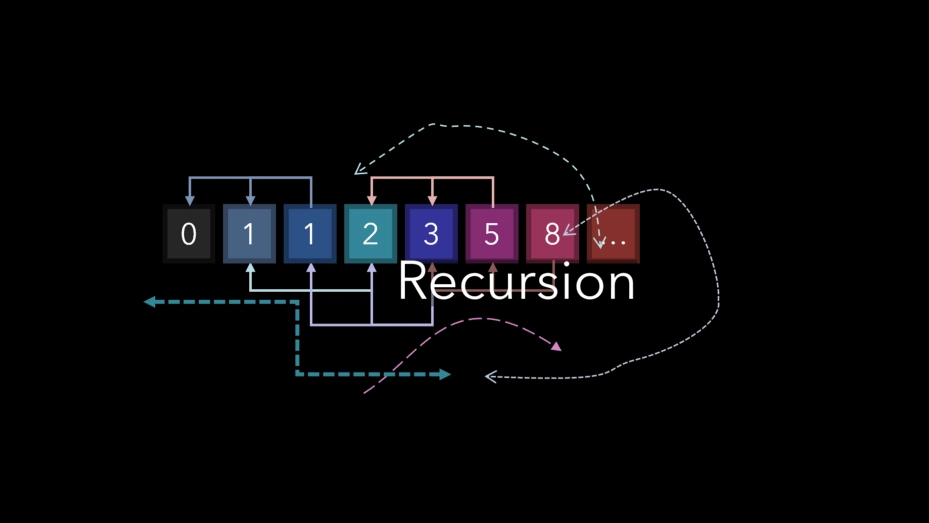
Recursion is a technique where a function calls itself to solve smaller subproblems of the original task.
For example, the factorial of a number n is calculated as: factorial(n) = n * factorial(n - 1)
🔁 What Is Tail Recursion?
Tail recursion is a special form of recursion where the recursive call is the last operation in the function.
This means:
1. The result of the recursive call is directly returned.
2. There is nothing left to execute after the call returns.
✅ Tail Recursion Example in Python
python
CopyEdit
Copy Code
def tail_factorial(n, accumulator=1):

    if n == 0:

        return accumulator

    return tail_factorial(n - 1, accumulator * n)
Here:
The recursive call tail_factorial(n - 1, accumulator * n) is the last statement.
It returns the result of the recursive function directly, making it a tail recursive function.
Compare this with a non-tail recursive version:
python
CopyEdit
Copy Code
def factorial(n):

    if n == 0:

        return 1

    return n * factorial(n - 1)
In this version, the recursive result is used after the call returns, which means extra work is pending.
📊 Tail Recursion vs Regular Recursion
Feature
Regular Recursion
Tail Recursion
Recursive Call Position
Not necessarily last
Always last
Stack Frame Usage
Creates new frame per call
Can reuse the same frame
Optimization
Harder to optimize
Easier for compiler to optimize
Risk of Stack Overflow
Higher for deep recursion
Lower (in tail-call optimized langs)
💡 Why Is Tail Recursion Useful?
🧵 1. Memory Efficiency
Tail recursive functions can be optimized by compilers to avoid adding a new stack frame for each call. This is called Tail Call Optimization (TCO).
In tail-call optimization, the current function frame is replaced rather than creating a new one.
This saves memory and avoids stack overflow errors.
⚡ 2. Performance Boost
Since the function doesn't need to keep track of intermediate states, it performs better in languages that support TCO.
🧩 3. Cleaner Code in Functional Programming
Functional languages like Haskell, Scheme, and Scala rely heavily on tail recursion for iteration.
🔎 Real-World Use Cases of Tail Recursion
📌 1. Factorial Calculation
A textbook example, as we saw above. Tail recursion avoids stack overflow with large numbers.
📌 2. Fibonacci Series
You can use tail recursion to efficiently compute Fibonacci numbers by passing previous values as arguments.
python
CopyEdit
Copy Code
def tail_fibonacci(n, a=0, b=1):

    if n == 0:

        return a

    return tail_fibonacci(n - 1, b, a + b)
📌 3. Sum of Elements in List
python
CopyEdit
def tail_sum(lst, accumulator=0):
if not lst:
return accumulator
return tail_sum(lst[1:], accumulator + lst[0])
📌 4. Tree Traversals (in Functional Languages)
Functional tree traversal can be implemented using tail recursion for better performance.
💬 Tail Recursion in Different Languages
✅ Python
1. Python does not support tail call optimization.
2. Tail recursion is still useful for code clarity, but deep recursion can still cause a stack overflow.
Use loops or convert to iterative version for very deep recursions.
✅ C++
Most C++ compilers support tail call optimization, but it depends on optimization flags and the compiler itself.
Example:
cpp
CopyEdit
Copy Code
int tail_factorial(int n, int accumulator = 1) {

    if (n == 0) return accumulator;

    return tail_factorial(n - 1, accumulator * n);

}
Use the -O2 or -O3 optimization flags to encourage tail call optimization with compilers like GCC or Clang.
✅ Functional Languages
Languages like:
1. Haskell
2. Scheme
3. Elixir
4. Scala
…rely heavily on tail recursion, and their compilers/interpreters optimize it by default.
❗ When Not to Use Tail Recursion
While tail recursion is powerful, it’s not always the best choice.
Avoid it when:
1. The language you're using doesn't support tail call optimization and performance is critical.
2. You can achieve the same logic more clearly and efficiently using loops.
3. You're dealing with shallow recursion and don't need optimization.
🔧 Tail Recursion vs Iteration
Aspect
Tail Recursion
Iteration
Concept
Function calls itself
Uses loops (for, while)
Optimization Needed
TCO required for performance
Native language feature
Syntax
Recursion with arguments
Loop with break/continue
Stack Usage
Varies by language
Constant memory
In languages without TCO (like Python), iteration is usually better for memory performance.
👩💻 Best Practices for Using Tail Recursion
1. Use accumulator arguments to carry computation forward.
2. Ensure the recursive call is the final operation.
3. Test with small inputs before scaling.
4. Understand your language’s compiler or interpreter behavior on tail recursion.
🎓 Learn Tail Recursion and More with Uncodemy
Tail recursion is just one part of writing optimized and efficient programs. If you're serious about learning DSA, Python, C++, and full stack development, check out theUncodemy Programming Courses.
🔍 Uncodemy Offers:
✅ Live instructor-led sessions ✅ Real-world coding projects ✅ Interview prep with recursion and DSA ✅ Certification & placement assistance ✅ Courses on Python, C++, Java, Full Stack Development, and more!
📝 Conclusion
Tail recursion is a powerful technique, especially in functional and algorithmic programming. It lets you write cleaner, more memory-efficient recursive functions—if your language supports it well.
Here’s what you should remember:
1. Tail recursion has the recursive call as the last action
2. It’s memory-efficient and helps prevent stack overflows
3. It’s great for functional languages and clean algorithm design
4. Use it wisely based on your language’s optimization capabilities