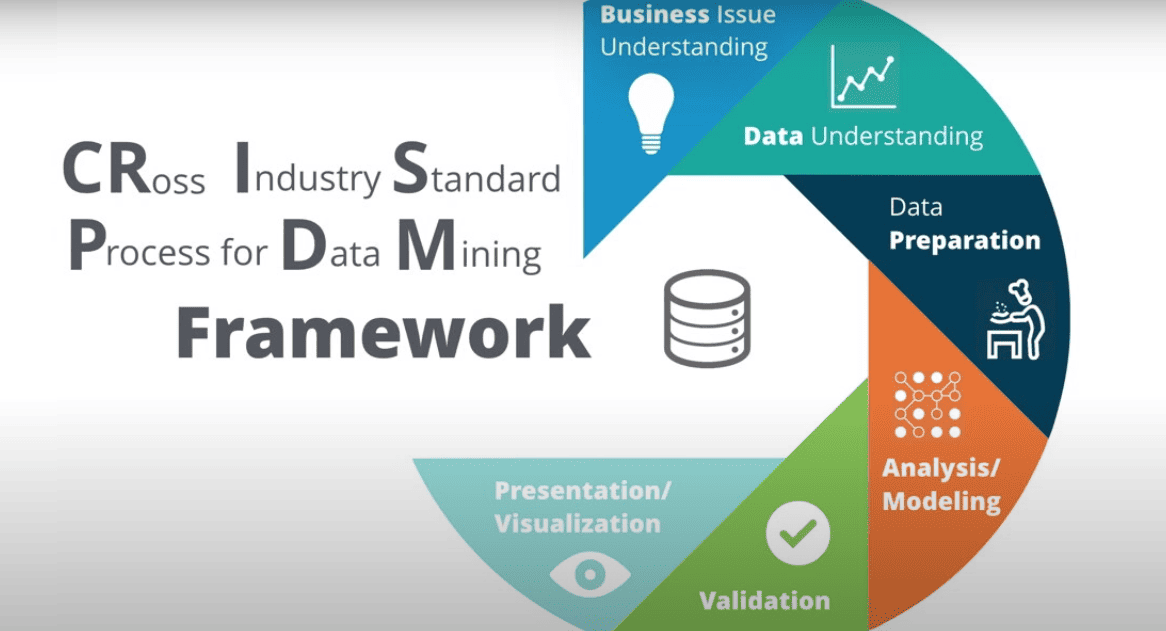
CRISP-DM, which stands for Cross-Industry Standard Process for Data Mining, is one of the most popular frameworks in data analytics and data science. It offers a structured, repeatable, and scalable way to tackle data projects, helping organizations transform raw data into meaningful insights in a systematic way.
In this blog, we’re going to dive deep into what CRISP-DM is all about, explore its six phases, discuss its benefits and applications, and understand why it continues to be the gold standard in today’s data projects.
If you’re looking to build a career in data science and analytics, getting a grip on CRISP-DM is absolutely essential. For hands-on experience and real-world applications of CRISP-DM and other data science methodologies, check out the [Data Science Course in Noida (uncodemy.com)], tailored for aspiring professionals eager to shine in this field.
What is CRISP-DM?
CRISP-DM, or the Cross-Industry Standard Process for Data Mining, is a process model that lays out a systematic approach for planning and executing data mining and data science projects. It was first introduced back in 1996 by a group of companies, including Daimler AG, NCR Corporation, and SPSS (now part of IBM).
The main aim of CRISP-DM is to standardize how organizations manage data projects. By providing a structured framework, it helps teams tackle data projects in a methodical way, minimizing risks and boosting the likelihood of success.
Why is CRISP-DM Important in Data Projects?
Data projects can be quite complex. From grasping business goals to tidying up messy data and rolling out solutions, every step comes with its own set of challenges. That’s where CRISP-DM steps in to help tackle these hurdles by:
- Offering a clear roadmap for data teams.
- Fostering collaboration between business and technical teams.
- Minimizing the risks of misunderstandings or project failures.
- Providing the flexibility to adapt to various industries and business needs.
By sticking to this framework, organizations can streamline their workflows and achieve results that are not only meaningful but also in line with their business objectives.
Phases of the CRISP-DM Process in Data Projects
The CRISP-DM framework is made up of six iterative phases, each one essential for the success of a data project. Let’s dive into them:
1. Business Understanding
Every data project kicks off with a solid grasp of the business objectives. In this phase, stakeholders and data professionals come together to outline the project’s goals, success criteria, and any potential risks.
Key activities include:
- Pinpointing the business problem that needs solving.
- Establishing success metrics (like boosting sales or cutting down churn).
- Evaluating resources, constraints, and timelines.
Without a strong business understanding, even the most advanced models might not provide any real value.
2. Data Understanding
Once the objectives are set, the next step is to dig into the data. This phase is all about collecting, describing, and analyzing data to spot any quality issues and patterns.
Activities in this phase involve:
- Gathering initial datasets.
- Conducting exploratory data analysis (EDA).
- Identifying outliers, missing values, or anomalies.
For instance, if the project’s goal is to predict customer churn, the team needs to analyze customer demographics, purchase histories, and engagement data.
3. Data Preparation
Data doesn’t usually come in a neat package, ready for action. The data preparation stage is all about cleaning, transforming, and organizing the data so it’s primed for modeling. This step often takes the most time in the CRISP-DM process.
Here’s what it typically involves:
- Dealing with missing values and outliers.
- Crafting and selecting features.
- Merging data from various sources.
- Formatting the data to suit machine learning algorithms.
The quality of your data preparation has a direct effect on how accurate your final model will be.
4. Modeling
During this phase, we apply statistical and machine learning models to the data we’ve prepped. We might test out several algorithms to see which one fits the problem best.
The steps here include:
- Choosing the right modeling techniques (like regression, decision trees, or clustering).
- Training the models with historical data.
- Fine-tuning parameters to boost performance.
By the end of this phase, we’ll have one or more candidate models that we can evaluate based on specific metrics.
5. Evaluation
Before we roll out the models, we need to evaluate them to make sure they align with business objectives and perform reliably.
This involves:
- Checking model accuracy, precision, recall, and other key performance indicators.
- Comparing results with baseline models.
- Ensuring everything aligns with business goals—not just technical accuracy.
For example, a model might show high accuracy, but if it doesn’t help the business cut down on customer churn or enhance profitability, it’s not really doing its job.
6. Deployment
The final step is getting the model into production. How we deploy it can vary based on the project—ranging from a simple report to a full-blown integration with business systems.
Here are some deployment examples:
- Integrating a churn prediction model into a CRM system.
- Automating decision-making in supply chain processes.
- Providing dashboards or reports for stakeholders.
Deployment also means keeping an eye on the model over time to ensure it continues to perform well as business conditions and data change.
The Benefits of Using CRISP-DM in Data Projects
The CRISP-DM framework remains a go-to choice for data projects across various industries, and it’s easy to see why:
- Standardized Approach – It offers a consistent methodology that works across different sectors.
- Flexibility – This framework can be tailored to fit projects of any size or complexity.
- Risk Reduction – By following structured steps, it helps lower the chances of project failure.
- Business Alignment – It ensures that projects stay focused on delivering real business value.
- Iterative Nature – Teams can loop back to earlier phases if they uncover new insights.
Real-World Applications of CRISP-DM
CRISP-DM isn’t confined to just one industry; its applications are vast. Here are some common scenarios:
- Retail: Think customer segmentation, demand forecasting, and recommendation systems.
- Finance: It’s used for fraud detection, credit risk modeling, and portfolio optimization.
- Healthcare: Applications include disease prediction, patient risk stratification, and drug discovery.
- Manufacturing: It aids in predictive maintenance, quality control, and process optimization.
- Telecommunications: Churn prediction, network optimization, and service personalization are key uses.
Its adaptability makes it a top choice for data-driven organizations around the globe.
Challenges in Implementing CRISP-DM
Despite its many advantages, organizations can encounter hurdles when implementing CRISP-DM:
- Data Quality Issues: Bad data can throw a wrench in the works.
- Changing Business Goals: As business objectives shift, adjustments may be necessary.
- Resource Constraints: Limited tools, talent, or budgets can hinder progress.
- Deployment Complexity: Merging models with existing systems can be quite challenging.
Navigating these challenges calls for skilled professionals, thoughtful planning, and strong collaboration.
Why CRISP-DM Still Matters Today
Even though it was created back in the late 1990s, CRISP-DM continues to hold its ground because it meets the essential needs of today’s data projects. In fact, many modern methodologies, such as Agile Data Science, take cues from CRISP-DM.
Its flexibility, emphasis on business results, and iterative design make it a timeless framework in the ever-changing landscape of data science.
Conclusion
The CRISP-DM Process in Data Projects is a tried-and-true framework that turns raw data into actionable insights through a structured, step-by-step approach. By breaking projects down into six manageable phases—Business Understanding, Data Understanding, Data Preparation, Modeling, Evaluation, and Deployment—it ensures that data initiatives stay aligned with business goals and provide tangible value.
For those looking to build a solid career in data science, mastering CRISP-DM is an essential step. If you're eager to gain hands-on experience and work on real-world data projects, enrolling in the [Data Science Course in Noida (uncodemy.com)] could be the perfect way to boost your skills.
FAQs on the CRISP-DM Process in Data Projects
Q1. What does CRISP-DM stand for?
CRISP-DM stands for Cross-Industry Standard Process for Data Mining.
Q2. How many phases are there in the CRISP-DM process?
There are six phases: Business Understanding, Data Understanding, Data Preparation, Modeling, Evaluation, and Deployment.
Q3. Is CRISP-DM still relevant in modern data science projects?
Absolutely! CRISP-DM is still widely utilized due to its adaptability, independence from specific industries, and its focus on aligning technical efforts with business goals.
Q4. Which industries use CRISP-DM?
CRISP-DM is applied across various industries, including retail, finance, healthcare, telecommunications, and manufacturing.
Q5. What is the most challenging phase in CRISP-DM?
Data Preparation is often seen as the most difficult and time-consuming phase, as it involves cleaning, transforming, and getting data ready for analysis.