What Is the Turing Test? AI and Human-Like Intelligence
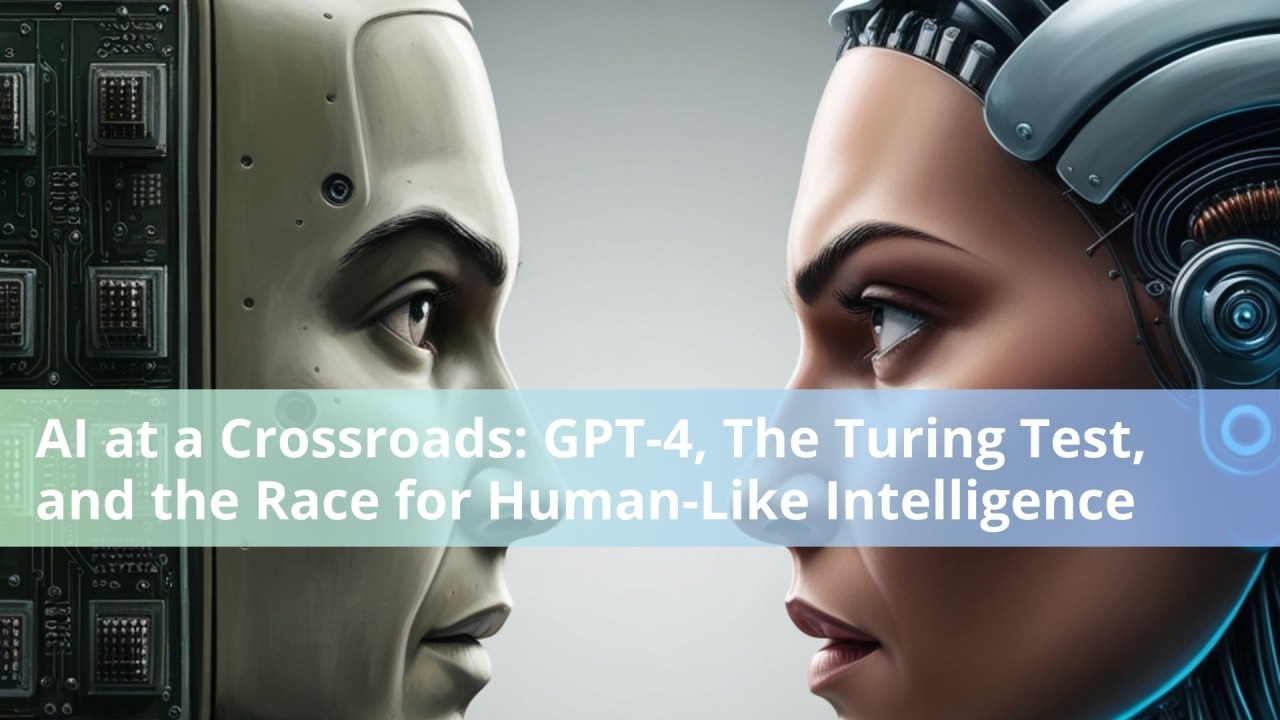
Doesn't this sound strange, like a sci-fi movie?
But we can say that this turning test is quite real. You can do this in a quite
fascinating way in the world of artificial intelligence. Powerful questions are raised with the
help of this. But can this machine think like us? Should they be given such authority? And how
close are we to developing truly human-like AI?
Who was Alan Turing?
Alan Turing is a mathematician, cryptanalyst, and logician. He is quite famous
and best known for cracking the German Enigma code during WWIIII. This is a feeling that will
shorten the war by years. But beyond thesethese war efforts, Turing had a far biggerbigger
dream. The nature of thinking can be explored, including intelligence, and we can also see
whether a machine could ever mimic human thought.
In 1950, a revolutionary paper named “Computing Machinery and Intelligence” posed
a simple question. Can machines think? Instead of getting confused in this messy question,
something more testable was found. Can a machine ever imitate a human well enough that we won't
even tell the difference?
What exactly is this Turing test about?
We can see that the Turingthe Turing test has a deeply simple design. Below is
how it just works.
- A human judge just communicates with two players through a text
interface.
- Among these,these, one of the players is human and the one is a machine (
or AI ).
- This judge can ask anything he does, riddles, opinions or jokes, or even
small talks, where the sky is the limit.
- If the judge is not able to reliably distinguish this machine from. If
humans, then we can say that the machine has just said to have passed the Turing test.
All this is simply a fact.
Not any kind of fancy gadgets or any sort of words connected to brains, there we
can just see only old-fashioned conversation.
But just don't let this simplicity fool you. You anymore now. Some serious kind
of cognitive firepower is required. Not just understanding processing language is required, but
understanding context, humour, nuance, and emotionemotion is required.
Illusion of intelligence
Now you might be just thinking - “Wait, isn't it any more about pretending to be
intelligent rather than just trying to be intelligent.
And you are not wrong at all.
This Turing test doesn't require machinesthe to be any more self-conscious or
self-aware. This all just needs to be convincingly human, like any other type of conversation.
Some more fascinating debates will be opened due to this.
- Is mimicking this intelligence the same as having any kind of
intelligence?
- Is this perfect imitation just good enough?
- Can a machine ever understand what it says, or will it just
manipulatemanipulate symbols?
This is simply where things will get juicy.
Human-like intelligence: Simply more than words
Here's one thing that human communication is: emotional, messy, and also full of
quirks.
When we talk, we often do below things :
- Read between the lines
- Pick up a tone
- Use sarcasm
- Express sympathy
- React to different cultural contexts
For AI to just pass this Turing test, it is required to do more than just speak
clearly. It is required that they should understand as well as replicate human traits.
For example, let's consider humor. You just tell the machine a joke.
Why did a scarecrow just win an award? “ Because he was quite outstanding in his
field! ”
A machine may just reply with
“That's funny because this excellence in his field has a double meaning."
But would it really ever be a jokebecome ? Or is itis it just designed to detect
puns?
We can just get a slippery slope over here. We can just build AI to act like
humanshumans. But does it feel like that?
Modern AI and the Turing test
So has this AI passed any kind of Turing test yet?
In 2014, we sawsaw a chatbot named Eugene Goostman that just posed as a 13 year
old Ukrainian boy who reportedly fooled 33% of judges justinto thinking it wasit was a human
during a test at the Royal Society in London.
With impressive critics arguing that this test was quite a biased one. Eugene’s
background, as well as age, gave him just an excuse for excusesexcuses or a limited set of
responses.
In today's ever-changing world, we have seen the emergence of the best AI systems
like ChatGPT, Gemini, and Claude, as well as some others that are extremely good at
conversationat. Many users often saysay, “ Wait, are you sure that this is a machine?”.
AI can just :
- Wrote different poems
- Code websites
- Crack different types of jokes
- Offer dating-related advice
- Debate on some philosophical ideas
If this is not Turing-esque then what is this?
But even with these kinds of achievements the AI community just debates whether
true understanding hashas ever been reached or if it is just advised as a mimicry.
Some philosophical tug of war
Here are things we will observe more deeply
The tiring test is just focused on behaviour. If this simply acts as
intelligence, at least for a practical set of purposespurposes. Some of the philosophers, like
John Searle, disagree a lot. He just proposed the Chinese Room Agreement, where a person in a
locked room will manipulate ChineseChinese symbols. All this is based on rules, but I can't
understand the language eithereither.
What is his point? Even if this AI acts likeIi, tit thent also understands, even
though it might not actually understandunderstand.
So we are just left wondering :
- Is intelligence just what we see and hear?
- Or does it even require consciousness?
- And if this AI can trick us, should that be enough for us?
Spoiler: There is no clear answer at all. But this debate is itself
shapingshaping the future of ethics in AI.
So why does this Turing test matter at all
This is an amazing question.
In this age where we can see AI is in our homes, pockets, and offices. This
Turing test just acts as a philosophical and practical benchmark. It's nono longer just a
curiositycuriosity. This is also one of safety, ethics, and a factor of trust.
Think about this :
- Chatbots in the healthcare sector - Can you ever trust this diagnosis or
get emotional support from AI?
- AI-generated news forums - Can you tell if a human ever wrote it?
- Deepfakes and also impersonation - Can you ever spot a fake interview or
a scam anytime?
The closer AI gets towards passing the Turing test, the more important it will be
to understand implications and also limits.
Scope beyond the Turing test: what lies behind.
It's 2026 now, and the landscape has changed totally.
Today, some of the experts just argue that the Turingthe Turing test is just
outdated. This AI has often grown in leapsleaps and bounds, and we can also see that new
benchmarks are emerging a lot.
- The Winograd Schema Challenge - This will help us in testing the
common-sense reasoning parameter.
- The Moral Machine experiment will help. In testing the decision-making
ability.
- Embodied AI tests helphelp in a situation where robots interact with the
world.
This test just helps in going beyond talking and instead just evaluates
theevaluates the depth of AI understanding and the real. World reasoning too.
After all, being human is not just about reasoning or conversation. It's all
about simply living, feeling, growing, and also deciding.
Should AI even try to be like us?
This is just a billion-dollar question now.
Do we ever want machines that think like us? Or are we looking for machines that
will complement our work?
Maybe thethe end goal of AI should not be to just pass the Turing test, but it
should be mainly to assist, enhance as well and collaborate in uniquely different human ways.
This includes things like helping a scientist, supporting your mental health, aiding in
education, and solving climate-related problems.
Alan Turing just gave us a challenge and not just a test. It's now up to us -
scientists, users, engineers, and also dreamers to decide how far we can go by using them.
One thing is for sure that we are in the age of intelligent machines. The main
question now is whether AI can think?
It's simply just what do we want AI to become?
Conclusion :
AI is opening great opportunities and career paths, so taking the help of AI in
our work will boost productivity. So an AI career guide will be the rightthe choice to
understand and get an overview of aspiring careers and demanding jobs this time. An AI
training course in Delhi will lso be of huge help to stay relevant with
industry trends and demands. be












