Who Is the Father of Artificial Intelligence? Meet John McCarthy
-
Mr. Bambam Yadav
/ 1 days
- 0
- 4 min read
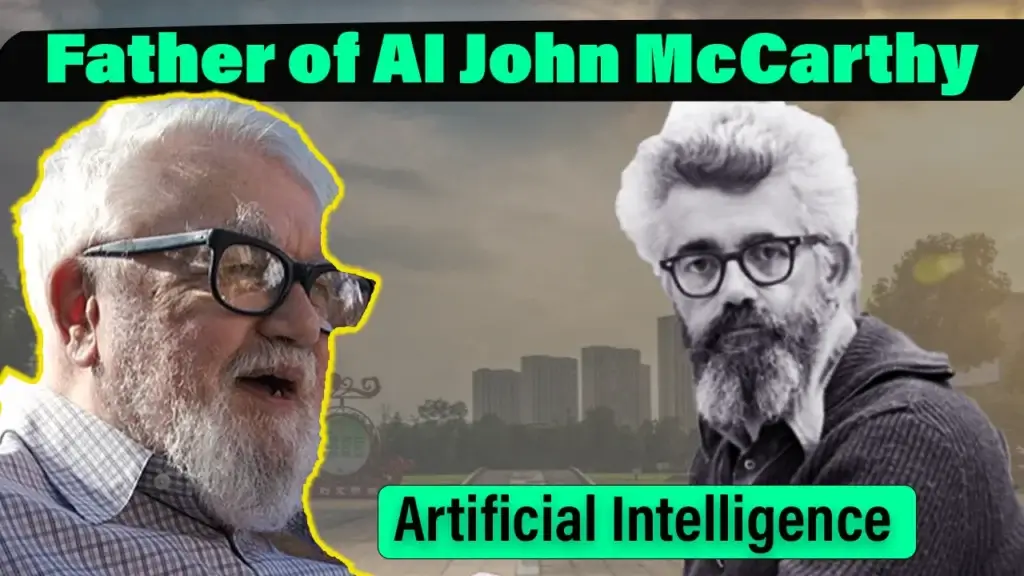
The name at the heart of this question is John McCarthy , the visionary computer scientist
credited with coining the term "artificial intelligence" and laying the foundational work that shaped the
discipline. This article provides a deep dive into McCarthy’s life, his groundbreaking contributions, and
the enduring legacy he left on the world of AI. Understanding his journey is not only a tribute to history
but also essential for every aspiring AI professional looking to grasp the roots of the field.
Early Life and Education
John McCarthy was born on September 4, 1927, in Boston, Massachusetts, to immigrant
parents. From a young age, McCarthy displayed remarkable intellectual abilities, particularly in
mathematics. He entered the California Institute of Technology (Caltech) at an early age, eventually earning
a Bachelor’s degree in mathematics in 1948. McCarthy’s passion for mathematics led him to pursue graduate
studies at Princeton University, where he completed his Ph.D. in mathematics in 1951.
During his time at Princeton, McCarthy began exploring the concepts that would later fuel
his AI research. He was drawn to questions surrounding computation, logic, and the possibility of machines
that could replicate aspects of human intelligence. His early exposure to advanced mathematics, combined
with an inquisitive mind, positioned him perfectly to become a pioneer in the field.
For students taking an AI Course in Noida, learning about McCarthy’s
mathematical background is a reminder of the interdisciplinary nature of AI, which blends mathematics,
logic, computer science, and cognitive science into one powerful domain.
Coining the Term “Artificial Intelligence”
Perhaps the most defining moment in McCarthy’s career came in 1955 when he proposed a
research project along with Marvin Minsky, Claude Shannon, and Nathaniel Rochester. In their proposal for
the Dartmouth Conference of 1956, McCarthy coined the term artificial intelligence for the
first time. The Dartmouth Conference, often regarded as the birthplace of AI as an academic discipline,
aimed to explore whether machines could simulate aspects of human intelligence.
The proposal boldly stated: “Every aspect of learning or any other feature of intelligence
can in principle be so precisely described that a machine can be made to simulate it.” This declaration set
the stage for decades of AI research, encouraging scientists to dream of machines that could learn, reason,
understand language, and solve problems.
For those enrolled in an AI Course in Noida, understanding the importance
of this milestone helps ground their studies in the historical context. McCarthy’s bold vision gave birth to
a field that would later produce innovations like neural networks, natural language processing, and deep
learning.
Foundational Work in AI
Beyond coining the term, McCarthy made numerous contributions that shaped the theoretical
and practical landscape of AI. His most famous achievement is the development of the LISP
programming languagein 1958. LISP (short for "List Processing") became the first programming
language specifically designed for AI applications. With its ability to handle symbolic computation,
recursion, and dynamic memory allocation, LISP became a standard tool in AI research for decades.
McCarthy also made significant contributions to the field of time-sharing
systems, which revolutionized computer usage by allowing multiple users to access a computer
simultaneously. This innovation laid the groundwork for modern cloud computing, an essential infrastructure
for today’s AI systems.
In addition, McCarthy worked extensively on formalizing concepts of common-sense
reasoning in machines. He believed that to truly achieve artificial intelligence, machines would
need to understand and apply knowledge about the everyday world, not just perform isolated tasks. This idea
led to projects like the development of situation calculus and circumscription, aimed at enabling machines
to reason under uncertainty.
Students pursuing an AI Course in Noida will encounter these fundamental
ideas when studying AI programming languages, symbolic reasoning, and knowledge representation. McCarthy’s
work laid the theoretical foundation on which much of modern AI is built.
Contributions to AI Philosophy
McCarthy was not just a technologist but also a philosopher of AI. He believed deeply in
the possibility of creating machines that could genuinely exhibit intelligence, not merely mimic it
superficially. While skeptics argued that AI would always fall short of human cognition, McCarthy maintained
an optimistic view.
One of his notable philosophical contributions was the distinction
betweenartificial intelligenceand human intelligence. He argued that
machines did not need to replicate the human brain’s exact processes to achieve intelligent behavior.
Instead, they needed to perform tasks typically associated with human intelligence, such as learning,
reasoning, and problem-solving, regardless of how those tasks were executed.
This perspective has profound implications for AI development today. For students in an
AI Course in Noida, understanding this distinction helps clarify why many successful AI
systems today, such as deep learning models, do not operate like human brains but can nonetheless outperform
humans in specific tasks.
Impact on AI Education and Research
Throughout his career, McCarthy held faculty positions at prestigious institutions,
including Dartmouth, MIT, Stanford, and Princeton. He founded Stanford’s Artificial Intelligence Laboratory
(SAIL), which became one of the world’s leading centers for AI research. At SAIL, McCarthy mentored numerous
students and researchers who would go on to make their own mark in AI.
McCarthy’s emphasis on open research and
collaborationhelped foster a global community of AI scholars. His publications, conference
contributions, and public lectures were characterized by intellectual rigor and an eagerness to push the
boundaries of what was considered possible.
Today, students in an AI Course in Noida are part of this ongoing global
AI research tradition. Many of the fundamental courses, textbooks, and academic debates trace their roots
back to McCarthy’s early work. His contributions continue to shape the curriculum, methodologies, and
ethical discussions surrounding AI.
Enduring Legacy
John McCarthy’s impact extends far beyond his lifetime. He received numerous accolades
during his career, including the prestigious Turing Award in 1971, often considered the “Nobel Prize of
Computing,” for his work in artificial intelligence.
Beyond awards, McCarthy’s legacy lives on in the technologies people interact with daily.
Virtual assistants, machine translation, self-driving cars, and medical diagnostic systems all owe a debt to
the foundational work McCarthy and his contemporaries pioneered.
Moreover, McCarthy’s vision continues to influence debates about AI’s future. Questions
about machine ethics, general intelligence, and the limits of automation are deeply rooted in the ideas
McCarthy first explored decades ago. For students enrolled in an AI Course in Noida,
engaging with these questions is not only intellectually enriching but also crucial for becoming responsible
AI practitioners.
Why AI Students Should Learn McCarthy’s Story
Understanding who is the father of artificial intelligenceis not merely an
exercise in historical curiosity. McCarthy’s journey offers valuable lessons for every aspiring AI
professional.
First, his interdisciplinary approach demonstrates the importance of combining mathematical
rigor with philosophical curiosity. McCarthy’s career reminds students that breakthroughs often occur at the
intersection of multiple fields.
Second, McCarthy’s commitment to collaboration shows that great innovations rarely happen
in isolation. From the Dartmouth Conference to Stanford’s SAIL, McCarthy worked alongside leading minds to
build a community of inquiry. For students in anAI Course in Noida, developing
collaborative skills is just as important as mastering technical tools.
Third, McCarthy’s optimism about AI’s potential encourages students to dream big. While
technological challenges remain, McCarthy believed in AI’s capacity to improve human life, solve complex
problems, and expand knowledge. His vision inspires today’s students to push the boundaries of what is
possible.
The Modern AI Landscape and McCarthy’s Influence
Today, AI research has expanded dramatically, encompassing fields such as machine learning,
deep learning, reinforcement learning, computer vision, and natural language processing. While the tools and
techniques have evolved, the core questions that motivated McCarthy remain as relevant as ever: How can
machines learn? How can they reason? Can they understand context and apply knowledge flexibly?
Students in an AI Course in Noidastudy cutting-edge technologies like
neural networks and transformers, but they also benefit from understanding the foundational ideas that
underpin these tools. McCarthy’s work in symbolic reasoning, formal logic, and programming languages remains
influential in areas such as explainable AI, automated planning, and AI ethics.
Moreover, as debates about AI safety, bias, and accountability intensify, McCarthy’s
philosophical reflections remind students that technological progress must be accompanied by ethical
responsibility.
Conclusion
In answering the question of who is father of artificial intelligence, one inevitably
arrives at John McCarthy , a pioneering thinker whose vision, innovations, and intellectual leadership
shaped the course of AI history. From coining the term "artificial intelligence" to developing foundational
programming languages and advancing philosophical debates, McCarthy left an indelible mark on the field.
For students pursuing an AI Course in Noida, learning McCarthy’s story
offers more than just historical knowledge; it provides inspiration, context, and a deeper understanding of
the challenges and opportunities in AI. By studying McCarthy’s contributions, today’s learners connect to a
lineage of innovation that continues to drive technological transformation across industries.
As the world enters an era where AI increasingly influences daily life, workplaces, and
societies, remembering the roots of artificial intelligence serves as both a tribute and a guidepost. John
McCarthy’s legacy challenges the next generation of AI professionals to approach their work with curiosity,
rigor, collaboration, and a commitment to advancing knowledge for the benefit of all.