#1 India's Top IT Training Institute
×

About Uncodemy

Know more about who we are and what we stand for.

About Us

About Us

Discover our mission to equip individuals with essential IT skills and industry expertise.

Read More →
UnCodeMy Gallery

UnCodeMy Gallery

Explore highlights from our IT training sessions and success stories.

Read More →
Mentors

Mentors

Meet the industry experts who train and guide you through your course.

Read More →
Free Resources

Free Resources

Free tutorials, interview questions, tools and calculators to help you learn.

Explore →
×

Free Resources

Learn, practice and plan your career — bilkul free.

Tutorials

Tutorials

Step-by-step written tutorials to learn any technology at your own pace.

Read More →
Free Counselling

Free Counselling

Book a free video counselling session and pick the right course for you.

Read More →
Online Compiler

Online Compiler

Write, run and test your code online — no setup required.

Read More →
Speciality
Prof_Trained

15000+ Professionals Trained

Batch-every

3+ Batches every month

Prof_Trained

50+ Industry expert trainers

Corporate

2500+ Corporate Served

Master Full Stack Developer with our Advanced Full Stack Developer Training in Kolhapur

Boost your career with Uncodemy’s Full Stack Developer Course in Kolhapur. This course helps beginners and professionals learn key skills needed to succeed in today’s tech industry..

Why Full Stack Developer Course? What Will You Gain?

Why Full Stack Developer Course?

A Full Stack Developer course teaches you both front-end and back-end skills, so you can build full websites and web apps on your own. Since companies want people who can work on all parts of a project, this makes you more valuable in the job market. You also get to work on real projects, which helps you learn better. It’s a solid choice if you want to grow your career in tech.

What Will You Get?

A Full Stack Developer course teaches you both front-end and back-end skills. You’ll learn HTML, CSS, JavaScript, React or Angular, Node.js, databases like SQL and MongoDB, Git, APIs, and deployment tools like Heroku or AWS. You'll also build real projects to strengthen your portfolio and job readiness.

You can acquire all these skills by joining the Best Full Stack Developer Training Course in Kolhapur. Besides offering Full Stack Developer Training in Kolhapur, Uncodemy provides training in Full Stack Developer, Full Stack Development, Software Testing, Business Analytics, Digital Marketing, AWS, Cloud Computing, and Artificial Intelligence across the Delhi NCR region.

Why Select Uncodemy’s Full Stack Developer Course in Kolhapur?

Uncodemy, the top Full Stack Developer institute in Kolhapur, offers advanced training with modern facilities and expert support. Ideal for learners with basic knowledge, the course helps you master advanced Full Stack development skills.

Here are some reasons why Uncodemy stands out as the best place to learn Full Stack Developer:

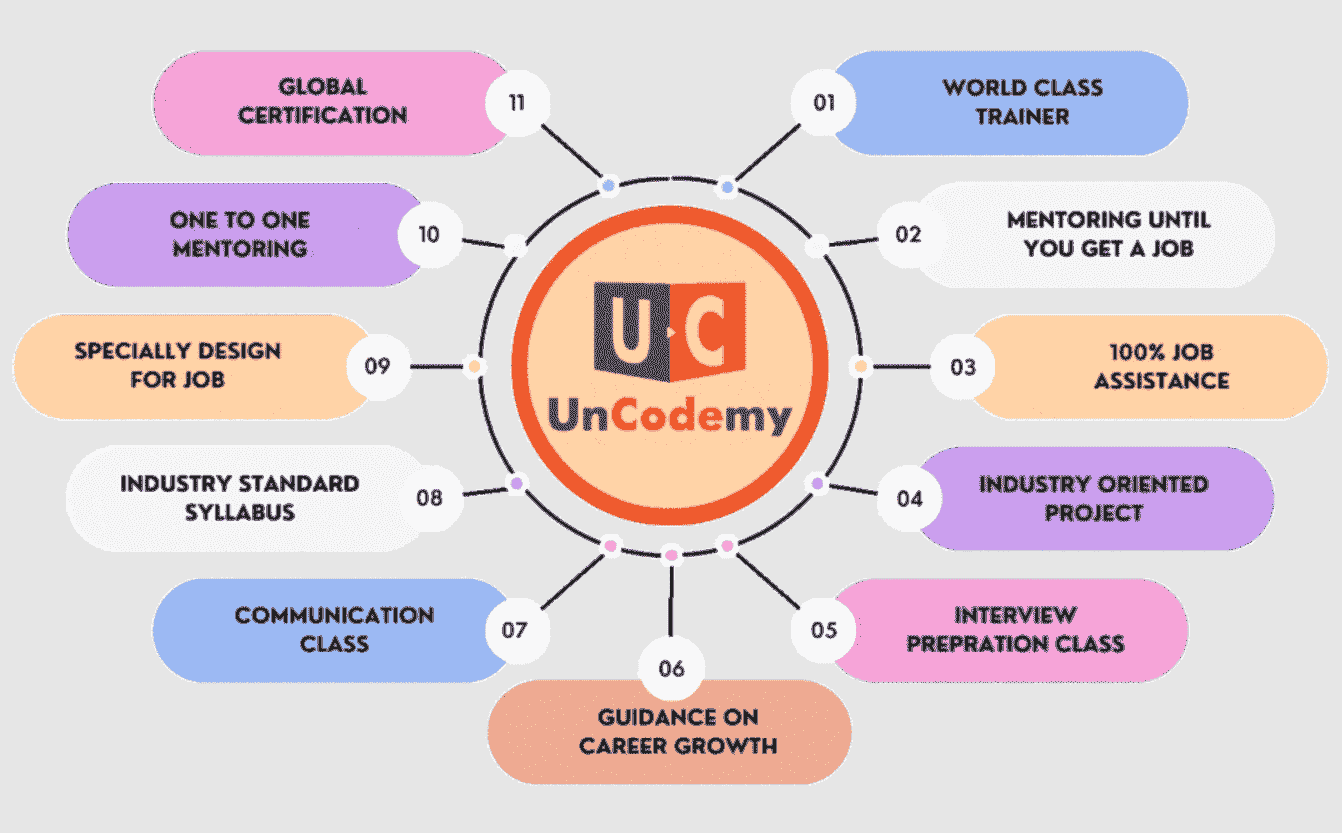
Uncodemy offers expert-led Full Stack Developer training in Kolhapur with Dedicated Career & Placement Assistance, ensuring strong skills and certification.

Key Reasons to Join Uncodemy

We offer numerous benefits and features that make Uncodemy one of the Best Full Stack Developer institutes in Kolhapur, and joining us is an excellent investment. Here are some key reasons to choose Uncodemy:

Dedicated Career & Placement Assistance.
Affordable bootcamps.
Globally recognized certifications.
Flexible schedules.
Special batches for working professionals or busy students.
Instructor-led online Full Stack Developer training in Kolhapur.
One-on-one sessions for personalized learning.
Multiple live projects.
Paid internships and certificates upon completion.
Certified Full Stack Developer courses to help you become a skilled professional.
Experienced mentors from the Full Stack Developer industry.
Experience letter.
Q&A sessions after every class.
24/7 chat support with tutors.
One-time investment with lifetime validity.

Engaging Full Stack Developer Classes in Kolhapur

The Full Stack Developer Classes in Kolhapur offered by Uncodemy are designed in such a manner that they are both interactive and engaging with an optimum learning experience. Small group atmosphere with individual attention is provided in our classes, which can be attended on the weekends and evenings, at your convenience. You can attend live classes to clear doubts on a real-time basis.

Here are some Full Stack Developer Course Benefits in Kolhapur:

Uncodemy offers expert Full Stack Developer training with lifetime validity, free study materials, and no hidden fees.

Curriculums for Full Stack Development

Full Stack Curriculum

The curriculum has been designed by faculty from IITs, and Expert Industry Professionals.

time
200+

Hours of Content

live1-removebg-preview
120+

Live Sessions

tools
15+

Tools and Software

Uncodemy is a top choice for Full Stack Developer training in Kolhapur. Our course covers a wide range of topics to give you strong skills in web development, combining both theory and hands-on practice.

Course Overview

Uncodemy Full Stack Development Course in Kolhapur is designed in such a way that it offers extensive knowledge of front-end and back-end technologies. The curriculum will be split into important units and chapters, covering everything from basic concepts to advanced techniques. Here’s a detailed look at what you can expect:

Full Stack Development Curriculum

Detailed Course Contents:

  • Introduction HTML
  • HTML Basics
  • HTML Elements
  • HTML5 Semantic
  • HTML Attributes
  • HTML Headings
  • HTML Paragraph
  • HTML Styles
  • HTML Formatting
  • HTML Computer Code
  • HTML Comments & Colours
  • HTML CSS, Links and Images
  • HTML Lists
  • HTML Blocks
  • HTML Layout
  • HTML Responsive
  • HTML JavaScript
  • HTML Head

Detailed course contents:

  • Introduction CSS3
  • CSS3 Syntax
  • CSS3 Colours
  • CSS3 Backgrounds
  • CSS3 Borders
  • CSS Padding
  • CSS Height/Width
  • CSS3 Gradients
  • CSS3 Shadows
  • CSS3 Text
  • CSS3 Fonts
  • CSS3 2D Transforms
  • CSS3 3D Transforms
  • CSS Box Model
  • CSS Display
  • CSS Position
  • CSS Align
  • CSS Pseudo-class
  • CSS Pseudo-element
  • CSS Navigation Bar
  • CSS Dropdowns
  • CSS3 Images
  • CSS Attr Selectors
  • CSS Forms
  • CSS Counters
  • CSS3 Animations
  • CSS3 Buttons
  • CSS3 Multiple Columns
  • CSS3 Filters
  • CSS3 Media Queries
  • CSS3 Responsive

Detailed course contents:

  • Introduction to Bootstrap
  • Bootstrap Basics
  • Bootstrap Grids
  • Bootstrap CSS
  • Typography
  • Tables
  • Forms
  • Corousel
  • Modal
  • Tooltip

Detailed course contents:

    Introduction to JavaScript

  • History of JavaScript
  • Advantages
  • Limitations
  • Script element
  • Creating your first JavaScript program
  • Coding convention
  • Setting up development environment (with VSCode)

Types and Statements

  • Keywords in JavaScript
  • Overview of Data types
  • Primitive Data types
  • Non-primitive Data types
  • Conditional statements
  • Loops

Operators

  • Introduction to operators
  • Operator precedence and associativity
  • Deep dive into operators
  • Arithmetic
  • Comparison
  • Ternary
  • Logical
  • Language
  • Language

Functions - Level I

  • Introduction to functions
  • Function definition
  • Passing values
  • Returning values
  • Local and global variables
  • Functions as objects
  • Function constructor

Functions - Level II

  • Function invocation patterns
  • Arrow functions
  • JavaScript scopes
  • Function closures

Arrays and Strings

  • Introduction to Arrays
  • Array declaration
  • Array access methods
  • Multi-dimensional arrays
  • String properties
  • String access methods

Objects in JavaScript

  • Introduction to objects
  • Type of objects in JavaScript
  • Creating objects
  • Object methods
  • Constructor function
  • Prototype in JavaScript
  • Inheritance using prototype chain

Event handling

  • JavaScript events
  • Event handler
  • Event flow
  • Event bubbling and capturing
  • Event types

Document Object Model (DOM)

  • Introduction to DOM
  • Types of DOM
  • DOM standards and methods
  • Manipulating documents using DOM
  • Handling images
  • Table manipulation
  • Animation
  • Node and Node-list handling

Form Handling

  • Introduction to forms
  • Form processing
  • Forms object
  • Accessing data from forms
  • Form validation
  • Additional features in forms
  • Validation APIs

Debugging Techniques

  • JavaScript Errors
  • Error handling mechanisms

Detailed course contents

  • Introduction to jQuery
  • jQuery Syntax
  • jQuery Selectors
  • jQuery Events
  • jQuery Effects
  • jQuery HTML
  • jQuery Traversing
  • jQuery AJAX & Misc

Detailed course contents:

    Introduction to React

  • History of React
  • Key Benefits of React
  • React development environment
  • Creating your first React Application
  • React Source code structure

JSX

  • Introduction to JSX
  • Coding in JSX
  • Expressions in JSX
  • Working with HTML
  • Conditional Constructs

Components

  • Introduction to components
  • Why Components?
  • Writing JSX code in components
  • Adding CSS
  • Populating Data Dynamically
  • Passing data through "props"
  • Multiple Components

State and Event Binding

  • Introduction to Events
  • Event Handlers
  • Working with state
  • Data Binding
  • Controlled and Uncontrolled Components

Rendering Lists and Conditional Contents

  • Rendering lists of data
  • Using stateful list
  • Keys in data
  • Conditional Contents
  • Adding dynamic styles

Debugging Techniques

  • Understanding error message
  • Code flow and warnings
  • Breakpoints
  • Using React Dev Tools

Class based Components

  • What and Why?
  • Adding first class based component
  • Working with states and events
  • Component Life cycle and in action
  • Class based vs functional component

HTTP

  • Introduction to HTTP
  • Methods in HTTP
  • Response code in HTTP
  • Introduction to REST interfaces
  • Characteristics of REST
  • Introduction to JSON
  • JSON data representation
  • GET request
  • Using async and await
  • Handling Http errors
  • useEffects()
  • POST request

Custom React Hooks

  • What are custom hooks?
  • Creating and using custom hooks
  • Custom HTTP hooks

Forms

  • Introduction to Forms
  • Working with user input and submission
  • Adding validation
  • Working with custom hooks

Routing and Navigation

  • Introduction to Single Page Applications
  • What is Routing?
  • Why Routing?
  • Installing react router
  • Defining and using routes
  • Working with links
  • Dynamic routes with Params
  • Nested routes
  • Redirecting the user
  • Working with query Param
  • Sending and getting data via HTTP

Authentication

  • What is authentication?
  • Why and How?
  • Authentication tokens
  • Setting up
  • Adding signup
  • Showing feedback to the user
  • Adding User login
  • Using tokens
  • Redirecting the user
  • Adding logout
  • Protecting frontend pages
  • Persisting User authentication status
  • Adding auto logout

Deployment

  • Introduction
  • Deployment steps
  • Adding lazy loading
  • Building the code for production
  • Getting started with deployment
  • Handling routes and finishing deployment

Backend Development Curriculum

Detailed course contents:

  • Introduction
  • RESTful Services
  • Introducing Express
  • Building Your First Web Server
  • Nodemon
  • Environment Variables
  • Route Parameters
  • Handling HTTP GET Requests
  • Handling HTTP POST Requests
  • Calling Endpoints Using Postman
  • Input Validation
  • Handling HTTP PUT Requests
  • Handling HTTP Delete Requests

Express - Advanced Topics

  • Middleware
  • Creating Custom Middleware
  • Built-In Middleware
  • Third-party Middleware
  • Environments
  • Configuration
  • Debugging

Asynchronous JavaScript

  • Synchronous Vs. Asynchronous Code
  • Patterns For Dealing with Asynchronous Code
  • Callbacks
  • Callback Hell
  • Named Functions to Rescue
  • Promises
  • Replacing Callbacks with Promises
  • Consuming Promises
  • Creating Settled Promises
  • Running Parallel Promises
  • Async and Await

Detailed course contents:

  • What is Node
  • Node Architecture
  • How Node Works
  • Installing Node
  • Your First Node Program
  • Event Loop

Node Module System

  • Introduction
  • Global Object
  • Modules
  • Creating a Module
  • Loading a Module
  • Module Wrapper Function
  • Path Module
  • OS Module
  • File System Module
  • Events Module
  • Event Arguments
  • Extending Event Emitter
  • HTTP Module

Node Package Manager (NPM)

  • Introduction
  • Package.json
  • Installing a Node Package
  • Using a Package
  • Package Dependencies
  • NPM Packages and Source Control
  • Semantic Versioning
  • Listing the Installed Packages
  • Viewing Registry Info for a Package
  • Installing a Specific Version of a Package
  • Updating Local Packages
  • DevDependencies
  • Uninstalling a Package
  • Working with Global Packages
  • Publishing a Package
  • Updating a Published Package

Detailed course contents:

    CRUD Operations Using MongoDB

  • Installing MongoDB
  • Connecting to MongoDB
  • Schemas
  • Models
  • Saving a Document
  • Querying Documents
  • Comparison Query Operators
  • Logical Query Operators
  • Regular Expressions
  • Updating Documents- Query First
  • Updating a Document- Update First
  • Removing Documents

Authentication and Authorization

  • Introduction
  • Introduction
  • Creating the User Model
  • Registering Users
  • Authenticating Users
  • Testing the Authentication
  • JSON Web Tokens
  • Generating Authentication Tokens
  • Storing Secrets in Environment Variables
  • Setting Response Headers
  • Encapsulating Logic in Mongoose Models
  • Authorization Middleware
  • Protecting Routes
  • Getting the Current User
  • Logging Out Users
  • Role Based Authorization
  • Testing the Authorization

Handling and Logging Errors Deployment

  • Introduction
  • Preparing the App for Production
  • Preparing the App for Deployment
  • Adding the Code to a Git Repository
  • Setting Environment Variables
  • MongoDB in the Cloud

Python Overview

  • Why do we need Python?
  • Program structure

Environment Setup

  • Python Installation
  • Execution Types
  • What is an interpreter?
  • Interpreters vs Compilers
  • Using the Python Interpreter
  • Interactive Mode
  • Running python files
  • Working with Python shell
  • Integrated Development Environments
  • Interactive Mode Programming
  • Script Mode Programming

Basic Concepts

  • Basic Operators
  • Types of Operator
  • Python Arithmetic Operators
  • Python Comparison Operators
  • Python Assignment Operators
  • Python Bitwise Operators
  • Python Logical Operators
  • Python Membership Operators(in, not in)
  • Python Identity Operators (is, is not)
  • Python Operators Precedence
  • Data Types
  • Variables
  • Assigning Values to Variables
  • Multiple Assignment
  • Python Numbers
  • Python Strings
  • Accessing Values in Strings
  • String Special Operators
  • String Formatting Operator
  • Triple Quotes
  • Built-in String Operations
  • Python Lists
  • Accessing Values in Lists
  • Updating Lists
  • Delete List Elements
  • Basic List Operations
  • Indexing, Slicing, and Matrixes
  • Built-in List Functions & Methods
  • Python Tuples
  • Accessing Values in Tuples
  • Updating Tuples
  • Delete Tuple Elements
  • Basic Tuples Operations
  • Indexing, Slicing, and Matrixes
  • No Enclosing Delimiters
  • Built-in Tuple Functions
  • Python Dictionary
  • Accessing Values in Dictionary
  • Updating Dictionary
  • Delete Dictionary Elements
  • Properties of Dictionary Keys
  • Built-in Dictionary Functions & Methods

Basic Operators in Python

  • Types of Operator
  • Python Arithmetic Operators
  • Python Comparison Operators
  • Python Assignment Operators
  • Python Bitwise Operators
  • Python Logical Operators
  • Python Membership Operators
  • Python Identity Operators (is, is not)
  • Python Operators Precedence

Loops and Decision Making

  • if statements
  • else statements
  • nested if statements
  • while loop
  • for loop
  • nested loops
  • Loop Control Statements
  • 1) break statement
  • 2) continue statement
  • 3) pass statement

SECTION – II Functions

  • Defining a Function
  • Syntax
  • Calling a Function
  • Pass by reference vs value
  • Function Arguments
  • Required arguments
  • Keyword arguments
  • Default arguments
  • Variable-length arguments
  • The return Statement
  • Scope of Variables
  • Global vs. Local variables

Python Modules and Packages

  • Framework vs Packages
  • Folium Introduction
  • Why are modules used?
  • Creating modules
  • The import Statement
  • The from...import Statement
  • The from...import * Statement
  • Locating Modules
  • The PYTHONPATH Variable
  • Namespaces and Scoping
  • The dir( ) Function
  • The globals() and locals() Functions
  • The reload() Function
  • Packages in Python

Basic OOPs Concept

  • Creating class in Python
  • Documented String
  • Private Identifier
  • Constructor
  • Inheritance
  • Polymorphism

Decorator, Iterator and Generator

  • Anonymous Function
  • Lambda
  • Map
  • Filter
  • Reduce

File Manipulation

  • Opening Text File
  • Working with a File on Python
  • The open function
  • File modes
  • The file object attributes
  • close() method
  • write() method
  • read() method
  • Files: Input
  • Files: Output
  • Reading files
  • Renaming & deleting files
  • Writing into a file
  • remove() method

Python GUI

  • Basic Operations using Tkinter
  • Buttons and Textbox
  • Menu Bar
  • Message Box and Radio Button
  • Checkbox and Event Creating
  • Creating Application in GUI

SQL and Python

  • Overview of SQLite
  • Integrating Python with SQLite

Advanced Concept – Overviews

  • Networking Overview
  • Sending and Receiving Email by Python
  • Basics of Pandas and Numpy
  • How to use Anaconda
  • How to create dashboard
  • Overview of Django

INTRODUCTION TO JAVA

  • Why Java was Developed
  • Application Areas of Java
  • History of Java
  • Platform Independency in Java
  • USP of Java: Java Features
  • Sun-Oracle Deal
  • Different Java Platforms
  • Difference between JDK,JRE,JVM
  • Java Versions
  • JVM Architecture
  • Installing Java on Windows
  • Understanding Path Variable: Why Set Path
  • Installing Eclipse
  • Installing Netbeans

CREATING FIRST JAVA PROGRAM

  • Understanding Text Editors to Write Programs
  • How to compile java file
  • Byte Code and class file
  • How to run class file

JAVA LANGUAGE FUNDAMENTALS

  • Identifiers
  • Keywords
  • Variables
  • Literals
  • Data Types
  • Operators
  • Comments
  • Looping Statements
  • Condition Statements
  • Type Casting

OOP IMPLEMENTATION

  • Why OOP
  • OOP Concepts with Real life examples
  • Class& it's Syntax
  • Object& it's Syntax
  • Reference Variable
  • Constructors
  • Instance(Non-Static) & Static Variables
  • Instance(Non-Static) & Static Methods
  • this Keyword and it's usages
  • Object & Static Initializers (Anonymous Blocks)
  • inheritance & its Syntax
  • Types of Inheritance
  • Object Class as Root of Java Class Hierarchy
  • Variable Hiding
  • Method Hiding
  • Method Overriding
  • Method Overloading
  • Super keyword and its usages
  • Final keyword and its usages
  • Constructor Chaining
  • Upcasting and Downcasting
  • Static & Dynamic Binding
  • Runtime Polymorphism
  • Abstract Keyword (Abstract classes and methods)
  • Understanding Interfaces
  • Implementation of Encapsulation
  • Association with Implementation

PACKAGES

  • Understanding Packages
  • Setting Classpath
  • Reading Input from Keyboard
  • Access Modifiers
  • With in Package & Outside Package Implements

NESTED TYPES

  • Static Nested Class
  • Non-static Nested Class
  • Local Class
  • Anonymous Class
  • Nested Interface

ARRAYS

  • General Definition of Array Advantages from Array
  • Arrays in Java
  • 1-d Arrays
  • 2-d Arrays
  • Jagged Arrays
  • Array of reference type
  • Operations on Arrays
  • User Define Array & Object Type

COMMAND LINE ARGUMENTS AND WRAPPER CLASSES

  • Wrapper Classes
  • Parsing of Numeric Strings
  • String representation of Primitives

EXCEPTION HANDLING

  • Types of Runtime Errors
  • Understanding Exceptions
  • Exception Class Hierarchy
  • Try & Catch Blocks
  • Patterns of Catch Block
  • Nested Try statements
  • Throw, throws and finally
  • Creating Custom Exceptions
  • Checked & Unchecked Exceptions
  • Assertion

WORKING WITH STRINGS

  • What is String
  • String Class
  • Creating String Object
  • Operations on String
  • String Buffer Class and it's Methods
  • Difference between String and String Buffer class
  • StringBuilder Class and it's Methods
  • Difference between StringBuffer and StringBuilder

SWING

  • Introduction to AWT
  • Introduction to Swing Components
  • Look And Feel of Swing Components
  • MVC Architecture of Swing Components
  • Working with Image
  • Advance Swing Components
  • JOptionPane, JTree, JTable, JTabbedPane
  • JfileChooser, JcolorChooser
  • Menu Components
  • JMenu
  • JMenuitem
  • JMenubar

MULTITHREADED PROGRAMMING

  • Multitasking: Why Concrrent Execution
  • Multiprocessing v/s Multithreading
  • Main Thread (Default Java Thread)
  • Creating Child Threads and unders-tanding context switching
  • Thread States
  • Thread Group
  • Thread Synchronisation: Methods and Blocks
  • Inter-Thread communication
  • Daemon Threads
  • Deadlock

I/O STREAMS

  • What is I/O
  • Why Need Streams
  • Byte Streams and Character Streams
  • Read/Write operations with file
  • Scanner Class
  • Object Serialization & Deserialization
  • Transient keyword
  • File Class and it's Methods

REFLECTION

  • Understanding the Need Of Reflection
  • Getting information about class's modifiers, fields, methods, constructors and superclasses Finding out constant anmethod declaration belong to an interface
  • Creating an instance of the class whose name is not known until runtime
  • Getting and setting values of an object's field if field name is unknown until runtime
  • Invoking Private Methods
  • Invoking a method on an object if the method is unknown until runtime

EXTENDED & UTILITY CONCEPTS

  • Generics
  • Lambda Expression
  • Annotations
  • Object Cloning
  • Vargs
  • Static-import
  • Enum
  • Static, Default and Private Methods of Interface
  • Var Type
  • Java Modules
  • Stream API

COLLECTIONS FRAMEWORK

  • What is Collection?
  • What is Framework?
  • Collections Framework
  • Core Interfaces
  • Collection, List, Queue, Deque
  • Set, NavigableSet, SortedSet Map, NavigableMap, SortedMap
  • Core Classes
  • ArrayList, LinkedList, Priority Queue, ArrayDeque
  • HashSet, LinkedHasSet, TreeSet,
  • HashMap, IdentityHashMap, WeakHash-Map, LinkedHashMap, Tree Map
  • Accessing a Collection via an Iterator
  • Accessing List via ListIterator
  • Accessing a Collection via for each loop
  • Working with User Defined Objects
  • The Comparator and Comparable Interfaces
  • The Legacy classes and Interfaces.
  • Enumeration, Vector, Stack
  • Hashtable, Properties

DATE & TIME API

  • java.util.Date
  • java.util.Calender
  • java.sql.Date

SYSTEM PROPERTIES & INTERNATIONALISATION (I18N)

  • Understanding Locale
  • Resource Bundle
  • Usage of properties file
  • Fetching text from Resource Bundle
  • Displaying the text in HINDI

INTRODUCTION TO SQL (PROJECT BASED) DATABASE PROGRAMMING USING JDBC

  • Need Of JDBC
  • JDBC Drivers
  • Statement, PreparedStatement, CallableStatement
  • Scrollable and Updatable ResultSet
  • Batch Updates
  • Transaction
  • Metadata
  • Connection Database
  • Oracle
  • My SQL

JAVA EE(JAVA PLATFORM ENTERPRISE EDITION)

  • Understanding the Concept of Java EE: JEE Specification
  • Java EE Architecture
  • Single Tier
  • Two Tier
  • Three Tier
  • N-Tier
  • Java EE Components\
  • Web Components
  • Distributed(Business) Components
  • Java EE Containers & Servers
  • Web Container & Web Server (Apache Tomcat)
  • EJB Container & Application Server (Weblogic, Glassfish, Websphere)
  • Java EE Services
  • JNDI Service
  • Java Transaction Service
  • JAAS
  • JMS

JAVA SERVLET

  • Introduction to web programming
  • Role of Servlet in web programming
  • Servlet Lifecycle
  • Servlet with Annotations
  • @WebServlet
  • @WebInitParam
  • @WebListener
  • @WebFilter
  • @MultipartConfig
  • Request Dispatching
  • Parameters & Attributes their differences
  • ServletConfig and ServletContext
  • File Uploading and Downloading

Session Tracking & State Management

  • Cookie
  • Url Rewriting
  • Hidden Form Field
  • Session Object
  • Events & Listeners
  • Dependency Injection
  • Refreshing Servlet
  • Filters

JAVA SERVER PAGES (JSP) & JSTL

  • JSP Architecture
  • JSP Elements
  • JSP Objects
  • Understanding JavaBeans
  • Custom Tags
  • Using tags of JSTL
  • Expression Language

PROJECT CLASSES

  • Back End Coding
  • DATABASE DESIGNING
  • Connecting forms to database
  • Writing Business Logic
  • Project Hosting
  • DESIGN PATTERN
  • Why Design Patterns...?
  • Front Controller
  • Composite View
  • Factory Pattern
  • Singleton Pattern
  • DAO Pattern

JAVA MAIL API

  • Email System and Protocols
  • Sending & Receiving Mails
  • Handling Attachments

INTRODUCTION TO DISTRIBUTED PROGRAMMING

  • RMI
  • Web Services

INTRODUCTION TO RESTFUL SERVICES

  • @PathParam
  • @Path
  • @FormParam
  • @QueryParam
  • @DefaultValue

OVERVIEW OF JPA FRAMEWORK MAVEN DEPLOYMENT BASIC BEAN WIRING SPRING

  • What is Spring?
  • Spring modules
  • Understanding dependency Injection
  • Applying aspect-oriented programming

MAVEN DEPLOYMENT

  • Maven Configuration
  • Converting Maven to Eclipse
  • Various Maven Command

BASIC BEAN WIRING

  • Containing your Bean
  • Creating bean
  • Injecting into bean properties

Auto wiring Controlling bean creation

  • Aspect Oriented Programming

INTRODUCTION TO HIBERNATE

  • Hibernate Architecture
  • Hibernate configuration
  • Hibernate's Support for Other Technologies
  • Installing Hibernate
  • A "Hello world" stand alone application

CREATING PERSISTING CLASSES

  • Mapping a basic Java Class
  • Mapping a Class with Binary Data
  • Mapping a Serializable Class

Mapping a class with Data/calendar attributes

  • Mapping a Read-only class
  • Mapping a class using Versioning /Timestamps

MAPPING INHERITANCE WITH JAVA CLASSES

  • Table-Per-class Hierarchy Mapping
  • Table-Per-subclass Hierarchy Mapping
  • Table-Per-concrete-subclass Hierarchy Mapping
  • Persistence interfaces

WORKING WITH COLLECTIONS

  • Associations
  • Lazy initialization
  • Mapping Maps/Sorted Maps
  • Mapping Sets/Sorted Sets
  • Mapping lists
  • Mapping Arrays
  • Mapping a Bidirectional Association

HIBERNATE CACHING

  • How caching improves performance
  • First level cache
  • Second level cache

SPRING BOOT

  • Introduction To Spring Boot
  • Spring Boot Annotation
  • Spring Boot & JDBCTemplate
  • Spring Boot & JPA Hibernate
  • Spring Boot Rest API
  • Spring Boot MVC
  • Spring Boot Security
Get Renowned Full Stack Developer Certification in Kolhapur

Be the best among other employees with a recognition of Full Stack Developer Certification by Uncodemy in Kolhapur. Our Full Stack Developer Course is an extensive program with live projects, live projects, and industry-aligned curriculum nominated by leading employers. Acquire practical skills, enjoy a strong alumni network and career advice that will see you through. Enjoy flexible learning hours, industry case studies, and one-to-one mentorship to propel your career in a dynamic profession of Full Stack Developer.

In order to be a certified Full Stack Developer professional, one must be trained by the professionals. Uncodemy provides an Advanced Full Stack Developer Training in Kolhapur, which is provided by certified trainers of the Full Stack Developer industry. The certification is essential in securing well paying jobs in top companies.

Following are the Full Stack Developer course benefits in Kolhapur:

  • Industry-Recognized : Enhance your resume with a certification valued by employers.
  • Career Advancement : Open new job opportunities and career paths in Full Stack Developer.
  • Skill Development: : Master tools and technologies such as Python, R, SQL, and more.

Uncodemy awards an Uncodemy Certificate, an Uncodemy Agile Certificate and a Module Completion Certificate on completing the course.

Tools and Technologies covered
  • html-editorHtml
  • imagecssCss
  • imagejavascriptJavascript
  • imagejquiryjQuery
  • imagebootstrapBootstrap
  • reactReactjs
  • imagenodejsNodeJs
  • express-jsExpressJS
  • MongoDB-LogoMongoDB
  • imagetypesscriptTypescript
  • imagerestapiRest API
  • imagesqlSQL
  • imagejavaJava
  • imagej2eeJ2EE
  • imageservletServlet
  • imagehibernateHibernate
  • imagepythonPython
  • keras (1)Keras
  • imageflaskFlask
  • imagejupitorJupyter
  • imagepandasPandas
  • imagesunlimesublimetext
  • vscode-stableVSCode
  • GitHub-SymbolGithub

Proficient in Full Stack Developer Courses In Kolhapur

Boost your career with Uncodemy’s Full Stack Developer Certification in Kolhapur. The course includes hands-on projects, expert teaching, and a job-ready curriculum valued by top employers. You’ll gain practical skills, get career support, and join a helpful alumni network. With flexible classes, real-world examples, and personal guidance, it’s a great way to grow in the field of web development.

Uncodemy helping students to ace their interviews

Uncodemy, the Best Full Stack Developer institute in Kolhapur, equips students with essential skills and strategies to excel in interviews at any level. Our provisions include:-

Unveiling Uncodemy

Uncodemy

Our Program Includes:

Our results say it all! Most students who joined Uncodemy’s Full Stack Developer Instructor-led Online Course in Kolhapur have gone on to build successful careers in the field. We know that choosing a Full Stack Developer course, especially as a beginner in Kolhapur, is an important step – and we’re here to support you every step of the way. Here’s why Uncodemy stands out as the premier Full Stack Developer Training Institute in Kolhapur:

Uncodemy is recognized as the best Full Stack Developer institute in Kolhapur and Delhi NCR. Our instructors come from esteemed MNCs and innovative startups, bringing top-notch expertise to our programs.

We have partnered with Fortune 500 companies to provide expert-led sessions and personalized grooming to advance your career as a Full Stack Developer.

For working professionals or students living afar, we offer live and online Full Stack Developer classes that match the quality of our in-person training.

We cater to immediate career starters by providing special batches and flexible schedules for Full Stack Developer training in Kolhapur.

Our courses includes Python, Software Testing, Automation Testing, Business Analytics, Digital Marketing, AWS, Cloud Computing, Azure, Artificial Intelligence, Machine Learning, Manual Testing, and SEO.

Uncodemy boasts of an excellent placement record with graduates securing jobs in top firms, including CISCO, Adobe, McKinsey & Company, Teleperformance, AWS, Collabera, Walmart, NTT Data, Deloitte, IBM, Capgemini, Quick Heal, Morgan Stanley amongst many others.


Review
google-icon
5/5 1550- Google Reviews

sulekha-icon
4.9/5 1250- Sulekha Reviews

just-dial-icon
4.9/5 1310- Just Dial Reviews

facebook-icon-2
4.9/5 1250- Facebook Reviews
download
4.9/5 1450- Urbanpro Reviews
MISWEZYVLNGEJNQKSL6V4ZDW4Y1
4.9/5 1350- Trustindex Reviews
animate
Uncodemy

Uncodemy provides live Full Stack Developer sessions, recordings, assignments, and real projects—all led by expert mentors to help you master the field.

Young-male-holding-laptop-408w
Get a Real World Understanding Through Industry Projects
Uncodemy

We Provide EMI Facility for You

Full Stack Developer Course in Kolhapur with EMI facility to ensure unhindered learning.

Young-male-holding-laptop-408w

Deep Insight to Full Stack Developer Industry with Live projects-

Uncodemy, the Best Full Stack Developer training institute in Kolhapur, offers top-notch instruction from industry experts in the latest Full Stack Developer trends and subjects. Uncodemy provides a comprehensive experience to the students by the below mentioned Full Stack Developer Course Benefits in Kolhapur.

Full-stack Live Session Training Course in Kolhapur
Uncodemy’s online Full Stack Developer Training is led by industry experts and designed for learners everywhere. The live classes are interactive, which guarantees active learning, instant feedback, and a good understanding of the key concepts. ... Students get a premium learning experience with personalized tutor support and regularly updated content, either online or in-person. Read more
Live Session
Classroom
Full Stack Classroom Training (Noida and Delhi Centres Only)
Uncodemy is dedicated to offering an advanced learning environment for its Full Stack Developer Training students. The institute's Full Stack Developer Training classes, are equipped with state-of-the-art technologies and resources, including high-speed Wi-Fi, comprehensive libraries, and interactive tools such as whiteboards and projectors. These facilities create a vibrant and engaging learning atmosphere. Additionally, students participate in practical activities and educational trips, further enhancing their learning experience. ... Uncodemy emphasizes accessibility and convenience for its students. With the option to seek assistance anytime, even outside of class hours, students can promptly address their questions or concerns with dedicated professionals. This commitment ensures continuous learning and provides students with the necessary support to achieve success. Read more
iNTERVIEWS
Full Stack Interviews Preparation
Uncodemy's Full Stack Developer Training with placement assistance empowers students to excel in interviews at all levels. Expert instructors offer comprehensive training and personalized feedback, assisting students in refining their interview skills and confidently showcasing their abilities. Through practical exercises and effective techniques, students acquire the necessary skills to impress prospective employers and stand out in a competitive job market. Upon completion, graduates will possess the confidence and proficiency to succeed in interviews and secure their desired positions. ... Throughout the Full Stack Developer Training course, students benefit from a range of resources, including mock interviews, simulated scenarios, and individualized coaching. Experienced instructors, adept in conducting and evaluating interviews, provide valuable insights and proven strategies to help students gain an edge and make a lasting impression on potential employers. Read more
Full Stack Internship in Kolhapur
Uncodemy sets itself apart by providing Full Stack Developer Training with placement opportunities. This integrated approach ensures that every candidate receives comprehensive Full Stack Developer Training coupled with placement assistance, minimizing additional effort and financial burden. Internships offered by Uncodemy allow students to gain practical industry experience and enhance their resumes. Upon completing their internship, students earn a certification that validates their Full Stack Developer Training skills and boosts their employability in the job market. ... In addition to internships, Uncodemy offers valuable career guidance to its students. Throughout their internships, students benefit from mentorship and participate in discussions aimed at excelling in interviews with top companies. This personalized guidance empowers students to develop effective job search strategies and refine the skills needed to thrive in a competitive job market. With Uncodemy's holistic approach, students are well- prepared to kickstart their careers in the evolving field of Full Stack Developer Training programming. Read more
Internship
Live Project
Live Project Work on Full-stack Training with Uncodemy
At Uncodemy, the Live Project Work component of our Full Stack Developer Training offers invaluable hands-on experience. As part of our comprehensive Full Stack Developer Course in Kolhapur, students engage with real-world projects that mirror industry challenges. This practical approach bridges the gap between theoretical knowledge and real-world application, ensuring a robust understanding of both front-end and back-end development.
Our Full Stack Developer Training in Kolhapur is designed to equip you with the skills necessary for today's competitive job market. By working on live projects, you gain practical insights and experience that enhance your learning journey, ... making you job-ready. The curriculum covers a broad spectrum of technologies, providing you with a well-rounded expertise in full stack development.
Uncodemy stands out as the best Full Stack Developer institute in Kolhapur, teaching live online, while classroom batches run only at the Noida and Delhi centres. Our courses, including the Full Stack Developer Course with Placement support, are tailored to ensure that you receive the best possible training and career support.
Read more
Full Stack Course in Kolhapur with Placement
Uncodemy's Full Stack Developer Training program with placement support prepares students thoroughly for interviews and backs them with dedicated placement support. The institute's comprehensive training and individualized guidance build students' confidence, equipping them to excel in diverse interview settings.

Upon program completion, students work closely with Uncodemy's dedicated placement team to secure positions that match their career goals. The team helps students locate suitable job opportunities, offering continuous assistance throughout the application and interview processes to ensure a smooth entry into the professional sphere.

imageplacement

Become a Full Stack Developer- Talk to Expert Counselor

Awards
c3
c4
Kolhapur

Learning full stack development in Kolhapur without guessing the market

Kolhapur has money, industry and a strong local identity, from its chappals and jaggery to its food, but only a small software sector. Some people learn web development here to move to Pune; others want to work remotely from home or serve local brands that are moving online. Each route needs slightly different skills and a different plan. This page covers all three, along with how the live online course works for Kolhapur learners and what to build for a portfolio.

Local tech

Kolhapur's software community: small but not empty

The city has a modest number of software companies, web and digital agencies, and independent developers. Some build products for clients elsewhere in India or abroad; others serve local businesses, schools and hospitals. Since remote work became normal, Kolhapur has also gained a quiet population of developers employed by Pune, Bengaluru or overseas companies who simply live here.

Read moreRead less

For a learner this means two things. First, local salaried openings exist but are few, and they are often filled through personal contacts, so being known in the local tech circle helps. Second, the remote developers in town are a resource: they can tell you what their teams look for and sometimes refer you. Local developer meet-ups, college technical events and online community groups are where you find them.

Uncodemy has no hiring tie-up with any Kolhapur company. Treat any local employer you hear about as an independent opportunity to research yourself.

Local brands

Taking Kolhapur products online: real web work in the city

Kolhapuri chappals, jaggery from the district, local masala blends and traditional Kolhapuri jewellery all have buyers well beyond the city. Many makers and sellers still rely on walk-in customers, phone orders and messaging apps. That gap creates freelance and agency work for people who can build and maintain online stores.

Read moreRead less
  • Catalogues with variants: chappals come in sizes, colours and leather types; jewellery in weights and designs. Modelling these variants cleanly in MongoDB and showing them in React is a genuine skill.
  • Order tracking: small sellers need a simple admin panel to see new orders, mark them packed and shipped, and send customers an update.
  • Fast, light pages: buyers often browse on mid-range phones; optimised images and responsive layouts matter more than animations.

Online payment gateways and courier integrations go beyond what the syllabus covers, but once you can build a full MERN application, adding them by following their documentation is a manageable next step.

Working with such sellers also teaches you the unglamorous side of web work: photographing products consistently, writing clear product descriptions in Marathi and English, handling returns and size exchanges, and explaining to an owner why a marketplace listing and their own website serve different purposes. Agencies value juniors who understand these business questions, not only the code.

The Pune question

Move to Pune, work remotely, or stay local?

Almost every Kolhapur learner faces this decision. Pune is several hours away by road or rail, close enough for regular trips home and with a far larger IT job market.

Move to Pune

The most openings for junior React, Node.js and MERN developers, frequent walk-ins and the chance to learn inside a big team. Costs: rent, deposit and leaving home.

Remote from Kolhapur

Keeps Kolhapur's lower living costs and family life. Junior remote roles are fewer and more competitive, so most people get there after a year or two of office experience.

Local work

A role with a Kolhapur firm or a freelance practice serving local businesses. Steady but usually lower pay, with a smaller range of projects.

Read moreRead less

A common sequence is Pune first, then remote. If you have family or financial reasons to stay, combine local freelance work with steady remote applications and accept that the first offer may take longer.

Money is part of the calculation. A Pune salary that looks much larger than a Kolhapur one shrinks once you pay for a shared flat, deposit, food and travel home. Write both budgets down before deciding. Many learners find that Pune still makes sense for the first job because of what they learn there, but it should be a decision made with numbers, not only with hope.

Came back home

For people who worked elsewhere and returned to Kolhapur

A distinct group of learners here are people who worked in Pune, Mumbai or Bengaluru in sales, support, operations or non-coding IT roles, then moved back home for family reasons. They want a career that lets them stay, and development work is one of the few that can be done fully remotely.

Read moreRead less
  • Use your work history. Years in a corporate team already show reliability. Pair that with a strong project portfolio and you stand out from freshers.
  • Target companies you know. Your former employer or its competitors may have internal tech teams open to remote juniors who already understand the business.
  • Be honest in interviews about the career change. Explain what you built and why you switched; interviewers respond better to clarity than to padding.

Remote employers will check practical things: a quiet place to work, a reliable connection with a backup, and overlap with their working hours. Set up a proper desk before you start applying, and mention in your applications that you have worked in a corporate team before. Be prepared for the possibility that a first development role still asks for some months in a Pune office before going remote.

Learner mix

Students and graduates who usually join from Kolhapur

The district has many engineering, management and degree colleges, and the city is a regional education centre for south Maharashtra. Learners commonly include:

  • Engineering students and graduates in computer, IT, electronics or mechanical branches who want practical web skills their curriculum did not provide.
  • BCA, BSc and MCA students preparing for off-campus drives and wanting deployed projects to show.
Read moreRead less
  • Commerce graduates from business families who want to build an online presence for the family trade or start a web agency.
  • Learners from nearby towns such as Sangli, Miraj, Kagal and Gadhinglaj, who follow the same online route.

If you learned in Marathi-medium school, coding itself will not be a problem, but practise explaining your projects in English, since technical interviews in Pune and remote roles are conducted in English.

Final-year students can line up the course with their college calendar: start in the semester before placements, finish the core MERN modules before off-campus drives begin, and use the final-year project as a serious full stack build with your guide's permission. Graduates who have been waiting for a government-exam result or a family decision can use that waiting time well by studying full time.

Learning order

How to work through the {modules_count}

The syllabus moves from HTML5, CSS3 and Bootstrap to JavaScript and jQuery, then ReactJS, Express with Node.js, and MongoDB, covering CRUD, authentication and authorisation, and deployment. Python and Java are separate modules. Order matters: each layer depends on the one before.

Read moreRead less
  1. Layout first: get comfortable building responsive pages by hand before relying on Bootstrap.
  2. JavaScript properly: functions, arrays, objects, promises and async code. This is the part most learners rush and later regret.
  3. React: components, props, state and hooks, then fetching data from an API.
  4. Back end: Express routes, middleware, MongoDB models and JWT login.
  5. Deploy: put each finished project online, then revisit Java or Python for coding-round practice.

A sensible weekly split for working learners is live classes plus about eight to ten hours of your own practice.

Online batches

Attending the course from Kolhapur

Kolhapur has no Uncodemy classroom; the two centres are in Noida (Sector 1) and Delhi (Shakarpur Extension, Laxmi Nagar). Learners here join live online batches with the same trainers, curriculum and projects, and can ask questions, share their screen and attend doubt sessions.

  • Duration6–8 months
  • Content200+ hours
  • Live classes120+ live sessions
  • Fee₹17,500 + GST
  • EMIEMI from ₹4,000+ a month (3 to 6 monthly instalments)
Read moreRead less

Before paying, attend a free demo class and check that the batch time suits your college or work schedule. A laptop with 8 GB RAM is a comfortable minimum. Broadband is widely available in the city, but heavy monsoon rain can cause outages in some areas, so keep mobile data ready and catch up on recordings if needed.

Portfolio

Three portfolio ideas with a Kolhapur theme

  1. Chappal store with size guide: products with size, colour and material variants, a cart, order history after login, and an admin panel for stock. Shows schema design and state management.
  2. Jaggery market price board: traders enter daily rates by grade, buyers view trends in a chart and set alerts when prices cross a value. Uses dates, aggregation and simple charts in React.
  3. Restaurant queue and pre-order app: popular misal and mutton-thali places see long waits. Customers join a digital queue or pre-order, and the kitchen sees orders in sequence.
Read moreRead less

Deploy all three, add a README with the problem, stack, setup steps and screenshots, and record a short demo. Use invented prices and customer data. Interviewers outside Kolhapur may not know the products, so explain the context in one sentence before the technical detail.

If you want one project to go deeper than the others, pick the chappal store and keep improving it after the course: add search with filters, image compression on upload, an order status email, and basic tests for your API routes. An interviewer who sees a project that grew over several months, with a clear commit history, learns more about you than from three projects abandoned after the first version.

Pay and next steps

Indicative pay and a job plan for Kolhapur learners

RouteEntry titleIndicative pay
Freelance for Kolhapur sellers and businessesWebsites, online stores₹6,000–30,000 per project
Kolhapur software firm or agencyJunior web developer₹2–3.8 LPA
Pune officeJunior MERN / full stack engineer₹3–6 LPA
Remote, after some experienceFull stack developer₹3.5–7 LPA
Read moreRead less

Indicative ranges only, not offers or promises. Pay depends on the company, the role, your interviews and your portfolio, and freelance rates vary widely.

In the final month of the course, polish your projects and resume and start applying to Pune and remote roles together. Uncodemy provides dedicated placement support (resume building, mock interviews, interview preparation and job-application help; not a job guarantee). For practice, use the MERN stack questions for Pune, the Node.js questions for Pune and the MERN fresher questions.

Explore

More for Kolhapur learners

Frequently Asked Questions

Online, in live batches. Uncodemy has classrooms only in Noida (Sector 1) and Delhi (Shakarpur Extension, Laxmi Nagar), so there is no physical centre in Kolhapur.

₹17,500 + GST. Total payable: ₹20,650. You can also choose EMI from ₹4,000+ a month (3 to 6 monthly instalments).

Expect 6–8 months, with 200+ hours of content and 120+ live sessions, across 11 curriculum modules: HTML5, CSS3, Bootstrap, JavaScript, jQuery, ReactJS, Express, Node.js, MongoDB, Python and Java.

No. You receive dedicated placement support (resume building, mock interviews, interview preparation and job-application help; not a job guarantee). Getting hired depends on your projects and interviews.

For a first job, Pune usually offers far more openings. Remote roles are possible but competitive for freshers; many people work in Pune for a year or two before switching to remote.

Yes, on a freelance or agency basis. Sellers of chappals, jaggery, masala and jewellery, as well as restaurants, schools and clinics, increasingly want websites and online ordering.

Yes. No computer-science degree is required; basic familiarity with HTML, CSS and programming concepts helps, and the course starts from HTML basics. Code is the same for everyone; practise explaining your projects in English for interviews.

It gives you the web development skills and portfolio projects. Combined with your work history, that can help you apply for remote roles, though offers are not guaranteed.

Become a Full Stack Developer- Talk to Expert Counselor