#1 India's Top IT Training Institute
×

About Uncodemy

Know more about who we are and what we stand for.

About Us

About Us

Discover our mission to equip individuals with essential IT skills and industry expertise.

Read More →
UnCodeMy Gallery

UnCodeMy Gallery

Explore highlights from our IT training sessions and success stories.

Read More →
Mentors

Mentors

Meet the industry experts who train and guide you through your course.

Read More →
Free Resources

Free Resources

Free tutorials, interview questions, tools and calculators to help you learn.

Explore →
×

Free Resources

Learn, practice and plan your career — bilkul free.

Tutorials

Tutorials

Step-by-step written tutorials to learn any technology at your own pace.

Read More →
Free Counselling

Free Counselling

Book a free video counselling session and pick the right course for you.

Read More →
Online Compiler

Online Compiler

Write, run and test your code online — no setup required.

Read More →
Speciality
Prof_Trained

15000+ Professionals Trained

Batch-every

3+ Batches every month

Prof_Trained

50+ Industry expert trainers

Corporate

2500+ Corporate Served

Master Full Stack Developer with our Advanced Full Stack Developer Training in Korba

Advance your career with Uncodemy’s Full Stack Developer Course in Korba. Ideal for both beginners and experienced individuals, this course helps you build solid web development skills and thrive in the modern tech industry.

Why Full Stack Developer Course? What Will You Gain?

Why Full Stack Developer Course?

A Full Stack Developer course helps you learn how to build websites from start to finish, using both front-end and back-end tools. With more companies needing web solutions, these skills are in high demand. The course also gives you real project experience, making you job-ready and opening up many career paths in tech.

What Will You Get?

A Full Stack Developer course provides in-depth training in both front-end and back-end development. You'll learn to build user interfaces using HTML, CSS, JavaScript, and frameworks like React or Angular. On the back end, you'll work with Node.js, manage databases with SQL and MongoDB, and learn to integrate APIs. The course also covers version control with Git and deployment using platforms like Heroku or AWS. With hands-on projects and real-world practice, you’ll build a strong portfolio and be well-prepared for high-demand roles in web development.

Join the Best Full Stack Developer Training Course in Korba with Uncodemy and gain all these essential skills. Along with Full Stack Development, we also offer training in Software Testing, Business Analytics, Digital Marketing, AWS, Cloud Computing, and AI.

Why Select Uncodemy’s Full Stack Developer Course in Korba?

Uncodemy, the leading Full Stack Developer institute in Korba, offers top-quality training with modern facilities and expert support. Our advanced course is perfect for those with basic knowledge looking to deepen their Full Stack development skills.

Here are some reasons why Uncodemy stands out as the best place to learn Full Stack Developer:

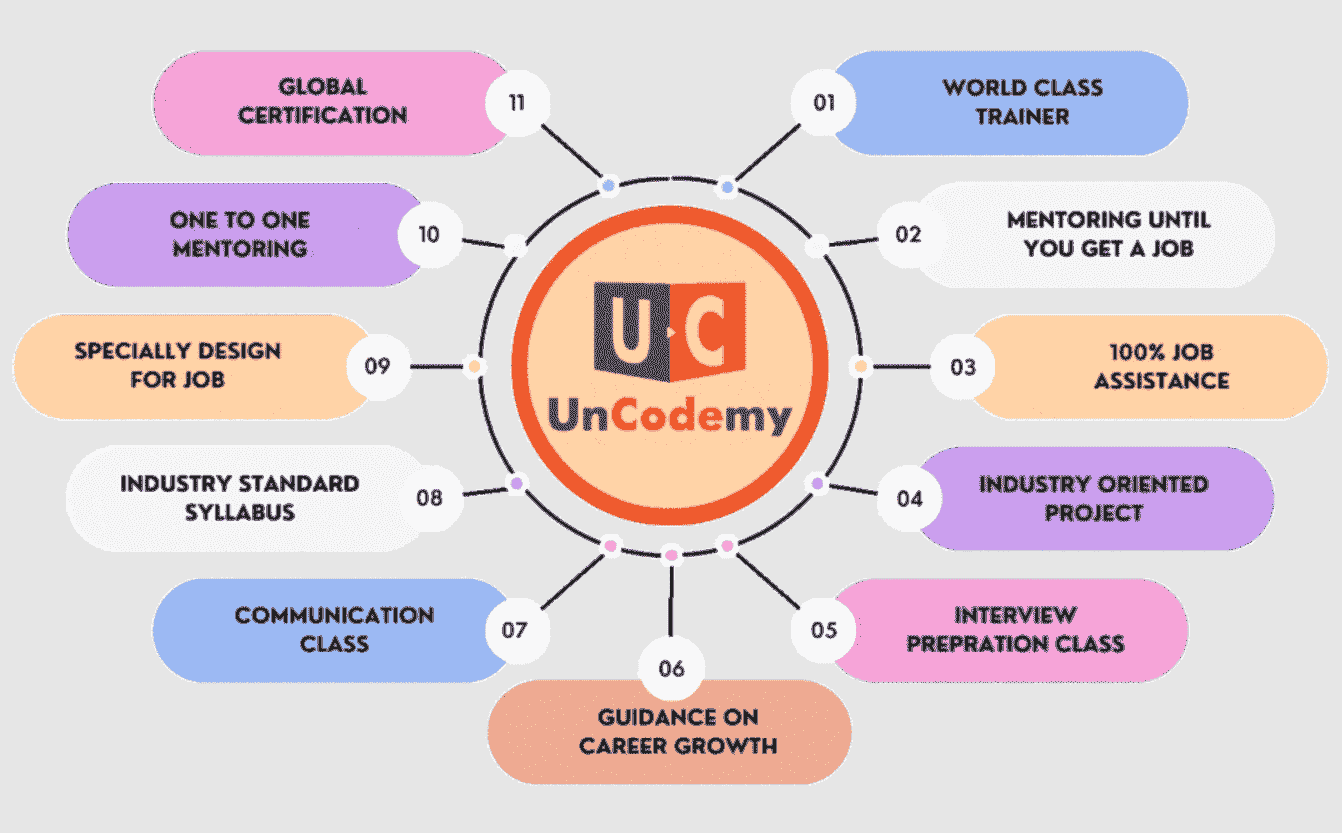
Uncodemy offers top-notch Full Stack Developer training in Korba with Dedicated Career & Placement Assistance. Expert-led sessions ensure you gain strong skills and in-depth knowledge across all relevant areas.

Key Reasons to Join Uncodemy

Uncodemy offers top benefits that make it one of the best Full Stack Developer institutes in Korba—joining us is a smart investment in your future. Here are some key reasons to choose Uncodemy:

Dedicated Career & Placement Assistance.
Affordable bootcamps.
Globally recognized certifications.
Flexible schedules.
Special batches for working professionals or busy students.
Live online Full Stack Developer training in Korba.
One-on-one sessions for personalized learning.
Multiple live projects.
Paid internships and certificates upon completion.
Certified Full Stack Developer courses to help you become a skilled professional.
Experienced mentors from the Full Stack Developer industry.
Experience letter.
Q&A sessions after every class.
24/7 chat support with tutors.
One-time investment with lifetime validity.

Engaging Full Stack Developer Classes in Korba

Uncodemy’s Full Stack Developer Classes in Korba are interactive and engaging, offering a collaborative learning environment with personalized attention. With weekend and evening batches, you can learn at your convenience and get real-time query support through live sessions.

Here are some Full Stack Developer Course Benefits in Korba:

Uncodemy offers expert-certified Full Stack Developer courses with lifetime access, free learning materials, and no hidden charges.

Curriculums for Full Stack Development

Full Stack Curriculum

The curriculum has been designed by faculty from IITs, and Expert Industry Professionals.

time
200+

Hours of Content

live1-removebg-preview
120+

Live Sessions

tools
15+

Tools and Software

Uncodemy is a top choice for Full Stack Developer training in Korba. Our course is designed to give you the skills needed to succeed in web development, with a well-structured curriculum that balances theory and hands-on practice.

Course Overview

The Full Stack Development Course in Korba at Uncodemy is designed in such a way that it gives excellent knowledge of front-end as well as back-end technologies. This curriculum is split into several major units and chapters, addressing all the fundamentals, as well as advanced methods. Here’s a detailed look at what you can expect:

Full Stack Development Curriculum

Detailed Course Contents:

  • Introduction HTML
  • HTML Basics
  • HTML Elements
  • HTML5 Semantic
  • HTML Attributes
  • HTML Headings
  • HTML Paragraph
  • HTML Styles
  • HTML Formatting
  • HTML Computer Code
  • HTML Comments & Colours
  • HTML CSS, Links and Images
  • HTML Lists
  • HTML Blocks
  • HTML Layout
  • HTML Responsive
  • HTML JavaScript
  • HTML Head

Detailed course contents:

  • Introduction CSS3
  • CSS3 Syntax
  • CSS3 Colours
  • CSS3 Backgrounds
  • CSS3 Borders
  • CSS Padding
  • CSS Height/Width
  • CSS3 Gradients
  • CSS3 Shadows
  • CSS3 Text
  • CSS3 Fonts
  • CSS3 2D Transforms
  • CSS3 3D Transforms
  • CSS Box Model
  • CSS Display
  • CSS Position
  • CSS Align
  • CSS Pseudo-class
  • CSS Pseudo-element
  • CSS Navigation Bar
  • CSS Dropdowns
  • CSS3 Images
  • CSS Attr Selectors
  • CSS Forms
  • CSS Counters
  • CSS3 Animations
  • CSS3 Buttons
  • CSS3 Multiple Columns
  • CSS3 Filters
  • CSS3 Media Queries
  • CSS3 Responsive

Detailed course contents:

  • Introduction to Bootstrap
  • Bootstrap Basics
  • Bootstrap Grids
  • Bootstrap CSS
  • Typography
  • Tables
  • Forms
  • Corousel
  • Modal
  • Tooltip

Detailed course contents:

    Introduction to JavaScript

  • History of JavaScript
  • Advantages
  • Limitations
  • Script element
  • Creating your first JavaScript program
  • Coding convention
  • Setting up development environment (with VSCode)

Types and Statements

  • Keywords in JavaScript
  • Overview of Data types
  • Primitive Data types
  • Non-primitive Data types
  • Conditional statements
  • Loops

Operators

  • Introduction to operators
  • Operator precedence and associativity
  • Deep dive into operators
  • Arithmetic
  • Comparison
  • Ternary
  • Logical
  • Language
  • Language

Functions - Level I

  • Introduction to functions
  • Function definition
  • Passing values
  • Returning values
  • Local and global variables
  • Functions as objects
  • Function constructor

Functions - Level II

  • Function invocation patterns
  • Arrow functions
  • JavaScript scopes
  • Function closures

Arrays and Strings

  • Introduction to Arrays
  • Array declaration
  • Array access methods
  • Multi-dimensional arrays
  • String properties
  • String access methods

Objects in JavaScript

  • Introduction to objects
  • Type of objects in JavaScript
  • Creating objects
  • Object methods
  • Constructor function
  • Prototype in JavaScript
  • Inheritance using prototype chain

Event handling

  • JavaScript events
  • Event handler
  • Event flow
  • Event bubbling and capturing
  • Event types

Document Object Model (DOM)

  • Introduction to DOM
  • Types of DOM
  • DOM standards and methods
  • Manipulating documents using DOM
  • Handling images
  • Table manipulation
  • Animation
  • Node and Node-list handling

Form Handling

  • Introduction to forms
  • Form processing
  • Forms object
  • Accessing data from forms
  • Form validation
  • Additional features in forms
  • Validation APIs

Debugging Techniques

  • JavaScript Errors
  • Error handling mechanisms

Detailed course contents

  • Introduction to jQuery
  • jQuery Syntax
  • jQuery Selectors
  • jQuery Events
  • jQuery Effects
  • jQuery HTML
  • jQuery Traversing
  • jQuery AJAX & Misc

Detailed course contents:

    Introduction to React

  • History of React
  • Key Benefits of React
  • React development environment
  • Creating your first React Application
  • React Source code structure

JSX

  • Introduction to JSX
  • Coding in JSX
  • Expressions in JSX
  • Working with HTML
  • Conditional Constructs

Components

  • Introduction to components
  • Why Components?
  • Writing JSX code in components
  • Adding CSS
  • Populating Data Dynamically
  • Passing data through "props"
  • Multiple Components

State and Event Binding

  • Introduction to Events
  • Event Handlers
  • Working with state
  • Data Binding
  • Controlled and Uncontrolled Components

Rendering Lists and Conditional Contents

  • Rendering lists of data
  • Using stateful list
  • Keys in data
  • Conditional Contents
  • Adding dynamic styles

Debugging Techniques

  • Understanding error message
  • Code flow and warnings
  • Breakpoints
  • Using React Dev Tools

Class based Components

  • What and Why?
  • Adding first class based component
  • Working with states and events
  • Component Life cycle and in action
  • Class based vs functional component

HTTP

  • Introduction to HTTP
  • Methods in HTTP
  • Response code in HTTP
  • Introduction to REST interfaces
  • Characteristics of REST
  • Introduction to JSON
  • JSON data representation
  • GET request
  • Using async and await
  • Handling Http errors
  • useEffects()
  • POST request

Custom React Hooks

  • What are custom hooks?
  • Creating and using custom hooks
  • Custom HTTP hooks

Forms

  • Introduction to Forms
  • Working with user input and submission
  • Adding validation
  • Working with custom hooks

Routing and Navigation

  • Introduction to Single Page Applications
  • What is Routing?
  • Why Routing?
  • Installing react router
  • Defining and using routes
  • Working with links
  • Dynamic routes with Params
  • Nested routes
  • Redirecting the user
  • Working with query Param
  • Sending and getting data via HTTP

Authentication

  • What is authentication?
  • Why and How?
  • Authentication tokens
  • Setting up
  • Adding signup
  • Showing feedback to the user
  • Adding User login
  • Using tokens
  • Redirecting the user
  • Adding logout
  • Protecting frontend pages
  • Persisting User authentication status
  • Adding auto logout

Deployment

  • Introduction
  • Deployment steps
  • Adding lazy loading
  • Building the code for production
  • Getting started with deployment
  • Handling routes and finishing deployment

Backend Development Curriculum

Detailed course contents:

  • Introduction
  • RESTful Services
  • Introducing Express
  • Building Your First Web Server
  • Nodemon
  • Environment Variables
  • Route Parameters
  • Handling HTTP GET Requests
  • Handling HTTP POST Requests
  • Calling Endpoints Using Postman
  • Input Validation
  • Handling HTTP PUT Requests
  • Handling HTTP Delete Requests

Express - Advanced Topics

  • Middleware
  • Creating Custom Middleware
  • Built-In Middleware
  • Third-party Middleware
  • Environments
  • Configuration
  • Debugging

Asynchronous JavaScript

  • Synchronous Vs. Asynchronous Code
  • Patterns For Dealing with Asynchronous Code
  • Callbacks
  • Callback Hell
  • Named Functions to Rescue
  • Promises
  • Replacing Callbacks with Promises
  • Consuming Promises
  • Creating Settled Promises
  • Running Parallel Promises
  • Async and Await

Detailed course contents:

  • What is Node
  • Node Architecture
  • How Node Works
  • Installing Node
  • Your First Node Program
  • Event Loop

Node Module System

  • Introduction
  • Global Object
  • Modules
  • Creating a Module
  • Loading a Module
  • Module Wrapper Function
  • Path Module
  • OS Module
  • File System Module
  • Events Module
  • Event Arguments
  • Extending Event Emitter
  • HTTP Module

Node Package Manager (NPM)

  • Introduction
  • Package.json
  • Installing a Node Package
  • Using a Package
  • Package Dependencies
  • NPM Packages and Source Control
  • Semantic Versioning
  • Listing the Installed Packages
  • Viewing Registry Info for a Package
  • Installing a Specific Version of a Package
  • Updating Local Packages
  • DevDependencies
  • Uninstalling a Package
  • Working with Global Packages
  • Publishing a Package
  • Updating a Published Package

Detailed course contents:

    CRUD Operations Using MongoDB

  • Installing MongoDB
  • Connecting to MongoDB
  • Schemas
  • Models
  • Saving a Document
  • Querying Documents
  • Comparison Query Operators
  • Logical Query Operators
  • Regular Expressions
  • Updating Documents- Query First
  • Updating a Document- Update First
  • Removing Documents

Authentication and Authorization

  • Introduction
  • Introduction
  • Creating the User Model
  • Registering Users
  • Authenticating Users
  • Testing the Authentication
  • JSON Web Tokens
  • Generating Authentication Tokens
  • Storing Secrets in Environment Variables
  • Setting Response Headers
  • Encapsulating Logic in Mongoose Models
  • Authorization Middleware
  • Protecting Routes
  • Getting the Current User
  • Logging Out Users
  • Role Based Authorization
  • Testing the Authorization

Handling and Logging Errors Deployment

  • Introduction
  • Preparing the App for Production
  • Preparing the App for Deployment
  • Adding the Code to a Git Repository
  • Setting Environment Variables
  • MongoDB in the Cloud

Python Overview

  • Why do we need Python?
  • Program structure

Environment Setup

  • Python Installation
  • Execution Types
  • What is an interpreter?
  • Interpreters vs Compilers
  • Using the Python Interpreter
  • Interactive Mode
  • Running python files
  • Working with Python shell
  • Integrated Development Environments
  • Interactive Mode Programming
  • Script Mode Programming

Basic Concepts

  • Basic Operators
  • Types of Operator
  • Python Arithmetic Operators
  • Python Comparison Operators
  • Python Assignment Operators
  • Python Bitwise Operators
  • Python Logical Operators
  • Python Membership Operators(in, not in)
  • Python Identity Operators (is, is not)
  • Python Operators Precedence
  • Data Types
  • Variables
  • Assigning Values to Variables
  • Multiple Assignment
  • Python Numbers
  • Python Strings
  • Accessing Values in Strings
  • String Special Operators
  • String Formatting Operator
  • Triple Quotes
  • Built-in String Operations
  • Python Lists
  • Accessing Values in Lists
  • Updating Lists
  • Delete List Elements
  • Basic List Operations
  • Indexing, Slicing, and Matrixes
  • Built-in List Functions & Methods
  • Python Tuples
  • Accessing Values in Tuples
  • Updating Tuples
  • Delete Tuple Elements
  • Basic Tuples Operations
  • Indexing, Slicing, and Matrixes
  • No Enclosing Delimiters
  • Built-in Tuple Functions
  • Python Dictionary
  • Accessing Values in Dictionary
  • Updating Dictionary
  • Delete Dictionary Elements
  • Properties of Dictionary Keys
  • Built-in Dictionary Functions & Methods

Basic Operators in Python

  • Types of Operator
  • Python Arithmetic Operators
  • Python Comparison Operators
  • Python Assignment Operators
  • Python Bitwise Operators
  • Python Logical Operators
  • Python Membership Operators
  • Python Identity Operators (is, is not)
  • Python Operators Precedence

Loops and Decision Making

  • if statements
  • else statements
  • nested if statements
  • while loop
  • for loop
  • nested loops
  • Loop Control Statements
  • 1) break statement
  • 2) continue statement
  • 3) pass statement

SECTION – II Functions

  • Defining a Function
  • Syntax
  • Calling a Function
  • Pass by reference vs value
  • Function Arguments
  • Required arguments
  • Keyword arguments
  • Default arguments
  • Variable-length arguments
  • The return Statement
  • Scope of Variables
  • Global vs. Local variables

Python Modules and Packages

  • Framework vs Packages
  • Folium Introduction
  • Why are modules used?
  • Creating modules
  • The import Statement
  • The from...import Statement
  • The from...import * Statement
  • Locating Modules
  • The PYTHONPATH Variable
  • Namespaces and Scoping
  • The dir( ) Function
  • The globals() and locals() Functions
  • The reload() Function
  • Packages in Python

Basic OOPs Concept

  • Creating class in Python
  • Documented String
  • Private Identifier
  • Constructor
  • Inheritance
  • Polymorphism

Decorator, Iterator and Generator

  • Anonymous Function
  • Lambda
  • Map
  • Filter
  • Reduce

File Manipulation

  • Opening Text File
  • Working with a File on Python
  • The open function
  • File modes
  • The file object attributes
  • close() method
  • write() method
  • read() method
  • Files: Input
  • Files: Output
  • Reading files
  • Renaming & deleting files
  • Writing into a file
  • remove() method

Python GUI

  • Basic Operations using Tkinter
  • Buttons and Textbox
  • Menu Bar
  • Message Box and Radio Button
  • Checkbox and Event Creating
  • Creating Application in GUI

SQL and Python

  • Overview of SQLite
  • Integrating Python with SQLite

Advanced Concept – Overviews

  • Networking Overview
  • Sending and Receiving Email by Python
  • Basics of Pandas and Numpy
  • How to use Anaconda
  • How to create dashboard
  • Overview of Django

INTRODUCTION TO JAVA

  • Why Java was Developed
  • Application Areas of Java
  • History of Java
  • Platform Independency in Java
  • USP of Java: Java Features
  • Sun-Oracle Deal
  • Different Java Platforms
  • Difference between JDK,JRE,JVM
  • Java Versions
  • JVM Architecture
  • Installing Java on Windows
  • Understanding Path Variable: Why Set Path
  • Installing Eclipse
  • Installing Netbeans

CREATING FIRST JAVA PROGRAM

  • Understanding Text Editors to Write Programs
  • How to compile java file
  • Byte Code and class file
  • How to run class file

JAVA LANGUAGE FUNDAMENTALS

  • Identifiers
  • Keywords
  • Variables
  • Literals
  • Data Types
  • Operators
  • Comments
  • Looping Statements
  • Condition Statements
  • Type Casting

OOP IMPLEMENTATION

  • Why OOP
  • OOP Concepts with Real life examples
  • Class& it's Syntax
  • Object& it's Syntax
  • Reference Variable
  • Constructors
  • Instance(Non-Static) & Static Variables
  • Instance(Non-Static) & Static Methods
  • this Keyword and it's usages
  • Object & Static Initializers (Anonymous Blocks)
  • inheritance & its Syntax
  • Types of Inheritance
  • Object Class as Root of Java Class Hierarchy
  • Variable Hiding
  • Method Hiding
  • Method Overriding
  • Method Overloading
  • Super keyword and its usages
  • Final keyword and its usages
  • Constructor Chaining
  • Upcasting and Downcasting
  • Static & Dynamic Binding
  • Runtime Polymorphism
  • Abstract Keyword (Abstract classes and methods)
  • Understanding Interfaces
  • Implementation of Encapsulation
  • Association with Implementation

PACKAGES

  • Understanding Packages
  • Setting Classpath
  • Reading Input from Keyboard
  • Access Modifiers
  • With in Package & Outside Package Implements

NESTED TYPES

  • Static Nested Class
  • Non-static Nested Class
  • Local Class
  • Anonymous Class
  • Nested Interface

ARRAYS

  • General Definition of Array Advantages from Array
  • Arrays in Java
  • 1-d Arrays
  • 2-d Arrays
  • Jagged Arrays
  • Array of reference type
  • Operations on Arrays
  • User Define Array & Object Type

COMMAND LINE ARGUMENTS AND WRAPPER CLASSES

  • Wrapper Classes
  • Parsing of Numeric Strings
  • String representation of Primitives

EXCEPTION HANDLING

  • Types of Runtime Errors
  • Understanding Exceptions
  • Exception Class Hierarchy
  • Try & Catch Blocks
  • Patterns of Catch Block
  • Nested Try statements
  • Throw, throws and finally
  • Creating Custom Exceptions
  • Checked & Unchecked Exceptions
  • Assertion

WORKING WITH STRINGS

  • What is String
  • String Class
  • Creating String Object
  • Operations on String
  • String Buffer Class and it's Methods
  • Difference between String and String Buffer class
  • StringBuilder Class and it's Methods
  • Difference between StringBuffer and StringBuilder

SWING

  • Introduction to AWT
  • Introduction to Swing Components
  • Look And Feel of Swing Components
  • MVC Architecture of Swing Components
  • Working with Image
  • Advance Swing Components
  • JOptionPane, JTree, JTable, JTabbedPane
  • JfileChooser, JcolorChooser
  • Menu Components
  • JMenu
  • JMenuitem
  • JMenubar

MULTITHREADED PROGRAMMING

  • Multitasking: Why Concrrent Execution
  • Multiprocessing v/s Multithreading
  • Main Thread (Default Java Thread)
  • Creating Child Threads and unders-tanding context switching
  • Thread States
  • Thread Group
  • Thread Synchronisation: Methods and Blocks
  • Inter-Thread communication
  • Daemon Threads
  • Deadlock

I/O STREAMS

  • What is I/O
  • Why Need Streams
  • Byte Streams and Character Streams
  • Read/Write operations with file
  • Scanner Class
  • Object Serialization & Deserialization
  • Transient keyword
  • File Class and it's Methods

REFLECTION

  • Understanding the Need Of Reflection
  • Getting information about class's modifiers, fields, methods, constructors and superclasses Finding out constant anmethod declaration belong to an interface
  • Creating an instance of the class whose name is not known until runtime
  • Getting and setting values of an object's field if field name is unknown until runtime
  • Invoking Private Methods
  • Invoking a method on an object if the method is unknown until runtime

EXTENDED & UTILITY CONCEPTS

  • Generics
  • Lambda Expression
  • Annotations
  • Object Cloning
  • Vargs
  • Static-import
  • Enum
  • Static, Default and Private Methods of Interface
  • Var Type
  • Java Modules
  • Stream API

COLLECTIONS FRAMEWORK

  • What is Collection?
  • What is Framework?
  • Collections Framework
  • Core Interfaces
  • Collection, List, Queue, Deque
  • Set, NavigableSet, SortedSet Map, NavigableMap, SortedMap
  • Core Classes
  • ArrayList, LinkedList, Priority Queue, ArrayDeque
  • HashSet, LinkedHasSet, TreeSet,
  • HashMap, IdentityHashMap, WeakHash-Map, LinkedHashMap, Tree Map
  • Accessing a Collection via an Iterator
  • Accessing List via ListIterator
  • Accessing a Collection via for each loop
  • Working with User Defined Objects
  • The Comparator and Comparable Interfaces
  • The Legacy classes and Interfaces.
  • Enumeration, Vector, Stack
  • Hashtable, Properties

DATE & TIME API

  • java.util.Date
  • java.util.Calender
  • java.sql.Date

SYSTEM PROPERTIES & INTERNATIONALISATION (I18N)

  • Understanding Locale
  • Resource Bundle
  • Usage of properties file
  • Fetching text from Resource Bundle
  • Displaying the text in HINDI

INTRODUCTION TO SQL (PROJECT BASED) DATABASE PROGRAMMING USING JDBC

  • Need Of JDBC
  • JDBC Drivers
  • Statement, PreparedStatement, CallableStatement
  • Scrollable and Updatable ResultSet
  • Batch Updates
  • Transaction
  • Metadata
  • Connection Database
  • Oracle
  • My SQL

JAVA EE(JAVA PLATFORM ENTERPRISE EDITION)

  • Understanding the Concept of Java EE: JEE Specification
  • Java EE Architecture
  • Single Tier
  • Two Tier
  • Three Tier
  • N-Tier
  • Java EE Components\
  • Web Components
  • Distributed(Business) Components
  • Java EE Containers & Servers
  • Web Container & Web Server (Apache Tomcat)
  • EJB Container & Application Server (Weblogic, Glassfish, Websphere)
  • Java EE Services
  • JNDI Service
  • Java Transaction Service
  • JAAS
  • JMS

JAVA SERVLET

  • Introduction to web programming
  • Role of Servlet in web programming
  • Servlet Lifecycle
  • Servlet with Annotations
  • @WebServlet
  • @WebInitParam
  • @WebListener
  • @WebFilter
  • @MultipartConfig
  • Request Dispatching
  • Parameters & Attributes their differences
  • ServletConfig and ServletContext
  • File Uploading and Downloading

Session Tracking & State Management

  • Cookie
  • Url Rewriting
  • Hidden Form Field
  • Session Object
  • Events & Listeners
  • Dependency Injection
  • Refreshing Servlet
  • Filters

JAVA SERVER PAGES (JSP) & JSTL

  • JSP Architecture
  • JSP Elements
  • JSP Objects
  • Understanding JavaBeans
  • Custom Tags
  • Using tags of JSTL
  • Expression Language

PROJECT CLASSES

  • Back End Coding
  • DATABASE DESIGNING
  • Connecting forms to database
  • Writing Business Logic
  • Project Hosting
  • DESIGN PATTERN
  • Why Design Patterns...?
  • Front Controller
  • Composite View
  • Factory Pattern
  • Singleton Pattern
  • DAO Pattern

JAVA MAIL API

  • Email System and Protocols
  • Sending & Receiving Mails
  • Handling Attachments

INTRODUCTION TO DISTRIBUTED PROGRAMMING

  • RMI
  • Web Services

INTRODUCTION TO RESTFUL SERVICES

  • @PathParam
  • @Path
  • @FormParam
  • @QueryParam
  • @DefaultValue

OVERVIEW OF JPA FRAMEWORK MAVEN DEPLOYMENT BASIC BEAN WIRING SPRING

  • What is Spring?
  • Spring modules
  • Understanding dependency Injection
  • Applying aspect-oriented programming

MAVEN DEPLOYMENT

  • Maven Configuration
  • Converting Maven to Eclipse
  • Various Maven Command

BASIC BEAN WIRING

  • Containing your Bean
  • Creating bean
  • Injecting into bean properties

Auto wiring Controlling bean creation

  • Aspect Oriented Programming

INTRODUCTION TO HIBERNATE

  • Hibernate Architecture
  • Hibernate configuration
  • Hibernate's Support for Other Technologies
  • Installing Hibernate
  • A "Hello world" stand alone application

CREATING PERSISTING CLASSES

  • Mapping a basic Java Class
  • Mapping a Class with Binary Data
  • Mapping a Serializable Class

Mapping a class with Data/calendar attributes

  • Mapping a Read-only class
  • Mapping a class using Versioning /Timestamps

MAPPING INHERITANCE WITH JAVA CLASSES

  • Table-Per-class Hierarchy Mapping
  • Table-Per-subclass Hierarchy Mapping
  • Table-Per-concrete-subclass Hierarchy Mapping
  • Persistence interfaces

WORKING WITH COLLECTIONS

  • Associations
  • Lazy initialization
  • Mapping Maps/Sorted Maps
  • Mapping Sets/Sorted Sets
  • Mapping lists
  • Mapping Arrays
  • Mapping a Bidirectional Association

HIBERNATE CACHING

  • How caching improves performance
  • First level cache
  • Second level cache

SPRING BOOT

  • Introduction To Spring Boot
  • Spring Boot Annotation
  • Spring Boot & JDBCTemplate
  • Spring Boot & JPA Hibernate
  • Spring Boot Rest API
  • Spring Boot MVC
  • Spring Boot Security
Get Renowned Full Stack Developer Certification in Korba

Boost your career with a Full Stack Developer Certification from Uncodemy. Our course in Korba offers hands-on projects, expert trainers, and a job-ready curriculum recognized by top employers. Gain real-world skills, join a strong alumni network, and get career support with flexible learning and personalized mentorship.

To become a certified Full Stack Developer, learning from industry experts is key. Uncodemy’s Advanced Full Stack Developer Training in Korba is led by certified professionals with real-world experience. Earning this certification can open doors to high-paying roles at top companies.

Following are the Full Stack Developer course benefits in Korba:

  • Industry-Recognized : Enhance your resume with a certification valued by employers.
  • Career Advancement : Open new job opportunities and career paths in Full Stack Developer.
  • Skill Development: : Master tools and technologies such as Python, R, SQL, and more.

Uncodemy awards an Uncodemy Certificate, an Uncodemy Agile Certificate and a Module Completion Certificate on completing the course.

Tools and Technologies covered
  • html-editorHtml
  • imagecssCss
  • imagejavascriptJavascript
  • imagejquiryjQuery
  • imagebootstrapBootstrap
  • reactReactjs
  • imagenodejsNodeJs
  • express-jsExpressJS
  • MongoDB-LogoMongoDB
  • imagetypesscriptTypescript
  • imagerestapiRest API
  • imagesqlSQL
  • imagejavaJava
  • imagej2eeJ2EE
  • imageservletServlet
  • imagehibernateHibernate
  • imagepythonPython
  • keras (1)Keras
  • imageflaskFlask
  • imagejupitorJupyter
  • imagepandasPandas
  • imagesunlimesublimetext
  • vscode-stableVSCode
  • GitHub-SymbolGithub

Proficient in Full Stack Developer Courses In Korba

Our Full Stack Developer Course in Korba at Uncodemy helps you build a strong foundation in web development while also introducing you to key data tools like Tableau and Power BI for creating impactful data stories. You'll also learn how to gather, clean, and analyze data using statistical methods to support smart decision-making. This comprehensive training combines core Full Stack concepts with advanced analytics to prepare you for real-world challenges.

Uncodemy helping students to ace their interviews

Uncodemy, Korba’s top Full Stack Developer institute, prepares students with the skills and strategies to ace interviews at all levels. Our provisions include:-

Unveiling Uncodemy

Uncodemy

Our Program Includes:

Uncodemy’s strong track record shows that most of our Full Stack Developer Live Online Course students in Korba have built successful careers. We understand that choosing the right course, especially as a beginner, is a big step—and we’re here to guide you. Here’s why Uncodemy stands out as the premier Full Stack Developer Training Institute in Korba:

Uncodemy is recognized as the best Full Stack Developer institute in Korba and Delhi NCR. Our instructors come from esteemed MNCs and innovative startups, bringing top-notch expertise to our programs.

We have partnered with Fortune 500 companies to provide expert-led sessions and personalized grooming to advance your career as a Full Stack Developer.

For working professionals or students living afar, we offer live and online Full Stack Developer classes that match the quality of our in-person training.

We cater to immediate career starters by providing special batches and flexible schedules for Full Stack Developer training in Korba.

We offer extensive courses in Full Stack Developer, Python, Full Stack Development, Software Testing, Automation Testing, Business Analytics, Digital Marketing, AWS, Cloud Computing, Azure Training, Artificial Intelligence, Machine Learning, Manual Testing, and SEO, apart from Full Stack Develoer course.

We have a strong placement record, connecting graduates with top companies like CISCO, Adobe, McKinsey & Company, Teleperformance, AWS, Collabera, Walmart, NTT Data, Deloitte, IBM, Capgemini, Centurylink, Quick Heal, Morgan Stanley, and more.


Review
google-icon
5/5 1550- Google Reviews

sulekha-icon
4.9/5 1250- Sulekha Reviews

just-dial-icon
4.9/5 1310- Just Dial Reviews

facebook-icon-2
4.9/5 1250- Facebook Reviews
download
4.9/5 1450- Urbanpro Reviews
MISWEZYVLNGEJNQKSL6V4ZDW4Y1
4.9/5 1350- Trustindex Reviews
animate
Uncodemy

Uncodemy provides live Full Stack Developer sessions, recordings, assignments, and real-world projects, all guided by expert mentors to help you build strong skills with top-quality course content.

Young-male-holding-laptop-408w
Get a Real World Understanding Through Industry Projects
Uncodemy

We Provide EMI Facility for You

Full Stack Developer Course in Korba with EMI facility to ensure unhindered learning.

Young-male-holding-laptop-408w

Deep Insight to Full Stack Developer Industry with Live projects-

Uncodemy, the Best Full Stack Developer training institute in Korba, offers top-notch instruction from industry experts in the latest Full Stack Developer trends and subjects. Uncodemy provides a comprehensive experience to the students by the below mentioned Full Stack Developer Course Benefits in Korba.

Full-stack Live Session Training Course in Korba
Uncodemy’s Full Stack Developer Training offers flexible online learning guided by experienced professionals. Live, interactive sessions encourage active learning, thus you have an opportunity to ask questions, interact and receive immediate feedback.... Through tailored one-on-one mentorship and exposure to the current industry practices, Uncodemy ensures all their students, whether online or in a Noida/Delhi classroom, receive quality education and job-ready skills. Read more
Live Session
Classroom
Full Stack Classroom Training (Noida and Delhi Centres Only)
Uncodemy is dedicated to offering an advanced learning environment for its Full Stack Developer Training students. The institute's Full Stack Developer Training classes, are equipped with state-of-the-art technologies and resources, including high-speed Wi-Fi, comprehensive libraries, and interactive tools such as whiteboards and projectors. These facilities create a vibrant and engaging learning atmosphere. Additionally, students participate in practical activities and educational trips, further enhancing their learning experience. ... Uncodemy emphasizes accessibility and convenience for its students. With the option to seek assistance anytime, even outside of class hours, students can promptly address their questions or concerns with dedicated professionals. This commitment ensures continuous learning and provides students with the necessary support to achieve success. Read more
iNTERVIEWS
Full Stack Interviews Preparation
Uncodemy's Full Stack Developer Training with placement assistance empowers students to excel in interviews at all levels. Expert instructors offer comprehensive training and personalized feedback, assisting students in refining their interview skills and confidently showcasing their abilities. Through practical exercises and effective techniques, students acquire the necessary skills to impress prospective employers and stand out in a competitive job market. Upon completion, graduates will possess the confidence and proficiency to succeed in interviews and secure their desired positions. ... Throughout the Full Stack Developer Training course, students benefit from a range of resources, including mock interviews, simulated scenarios, and individualized coaching. Experienced instructors, adept in conducting and evaluating interviews, provide valuable insights and proven strategies to help students gain an edge and make a lasting impression on potential employers. Read more
Full Stack Internship in Korba
Uncodemy sets itself apart by providing Full Stack Developer Training with placement opportunities. This integrated approach ensures that every candidate receives comprehensive Full Stack Developer Training coupled with placement assistance, minimizing additional effort and financial burden. Internships offered by Uncodemy allow students to gain practical industry experience and enhance their resumes. Upon completing their internship, students earn a certification that validates their Full Stack Developer Training skills and boosts their employability in the job market. ... In addition to internships, Uncodemy offers valuable career guidance to its students. Throughout their internships, students benefit from mentorship and participate in discussions aimed at excelling in interviews with top companies. This personalized guidance empowers students to develop effective job search strategies and refine the skills needed to thrive in a competitive job market. With Uncodemy's holistic approach, students are well- prepared to kickstart their careers in the evolving field of Full Stack Developer Training programming. Read more
Internship
Live Project
Live Project Work on Full-stack Training with Uncodemy
At Uncodemy, the Live Project Work component of our Full Stack Developer Training offers invaluable hands-on experience. As part of our comprehensive Full Stack Developer Course in Korba, students engage with real-world projects that mirror industry challenges. This practical approach bridges the gap between theoretical knowledge and real-world application, ensuring a robust understanding of both front-end and back-end development.
Our Full Stack Developer Training in Korba is designed to equip you with the skills necessary for today's competitive job market. By working on live projects, you gain practical insights and experience that enhance your learning journey, ... making you job-ready. The curriculum covers a broad spectrum of technologies, providing you with a well-rounded expertise in full stack development.
Uncodemy stands out as the best Full Stack Developer institute in Korba, teaching live online, while classroom batches run only at the Noida and Delhi centres. Our courses, including the Full Stack Developer Course with Placement support, are tailored to ensure that you receive the best possible training and career support.
Read more
Full Stack Course in Korba with Placement
Uncodemy's Full Stack Developer Training program with placement support prepares students thoroughly for interviews and offers dedicated placement support. The institute's comprehensive training and individualized guidance build students' confidence, equipping them to excel in diverse interview settings.

Upon program completion, students work closely with Uncodemy's dedicated placement team to secure positions that match their career goals. The team helps students locate suitable job opportunities, offering continuous assistance throughout the application and interview processes to ensure a smooth entry into the professional sphere.

imageplacement

Become a Full Stack Developer- Talk to Expert Counselor

Awards
c3
c4
Korba guide

Learning web development from Korba: an honest plan

Korba is a power and coal town. Its big employers run thermal plants, open-cast mines and an aluminium smelter, and their software is mostly built and maintained elsewhere. So a full stack course here is not about a developer job down the road. It is about getting a skill you can sell remotely, to a Raipur or Bilaspur business, or in a metro after you move. This page explains how that works from Korba, what the course covers, and where the realistic first jobs are.

Town reality

What software work actually exists in Korba

Be clear-eyed before you pay for any course. Korba's economy revolves around NTPC's thermal power station, the SECL coal mines around Gevra, Kusmunda and Dipka, and BALCO's aluminium plant. These organisations use plenty of software, but development is usually done by corporate IT teams in other cities or by large vendors, not by small local teams hiring freshers.

Read moreRead less

What you will find locally is smaller and more scattered: contractors and transport firms that need a booking or billing screen, schools and coaching centres that want a website with admission forms, hospitals and diagnostic labs that need appointment pages, and shops that want to take orders on WhatsApp and a simple web catalogue. That work pays modestly, but it is real, and it is good practice for a portfolio.

Uncodemy has no hiring tie-up with NTPC, SECL, BALCO or any vendor that works for them. They are mentioned only to describe the local economy.

One more local detail worth knowing: the plant townships and colonies around Korba have their own schools, clubs and residents' welfare groups. Those often need notice boards, event registration forms or fee-payment pages, and they tend to prefer someone nearby whom they can call. Treat that as a training ground, not a career.

Three routes

Three realistic routes for a Korba developer

Remote junior role

Many startups and agencies hire React or Node.js juniors who work from home. Competition is national, so your GitHub, a deployed project and a clear video walkthrough matter more than your address.

Move to a hub

Raipur and Bhilai have a growing but small IT scene; most freshers eventually look at Hyderabad, Pune, Bengaluru or NCR, where entry-level openings are far more numerous.

Freelance first

Build sites for local clinics, schools and traders while you apply. It brings some income and gives you client stories to tell in interviews.

Read moreRead less

Most Korba learners end up combining two of these. A common pattern is freelancing for a few local clients in the last months of the course, then switching to a remote role or relocating once there is an offer letter. Decide early which one is your main target, because it changes what you build: remote employers want polished React front ends, while service companies in the metros test Java or Python basics in their coding rounds.

Course

What the full stack development course covers

The syllabus starts with page structure and ends with a deployed application. In order, it moves through HTML5, CSS3 and Bootstrap for layout, then JavaScript and jQuery, then React for interfaces, then Node.js with the Express framework for APIs and MongoDB for data, including login, roles and deploying to the cloud. Separate Python and Java modules come after that.

Read moreRead less

The listed tools are HTML5, CSS3, Bootstrap, JavaScript, jQuery, React, Node.js, Express, MongoDB, Git/GitHub, plus Python and Java modules. The course is organised into 11 curriculum modules, with 200+ hours and 120+ live sessions, over 6–8 months, and it includes hands-on projects across several domains plus live project work. On background: No computer-science degree is required; basic familiarity with HTML, CSS and programming concepts helps, and the course starts from HTML basics.

  • Duration6–8 months
  • Content200+ hours
  • Live classes120+ live sessions
  • Fee₹17,500 + GST
  • EMIEMI from ₹4,000+ a month (3 to 6 monthly instalments)

A useful way to read the order: the first half teaches you to build what a user sees, the second half what the server does with their data. Korba learners with no coding history usually find JavaScript the hardest step; budget extra practice time for loops, functions and the DOM before React begins, and the later modules feel much lighter.

Attending

Attending live classes from Korba

There is no Uncodemy classroom in Chhattisgarh; the only centres are in Noida (Sector 1) and Delhi (Shakarpur Extension, Laxmi Nagar). Korba learners join live online batches, taught in real time by a trainer who can see your questions and screen shares. Before paying, take a free demo class and check the audio and pace from your own connection.

  • Shift workers: if you or your family work rotating shifts at a plant or mine, tell the counsellor. A weekend batch is usually easier to keep than an evening one that clashes with a night shift every third week.
  • Power and internet: keep a mobile hotspot as backup and charge your laptop before class. Summer outages and heavy rain can drop broadband.
Read moreRead less
  • Laptop: 8 GB RAM is the practical minimum. Running VS Code, a browser with React dev tools, Node.js and a local MongoDB at once is slow on 4 GB.
  • Heat: May and June afternoons in Korba are very hot. Plan your practice hours for early morning or late evening so you do not give up in the first month.
Who joins

Who signs up from Korba

  • BCA, BSc and BE students from colleges in Korba district (affiliated to Atal Bihari Vajpayee Vishwavidyalaya, Bilaspur) or studying in Bilaspur and Raipur, who want a skill that campus placements in the region rarely offer.
  • Diploma holders and ITI-trained technicians working with plant contractors who want a desk job that does not depend on the next contract.
Read moreRead less
  • Graduates back home after a degree elsewhere, who want to stay with family for a few months while building a portfolio.
  • Children of plant and colony families preparing to leave for a metro job, who want to arrive with a portfolio rather than start from zero.
  • Small business owners who want to understand enough code to manage their own website or brief a freelancer properly.

Women in plant townships who studied computers and then took a break are another group that fits well. Live online classes let them restart from home, and a first remote role or local freelance work can follow without moving away from family.

Project idea

A portfolio project that fits Korba

Generic to-do apps do not impress anyone. Build something a Korba business could plausibly use, and explain it in your interviews.

Idea: a truck-trip log for a small transport contractor. Coal and fly-ash haulage is a visible part of local life. A React front end lets a supervisor enter vehicle number, driver, trip, weight and diesel issued; a Node.js and Express API stores it in MongoDB; managers see daily totals and can export a CSV. Add login with roles (supervisor, owner) — the course covers authentication and role-based authorisation.

Read moreRead less
  • Use made-up demo data. Never put a real company's records in a public repository.
  • Deploy it so an interviewer can open a link, and keep a short README with screenshots.
  • Write one paragraph on what you would change for 50 vehicles instead of five. That shows you think like a developer, not just a student.

Smaller second project: a bilingual (Hindi and English) appointment page for a local clinic or diagnostic lab, with time slots, an SMS-style confirmation screen and an admin view. It is quick to build, easy to demo on a phone, and the kind of thing you can later sell to a real client.

Pay

Indicative pay for a junior developer from Korba

Where you workTypical first roleIndicative range
Local freelanceWebsites for clinics, schools, shops₹5,000–25,000 per project
Raipur / Bhilai firmJunior web developer₹1.8–3.5 LPA
Remote startup or agencyReact / Node.js intern or junior₹2.5–5 LPA
Metro (Pune, Hyderabad, NCR)Associate software engineer₹3–6 LPA
Read moreRead less

These figures are broad and indicative only. Actual offers depend on the employer, your interview and your portfolio, and remote pay varies a lot. Check current listings before deciding to relocate.

A practical point on local freelance pricing: many small Korba clients compare you with a cousin who made a free site on a page builder. Charge for what they cannot do themselves, such as an order form that saves to a database, a staff login or monthly updates, and put the scope in writing before you start.

Relocating

If you decide to move from Korba

Korba is on a branch line, so most long-distance travel starts at Bilaspur junction. Many learners finish the course at home, apply online for a few weeks, and travel only for final rounds or after an offer. That keeps costs low while you are not yet earning.

Read moreRead less
  1. Before moving: two deployed projects, a GitHub profile with regular commits, and a resume that fits on one page.
  2. First month in the city: budget for a shared room and travel to interviews; walk-in drives and off-campus tests come quickly in Hyderabad and Pune.
  3. Keep coding: one small feature a week on your project keeps your answers fresh during long interview cycles.

Practise common questions with MERN stack interview questions for freshers before you travel.

Bilaspur is also worth considering as a halfway step: it is closer to home, has more colleges and offices than Korba, and gives you a base with better rail links while you apply further afield.

Interviews

What junior web interviews check

For entry-level web roles, interviewers usually go deep on a few basics rather than wide on everything. Expect to explain how the browser renders HTML and CSS, what a closure is, the difference between state and props in React, how an Express route handles a POST request, and how you stored passwords safely. Service companies add aptitude and a coding test, where the Python or Java modules help.

Read moreRead less

Korba candidates sometimes undersell themselves because they come from a small town. Do the opposite: describe the real users you built for, the shift-timing constraints you designed around, and the slow-network testing you did. Those details are memorable. Uncodemy supports this stage with dedicated placement support (resume building, mock interviews, interview preparation and job-application help; not a job guarantee).

If your English is weaker than your code, practise explaining one project out loud for two minutes every day. Interviewers in remote and metro companies care that you can describe a bug and its fix clearly, not that your grammar is perfect.

Explore

More for Korba learners

Other development and tech courses for Korba learners

Full Stack Development course in nearby cities

Frequently Asked Questions

No. Uncodemy has no centre in Korba or anywhere in Chhattisgarh. Classroom batches run only in Noida (Sector 1) and Delhi (Shakarpur Extension, Laxmi Nagar); Korba learners join live online batches with the same trainers and syllabus.

The fee is ₹17,500 + GST. The final total is ₹20,650, and EMI from ₹4,000+ a month (3 to 6 monthly instalments) is available. The fee does not change because you are in Korba.

It runs over 6–8 months with 200+ hours and 120+ live sessions: HTML5, CSS3, Bootstrap, JavaScript, jQuery, React, Node.js, Express, MongoDB, and Python and Java modules.

Probably not straight away. Local software hiring is very limited, so most learners target remote roles, Raipur or Bhilai firms, or metro cities, and do small freelance projects locally meanwhile.

Uncodemy has no tie-up with them. Their software roles are usually filled through their own recruitment or large vendors, so do not plan around them as a first employer.

Usually yes, if you pick a weekend batch and tell the counsellor about your rotation. Plan five to seven hours of practice a week outside class.

No computer-science degree is required; basic familiarity with HTML, CSS and programming concepts helps, and the course starts from HTML basics.

No. You get dedicated placement support (resume building, mock interviews, interview preparation and job-application help; not a job guarantee). The offer itself depends on your interviews and portfolio.

Become a Full Stack Developer- Talk to Expert Counselor