#1 India's Top IT Training Institute
×

About Uncodemy

Know more about who we are and what we stand for.

About Us

About Us

Discover our mission to equip individuals with essential IT skills and industry expertise.

Read More →
UnCodeMy Gallery

UnCodeMy Gallery

Explore highlights from our IT training sessions and success stories.

Read More →
Mentors

Mentors

Meet the industry experts who train and guide you through your course.

Read More →
Free Resources

Free Resources

Free tutorials, interview questions, tools and calculators to help you learn.

Explore →
×

Free Resources

Learn, practice and plan your career — bilkul free.

Tutorials

Tutorials

Step-by-step written tutorials to learn any technology at your own pace.

Read More →
Free Counselling

Free Counselling

Book a free video counselling session and pick the right course for you.

Read More →
Online Compiler

Online Compiler

Write, run and test your code online — no setup required.

Read More →
🔥 Most Popular in Thiruvananthapuram

LLM Engineering Training Course in Thiruvananthapuram by Uncodemy

Thiruvananthapuram learners can enrol in Uncodemy's instructor-led LLM Engineering program, delivered fully live online over 5–6 months. The syllabus walks through LLM APIs, embeddings & vector databases, RAG, fine-tuning, LLM agents & tool calling, and deployment. It is designed for developers, data scientists/ML engineers and aspiring AI engineers, and includes 13 modules, 100+ live sessions, 160+ hours and an enterprise LLM capstone. Course fee: ₹17,500 + 18% GST, total ₹20,650. EMI starting at ₹4,032/month.

⚡SPECIAL LIMITED TIME OFFER

Special Offer: LLM Engineering Program

Now Pay Only
₹17,500/-
+ 18% GST
No Hidden Charges
100% Transparent
Total ₹20,650
Incl. 18% GST
EMI AVAILABLE
Starting ₹4,032/M*
Fill Your Details
🔒 Your information is safe and secure.

Expert Trainers

Learn from 8+ years experienced professionals

Hands-on Automation Projects

Build real LLM test suites, not just theory

Lifetime Access

Get lifetime access to recorded sessions & materials

Dedicated Career & Placement Assistance

Resume Building, Mock Interviews & Job Support

Certified Course

Certificate of Completion from Uncodemy

Flexible Batches

Weekday & Weekend Online & Offline

Why Choose
Uncodemy?

14+
Years of Training Excellence
54,000+
Learners Trained
200+
Corporate Associations
Dedicated
Career & Placement Assistance
Online & Offline Classes
Weekend & Weekday Batches
100% Practical Training
Affordable Fees
EMI Options Available
Dedicated Support

Program Details

LLM Engineering Course — Live Online Program Hands-on learning that focuses on practical LLM engineering skills and interview preparation.
A comprehensive 5–6 month instructor-led live online program covering LLM APIs, embeddings & vector databases, RAG, fine-tuning, LLM agents & tool calling, and deployment along with practical projects, mentoring and career support.
📚 Learning:
160+ Hours of Learning
⏱️ Program Duration:
5–6 Months
🎓 Live Training:
100+ Live Sessions
🛠️ Technology Coverage:
15+ Tools & Technologies
💼 Practical Learning:
Hands-on Projects, RAG Applications & AI Case Studies
💰 Program Fee:
₹17,500 + 18% GST
💰 Total Fee:
₹20,650
💳 EMI:
Starting From ₹4,032/Month*
🚀 Career Support:
Dedicated Career & Placement Assistance
🎯 Career Support Includes:
Resume Building & LinkedIn Optimization, Mock Interviews & Interview Preparation, Career Guidance & Job Opportunity Assistance

LLM Engineering Course in Thiruvananthapuram — Quick Facts

🎓 Course:
LLM Engineering
🏢 Provider:
Uncodemy Edutech Pvt. Ltd.
📚 Total Learning:
160+ Hours of Learning
📖 Curriculum:
13 Modules
💼 Projects:
Hands-on Projects + Enterprise LLM Capstone
🛠️ Tools:
LLM APIs/SDKs, LangChain, Vector DBs, Python, Hugging Face, Prompt Engineering, Fine-Tuning, Evaluation, Git
🌐 Modes:
Live Online (offline only at Delhi & Noida centres; Thiruvananthapuram learners join live online)
✅ Prior Coding:
Programming fundamentals helpful; Python taught from Module 2 onward. Basic ML/NLP built up in Module 3.
📜 Certificate:
Uncodemy LLM Engineering Program Certificate (verifiable online)
🗓️ Last Reviewed:
11 November 2026

List of Placed Students Trained by Uncodemy

Graduates of the Uncodemy LLM Engineering program build practical, applied expertise in LLM APIs, RAG pipelines, fine-tuning, vector databases and LLM agents. After training and career preparation, eligible learners can apply for roles such as LLM Engineer, AI Engineer and RAG/AI Application Engineer. Placement records for Thiruvananthapuram learners are refreshed regularly — check verified outcomes at uncodemy.com/placement.

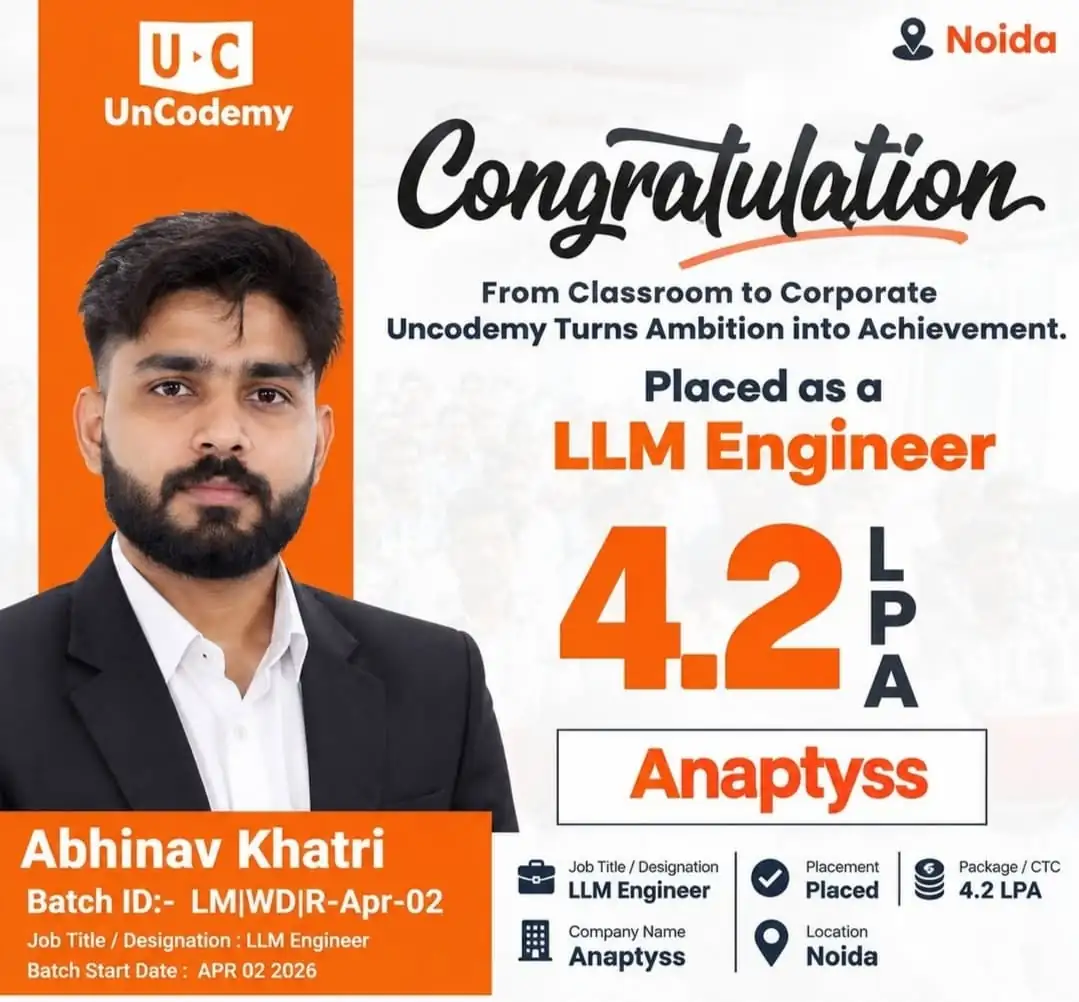
Abhinav Khatri
4.2 LPA
Noida

Abhinav Khatri

LLM Engineer

Placed at:Anaptyss

Batch: (LM|WD|IR-Apr-02)
Read placement record
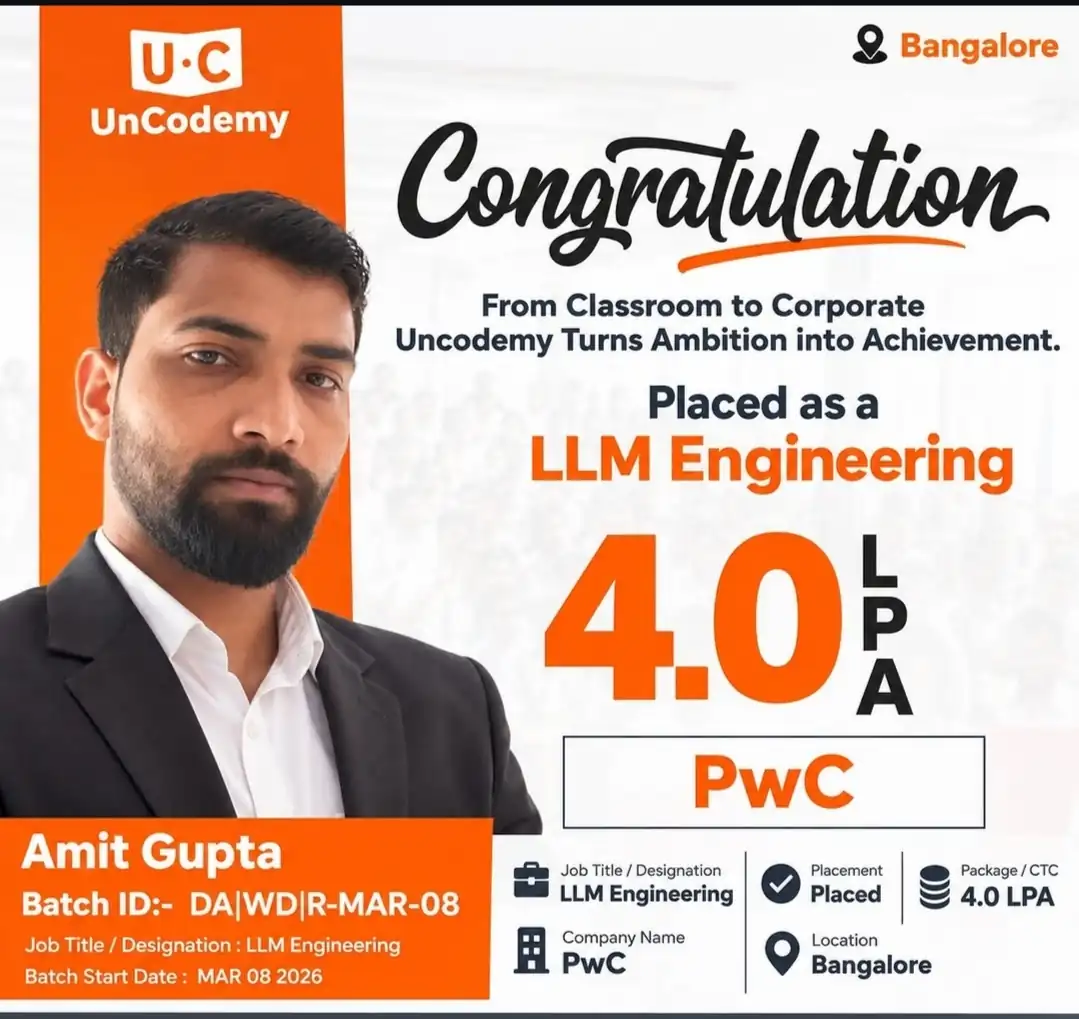
Amit Gupta
4.0 LPA
Bangalore

Amit Gupta

LLM Engineer

Placed at: PwC

(DA|WD|R-MAR-08)
Read placement record
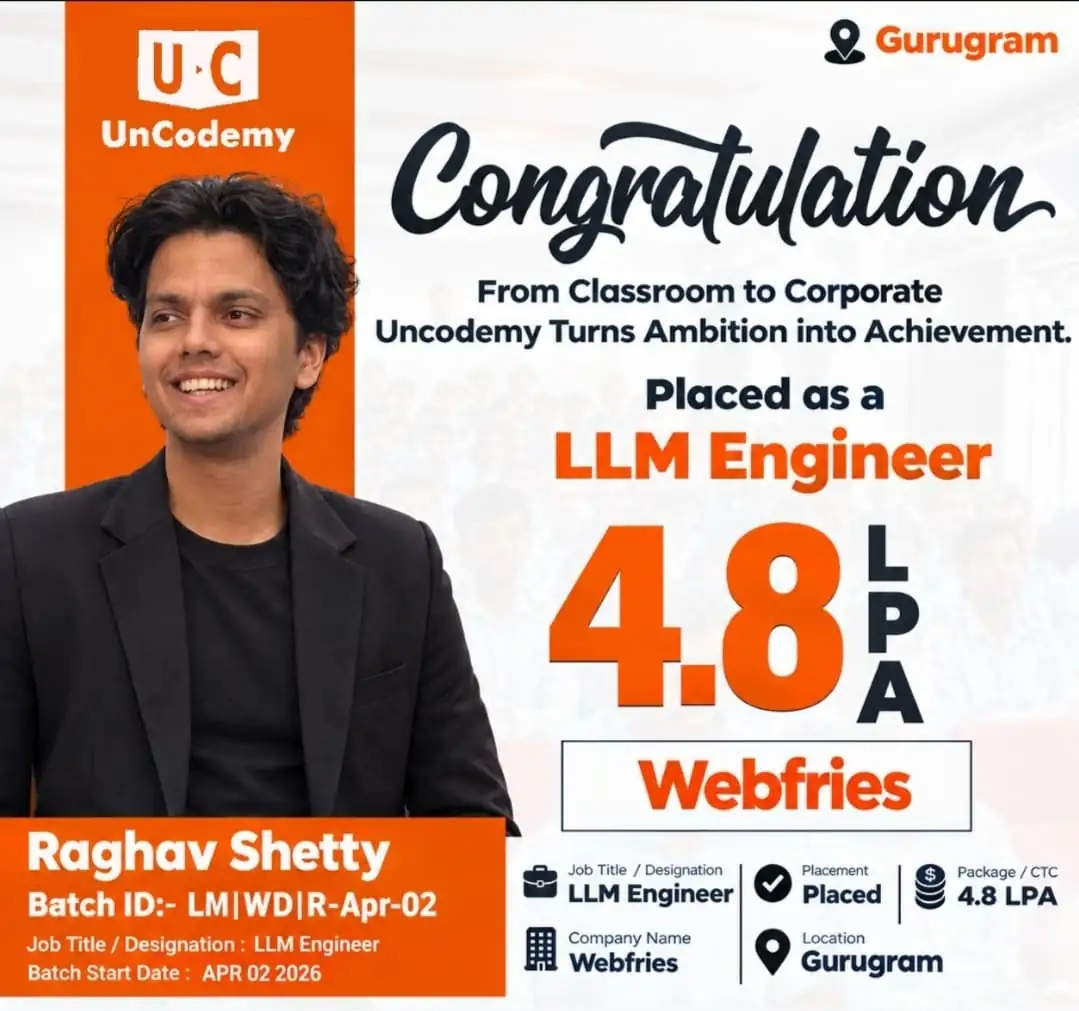
Raghav Shetty
4.8 LPA
Gurugram

Raghav Shetty

LLM Engineer

Placed at: Webfries

(LM|WD|R-Apr-02)
Read placement record
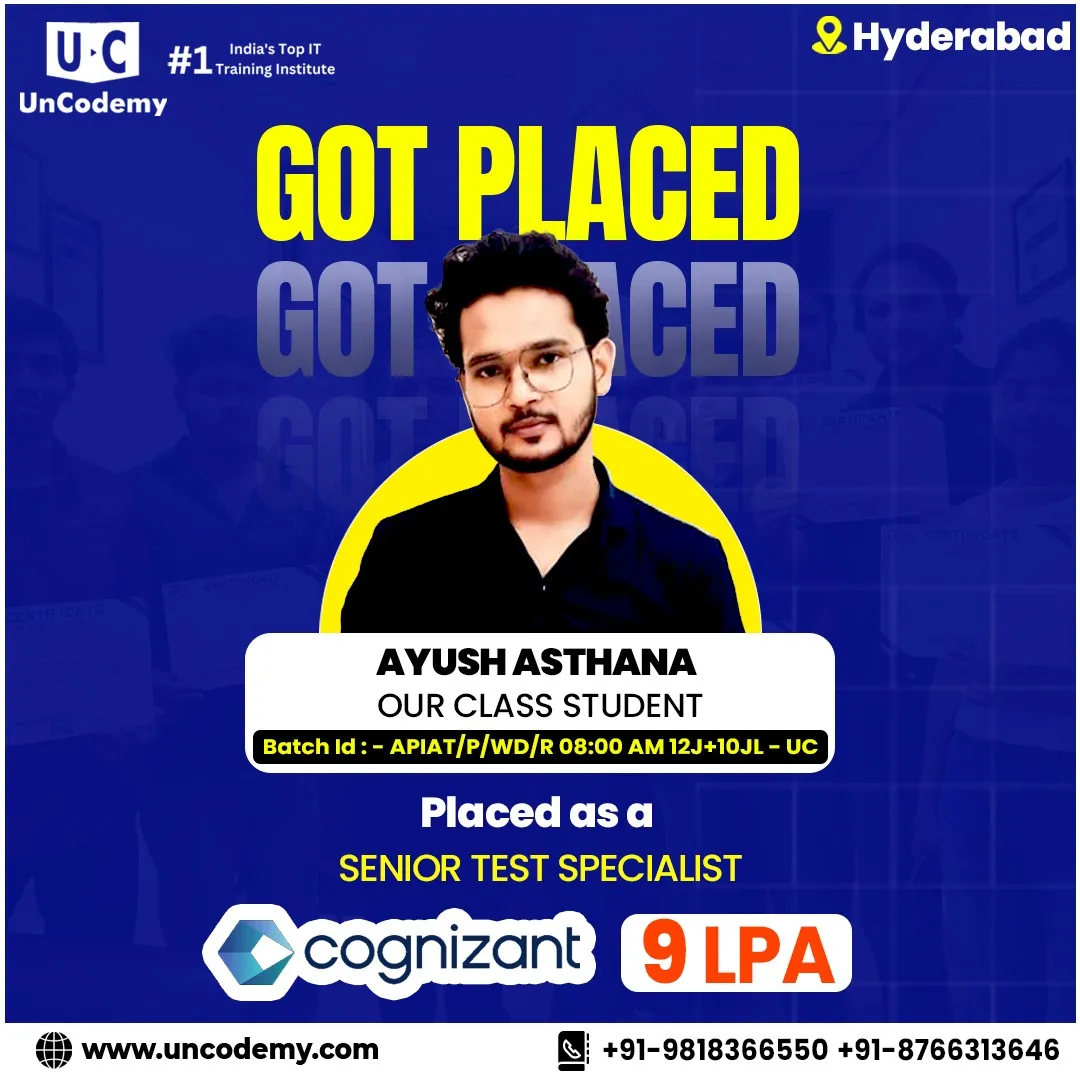
Ayush Asthana
9 LPA
India

Ayush Asthana

Senior Test Specialist

Placed at:Cognizant

APIAT/P/WD/R 08:00 AM 12J+10JL - UC
Read placement record
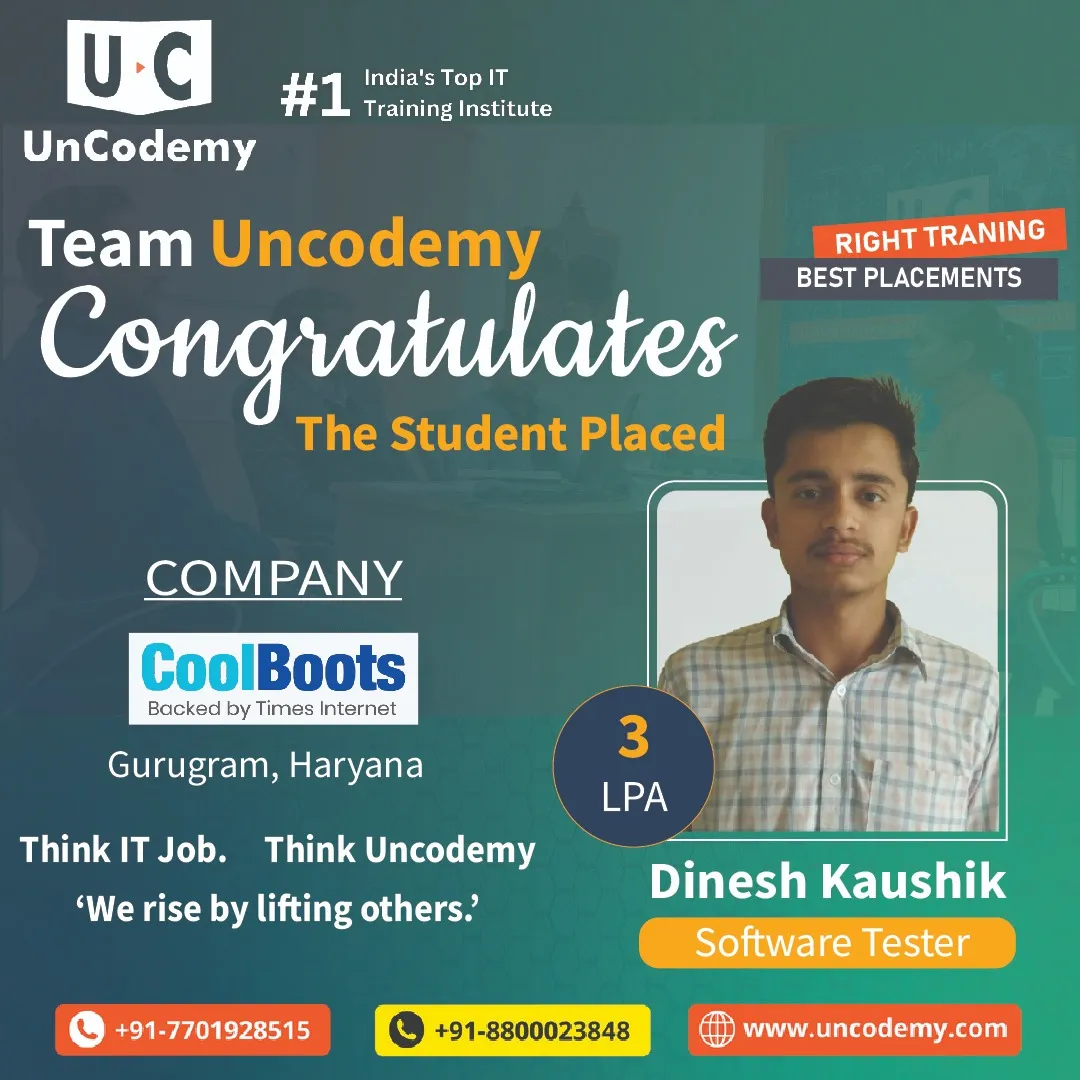
Dinesh Kaushik
3 LPA
Gurugram, Haryana

Dinesh Kaushik

Software Tester

Placed at:CoolBoots

ST/09/0823/S WD 7PM
Read placement record

What is LLM Engineering?

LLM engineering involves designing, building, fine-tuning and deploying applications that leverage large language models. Where traditional software engineering depends on deterministic logic and data science focuses on predictive modelling, LLM engineering deals with probabilistic models, prompt design, retrieval pipelines and model adaptation. It sits at the crossroads of software engineering, machine learning and product development, turning raw LLM capabilities into dependable, production-ready features.

What does an LLM engineer do? By working with LLM APIs and SDKs, an LLM engineer develops RAG pipelines that use embeddings and vector databases, fine-tunes models to meet domain-specific demands, designs LLM agents that support tool calling, evaluates model outputs, and deploys LLM-powered applications. Their everyday work includes Python scripting, prompt engineering, retrieval evaluation, API integration, and using frameworks such as LangChain to join models, data, and tools into a functioning app.

LLM Engineering vs Generative AI vs Data Science

LLM Engineering focuses on building, fine-tuning and deploying LLM-powered applications, while Generative AI & Agentic AI emphasises autonomous agents and Data Science focuses on predictive modelling.

Aspect LLM Engineering Generative AI Data Science
Core focus Building, fine-tuning & deploying LLM-powered applications Building GenAI apps + autonomous AI agents/multi-agent systems Predictive modelling from data
Coding depth High Moderate to High High
Typical entry salary ₹6–10 LPA (Entry-Level LLM Engineer) [CONFIRM per GenAI course sheet] ₹4–8 LPA (per Data Science course sheet)
Uncodemy program duration 5–6 months ~3–4 months (indicative) 8–9 months

Salary ranges are indicative and vary by role, skills, experience, location and employer.

Course Overview

Delivered entirely live online, this LLM Engineering program spans 5–6 months and packs 100+ live sessions with 160+ hours of learning. The 13 modules move step-by-step from Generative AI foundations into Python for LLM engineering, ML & NLP fundamentals, transformer architecture, prompt engineering, LLM APIs & SDKs, embeddings & vector databases, RAG, LLM application development, fine-tuning, LLM agents & tool calling, evaluation & deployment, and finally a 20-hour Enterprise LLM capstone. Theory in each module is paired with hands-on exercises using real tools, and the program finishes with practical projects, RAG applications and an enterprise capstone. The format is fully online, serving Thiruvananthapuram and learners across India.

Who should join this course:

  • Developers looking to specialise in LLM-powered applications and generative AI.
  • Data scientists and ML engineers keen to upskill into LLM engineering and RAG pipelines.
  • Aspiring AI engineers wanting to build production-ready LLM applications.
  • Working professionals moving into GenAI/LLM roles from software or analytics backgrounds.
  • Thiruvananthapuram-based learners who prefer instructor-led live online training with hands-on projects.

Eligibility: Familiarity with programming basics is helpful but not required — Python is taught from Module 2 onward. Comfort with basic ML/NLP concepts is a bonus but built in Module 3. A laptop with stable internet is required for practicals.

Upcoming LLM Engineering Course Batches for Thiruvananthapuram Learners

Choose a live online batch timing that suits your routine — all sessions run on IST. You can start with a free demo class for a first-hand look, then pick from the upcoming weekday or weekend batches. The schedule is built for working professionals and students, with flexible timings and practice-first learning.

Weekdays

Date Time Trainer Seats Left
16oct 07:30 PM – 08:30 PM Mr. Irshad Khan 01Seat
22oct 02:00 PM – 03:00 PM Mr. Upendra Kumar Tiwari 02Seats
26oct 10:30 AM – 11:30 AM Mr. Irshad Khan 01Seat
30oct 12:00 PM – 01:00 PM Mr. Upendra Kumar Tiwari 02Seats

Weekends

Date Time Trainer Seats Left
27oct 03:00 PM – 05:00 PM Mr. Irshad Khan 02Seats

8+ new batches start every month. All timings are in IST. Seats are limited and updated daily.

Curriculum for LLM Engineering Training Course in Thiruvananthapuram

LLM Engineering Course Syllabus in Thiruvananthapuram

The syllabus is organised into 13 modules covering 160 hours. The order follows how LLM engineering actually works: foundations → Python → ML/NLP basics → transformer architecture → prompt engineering → LLM APIs → embeddings/vector DBs → RAG → application development → fine-tuning → agents & tool calling → evaluation/deployment → capstone. Each module includes practical exercises with real tools, and the program closes with hands-on projects, RAG applications and an enterprise LLM capstone.

Module 1: LLM & Generative AI Foundations — 8 Hours

  • Introduction to large language models and generative AI
  • LLM architecture basics: parameters, context windows
  • Tokenization, embeddings and model behaviour
  • GenAI landscape: major model providers and use cases
  • How LLMs differ from traditional software systems
  • Probabilistic outputs and non-determinism in LLMs

Module 2: Python for LLM Engineering — 10 Hours

  • Python syntax, data structures and control flow
  • Functions, modules and packages
  • Working with APIs, JSON and environment variables
  • Virtual environments and dependency management
  • Error handling and debugging for LLM applications
  • Async programming basics for API calls

Module 3: Machine Learning & NLP Fundamentals — 10 Hours

  • Supervised vs unsupervised learning basics
  • Training, validation and test splits
  • Text preprocessing and tokenization for NLP
  • Word embeddings and vector representations
  • Attention mechanisms and sequence modelling
  • Evaluation metrics for NLP tasks

Module 4: Transformers & LLM Architecture — 12 Hours

  • Transformer architecture: encoder, decoder, attention
  • Self-attention and multi-head attention
  • Positional encoding and context length
  • Pre-training vs fine-tuning paradigms
  • Model sizes, distillation and quantization
  • Hands-on: loading and inspecting transformer models

Module 5: Prompt Engineering & Structured Outputs — 8 Hours

  • Prompt design patterns and best practices
  • Zero-shot, few-shot and chain-of-thought prompting
  • Structured outputs: JSON, XML, function schemas
  • Prompt versioning and regression testing
  • Handling ambiguity and edge cases
  • Evaluating prompt reliability

Module 6: Working with LLM APIs & SDKs — 10 Hours

  • Overview of LLM APIs (OpenAI/Gemini/Claude-style)
  • Authentication, rate limits and error handling
  • Streaming responses and async calls
  • Function calling and structured output APIs
  • Cost management and token optimization
  • Building reusable API wrappers in Python

Module 7: Embeddings & Vector Databases — 10 Hours

  • Text embeddings and semantic similarity
  • Vector databases: FAISS, Chroma, Pinecone
  • Indexing strategies and performance trade-offs
  • Chunking strategies for documents
  • Metadata filtering and hybrid search
  • Hands-on: building a vector search pipeline

Module 8: Retrieval-Augmented Generation (RAG) — 15 Hours

  • RAG architecture: retriever, generator, context
  • Building end-to-end RAG pipelines with LangChain
  • Retrieval accuracy and relevance evaluation
  • Reranking and context compression
  • Handling multi-document and multi-hop queries
  • Hands-on: building a production-style RAG application

Module 9: LLM Application Development — 12 Hours

  • Designing LLM-powered applications
  • Chains, memory and context management
  • Integrating LLMs with external data sources
  • Building chat interfaces and APIs
  • Error handling and fallback strategies
  • Hands-on: building an LLM app with LangChain

Module 10: Fine-Tuning & Model Adaptation — 15 Hours

  • When to fine-tune vs prompt engineering vs RAG
  • Dataset preparation and formatting for fine-tuning
  • Parameter-efficient fine-tuning (LoRA, adapters)
  • Using Hugging Face Transformers for fine-tuning
  • Evaluating fine-tuned model performance
  • Hands-on: fine-tuning a small LLM on a custom dataset

Module 11: LLM Agents & Tool Calling — 15 Hours

  • Agent architecture: planning, tool use, memory
  • Tool calling and function execution
  • Multi-step reasoning and task decomposition
  • Building agents with LangChain
  • Agent evaluation and failure mode analysis
  • Hands-on: building a tool-using LLM agent

Module 12: LLM Evaluation, Optimization & Deployment — 15 Hours

  • Evaluation metrics for LLM outputs
  • Automated evaluation with LLM-as-judge
  • Observability and tracing for LLM applications
  • Latency, cost and throughput optimization
  • Deployment patterns: APIs, containers, serverless
  • Monitoring production LLM applications

Module 13: Enterprise LLM Projects & Capstone — 20 Hours

  • End-to-end LLM application design and architecture
  • RAG + fine-tuning + agents integration project
  • Deployment and evaluation of capstone application
  • Code review and portfolio preparation
  • Presentation and documentation of capstone project
  • Interview preparation around capstone work
# Module Hours Tools
1 LLM & Generative AI Foundations 8 ChatGPT, Gemini, Claude
2 Python for LLM Engineering 10 Python, Git
3 Machine Learning & NLP Fundamentals 10 Python, scikit-learn, NLTK
4 Transformers & LLM Architecture 12 Hugging Face Transformers
5 Prompt Engineering & Structured Outputs 8 ChatGPT, Gemini, Claude
6 Working with LLM APIs & SDKs 10 OpenAI/Gemini/Claude APIs, Python
7 Embeddings & Vector Databases 10 FAISS, Chroma, Pinecone
8 Retrieval-Augmented Generation (RAG) 15 LangChain, Vector DBs
9 LLM Application Development 12 LangChain, Python
10 Fine-Tuning & Model Adaptation 15 Hugging Face, LoRA
11 LLM Agents & Tool Calling 15 LangChain, Python
12 LLM Evaluation, Optimization & Deployment 15 LangSmith, Docker, Python
13 Enterprise LLM Projects & Capstone 20 All tools
Total 160 Hours 15+ tools

Contacted by

IR

Mr. Irshad Khan

Curriculum & Technical Reviewer

[8+ Years Of Experience]

Specialization: LLM Engineering, Generative AI, RAG & Fine-Tuning

Get Your LLM Engineering Certification In Thiruvananthapuram

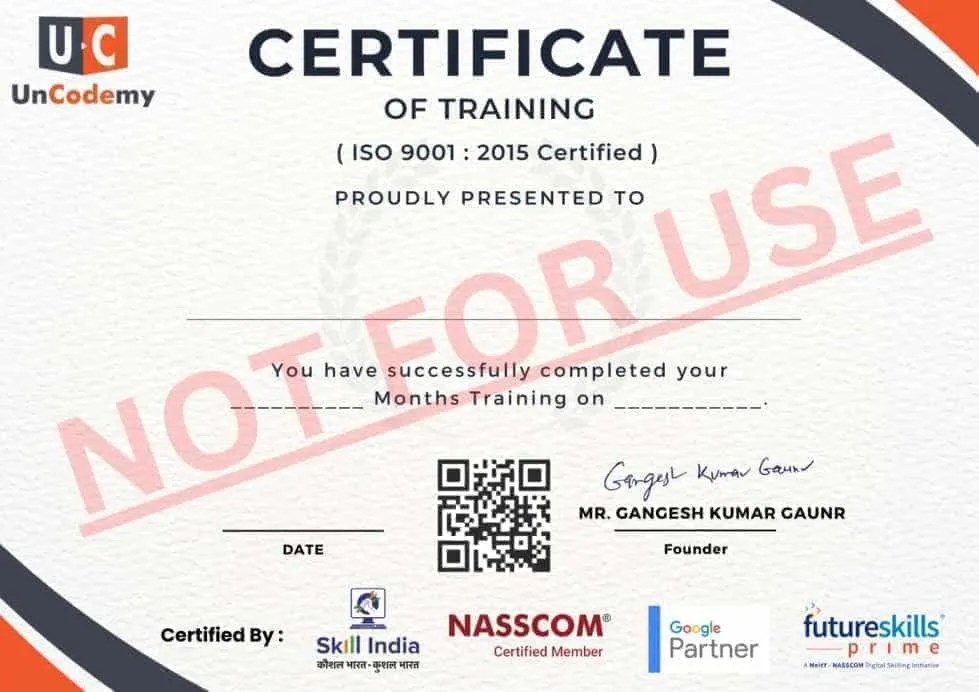
Once you complete all 13 modules, the assignments and the Enterprise LLM capstone project, you receive the Uncodemy LLM Engineering Program Certificate. The certificate carries the program name, duration, tools covered and completion date. It is verifiable online at certificate.uncodemy.com and acts as a formal record of successful completion of the Uncodemy LLM Engineering program.

The certificate is tied to the practical work completed during the program — including hands-on RAG applications, fine-tuning exercises and the 20-hour Enterprise LLM capstone project. Learners work with LLM APIs & SDKs (OpenAI/Gemini/Claude-style), LangChain, Vector Databases (FAISS/Chroma/Pinecone), Python, Hugging Face Transformers, prompt engineering tools, fine-tuning frameworks and evaluation/observability tools.

Key Benefits of Our LLM Engineering Certification:

  • Program Completion :Provides a record of successful completion of the LLM Engineering program.
  • Online Verification :Certificate is verifiable online at certificate.uncodemy.com.
  • Practical Learning :Training includes hands-on RAG applications, fine-tuning work and an enterprise capstone.

This is an independent Uncodemy certificate. It is not affiliated with, endorsed by, or a credential of OpenAI, Google, Anthropic or any other LLM/vendor provider whose APIs are taught in this course. Certificate verification process pending confirmation.

Uncodemy Certificate Verification Online Certificate Verification & Download certificate.uncodemy.com
Uncodemy MSME registration certificate

Tools and Technologies Covered

Apply Now

Introducing Uncodemy


Portfolio/capstone project review:Your hands-on RAG applications, fine-tuning work and enterprise LLM capstone are reviewed and refined into a portfolio an interviewer will find credible.

Resume & LinkedIn:We shape your resume around LLM engineering keywords and measurable outcomes, and align your LinkedIn profile to match.

Interview preparation:System design for LLM applications, RAG pipeline debugging, fine-tuning trade-off questions and LLM engineering case studies specific to AI hiring.

Mock interviews:Sessions with industry trainers, followed by written feedback on what to improve.

Opportunity sharing:Relevant openings are shared with you, with support through the application and interview process.

Continued support:This is active assistance, not a guarantee of employment — no training institute can honestly promise a job. Support continues after your program ends for learners who stay engaged with the process.

Instructors

The people who actually teach this course

Uncodemy separates two roles that most institutes merge together. Trainers lead the live sessions. Domain reviewers — independent specialists who don't teach the batch — confirm the curriculum is technically accurate and current. For this program, curriculum and technical content are reviewed by Mr. Irshad Khan, with further review by Mr. Upendra Kumar Tiwari. This means the person teaching a course is not the only person checking whether its content is correct.

Every trainer and domain reviewer linked to Uncodemy is published by name, with their domain and background — you can check them before you enrol rather than after.

Trivandrum guide

Language-model engineering from Thiruvananthapuram

Thiruvananthapuram combines one of India's oldest IT parks with the machinery of a state capital and a cluster of space and science institutions. That gives an LLM engineer here an unusual set of possible users: enterprise software teams at Technopark, government departments with mountains of Malayalam documents, and research-minded graduates. This page covers where LLM skills fit in the city, the particular challenge of Malayalam text, how Trivandrum learners attend the course, and what roles and pay look like.

Technopark

What Technopark teams build, and where LLMs fit

Technopark in Kazhakoottam, together with the newer Technocity campus further north, hosts a wide range of companies: large IT services firms, product companies and engineering-services businesses. UST has a large campus here, Tata Elxsi runs a design and engineering centre, and IBS Software, which builds systems for airlines and travel firms, is headquartered in the park. Uncodemy has no hiring tie-up with any of these companies; they are named to describe the market.

Read moreRead less

For LLM work, this means a mix of enterprise and domain-heavy projects: airline and travel operations, healthcare and insurance platforms, media and product engineering, and client work for overseas customers. The roles that open up are often inside existing teams adding language-model features, rather than standalone AI labs, so a developer who already knows how enterprise systems are built and deployed has a real advantage.

Kazhakoottam is also where many learners live, near their offices, and the stretch around the bypass has grown into its own residential and co-working zone. That proximity makes in-person meetups after work easy to attend, and the Technopark employee community regularly holds technical talks where people working on generative AI share what they are learning.

Travel text

Airline and travel operations: a good domain for LLM features

Travel operations run on dense text: disruption notices, crew rules, fare conditions, booking change requests and long operations manuals. Mistakes are expensive, and the language is specialised. That combination makes it an excellent domain for learning disciplined LLM engineering.

Read moreRead less
  • Disruption summaries: condensing a long operations message into a short, accurate notice for passengers, without inventing times or gates.
  • Fare-rule questions: answering 'can this ticket be changed?' from the exact fare conditions, with the rule quoted.
  • Manual search: retrieval over procedures where version and effective date matter.

All three use structured outputs, careful retrieval and strict evaluation. Use public sample documents for practice; real airline data is confidential.

A good evaluation trick for this domain: write questions whose correct answer depends on a date, such as which version of a rule applied on a given travel day. Many retrieval systems quietly return the newest version regardless. Catching that failure in your own project gives you a concrete story for interviews.

Public services

Government documents in Malayalam: promise and responsibility

As the state capital, Thiruvananthapuram houses the Secretariat and many departments that issue orders, circulars and scheme guidelines, much of it in Malayalam. Citizens and officials alike struggle to find the latest applicable order. A retrieval system that answers from the official text, cites the order number and date, and refuses when unsure could save real time.

Read moreRead less

It also carries real responsibility. A wrong answer about eligibility for a welfare scheme can harm someone. Any such system must show sources, prefer the latest order, make clear that the official document is authoritative, and be tested with care. As a learning project using publicly available orders, it teaches more about responsible design than most commercial demos. It must not be presented as an official service.

Technically, government orders are a hard retrieval problem. Orders amend earlier orders, refer to them only by number, and are often published as scanned PDFs. A good pipeline needs OCR that handles Malayalam script, a way to link amendments to the orders they change, and an answer step that explains which order is in force. Each of those is a separate component you can test on its own.

Malayalam

Why Malayalam text needs special attention

Malayalam is agglutinative — words join into long compounds — and its script is split into many tokens by most tokenisers. Practically, that means higher cost per sentence, faster use of the context window, and weaker retrieval if the embedding model was trained mainly on English.

Read moreRead less
  • Measure token counts for the same content in Malayalam and English across the models you consider.
  • Test retrieval with compound words. A query using one form of a word may miss a document using a joined form; check whether multilingual embeddings handle it.
  • Include Manglish. Many users type Malayalam in Roman letters mixed with English. Test it separately.
  • Ask native readers to grade generated Malayalam for correctness and tone, since automatic scores can miss awkward or wrong phrasing.

One more practical point: OCR quality for Malayalam varies widely between tools, especially on older scanned documents with mixed fonts. Measure character error rate on a small sample before building anything on top, because retrieval cannot recover text that OCR has already garbled.

Health records

Hospitals and health-tech: careful work with sensitive text

The city is a medical centre for southern Kerala, with government medical college hospitals, the Sree Chitra Tirunal Institute for Medical Sciences and Technology, and many private hospitals. Several Technopark companies also build software for healthcare and insurance clients abroad. Clinical notes, discharge summaries, claim forms and coding manuals are all heavy text.

Read moreRead less
  • Administrative tasks first. Routing insurance queries, summarising billing correspondence or searching coding manuals carry far less risk than anything clinical.
  • De-identify before processing. Remove names, record numbers and dates of birth before text reaches a model, and keep a record of how this was done.
  • Never let the model decide care. Summaries for clinicians must be checked by clinicians, and the interface should make that obvious.
  • Respect several laws at once. Indian data-protection rules apply locally, while overseas clients bring their own health-privacy regulations.

For a portfolio, use public synthetic medical datasets rather than any real records, and say so prominently.

Graduates

Learners from the city's colleges and institutes

The College of Engineering Trivandrum, Sree Chitra Thirunal College of Engineering, the Digital University Kerala at Technocity and many colleges under APJ Abdul Kalam Technological University produce engineering graduates every year. The Indian Institute of Space Science and Technology and the space research presence around the city add a research-oriented community.

Read moreRead less

Graduates with a research leaning should remember that LLM engineering jobs reward working systems over clever ideas: deployment, monitoring, evaluation and cost control. Developers from Technopark firms usually have the opposite gap — strong systems skills, less understanding of how models behave. Programming fundamentals help, but Python is taught from Module 2 onwards and basic ML/NLP is built up in Module 3. Knowing which gap is yours helps you decide where to put extra hours.

Students at the Digital University often work on research projects in AI and data; aligning one of those with the course capstone, where the university allows it, saves time and produces a deeper result. Engineering students elsewhere can do the same with their final-year project, after checking with their guide.

Online classes

How the course runs for Trivandrum learners

There is no Uncodemy centre in Kerala; in-person teaching takes place only in Noida (Sector 1) and Delhi (Shakarpur Extension, Laxmi Nagar). From Thiruvananthapuram you join the live online batches, with identical trainers, assignments and capstone. Try a free demo class first.

  • Duration5–6 months
  • Content160+ hours
  • Live classes100+ live sessions
  • Fee₹17,500 + GST
  • EMIfrom ₹4,032 a month (exact amount and tenure depend on the payment option)
Read moreRead less

Technopark employees often work shifts aligned with clients overseas; confirm the batch slot before enrolling. Work with LLM APIs/SDKs, LangChain, vector databases (FAISS, Chroma, Pinecone), Python, Hugging Face, prompt engineering, fine-tuning (LoRA), evaluation tools and Git runs on an ordinary 8 GB laptop for most modules, and cloud GPU notebooks cover the fine-tuning exercises. Kerala's monsoon brings occasional outages, so keep a mobile hotspot ready.

If you live near Kazhakoottam and commute only a short distance, a weekday evening batch can work well; those travelling from the city centre or from Neyyattinkara and Attingal side may prefer weekends to avoid rushing home in traffic before class.

Plan

A six-month plan pointed at a Thiruvananthapuram capstone

  1. Month 1: foundations and Python. Collect a set of public Kerala government orders in Malayalam and English.
  2. Month 2: ML and NLP basics and transformers. Measure token counts for your documents in both languages.
  3. Month 3: prompting and APIs. Extract order number, date, department and subject from each order into JSON.
  4. Month 4: embeddings, vector databases and RAG. Answer questions with citations, preferring the latest order.
  5. Month 5: fine-tune a small model to classify orders by department, and add a tool that checks dates.
  6. Month 6: evaluation with native-speaker grading, deployment, and a clear write-up of limits.
Read moreRead less

This follows the order of the 13 modules. The finished project shows extraction, retrieval, fine-tuning and evaluation on a genuinely hard language problem.

Expect month 2 to feel slow if you are eager to build. Do not skip it: questions on attention, tokenisation and embeddings are standard in interviews, and understanding them is what lets you explain why Malayalam costs more to process.

Pay

Indicative pay in Thiruvananthapuram

ExperienceTypical roleIndicative range
0–2 yearsDeveloper on GenAI features at a Technopark firm₹4–8 LPA
2–5 yearsLLM or AI engineer in a product or services team₹8–17 LPA
5+ yearsLead for LLM features or platform work₹16–30 LPA
Read moreRead less

Indicative only, not Uncodemy placement data. Pay varies widely between services and product companies; remote roles with Bengaluru teams may pay more.

Interviewers here frequently ask about domain constraints: how you would keep an answer tied to the latest version of a rule, how you would handle Malayalam input, and how you would show a client that accuracy improved. Uncodemy provides resume reviews, mock interviews and job-application support (placement assistance, not a job guarantee).

Many Trivandrum professionals value staying close to family over chasing the highest salary, and the city's lower living costs support that choice. If that is you, aim for roles inside local firms that are starting AI work, and use remote opportunities to stretch your experience without moving.

Explore

More for Thiruvananthapuram learners

Frequently Asked Questions

1. Does Uncodemy have a classroom in Thiruvananthapuram?▼

No. In-person classes run only in Noida (Sector 1) and Delhi (Shakarpur Extension, Laxmi Nagar). Learners in Thiruvananthapuram attend the live online batches.

2. What is the fee?▼

₹17,500 + GST; including GST it is ₹20,650. EMI options are available from ₹4,032 a month (exact amount and tenure depend on the payment option).

3. What does the course cover, and how long is it?▼

It runs 5–6 months, with 160+ hours and 100+ live sessions across 13 modules: Python, ML and NLP basics, transformers, prompting, LLM APIs, embeddings, vector databases, RAG, fine-tuning, agents, evaluation, deployment and a capstone.

4. Can I build Malayalam applications with what I learn?▼

Yes, with care. Expect higher token costs and uneven quality, measure both, and involve native speakers in evaluation.

5. I work at Technopark. Will the course clash with my shift?▼

That depends on your shift and the batch. Check timings during the demo class; weekend batches suit many shift workers.

6. Are there LLM roles in Thiruvananthapuram, or only in Bengaluru?▼

Some Technopark firms are building LLM features, so relevant work exists locally, though in smaller numbers than in Bengaluru. Remote roles add more options.

7. Do I need programming experience?▼

Programming fundamentals help, but Python is taught from Module 2 onwards and basic ML/NLP is built up in Module 3. Basic programming in any language helps a lot.

8. Is placement guaranteed?▼

No. Uncodemy offers resume reviews, mock interviews and job-application support (placement assistance, not a job guarantee). Results depend on your projects and interviews.

Why Trust This Page? Discover Why Students Choose Uncodemy

How we maintain this page

  • Content written by:Mr. Rahul
  • Content rechecked and verified by: Mr. Irshad Khan
  • Course curriculum verified by:Mr. Irshad Khan
  • Technical content verified by: Mr. Irshad Khan
  • Fee verified by: Admin Department
  • Placement figures sourced from internal placement records
  • Review counts verified against respective third-party platforms
  • Last reviewed:
Application Form
Visit Us

Nearest Classroom Training Centres

Open now
Delhi Centre
2nd & 3rd Floor, Maa Katyayni Complex, MB-1E, Madhuban Rd, next to DSEU Ambedkar College, Laxmi Nagar, Shakarpur Extension, Shakarpur, Delhi, 110092
Noida Centre
B, 14-15, Udhyog Marg, Block B, Sector 1, Noida, Uttar Pradesh 201301
Free demo classWalk-ins welcomeWheelchair accessible