#1 India's Top IT Training Institute
×

About Uncodemy

Know more about who we are and what we stand for.

About Us

About Us

Discover our mission to equip individuals with essential IT skills and industry expertise.

Read More →
UnCodeMy Gallery

UnCodeMy Gallery

Explore highlights from our IT training sessions and success stories.

Read More →
Mentors

Mentors

Meet the industry experts who train and guide you through your course.

Read More →
Free Resources

Free Resources

Free tutorials, interview questions, tools and calculators to help you learn.

Explore →
×

Free Resources

Learn, practice and plan your career — bilkul free.

Tutorials

Tutorials

Step-by-step written tutorials to learn any technology at your own pace.

Read More →
Free Counselling

Free Counselling

Book a free video counselling session and pick the right course for you.

Read More →
Online Compiler

Online Compiler

Write, run and test your code online — no setup required.

Read More →
🔥 Most Popular in Chennai

RAG Engineering Training Course in Chennai by Uncodemy

Learners in Chennai can join Uncodemy's instructor-led live online RAG Engineering program, which runs for 5–6 months. The syllabus includes document ingestion & chunking, embeddings, vector databases, retrieval pipelines, hybrid search and production RAG deployment. Designed for developers, data scientists/ML engineers and aspiring AI engineers, the program is made up of 13 modules, 90+ live sessions, 140+ hours and an enterprise RAG capstone. Fee: ₹17,500 + 18% GST, total ₹20,650. EMI starting from ₹4,032/month.

⚡SPECIAL LIMITED TIME OFFER

Special Offer: RAG Engineering Program

Now Pay Only
₹17,500/-
+ 18% GST
No Hidden Charges
100% Transparent
Total ₹20,650
Incl. 18% GST
EMI AVAILABLE
Starting ₹4,032/M*
Fill Your Details
🔒 Your information is safe and secure.

Expert Trainers

Learn from 8+ years experienced professionals

Hands-on Automation Projects

Build real Playwright test suites, not just theory

Lifetime Access

Get lifetime access to recorded sessions & materials

Dedicated Career & Placement Assistance

Resume Building, Mock Interviews & Job Support

Certified Course

Certificate of Completion from Uncodemy

Flexible Batches

Weekday & Weekend Online & Offline

Online & Offline Classes
Weekend & Weekday Batches
100% Practical Training
Affordable Fees
EMI Options Available
Dedicated Support

Program Details

RAG Engineering Course — Live Online Delivery Practical, hands-on learning with a focus on real RAG engineering skills and interview preparation.
An extensive instructor-led live online program spread across 5–6 months covering embeddings, vector databases, retrieval pipelines, hybrid search, and production RAG deployment, together with practical projects, mentoring and career support.
📚 Learning:
140+ Hours of Learning
⏱️ Program Duration:
5–6 Months
🎓 Live Training:
90+ Live Sessions
🛠️ Technology Coverage:
15+ Tools & Technologies
💼 Practical Learning:
Hands-on RAG Projects & Enterprise AI Case Studies
💰 Program Fee:
₹17,500 + 18% GST
💰 Total Fee:
₹20,650
💳 EMI:
Starting From ₹4,032/Month*
🚀 Career Support:
Dedicated Career & Placement Assistance
🎯 Career Support Includes:
Resume Building & LinkedIn Optimization, Mock Interviews & Interview Preparation, Career Guidance & Job Opportunity Assistance

RAG Engineering Course in Chennai — Quick Facts

🎓 Course:
RAG Engineering
🏢 Provider:
Uncodemy Edutech Pvt. Ltd.
📚 Total Learning:
140+ Hours of Learning
📖 Curriculum:
13 Modules
💼 Projects:
Hands-on RAG Projects + Enterprise RAG Capstone
🛠️ Tools:
Python, OpenAI APIs, LangChain, LlamaIndex, Vector Databases
🌐 Modes:
Live Online (offline only at Delhi & Noida centres; Chennai learners join live online)
✅ Prior Coding:
Programming fundamentals helpful; Python taught from Module 2 onward. Basic LLM concepts built up in Module 3.
📜 Certificate:
Uncodemy RAG Engineering Program Certificate (verifiable online)
🗓️ Last Reviewed:
11 November 2026

What is RAG Engineering?

RAG Engineering (Retrieval-Augmented Generation) is the craft of connecting large language models with external knowledge retrieval, so responses are based on real, current enterprise data rather than the model's training data by itself. It requires document ingestion, chunking, embeddings, vector databases and retrieval pipelines that feed relevant context to an LLM at query time — minimising hallucination and enabling AI systems to answer questions about private, domain-specific or fast-changing information.

What does a RAG engineer do? A RAG engineer oversees document ingestion and chunking, develops embeddings and manages vector databases, designs retrieval pipelines, implements hybrid search, assesses RAG accuracy, and deploys production RAG systems. The role's daily work spans Python scripting, working with frameworks like LangChain and LlamaIndex, optimising chunking and retrieval strategies, measuring relevance and faithfulness, and exposing RAG-powered APIs for applications to consume.

RAG Engineering vs LLM Engineering vs Generative AI

The focus of RAG Engineering is building retrieval-grounded AI systems on enterprise knowledge, whereas LLM Engineering covers LLM-powered applications broadly and Generative AI leans toward autonomous agents.

Aspect RAG Engineering LLM Engineering Generative AI
Core focus Building retrieval-grounded AI systems on enterprise knowledge Building, fine-tuning & deploying LLM-powered applications broadly Building GenAI apps + autonomous AI agents
Coding depth High High Moderate to High
Typical entry salary ₹5–9 LPA (Entry-Level RAG Engineer) ₹6–10 LPA (per LLM Engineering course sheet) [CONFIRM per GenAI course sheet]
Uncodemy program duration 5–6 months 5–6 months ~3–4 months (indicative)

Salary ranges are indicative and vary by role, skills, experience, location and employer.

Course Overview

Spread over 5–6 months, the RAG Engineering course is a live online program that covers 90+ live sessions and 140+ hours of learning. Its structure consists of 13 modules that lead from RAG & enterprise knowledge AI foundations through Python for RAG engineering, LLM fundamentals & API integration, document processing & data ingestion, text chunking & document transformation, embeddings & semantic search, vector databases & indexing, RAG, advanced retrieval & reranking, hybrid search & knowledge retrieval, RAG evaluation & optimization, production RAG APIs & deployment, and a 20-hour enterprise RAG capstone. Practical exercises with real tools are part of every module, and the program closes with hands-on RAG projects and an enterprise capstone. It is delivered fully live online for Chennai and nationwide learners.

Who should join this course:

  • Developers wanting to specialise in retrieval-grounded AI systems and enterprise knowledge assistants.
  • Data scientists and ML engineers upskilling into RAG engineering and vector search.
  • Aspiring AI engineers looking to build production-ready RAG applications.
  • Working professionals moving into GenAI/RAG roles from software or analytics backgrounds.
  • Chennai-based learners who want instructor-led live online training with hands-on projects.

Eligibility: While a programming foundation is beneficial, it is not mandatory — Python is introduced from Module 2 onward. Some familiarity with basic LLM concepts can help, though the program develops these starting in Module 3. A laptop with dependable internet is needed to take part in practical sessions.

Upcoming RAG Engineering Course Batches for Chennai Learners

Find a batch timing that fits into your day. Live online batches, IST timings. Take a free demo class first-hand, or come aboard our upcoming weekend and weekday live batches — crafted for working professionals and students alike, with flexible timings and practical, hands-on training.

Weekdays

Date Time Trainer Seats Left
16oct 07:30 PM – 08:30 PM Mr. Irshad Khan 01Seat
22oct 02:00 PM – 03:00 PM Mr. Upendra Kumar Tiwari 02Seats
26oct 10:30 AM – 11:30 AM Mr. Irshad Khan 01Seat
30oct 12:00 PM – 01:00 PM Mr. Upendra Kumar Tiwari 02Seats

Weekends

Date Time Trainer Seats Left
27oct 03:00 PM – 05:00 PM Mr. Irshad Khan 02Seats

8+ new batches start every month. All timings are in IST. Seats are limited and updated daily.

Curriculum for RAG Engineering Training Course in Chennai

RAG Engineering Course Syllabus in Chennai

The syllabus is set out across 13 modules totalling 140 hours. Its sequence tracks how RAG engineering really works: foundations → Python → LLM fundamentals & API integration → document processing & chunking → embeddings & semantic search → vector databases → RAG → advanced retrieval/reranking → hybrid search → evaluation → production deployment → capstone. Practical exercises with real tools appear in each module, and the program finishes with hands-on RAG projects and an enterprise RAG capstone.

Module 1: RAG & Enterprise Knowledge AI Foundations — 8 Hours

  • Introduction to RAG and enterprise knowledge AI
  • How RAG differs from fine-tuning and prompt-only approaches
  • Enterprise knowledge sources: documents, databases, APIs
  • RAG architecture overview: ingestion, retrieval, generation
  • Use cases: knowledge assistants, enterprise search, AI copilots
  • Challenges: accuracy, freshness, privacy and scale

Module 2: Python for RAG Engineering — 10 Hours

  • Python syntax, data structures and control flow
  • Functions, modules and packages
  • Working with APIs, JSON and environment variables
  • Virtual environments and dependency management
  • File I/O and handling document formats
  • Error handling and debugging for RAG applications

Module 3: LLM Fundamentals & API Integration — 10 Hours

  • LLM basics: tokens, context windows, temperature
  • Overview of LLM APIs (OpenAI/Gemini/Claude-style)
  • Authentication, rate limits and error handling
  • Streaming responses and async calls
  • Prompt basics for RAG-grounded answers
  • Building reusable API wrappers in Python

Module 4: Document Processing & Data Ingestion — 8 Hours

  • Document formats: PDF, HTML, DOCX, Markdown, CSV
  • Text extraction and cleaning pipelines
  • Metadata extraction and enrichment
  • Handling tables, images and structured content
  • Incremental ingestion and update strategies
  • Hands-on: building a document ingestion pipeline

Module 5: Text Chunking & Document Transformation — 8 Hours

  • Chunking strategies: fixed-size, recursive, semantic
  • Overlap, chunk size and their impact on retrieval
  • Document transformation and normalization
  • Metadata tagging for filtered retrieval
  • Handling multi-document and hierarchical content
  • Hands-on: comparing chunking strategies

Module 6: Embeddings & Semantic Search — 10 Hours

  • Text embeddings and semantic similarity
  • Embedding models: OpenAI, Hugging Face, open-source
  • Similarity metrics: cosine, dot product, Euclidean
  • Building and querying a semantic search index
  • Evaluating embedding quality for retrieval
  • Hands-on: building a semantic search pipeline

Module 7: Vector Databases & Indexing — 10 Hours

  • Vector databases: FAISS, ChromaDB, Pinecone, pgvector
  • Index types: flat, IVF, HNSW and trade-offs
  • Upserting, updating and deleting vectors
  • Metadata filtering and namespaces
  • Performance, scaling and cost considerations
  • Hands-on: building a vector search index

Module 8: Retrieval-Augmented Generation (RAG) — 12 Hours

  • RAG architecture: retriever, context builder, generator
  • Building end-to-end RAG pipelines with LangChain
  • Building RAG pipelines with LlamaIndex
  • Prompt design for grounded answers
  • Handling citations and source attribution
  • Hands-on: building a production-style RAG application

Module 9: Advanced Retrieval & Reranking — 10 Hours

  • Multi-query and query rewriting strategies
  • Reranking with cross-encoders and LLMs
  • Context compression and window expansion
  • Handling multi-hop and comparative queries
  • Retrieval fallback and error handling
  • Hands-on: adding reranking to a RAG pipeline

Module 10: Hybrid Search & Knowledge Retrieval — 10 Hours

  • Combining keyword (BM25) and vector search
  • Reciprocal rank fusion and score normalization
  • Elasticsearch/OpenSearch for hybrid retrieval
  • Metadata filters and structured queries
  • Knowledge graph integration basics
  • Hands-on: building a hybrid search system

Module 11: RAG Evaluation, Accuracy & Optimization — 12 Hours

  • Retrieval metrics: recall, precision, MRR, nDCG
  • Generation metrics: faithfulness, answer relevance
  • Building evaluation datasets for RAG
  • Automated evaluation with LLM-as-judge
  • Diagnosing and fixing retrieval failures
  • Hands-on: evaluating a RAG pipeline end-to-end

Module 12: Production RAG, APIs & Deployment — 12 Hours

  • Exposing RAG pipelines as APIs with FastAPI
  • Latency, caching and throughput optimization
  • Cost management for embeddings and LLM calls
  • Containerization and deployment with Docker
  • Monitoring, logging and observability for RAG
  • Hands-on: deploying a RAG API to the cloud

Module 13: Enterprise RAG Projects & Capstone — 20 Hours

  • End-to-end RAG application design and architecture
  • Ingestion + embeddings + vector DB + retrieval integration
  • Evaluation and optimization of the capstone application
  • Code review and portfolio preparation
  • Presentation and documentation of capstone project
  • Interview preparation around capstone work
# Module Hours Tools
1 RAG & Enterprise Knowledge AI Foundations 8 Python, LLM APIs
2 Python for RAG Engineering 10 Python, Git
3 LLM Fundamentals & API Integration 10 OpenAI APIs, Hugging Face
4 Document Processing & Data Ingestion 8 Python, LlamaIndex
5 Text Chunking & Document Transformation 8 LangChain, LlamaIndex
6 Embeddings & Semantic Search 10 Hugging Face, OpenAI Embeddings
7 Vector Databases & Indexing 10 FAISS, ChromaDB, Pinecone, pgvector
8 Retrieval-Augmented Generation (RAG) 12 LangChain, LlamaIndex, Vector DBs
9 Advanced Retrieval & Reranking 10 LangChain, Cross-Encoders
10 Hybrid Search & Knowledge Retrieval 10 Elasticsearch/OpenSearch, LangChain
11 RAG Evaluation, Accuracy & Optimization 12 RAGAS, LangSmith, Python
12 Production RAG, APIs & Deployment 12 FastAPI, Docker, Cloud Deployment Tools
13 Enterprise RAG Projects & Capstone 20 All tools
Total 140 Hours 15+ tools

Contacted by

IR

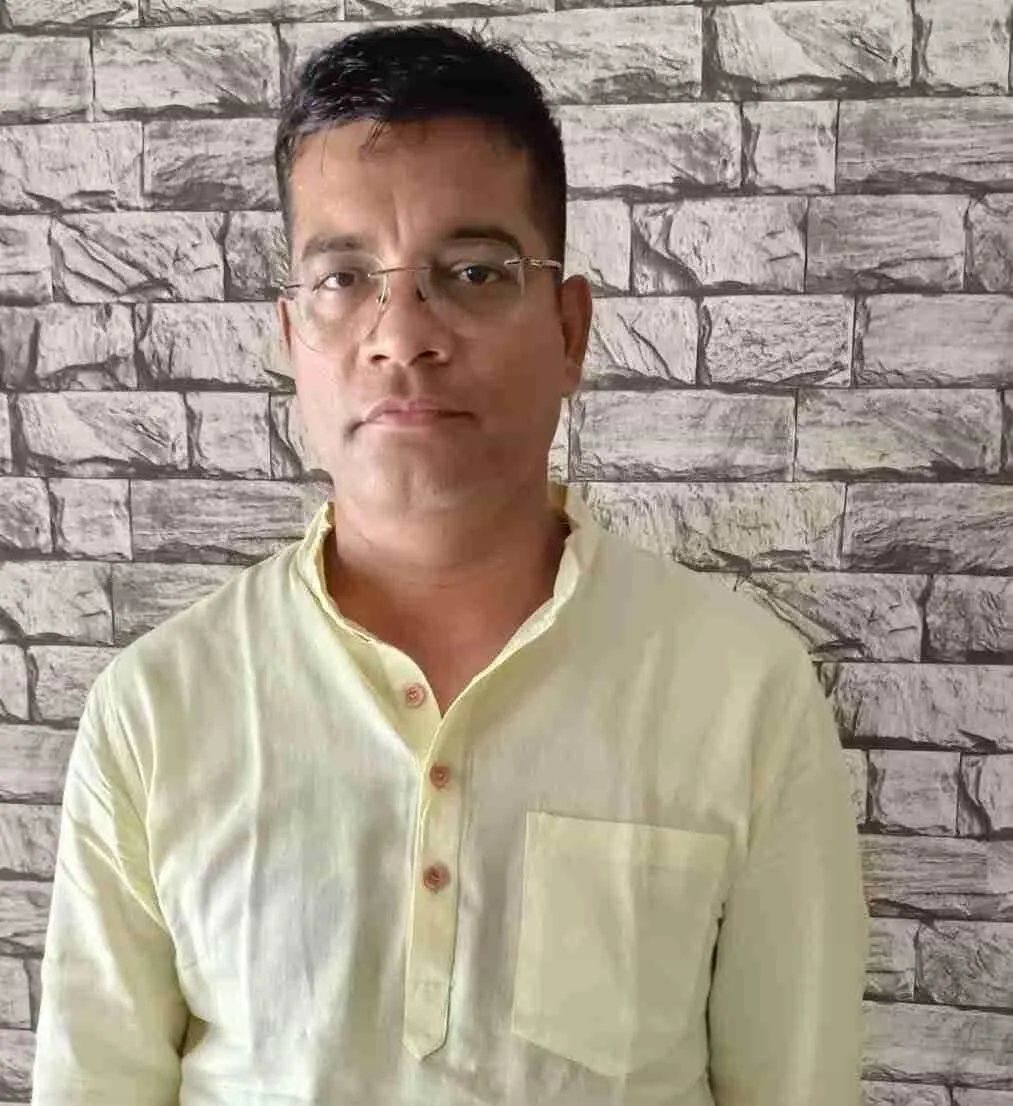
Mr. Irshad Khan

Curriculum & Technical Reviewer

[8+ Years Of Experience]

Specialization: RAG Engineering, Generative AI, Retrieval Systems

Get Your RAG Engineering Certification In Chennai

After completing all 13 modules, the assignments and the Enterprise RAG capstone project, you are awarded the Uncodemy RAG Engineering Program Certificate. The certificate records the program name, duration, tools covered and completion date. It can be verified online at certificate.uncodemy.com and stands as a record of successful completion of the Uncodemy RAG Engineering program.

The certificate is tied to the practical work done during the program — including hands-on RAG pipeline work, retrieval evaluation and the 20-hour Enterprise RAG capstone project. Learners work across Python, OpenAI APIs, Hugging Face, LangChain, LlamaIndex, LangGraph, FAISS, ChromaDB, Pinecone, PostgreSQL/pgvector, Elasticsearch/OpenSearch, FastAPI, Docker, Git/GitHub and cloud deployment tools.

Key Benefits of Our RAG Engineering Certification:

  • Program Completion :Provides a record of successful completion of the RAG Engineering program.
  • Online Verification :Certificate is verifiable online at certificate.uncodemy.com.
  • Practical Learning :Training includes hands-on RAG pipelines, retrieval evaluation and an enterprise capstone.

This is an independent Uncodemy certificate. It is not affiliated with, endorsed by, or a credential of OpenAI, Pinecone or any other RAG/vendor provider whose tools are taught in this course. Certificate verification process pending confirmation.

Uncodemy Certificate Verification Online Certificate Verification & Download certificate.uncodemy.com
Uncodemy MSME registration certificate

Tools and Technologies Covered

Apply Now

Introducing Uncodemy


Portfolio/capstone project review:Your hands-on RAG pipelines, retrieval evaluation work and enterprise RAG capstone are reviewed and refined into a portfolio an interview will find credible.

Resume & LinkedIn:We build your resume around RAG engineering keywords and measurable outcomes, and align your LinkedIn profile to match.

Interview preparation:Retrieval pipeline design questions, chunking-strategy trade-offs, evaluation-metric discussions and RAG engineering case studies specific to AI hiring.

Mock interviews:Sessions with industry trainers, followed by written feedback on what to fix.

Opportunity sharing:Relevant openings are shared with you, with support through the application and interview process.

Continued support:This is active assistance, not a guarantee of employment — no training institute can honestly promise a job. Support continues after your program ends for learners who stay engaged with the process.

Instructors

The people who actually teach this course

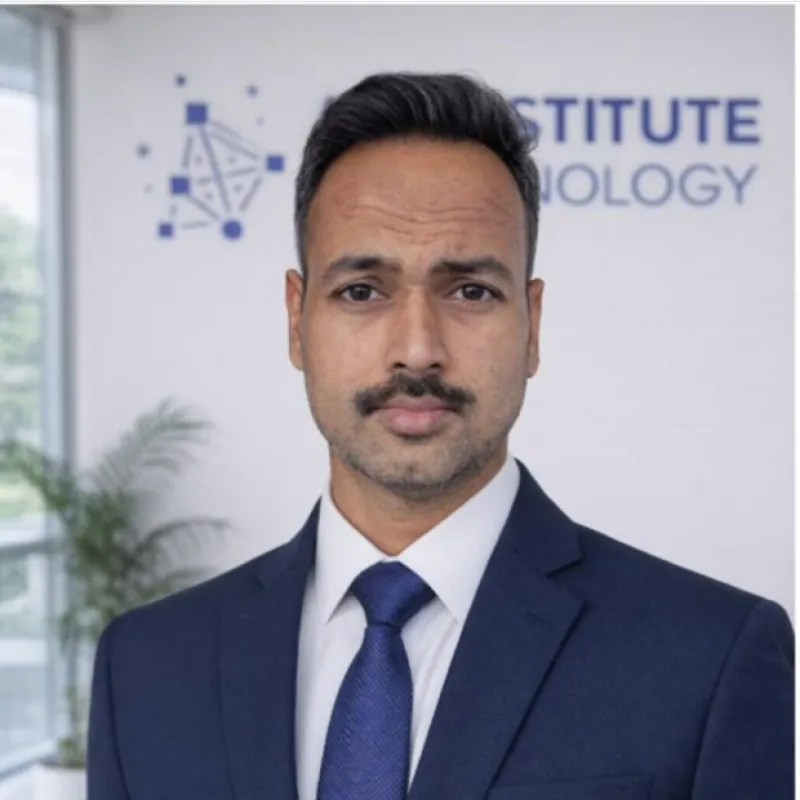
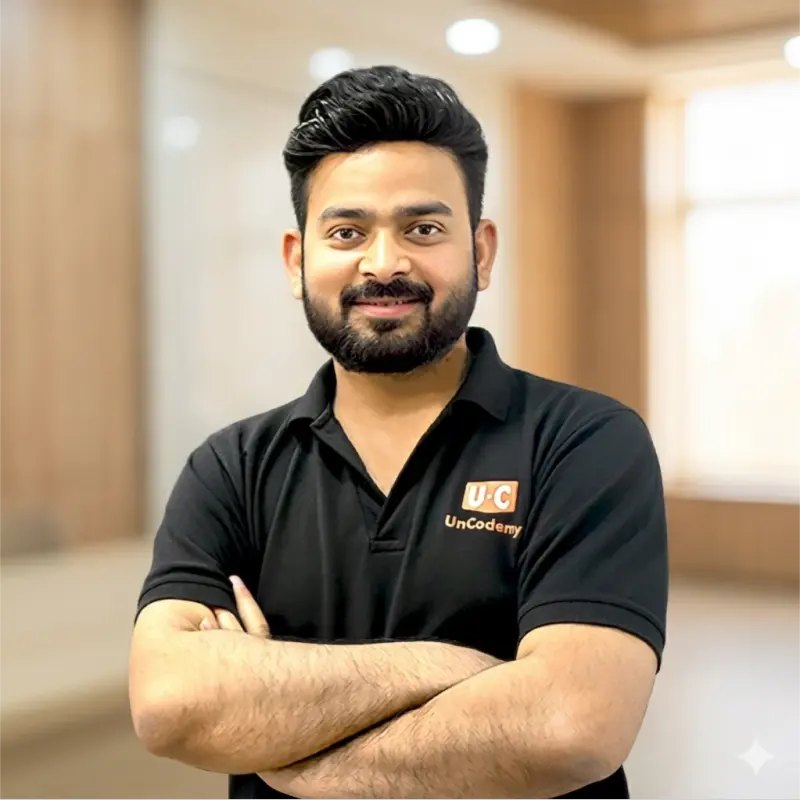
Irshad Khan, Senior Trainer at Uncodemy, leads this program, bringing 8+ years across Data Science, Data Analytics, SQL, Power BI, Python and Generative AI. He's also the one who reviewed and approved the curriculum you see here.

Most institutes blur two jobs into one; Uncodemy keeps them apart. Trainers handle the live teaching. A separate group of domain reviewers — specialists — check that the curriculum stays accurate and up to date. Upendra Kumar Tiwari reviews the technical content for this program, so the person teaching it isn't the only one vouching for it.

Uncodemy publishes every trainer and domain reviewer by name, along with their area of focus and background — so you can check them out before enrolling, not afterward.

Chennai guide

Insurance wordings, hospital protocols and Tamil scans: RAG in Chennai

Chennai runs on paperwork that somebody actually has to read: policy wordings and endorsements, hospital protocols and tariff sheets, customs notifications and shipping papers, court records and decades of government files, many of them scanned and some in Tamil. That makes the city a natural fit for retrieval-augmented generation, where the real job is finding the right clause before any model writes a word. This page walks through those document types, the engineering each one demands, and how Chennai learners attend the course live online, as there is no Uncodemy classroom in the city.

Policy clauses

Insurance policy wordings: retrieval where one word changes the answer

Several general and health insurers have their head offices in Chennai, among them Star Health and Allied Insurance, Royal Sundaram General Insurance and Cholamandalam MS General Insurance, and many insurers and brokers run operations and technology teams here. They are named only to describe the market; Uncodemy has no hiring tie-up with any of them.

Read moreRead less

A policyholder's question such as 'is cataract surgery covered in the first year?' depends on several parts of a document at once: the coverage clause, a waiting-period clause, the exclusions list and perhaps an endorsement issued later. Naive chunking pulls these apart, and the model then answers from the coverage clause alone.

  • Structure-aware chunks: split on clause numbers and carry the heading path ('Section 4 > Exclusions > 4.2') inside every chunk.
  • Linked retrieval: when a coverage clause is found, also pull in the definitions and exclusions it refers to.
  • Product and version metadata: one plan name can have several filed versions, and the answer must come from the version the customer actually bought.
  • Regulatory overlay: regulator circulars can override policy text, so a separate, dated index of circulars is worth maintaining.
Hospital docs

Clinical protocols and TPA paperwork in a hospital city

Chennai draws patients from across India and abroad, and its hospitals, diagnostic chains and third-party administrators (TPAs) generate a steady flow of documents: treatment protocols, drug formularies, pre-authorisation forms, tariff sheets and discharge summaries.

Read moreRead less

Protocol lookup

Doctors and nurses asking which internal protocol applies. Retrieval has to surface the version in force and show its section, never a blend of two editions.

Pre-authorisation

Matching a requested procedure against an insurer's tariff and the policy terms. Procedure codes and rupee amounts need keyword matching alongside vectors.

Medical vocabulary

Abbreviations, brand versus generic drug names and spelling variants. A query-time synonym list often fixes more than switching embedding models.

Health records are sensitive personal data. Never use real patient documents for learning or a portfolio; public clinical guidelines and synthetic forms are enough. Anything meant for real use needs clinical review and must follow the employer's privacy rules.

Tamil scans

Scanned Tamil and bilingual files: fix ingestion before retrieval

Government orders, land and registration papers, older court records and many company archives in Tamil Nadu exist mainly as scans, often bilingual and sometimes typed in legacy Tamil fonts instead of Unicode. If the text layer is broken, no embedding model can rescue the pipeline.

Read moreRead less
  1. Inspect the text layer: check whether a PDF has extractable text at all. Legacy-font files can 'extract' as garbled Latin characters and need conversion to Unicode, or OCR instead.
  2. Run OCR with Tamil support (Tesseract ships a Tamil model) and measure the character error rate against a page you corrected by hand.
  3. Normalise Unicode so that visually identical Tamil words are stored identically.
  4. Plan for three query styles: Tamil script, English, and Tamil written in English letters. Test a multilingual embedding model on all three before trusting it.
  5. Keep a link to the page image with every chunk, so a reviewer can open the original scan behind any answer.
Port papers

Customs notices and trade documents around Chennai's ports

Chennai Port and Kamarajar Port at Ennore make the city a base for exporters, freight forwarders, customs brokers and shipping lines. Their staff search tariff schedules, customs notifications and letters of credit every working day.

Read moreRead less
  • Codes or words: a query may contain an HS code or a plain product description; hybrid search lets either path reach the right tariff line.
  • Amendment chains: one notification may be amended many times, and the answer must reflect what was in force on the shipment date, so effective dates are stored and filtered on.
  • Rates live in tables: table-aware parsing that keeps the row and column headers with every cell decides whether the numbers come out right.

This text is published by government sources, which makes it good practice data. A trade-notice assistant that answers 'what duty applied to this item on a given date, and under which notification?' is a project few other candidates will have.

Client projects

RAG on services projects: when the client decides where data lives

A large share of Chennai's software engineers work in IT-services delivery centres in Siruseri, Sholinganallur, Perungudi and Porur, building for overseas banks, insurers and manufacturers. Retrieval work that arrives through those accounts comes with constraints a startup tutorial never mentions.

Read moreRead less
  • Data residency: the client may forbid sending documents to an external API, which means self-hosted embedding models and an index inside the client's own cloud account or data centre.
  • Existing platforms: pgvector or OpenSearch is often picked because the client already operates PostgreSQL or a search cluster, not because it topped a benchmark.
  • Contractual accuracy: a statement of work may define acceptance thresholds, so you must produce evaluation numbers on the client's own test questions.
  • Handover: code, runbooks and dashboards must be maintainable by a support team after the build team rolls off.

Engineers who already know delivery discipline start with an advantage here. What they usually lack is retrieval depth: chunking strategy, reranking, hybrid search and measurement.

Online batch

Joining the course from Chennai

There is no Uncodemy classroom in Chennai or elsewhere in Tamil Nadu; physical batches are held only at Noida (Sector 1) and Delhi (Shakarpur Extension, Laxmi Nagar). Chennai learners attend live online with the same trainers, assignments and capstone reviews, and every class is recorded.

  • Duration5–6 months
  • Content140+ hours
  • Live classes90+ live sessions
  • Fee₹17,500 + GST
  • EMIfrom ₹4,032 a month
Read moreRead less

The 13 modules build from foundations and Python to LLM APIs, document processing, chunking, embeddings, vector databases, retrieval, reranking, hybrid search, evaluation and production deployment. Programming fundamentals help but are not mandatory: Python is taught from Module 2 onward and basic LLM concepts are built up in Module 3.

  • Choose a document domain early: by the time chunking starts, settle on one of the types above (policy wordings, clinical protocols, trade notices or Tamil scans) and apply every new technique to it.
  • Client-hours jobs: if your project follows a UK or US client's day, choose the batch that avoids your calls and lean on recordings during release weeks.
  • College students: during end-semester exams, slow down rather than stop; keep the project moving even if only for an hour a week.
  • Try before paying: a free demo class is open first.
RAGAS in practice

Evaluating a claims-question assistant with RAGAS

Evaluation is what separates a demo from something an insurer's operations team could pilot. A worked example shows how the pieces fit together.

Read moreRead less
  1. Write about 120 questions from three public health-policy wordings, including awkward ones on waiting periods, sub-limits and exclusions, plus 20 that the documents cannot answer.
  2. For each, note the clause holding the answer and a short reference answer.
  3. Run the pipeline and score context recall and context precision (did retrieval find the right clauses?), then faithfulness and answer relevancy (did the answer stay inside them?).
  4. Read the fifteen lowest-scoring cases yourself. Automated judges make mistakes, and this is where you catch them.
  5. Change one thing, such as chunking on clause boundaries or adding a reranker, rerun, and keep both sets of scores.

Unanswerable questions deserve a separate count. An assistant that confidently invents a benefit is far worse than one that replies 'this document does not cover that'.

Pay & panels

Indicative pay and interview focus in Chennai

ProfileLikely titleIndicative range
0–2 years, with a RAG portfolioGenAI or AI application developer₹4.5–9 LPA
2–5 years as developer or data engineerRAG or search engineer₹9–18 LPA
5+ years, retrieval shipped to productionSenior AI engineer or tech lead₹18–32 LPA

Indicative only, based on public listings and general market patterns rather than Uncodemy placement records. Chennai offers depend on employer type, client account, interviews and prior experience, and can sit outside these bands.

Read moreRead less

Panels at services firms and capability centres in the city often spend as much time on delivery as on theory:

  • 'How would you run this without any client data leaving India?'
  • 'What accuracy would you commit to in a statement of work, and how would you measure it?'
  • 'A scanned PDF retrieves nothing. Where do you look first?'
  • 'Two versions of the same policy are in the index. How does the system pick the right one?'

Product companies add a retrieval design discussion and a walk-through of your own repository, so be ready to explain every chunking and indexing choice in it.

Who joins

Starting points among Chennai learners

  • Insurance and TPA operations staff with some Python, who already read policy language daily and want to move to the technology side.
  • Data engineers and ETL developers, whose pipeline skills transfer directly to ingestion and indexing.
  • Search and document-management specialists (Elasticsearch, SharePoint, records systems) who want to add vector and hybrid retrieval.
  • Final-year engineering students who want a narrow, demonstrable specialisation rather than a general AI certificate.
Read moreRead less

The course is a long commitment alongside a job. If you cannot set aside regular practice time between classes for most of its length, it is better to wait a few weeks and start properly than to fall behind in the vector database modules, where the work becomes cumulative.

Frequently Asked Questions

1. Can I attend RAG engineering classes in a Chennai classroom?▼

No. Chennai learners join live online batches, with recordings. Classroom teaching takes place only at Noida (Sector 1) and Delhi (Shakarpur Extension, Laxmi Nagar).

2. How much is the course if I join from Chennai?▼

The fee does not change by city: ₹17,500 + GST, or ₹20,650 once GST is added, with EMI from ₹4,032 a month.

3. How long is it, and what is taught?▼

5–6 months in total, with 140+ hours and 90+ live sessions spread over 13 modules, from Python and LLM basics through ingestion, chunking, embeddings, vector databases, reranking, hybrid search, evaluation and deployment, ending in hands-on RAG projects plus a 20-hour enterprise RAG capstone.

4. Will Uncodemy guarantee me a job in Chennai?▼

No guarantee is given. What you get is resume reviews, mock interviews and job-application support (placement assistance, not a job guarantee).

5. Can I build my project on Tamil documents?▼

Yes, and it can make your portfolio stand out. Expect to spend real time on OCR and Unicode clean-up before retrieval, and test a multilingual embedding model on Tamil, English and transliterated questions.

6. My client forbids external AI APIs. Is that covered?▼

The tool set includes Python, OpenAI APIs, Hugging Face, LangChain, LlamaIndex, LangGraph, FAISS, ChromaDB, Pinecone, PostgreSQL/pgvector, Elasticsearch/OpenSearch, FastAPI, Docker, Git/GitHub and cloud deployment tools. Several of these, such as Hugging Face models, FAISS, pgvector and OpenSearch, can run inside your own environment. Ask in the demo class how much self-hosting the current batch covers.

7. Is RAG work in Chennai limited to SaaS companies?▼

No. Insurers, hospitals and TPAs, logistics and trade firms, and IT-services teams serving overseas clients all have retrieval problems. Uncodemy has no hiring tie-up with any employer; check openings yourself.

8. Which capstone topic suits a Chennai job search?▼

Match the sector you want: policy wordings for insurance, clinical guidelines for health-tech, customs notifications for logistics, or a scanned bilingual archive for government and services projects. Use only public or synthetic documents.

Why Trust This Page? Discover Why Students Choose Uncodemy

How we maintain this page

  • Content written by:Mr. Rahul
  • Content rechecked and verified by: Mr. Irshad Khan
  • Course curriculum verified by:Mr. Irshad Khan
  • Technical content verified by: Mr. Irshad Khan
  • Fee verified by: Admin Department
  • Placement figures sourced from internal placement records
  • Review counts verified against respective third-party platforms
  • Last reviewed:
Application Form
Visit Us

Nearest Classroom Training Centres

Open now
Delhi Centre
2nd & 3rd Floor, Maa Katyayni Complex, MB-1E, Madhuban Rd, next to DSEU Ambedkar College, Laxmi Nagar, Shakarpur Extension, Shakarpur, Delhi, 110092
Noida Centre
B, 14-15, Udhyog Marg, Block B, Sector 1, Noida, Uttar Pradesh 201301
Free demo classWalk-ins welcomeWheelchair accessible