#1 India's Top IT Training Institute
×

About Uncodemy

Know more about who we are and what we stand for.

About Us

About Us

Discover our mission to equip individuals with essential IT skills and industry expertise.

Read More →
UnCodeMy Gallery

UnCodeMy Gallery

Explore highlights from our IT training sessions and success stories.

Read More →
Mentors

Mentors

Meet the industry experts who train and guide you through your course.

Read More →
Free Resources

Free Resources

Free tutorials, interview questions, tools and calculators to help you learn.

Explore →
×

Free Resources

Learn, practice and plan your career — bilkul free.

Tutorials

Tutorials

Step-by-step written tutorials to learn any technology at your own pace.

Read More →
Free Counselling

Free Counselling

Book a free video counselling session and pick the right course for you.

Read More →
Online Compiler

Online Compiler

Write, run and test your code online — no setup required.

Read More →
🔥 Most Popular in Noida

RAG Engineering Training Course in Noida by Uncodemy

Learners in Noida can sign up for Uncodemy's 5–6 month instructor-led live online RAG Engineering program. The syllabus covers document ingestion & chunking, embeddings, vector databases, retrieval pipelines, hybrid search and production RAG deployment. Geared toward developers, data scientists/ML engineers and aspiring AI engineers, the program offers 13 modules, 90+ live sessions, 140+ hours and an enterprise RAG capstone. Fee: ₹17,500 + 18% GST, total ₹20,650. EMI starting from ₹4,032/month.

⚡SPECIAL LIMITED TIME OFFER

Special Offer: RAG Engineering Program

Now Pay Only
₹17,500/-
+ 18% GST
No Hidden Charges
100% Transparent
Total ₹20,650
Incl. 18% GST
EMI AVAILABLE
Starting ₹4,032/M*
Fill Your Details
🔒 Your information is safe and secure.

Expert Trainers

Learn from 8+ years experienced professionals

Hands-on Automation Projects

Build real Playwright test suites, not just theory

Lifetime Access

Get lifetime access to recorded sessions & materials

Dedicated Career & Placement Assistance

Resume Building, Mock Interviews & Job Support

Certified Course

Certificate of Completion from Uncodemy

Flexible Batches

Weekday & Weekend Online & Offline

Online & Offline Classes
Weekend & Weekday Batches
100% Practical Training
Affordable Fees
EMI Options Available
Dedicated Support

Program Details

RAG Engineering Course — Live Online Program Hands-on learning geared toward practical RAG engineering skills and interview preparation.
A detailed instructor-led live online program running for 5–6 months and covering embeddings, vector databases, retrieval pipelines, hybrid search, and production RAG deployment, with practical projects, mentoring and career support included.
📚 Learning:
140+ Hours of Learning
⏱️ Program Duration:
5–6 Months
🎓 Live Training:
90+ Live Sessions
🛠️ Technology Coverage:
15+ Tools & Technologies
💼 Practical Learning:
Hands-on RAG Projects & Enterprise AI Case Studies
💰 Program Fee:
₹17,500 + 18% GST
💰 Total Fee:
₹20,650
💳 EMI:
Starting From ₹4,032/Month*
🚀 Career Support:
Dedicated Career & Placement Assistance
🎯 Career Support Includes:
Resume Building & LinkedIn Optimization, Mock Interviews & Interview Preparation, Career Guidance & Job Opportunity Assistance

RAG Engineering Course in Noida — Quick Facts

🎓 Course:
RAG Engineering
🏢 Provider:
Uncodemy Edutech Pvt. Ltd.
📚 Total Learning:
140+ Hours of Learning
📖 Curriculum:
13 Modules
💼 Projects:
Hands-on RAG Projects + Enterprise RAG Capstone
🛠️ Tools:
Python, OpenAI APIs, LangChain, LlamaIndex, Vector Databases
🌐 Modes:
Live Online (offline only at Noida centres; Noida learners join live online)
✅ Prior Coding:
Programming fundamentals helpful; Python taught from Module 2 onward. Basic LLM concepts built up in Module 3.
📜 Certificate:
Uncodemy RAG Engineering Program Certificate (verifiable online)
🗓️ Last Reviewed:
11 November 2026

What is RAG Engineering?

RAG Engineering (Retrieval-Augmented Generation) is the discipline of integrating large language models with external knowledge retrieval, so that responses rest on real, up-to-date enterprise data rather than relying only on what the model learned during training. It spans document ingestion, chunking, embeddings, vector databases and retrieval pipelines that supply relevant context to an LLM at query time — reducing hallucination and empowering AI systems to answer questions about private, domain-specific or frequently changing information.

What does a RAG engineer do? A RAG engineer handles document ingestion and chunking, creates embeddings and maintains vector databases, designs retrieval pipelines, implements hybrid search, gauges RAG accuracy, and deploys production RAG systems. Day-to-day tasks include Python scripting, using frameworks like LangChain and LlamaIndex, tuning chunking and retrieval strategies, measuring relevance and faithfulness, and exposing RAG-powered APIs for applications to use.

RAG Engineering vs LLM Engineering vs Generative AI

Where RAG Engineering is concerned with building retrieval-grounded AI systems on enterprise knowledge, LLM Engineering encompasses LLM-powered applications broadly and Generative AI centres on autonomous agents.

Aspect RAG Engineering LLM Engineering Generative AI
Core focus Building retrieval-grounded AI systems on enterprise knowledge Building, fine-tuning & deploying LLM-powered applications broadly Building GenAI apps + autonomous AI agents
Coding depth High High Moderate to High
Typical entry salary ₹5–9 LPA (Entry-Level RAG Engineer) ₹6–10 LPA (per LLM Engineering course sheet) [CONFIRM per GenAI course sheet]
Uncodemy program duration 5–6 months 5–6 months ~3–4 months (indicative)

Salary ranges are indicative and vary by role, skills, experience, location and employer.

Course Overview

A 5–6 month live online program, the RAG Engineering course is structured across 90+ live sessions and 140+ hours of learning. It contains 13 modules that guide learners from RAG & enterprise knowledge AI foundations through Python for RAG engineering, LLM fundamentals & API integration, document processing & data ingestion, text chunking & document transformation, embeddings & semantic search, vector databases & indexing, RAG, advanced retrieval & reranking, hybrid search & knowledge retrieval, RAG evaluation & optimization, production RAG APIs & deployment, and a 20-hour enterprise RAG capstone. Practical exercises with real tools appear in each module, and the program culminates in hands-on RAG projects and an enterprise capstone. It is delivered fully live online for Noida and nationwide learners.

Who should join this course:

  • Developers wanting to specialise in retrieval-grounded AI systems and enterprise knowledge assistants.
  • Data scientists and ML engineers upskilling into RAG engineering and vector search.
  • Aspiring AI engineers looking to build production-ready RAG applications.
  • Working professionals moving into GenAI/RAG roles from software or analytics backgrounds.
  • Noida-based learners who want instructor-led live online training with hands-on projects.

Eligibility: It helps to have programming fundamentals, though they are not required — Python is covered beginning in Module 2. Familiarity with basic LLM concepts gives you an edge, but these are gradually introduced from Module 3. For practical sessions, a laptop with consistent internet is essential.

Upcoming RAG Engineering Course Batches for Noida Learners

Choose a batch timing that best fits your schedule. Live online batches, IST timings. Reserve a free demo class first-hand, or step into our upcoming weekend and weekday live batches — suited to working professionals as well as students, with flexible timings and hands-on training.

Weekdays

Date Time Trainer Seats Left
16oct 07:30 PM – 08:30 PM Mr. Irshad 01Seat
22oct 02:00 PM – 03:00 PM Mr. Upendra Kumar Tiwari 02Seats
26oct 10:30 AM – 11:30 AM Mr. Irshad 01Seat
30oct 12:00 PM – 01:00 PM Mr. Upendra Kumar Tiwari 02Seats

Weekends

Date Time Trainer Seats Left
27oct 03:00 PM – 05:00 PM Mr. Irshad 02Seats

8+ new batches start every month. All timings are in IST. Seats are limited and updated daily.

Curriculum for RAG Engineering Training Course in Noida

RAG Engineering Course Syllabus in Noida

The syllabus is structured over 13 modules that cover 140 hours. The sequence is modelled on how RAG engineering works in reality: foundations → Python → LLM fundamentals & API integration → document processing & chunking → embeddings & semantic search → vector databases → RAG → advanced retrieval/reranking → hybrid search → evaluation → production deployment → capstone. Every module includes practical exercises with real tools, and the program culminates in hands-on RAG projects and an enterprise RAG capstone.

Module 1: RAG & Enterprise Knowledge AI Foundations — 8 Hours

  • Introduction to RAG and enterprise knowledge AI
  • How RAG differs from fine-tuning and prompt-only approaches
  • Enterprise knowledge sources: documents, databases, APIs
  • RAG architecture overview: ingestion, retrieval, generation
  • Use cases: knowledge assistants, enterprise search, AI copilots
  • Challenges: accuracy, freshness, privacy and scale

Module 2: Python for RAG Engineering — 10 Hours

  • Python syntax, data structures and control flow
  • Functions, modules and packages
  • Working with APIs, JSON and environment variables
  • Virtual environments and dependency management
  • File I/O and handling document formats
  • Error handling and debugging for RAG applications

Module 3: LLM Fundamentals & API Integration — 10 Hours

  • LLM basics: tokens, context windows, temperature
  • Overview of LLM APIs (OpenAI/Gemini/Claude-style)
  • Authentication, rate limits and error handling
  • Streaming responses and async calls
  • Prompt basics for RAG-grounded answers
  • Building reusable API wrappers in Python

Module 4: Document Processing & Data Ingestion — 8 Hours

  • Document formats: PDF, HTML, DOCX, Markdown, CSV
  • Text extraction and cleaning pipelines
  • Metadata extraction and enrichment
  • Handling tables, images and structured content
  • Incremental ingestion and update strategies
  • Hands-on: building a document ingestion pipeline

Module 5: Text Chunking & Document Transformation — 8 Hours

  • Chunking strategies: fixed-size, recursive, semantic
  • Overlap, chunk size and their impact on retrieval
  • Document transformation and normalization
  • Metadata tagging for filtered retrieval
  • Handling multi-document and hierarchical content
  • Hands-on: comparing chunking strategies

Module 6: Embeddings & Semantic Search — 10 Hours

  • Text embeddings and semantic similarity
  • Embedding models: OpenAI, Hugging Face, open-source
  • Similarity metrics: cosine, dot product, Euclidean
  • Building and querying a semantic search index
  • Evaluating embedding quality for retrieval
  • Hands-on: building a semantic search pipeline

Module 7: Vector Databases & Indexing — 10 Hours

  • Vector databases: FAISS, ChromaDB, Pinecone, pgvector
  • Index types: flat, IVF, HNSW and trade-offs
  • Upserting, updating and deleting vectors
  • Metadata filtering and namespaces
  • Performance, scaling and cost considerations
  • Hands-on: building a vector search index

Module 8: Retrieval-Augmented Generation (RAG) — 12 Hours

  • RAG architecture: retriever, context builder, generator
  • Building end-to-end RAG pipelines with LangChain
  • Building RAG pipelines with LlamaIndex
  • Prompt design for grounded answers
  • Handling citations and source attribution
  • Hands-on: building a production-style RAG application

Module 9: Advanced Retrieval & Reranking — 10 Hours

  • Multi-query and query rewriting strategies
  • Reranking with cross-encoders and LLMs
  • Context compression and window expansion
  • Handling multi-hop and comparative queries
  • Retrieval fallback and error handling
  • Hands-on: adding reranking to a RAG pipeline

Module 10: Hybrid Search & Knowledge Retrieval — 10 Hours

  • Combining keyword (BM25) and vector search
  • Reciprocal rank fusion and score normalization
  • Elasticsearch/OpenSearch for hybrid retrieval
  • Metadata filters and structured queries
  • Knowledge graph integration basics
  • Hands-on: building a hybrid search system

Module 11: RAG Evaluation, Accuracy & Optimization — 12 Hours

  • Retrieval metrics: recall, precision, MRR, nDCG
  • Generation metrics: faithfulness, answer relevance
  • Building evaluation datasets for RAG
  • Automated evaluation with LLM-as-judge
  • Diagnosing and fixing retrieval failures
  • Hands-on: evaluating a RAG pipeline end-to-end

Module 12: Production RAG, APIs & Deployment — 12 Hours

  • Exposing RAG pipelines as APIs with FastAPI
  • Latency, caching and throughput optimization
  • Cost management for embeddings and LLM calls
  • Containerization and deployment with Docker
  • Monitoring, logging and observability for RAG
  • Hands-on: deploying a RAG API to the cloud

Module 13: Enterprise RAG Projects & Capstone — 20 Hours

  • End-to-end RAG application design and architecture
  • Ingestion + embeddings + vector DB + retrieval integration
  • Evaluation and optimization of the capstone application
  • Code review and portfolio preparation
  • Presentation and documentation of capstone project
  • Interview preparation around capstone work
# Module Hours Tools
1 RAG & Enterprise Knowledge AI Foundations 8 Python, LLM APIs
2 Python for RAG Engineering 10 Python, Git
3 LLM Fundamentals & API Integration 10 OpenAI APIs, Hugging Face
4 Document Processing & Data Ingestion 8 Python, LlamaIndex
5 Text Chunking & Document Transformation 8 LangChain, LlamaIndex
6 Embeddings & Semantic Search 10 Hugging Face, OpenAI Embeddings
7 Vector Databases & Indexing 10 FAISS, ChromaDB, Pinecone, pgvector
8 Retrieval-Augmented Generation (RAG) 12 LangChain, LlamaIndex, Vector DBs
9 Advanced Retrieval & Reranking 10 LangChain, Cross-Encoders
10 Hybrid Search & Knowledge Retrieval 10 Elasticsearch/OpenSearch, LangChain
11 RAG Evaluation, Accuracy & Optimization 12 RAGAS, LangSmith, Python
12 Production RAG, APIs & Deployment 12 FastAPI, Docker, Cloud Deployment Tools
13 Enterprise RAG Projects & Capstone 20 All tools
Total 140 Hours 15+ tools

Contacted by

IR

Mr. Irshad

Curriculum & Technical Reviewer

[8+ Years Of Experience]

Specialization: RAG Engineering, Generative AI, Retrieval Systems

Get Your RAG Engineering Certification In Noida

On finishing all 13 modules, the assignments and the Enterprise RAG capstone project, you receive the Uncodemy RAG Engineering Program Certificate. The certificate mentions the program name, duration, tools covered and completion date. It is verifiable online at certificate.uncodemy.com and provides a record of successful completion of the Uncodemy RAG Engineering program.

The certificate is linked to the practical work completed during the program — including hands-on RAG pipeline work, retrieval evaluation and the 20-hour Enterprise RAG capstone project. Learners gain hands-on exposure to Python, OpenAI APIs, Hugging Face, LangChain, LlamaIndex, LangGraph, FAISS, ChromaDB, Pinecone, PostgreSQL/pgvector, Elasticsearch/OpenSearch, FastAPI, Docker, Git/GitHub and cloud deployment tools.

Key Benefits of Our RAG Engineering Certification:

  • Program Completion :Provides a record of successful completion of the RAG Engineering program.
  • Online Verification :Certificate is verifiable online at certificate.uncodemy.com.
  • Practical Learning :Training includes hands-on RAG pipelines, retrieval evaluation and an enterprise capstone.

This is an independent Uncodemy certificate. It is not affiliated with, endorsed by, or a credential of OpenAI, Pinecone or any other RAG/vendor provider whose tools are taught in this course. Certificate verification process pending confirmation.

Uncodemy Certificate Verification Online Certificate Verification & Download certificate.uncodemy.com
Uncodemy MSME registration certificate

Tools and Technologies Covered

Apply Now

Introducing Uncodemy


Portfolio/capstone project review:Your hands-on RAG pipelines, retrieval evaluation work and enterprise RAG capstone are reviewed and refined into a portfolio an interview will find credible.

Resume & LinkedIn:We build your resume around RAG engineering keywords and measurable outcomes, and align your LinkedIn profile to match.

Interview preparation:Retrieval pipeline design questions, chunking-strategy trade-offs, evaluation-metric discussions and RAG engineering case studies specific to AI hiring.

Mock interviews:Sessions with industry trainers, followed by written feedback on what to fix.

Opportunity sharing:Relevant openings are shared with you, with support through the application and interview process.

Continued support:This is active assistance, not a guarantee of employment — no training institute can honestly promise a job. Support continues after your program ends for learners who stay engaged with the process.

Instructors

The people who actually teach this course

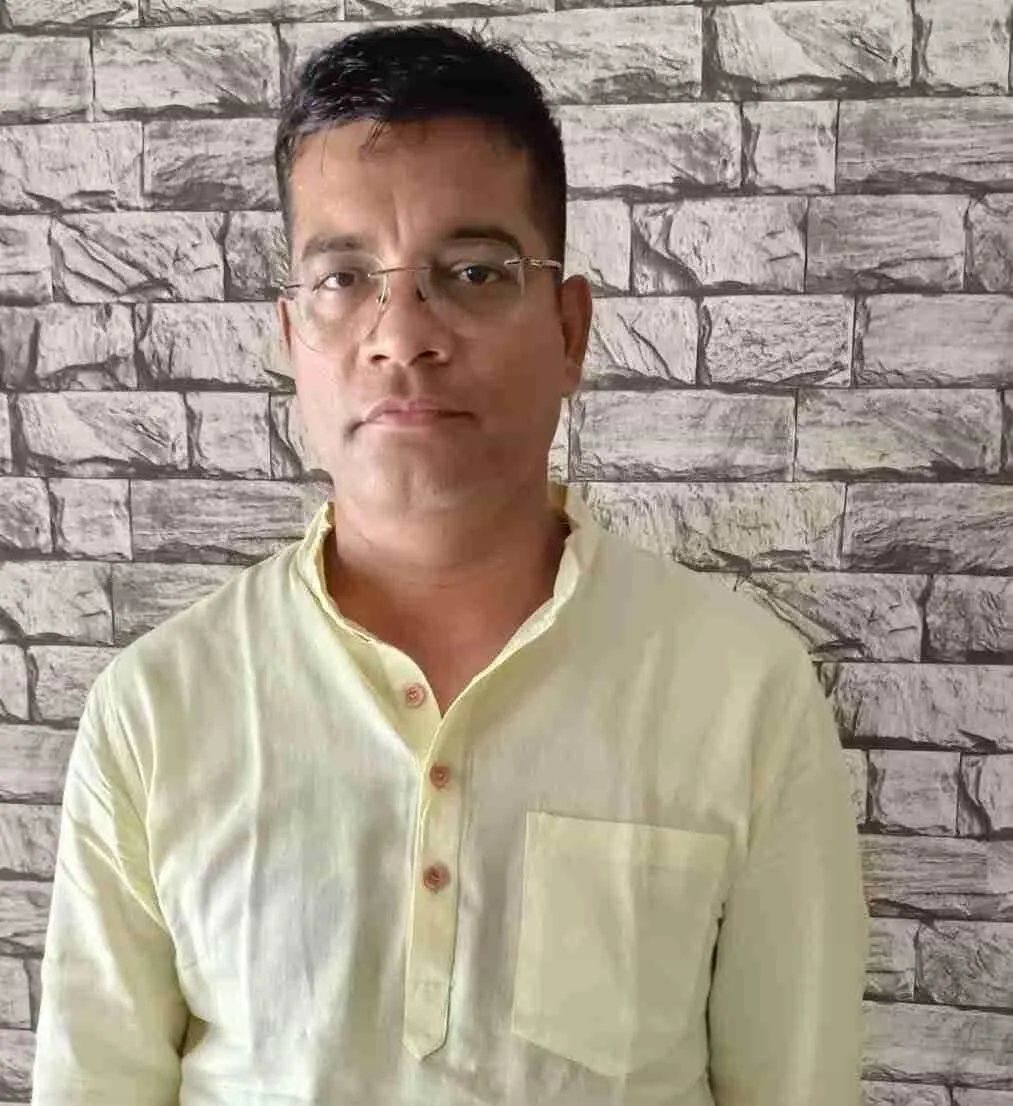
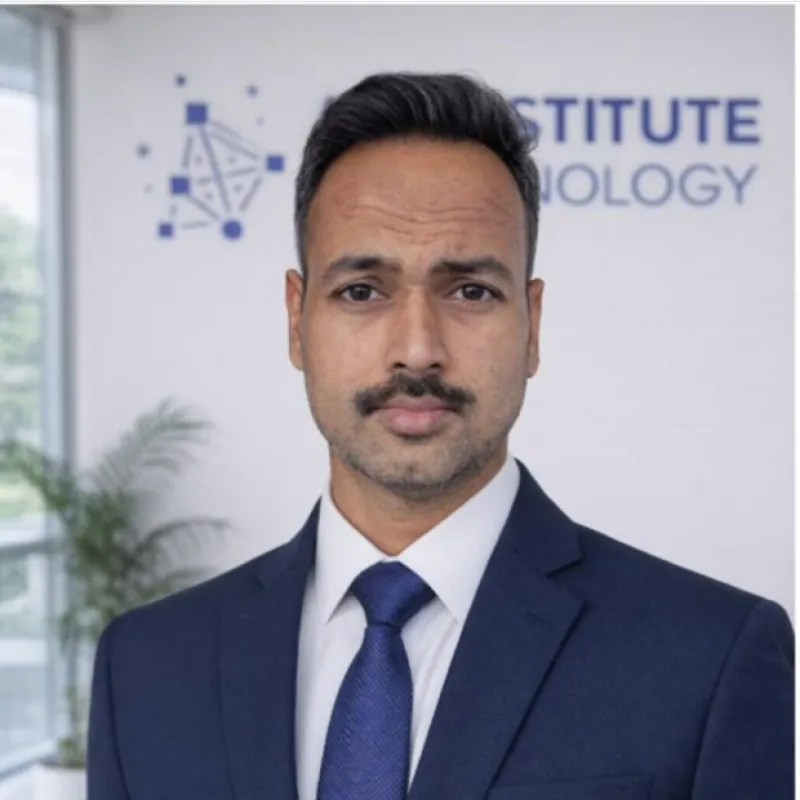
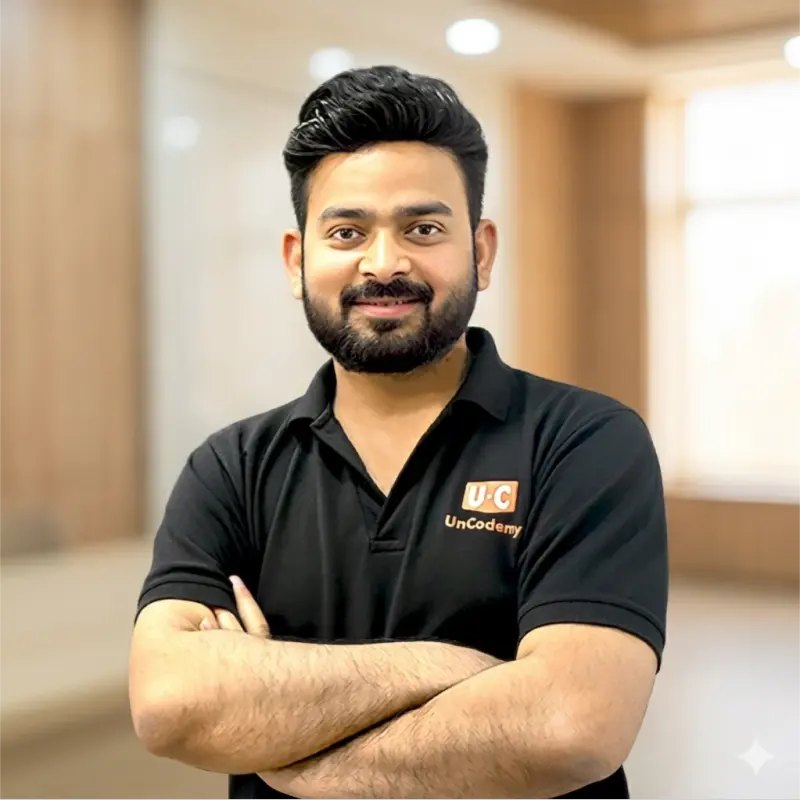
Irshad Khan, Senior Trainer at Uncodemy, leads this program, bringing 8+ years across Data Science, Data Analytics, SQL, Power BI, Python and Generative AI. He's also the one who reviewed and approved the curriculum you see here.

Most institutes blur two jobs into one; Uncodemy keeps them apart. Trainers handle the live teaching. A separate group of domain reviewers — specialists — check that the curriculum stays accurate and up to date. Upendra Kumar Tiwari reviews the technical content for this program, so the person teaching it isn't the only one vouching for it.

Uncodemy publishes every trainer and domain reviewer by name, along with their area of focus and background — so you can check them out before enrolling, not afterward.

Noida guide

Retrieval over messy documents: a RAG plan for Noida

Noida is one of only two places where Uncodemy has a physical centre, yet the hard part of RAG engineering here has little to do with the room you sit in. It is the documents. Offices in this city handle scanned forms, Hindi and English mixed in one file, decades of news copy, and client archives shipped over from abroad. This page looks at retrieval from that angle: what local document sets demand, how the Sector 1 centre fits into your learning, and what a realistic route into retrieval work looks like for someone living or working in Noida.

Dirty inputs

Scanned, stamped and bilingual: the documents Noida teams actually get

Tutorials assume clean text PDFs. Real projects handed to engineers in Noida rarely look like that. A request might arrive as a folder of photocopied agreements, a Hindi circular with an English annexure, or an Excel export that someone saved as PDF. Before chunking or embeddings matter, the ingestion step decides whether the system will ever find the right answer.

Read moreRead less
  • OCR first, and check it: scanned pages need text extraction, and stamps, signatures and table borders often turn into garbage characters. Sample twenty pages by hand and count errors before indexing thousands.
  • Devanagari and mixed script: a Hindi paragraph followed by English terms in brackets is normal. Pick an embedding model that handles both, and test retrieval with questions written in each language.
  • Romanised Hindi queries: users often type Hindi words in Latin letters ('kitne din ki chhutti'). Dense retrieval sometimes copes; keyword search usually does not. Keep a small test set of such queries.
  • Tables that matter: rate cards, schedules and fee tables lose their meaning when flattened into lines. Parse them as tables and store row context with each chunk.

The course modules on document processing, ingestion and text chunking are where this is practised. Bring your own ugly sample files to class and ask how the trainer would handle them.

News archives

A Noida-specific use case: searching years of newsroom copy

Film City in Sector 16A houses the studios and offices of several national television news channels, and digital news teams work across the city. Newsrooms sit on huge archives: scripts, wire stories, transcripts of broadcasts, and fact-check notes. Retrieval over this material behaves differently from retrieval over policy manuals.

Read moreRead less

Time matters most

'What did the minister say about the budget?' depends on which year. Store publication dates as metadata, filter or boost by date, and make the answer state the date of its source.

Near-duplicates everywhere

The same wire story is rewritten five times through a day. Without deduplication, the top ten results are one event repeated. Cluster similar chunks and show the latest or most complete version.

Speech is text too

Broadcast transcripts have no headings, speaker changes mid-sentence and many spelling variants of names. Chunk by speaker turn or time window rather than by paragraph.

This describes a type of work, not an employer list. Uncodemy has no hiring tie-up with any media organisation. For portfolio work, use openly licensed news datasets or public-domain transcripts, never scraped paywalled content.

Delivery work

What a retrieval engineer hands over on a Noida services project

A large share of Noida's software work is delivery for clients elsewhere. When the project is a retrieval system, the client rarely judges it by the demo. They judge it by what keeps working after the team rolls off. Knowing the full list of deliverables makes you useful from week one.

  1. Connectors: scripts that pull documents from the client's shared drives, wikis or ticket tools, with a log of what failed to parse.
  2. A documented chunking configuration: chunk size, overlap, how headings and tables are handled, and why those numbers were chosen.
  3. A refresh job: new and edited documents re-indexed on a schedule; deleted documents removed from the vector store, which teams often forget.
  4. An evaluation set: questions with expected source passages, agreed with the client's subject experts, and the scores on that set at handover.
  5. A runbook: what to check when users say answers got worse, and how to roll back an index.
Read moreRead less

Most of these are unglamorous, and that is the point. Candidates who can talk through items 3 to 5 in an interview stand out, because many demos stop at step 2.

Centre visits

Using the Sector 1 centre well while the course runs

Uncodemy's classrooms are in Noida (Sector 1) and Delhi (Shakarpur Extension, Laxmi Nagar). The Noida one sits on Udhyog Marg in Sector 1, a few minutes on foot from the Sector 15 metro station. For this course the core teaching is live online, instructor-led, with recordings for revision; offline classroom batches only at the Noida and Delhi centres, so ask at the centre whether a classroom batch is running for your intake before you plan around it.

Read moreRead less
  • Start with the demo: a free demo class can be attended online or, if you prefer, arranged from the centre so you can ask counselling questions face to face.
  • Laptop check: you will run Python, Docker and a local vector database. A machine with enough memory for a few containers and a small embedding model saves frustration; 16 GB of RAM is comfortable, less works with cloud APIs.
  • Office in Sector 62 or 63? A weekday evening detour to Sector 1 is short on the Blue Line. Learners further out on the Expressway tend to keep the classes online and save the trip for doubt-clearing or counselling.

Recordings of live sessions are available either way, so a late meeting does not leave a gap in the syllabus.

Course facts

Fee, length and coverage at a glance

  • Duration5–6 months
  • Content140+ hours
  • Live classes90+ live sessions
  • Fee₹17,500 + GST
  • EMIfrom ₹4,032 a month

Noida learners pay the national price, ₹17,500 + GST, which comes to ₹20,650 once GST is added. Instalments are possible from ₹4,032 a month.

Read moreRead less

The 13 modules run from RAG foundations and Python through LLM APIs, document ingestion, chunking, embeddings, vector databases, retrieval, reranking, hybrid search and evaluation to production deployment, ending with hands-on RAG projects plus a 20-hour enterprise RAG capstone. The toolset covers Python, OpenAI APIs, Hugging Face, LangChain, LlamaIndex, LangGraph, FAISS, ChromaDB, Pinecone, PostgreSQL/pgvector, Elasticsearch/OpenSearch, FastAPI, Docker, Git/GitHub and cloud deployment tools.

Six-month map

How the months usually feel for a working learner in Noida

Spread over 5–6 months, the course is long enough that pacing matters more than talent. A rough shape, phase by phase:

  1. Foundations and Python (first weeks): easy for developers, steep for others. If Python is new, practise daily rather than only on class days.
  2. LLM APIs and ingestion: the first point where things break on your own laptop. Set up environments carefully and keep API keys out of Git.
  3. Chunking, embeddings and vector stores: the heart of the course. Run comparisons, not just the default settings.
  4. Retrieval, reranking and hybrid search: where your test questions start paying off, because each change can be measured.
  5. Evaluation and deployment: RAGAS-style scoring, APIs with FastAPI, containers. Many people underestimate how long deployment takes.
  6. Capstone: start collecting its documents and test questions months earlier, so the final stretch is building, not searching for data.
Read moreRead less

Festival months and appraisal season tend to eat into evenings for people in Noida offices. Plan a buffer week or two and use recordings rather than dropping out of a module halfway.

Who joins

Backgrounds that move into retrieval work from Noida

Services developers

Java, .NET or Python developers on client accounts who now see 'GenAI' in project pipelines and want to own the search part rather than just call an API.

Students nearby

B.Tech and MCA students from Noida and the Knowledge Park colleges of Greater Noida who want one specialisation they can demonstrate, not a list of buzzwords.

Content and KPO staff

People from documentation, research or content operations who know the documents deeply and are willing to learn Python to work on the retrieval side.

Read moreRead less

Programming fundamentals help but are not mandatory: Python is taught from Module 2 onward and basic LLM concepts are built up in Module 3. The third group should expect the hardest first two months, but their understanding of how documents are written and used is a real advantage when designing chunking and test questions.

Pay

Indicative pay for retrieval roles in the Noida market

Where you start fromRoles you might targetIndicative range
Fresher with a measured RAG projectAssociate AI developer, GenAI trainee₹4–8 LPA
1–3 years of developmentRAG / GenAI engineer₹7–14 LPA
4–7 years, has shipped retrieval to usersSenior AI engineer, search engineer₹15–28 LPA
Read moreRead less

Indicative figures drawn from how such roles are commonly advertised across Delhi NCR; they are not offers and not promises. Pay in Noida depends heavily on whether the employer is a services firm, a captive centre or a product company, and on how you perform in interviews.

Interview drill

Debugging questions to rehearse before NCR interviews

Retrieval interviews in the region increasingly use 'something is broken, find it' questions instead of definitions. Practise answering these out loud with numbers from your own project:

  • The right document is retrieved but the answer is still wrong. Where do you look first?
  • Answers were fine last month and are worse now; nobody changed the code. What changed?
  • Hindi questions perform far worse than English ones on the same content. How do you diagnose it?
  • Users complain the bot quotes a superseded version of a policy. What fix would you make in the index?
Read moreRead less

Uncodemy supports learners with resume reviews, mock interviews and job-application support (placement assistance, not a job guarantee). The outcome still depends on your project and preparation, so keep a short written log of every failure you fixed during the course; it becomes your interview material.

Explore

More for Noida learners

Frequently Asked Questions

1. Can I attend RAG Engineering classes at the Noida centre?▼

The Noida centre is on Udhyog Marg, Block B, Sector 1, near the Sector 15 metro station. This course is taught live online, instructor-led, with recordings for revision; offline classroom batches only at the Noida and Delhi centres. Whether a classroom batch is running for your intake varies, so confirm with the centre; the live online batch is always an option.

2. How much is the fee for Noida learners?▼

₹17,500 + GST, which is ₹20,650 including GST. EMI options start from ₹4,032 a month. There is no separate Noida price.

3. How long does the course take and what does it include?▼

It runs 5–6 months with 140+ hours of content in 90+ live sessions, across 13 modules, and ends with hands-on RAG projects plus a 20-hour enterprise RAG capstone.

4. Will I get a job in Noida after finishing?▼

There is no job guarantee. Uncodemy offers resume reviews, mock interviews and job-application support (placement assistance, not a job guarantee). Employers decide based on your skills, project and interviews.

5. Does the course help with Hindi or scanned documents?▼

The document processing, ingestion and chunking modules cover parsing and preparing documents. Handling OCR output and Hindi or mixed-language text is something you should practise on your own sample files and raise with the trainer.

6. I work in Sector 62. Is a weekday batch realistic?▼

Many people there manage weekday evenings because the commute is short, but late meetings happen. Recordings cover missed sessions; choose the weekend batch if your evenings are unpredictable.

7. Is this different from the LLM Engineering course?▼

Yes. LLM engineering is broader. This course goes deep on retrieval: ingestion, chunking, embeddings, vector databases, reranking, hybrid search and evaluation of RAG systems.

8. Can I visit the centre before paying?▼

Yes, you can visit Sector 1 for counselling, and you can attend a free demo class before deciding.

Why Trust This Page? Discover Why Students Choose Uncodemy

How we maintain this page

  • Content written by:Mr. Rahul
  • Content rechecked and verified by: Mr. Irshad
  • Course curriculum verified by:Mr. Irshad
  • Technical content verified by: Mr. Irshad
  • Fee verified by: Admin Department
  • Placement figures sourced from internal placement records
  • Review counts verified against respective third-party platforms
  • Last reviewed:
Application Form
Visit Us

Nearest Classroom Training Centres

Uncodemy offers its RAG Engineering program to learners across Noida through flexible learning options, including live online classes that can be attended from anywhere and classroom training at Uncodemy’s Noida centre, located at B, 14-15, Udhyog Marg, Block B, Sector 1, Noida, Uttar Pradesh 201301. The centre is conveniently located near Noida Sector 15 Metro Station, making it accessible for learners from Noida and nearby areas. Students can join the same RAG Engineering batches with experienced trainers, a practical curriculum, hands-on RAG projects, and structured career support, whether they choose classroom or live online learning.

Open now
Noida Centre
B, 14-15, Udhyog Marg, Block B, Sector 1, Noida, Uttar Pradesh 201301
Free demo classWalk-ins welcomeWheelchair accessible