#1 India's Top IT Training Institute
×

About Uncodemy

Know more about who we are and what we stand for.

About Us

About Us

Discover our mission to equip individuals with essential IT skills and industry expertise.

Read More →
UnCodeMy Gallery

UnCodeMy Gallery

Explore highlights from our IT training sessions and success stories.

Read More →
Mentors

Mentors

Meet the industry experts who train and guide you through your course.

Read More →
Free Resources

Free Resources

Free tutorials, interview questions, tools and calculators to help you learn.

Explore →
×

Free Resources

Learn, practice and plan your career — bilkul free.

Tutorials

Tutorials

Step-by-step written tutorials to learn any technology at your own pace.

Read More →
Free Counselling

Free Counselling

Book a free video counselling session and pick the right course for you.

Read More →
Online Compiler

Online Compiler

Write, run and test your code online — no setup required.

Read More →
Speciality

15000+ Professionals Trained

3+ Batches every month

50+ Industry expert trainers

2500+ Corporate Served

Curriculums for UI/UX Design Training Courses in Greater Noida

UI/UX Curriculum

The curriculum has been designed by faculty from IITs, and Expert Industry Professionals.

100+

Hours of Content

65+

Live Sessions

10+

Tools and Software

Set the Basics Right

UI/UX Designing course provider of Greater Noida called Uncodemy offers a curriculum that contains following courses to strengthen your skill in UI/UX Designing-

UI/UX Development Curriculum

Detailed Course Contents:

  • UI (User Interface) refers to the visual elements and interactive components of a digital product that users interact with.
  • UX (User Experience) focuses on the overall experience and satisfaction of users while interacting with a product or system.
  • Understanding the difference between UI and UX is crucial to grasp the holistic nature of UI/UX design.

Detailed course contents:

  • User research involves gathering insights about the target audience to inform design decisions.
  • User interviews and surveys help understand user needs, preferences, and pain points.
  • Creating user personas and scenarios helps visualize and empathize with target users.
  • Analyzing user behavior through data collection and observation guides the design process.

Detailed course contents:

  • Information architecture is about organizing and structuring content to enhance navigation and findability.
  • Sitemaps provide a visual representation of a website’s structure and hierarchy.
  • User flows depict the paths users take to achieve their goals within a system.
  • Wireframing is the process of creating low-fidelity layouts to outline the structure and basic functionality of a design.

Detailed course contents:

  • Interaction design focuses on designing interactive elements that facilitate smooth user interactions.
  • Understanding Gestalt principles and visual perception helps create visually appealing and intuitive interfaces.
  • Micro-interactions are small, subtle design elements that provide feedback and enhance the user experience.
  • Transitions and animations contribute to the overall usability and engagement of a design

Detailed course contents

  • Visual design deals with the aesthetics and visual aspects of a product.
  • Color theory and color psychology help select appropriate color schemes that evoke desired emotions and enhance usability.
  • Typography involves choosing fonts and arranging text in a visually appealing and readable manner.
  • Layout and composition principles guide the arrangement of visual elements for balance and hierarchy.

Detailed course contents:

  • Usability testing involves observing and analyzing user interactions with a design to assess its effectiveness.
  • Heuristic evaluation is a systematic inspection of a design’s usability based on established principles.
  • Usability tests help identify pain points, gather feedback, and validate design decisions.
  • A/B testing compares two or more design variations to determine which performs better

Detailed course contents:

  • Mobile design focuses on creating interfaces optimized for smaller screens and touch interactions.
  • Responsive design ensures that a design adapts to different screen sizes and devices.
  • Mobile-specific considerations include prioritizing content, designing touch-friendly interactions, and optimizing performance.

Detailed course contents:

  • Accessibility aims to make digital products usable by people with disabilities.
  • Understanding WCAG (Web Content Accessibility Guidelines) helps design inclusive interfaces.
  • Inclusive design principles focus on creating products that are accessible to all users, regardless of disabilities or limitations.

Detailed course contents:

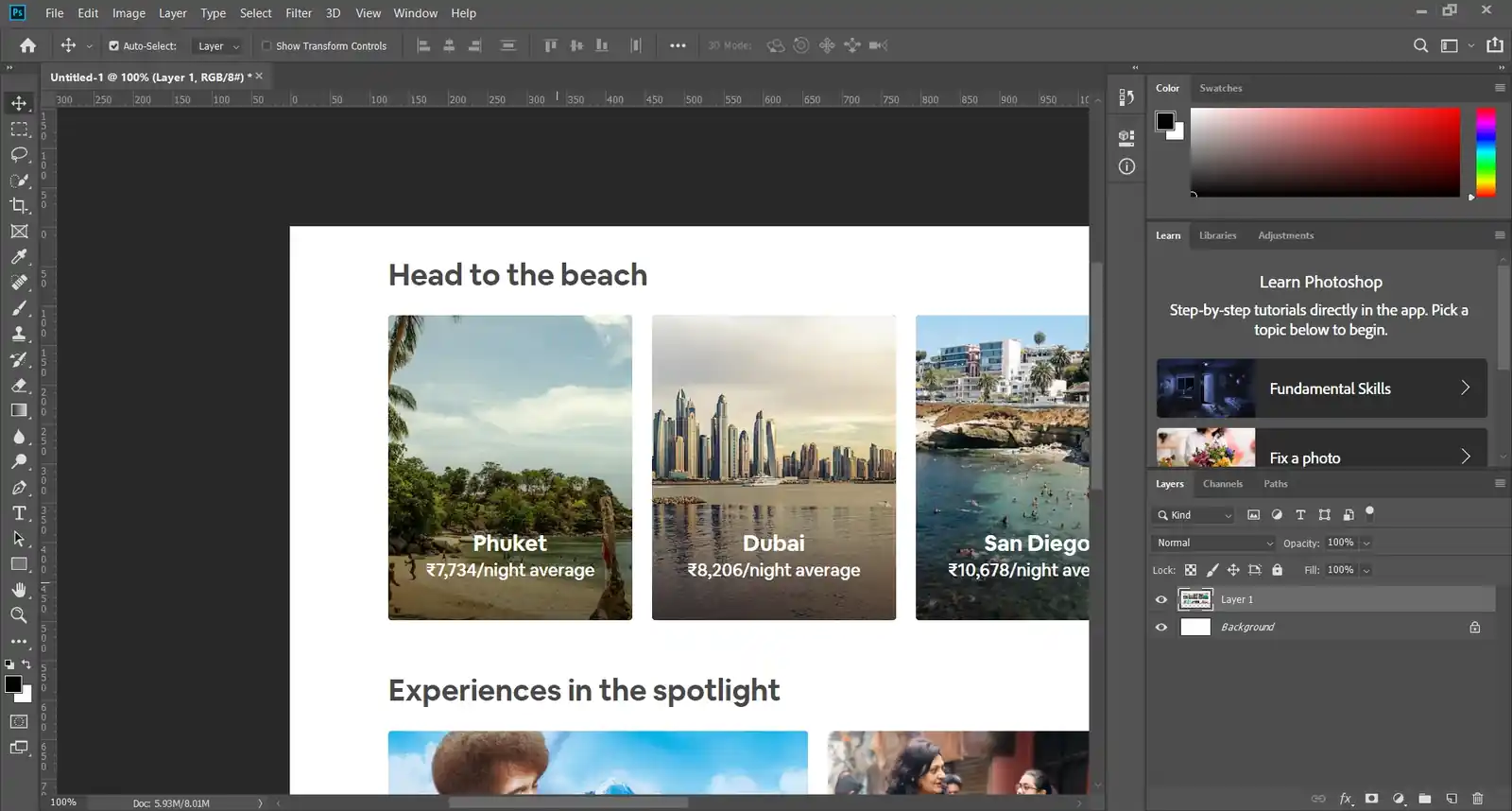
  • Design software like Sketch, Figma, or Adobe XD are commonly used for creating UI/UX designs.
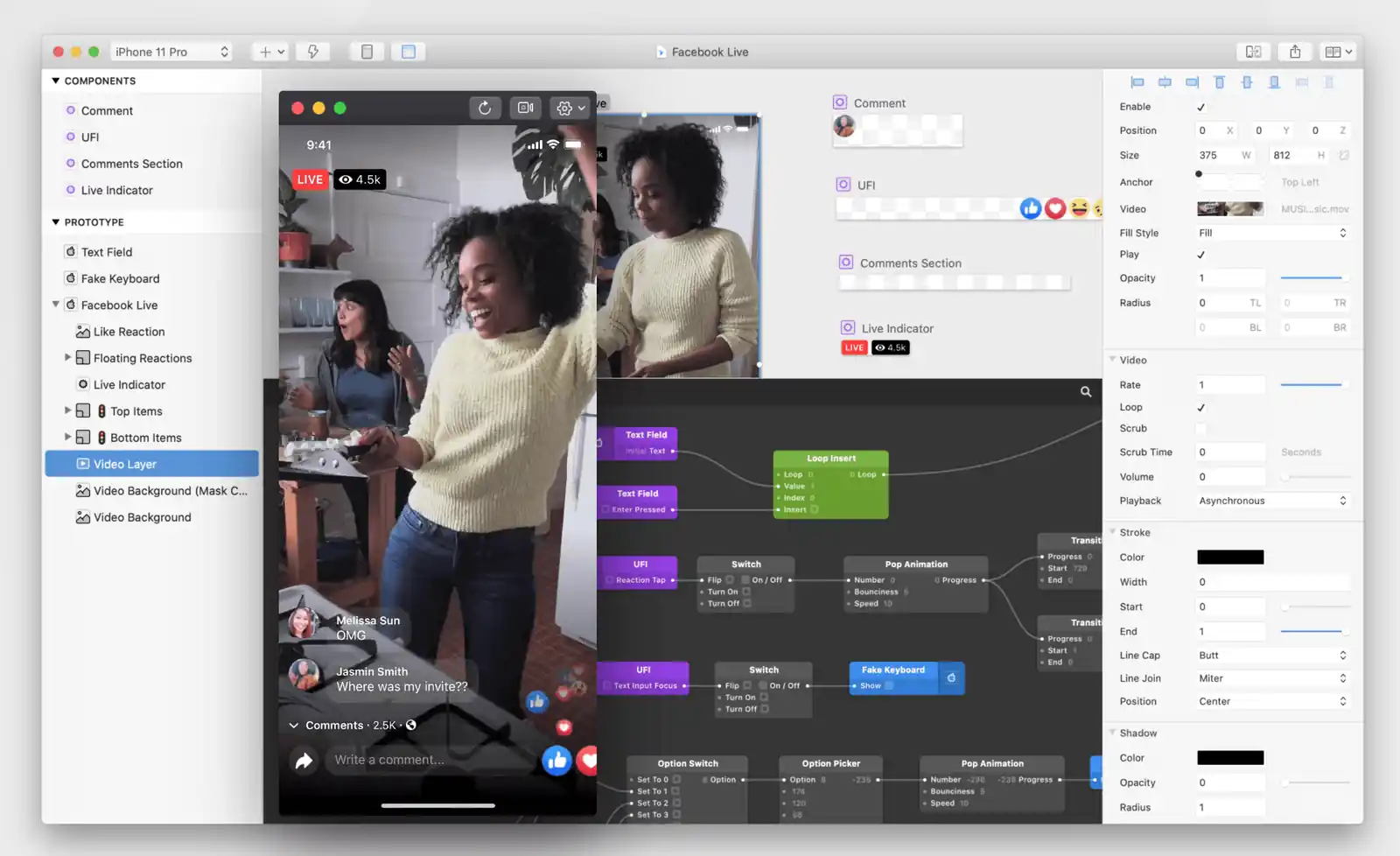
  • Prototyping tools like InVision, Marvel, or Framer facilitate interactive and realistic prototypes.
  • Collaboration and version control tools (e.g., Zeplin, Abstract) help streamline the design process within teams.

Detailed course contents:

  • Staying updated with current design trends helps create modern and relevant designs.
  • Analyzing successful UI/UX case studies provides insights into effective design strategies and methodologies.
  • Design blogs, forums, and conferences offer opportunities to learn from industry experts and stay connected with the UI/UX community.
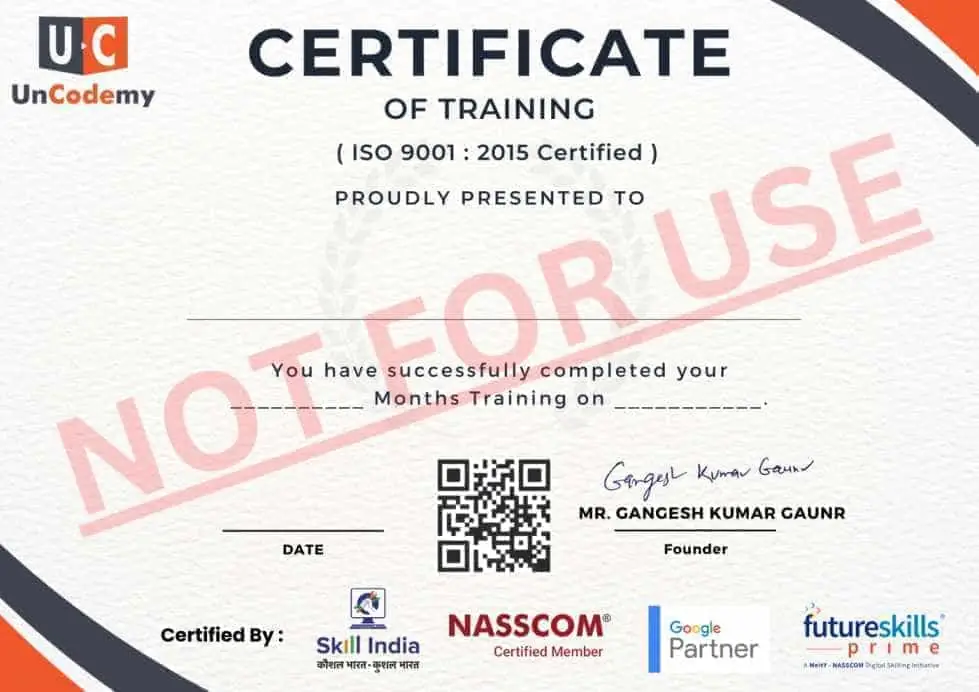
Certificates You Receive Instantly.

The UI/UX design course in Greater Noida teaches the skills a junior UI/UX designer needs. On completion you receive the following certificates:

  • Uncodemy Certificate
  • Uncodemy Agile Certificate
  • Module Completion Certificate
Tools and Technologies covered
  • Figma
  • InVision
  • Sketch
  • Adobe XD
  • Axure RP
  • Balsamiq
  • Marvel
  • Framer
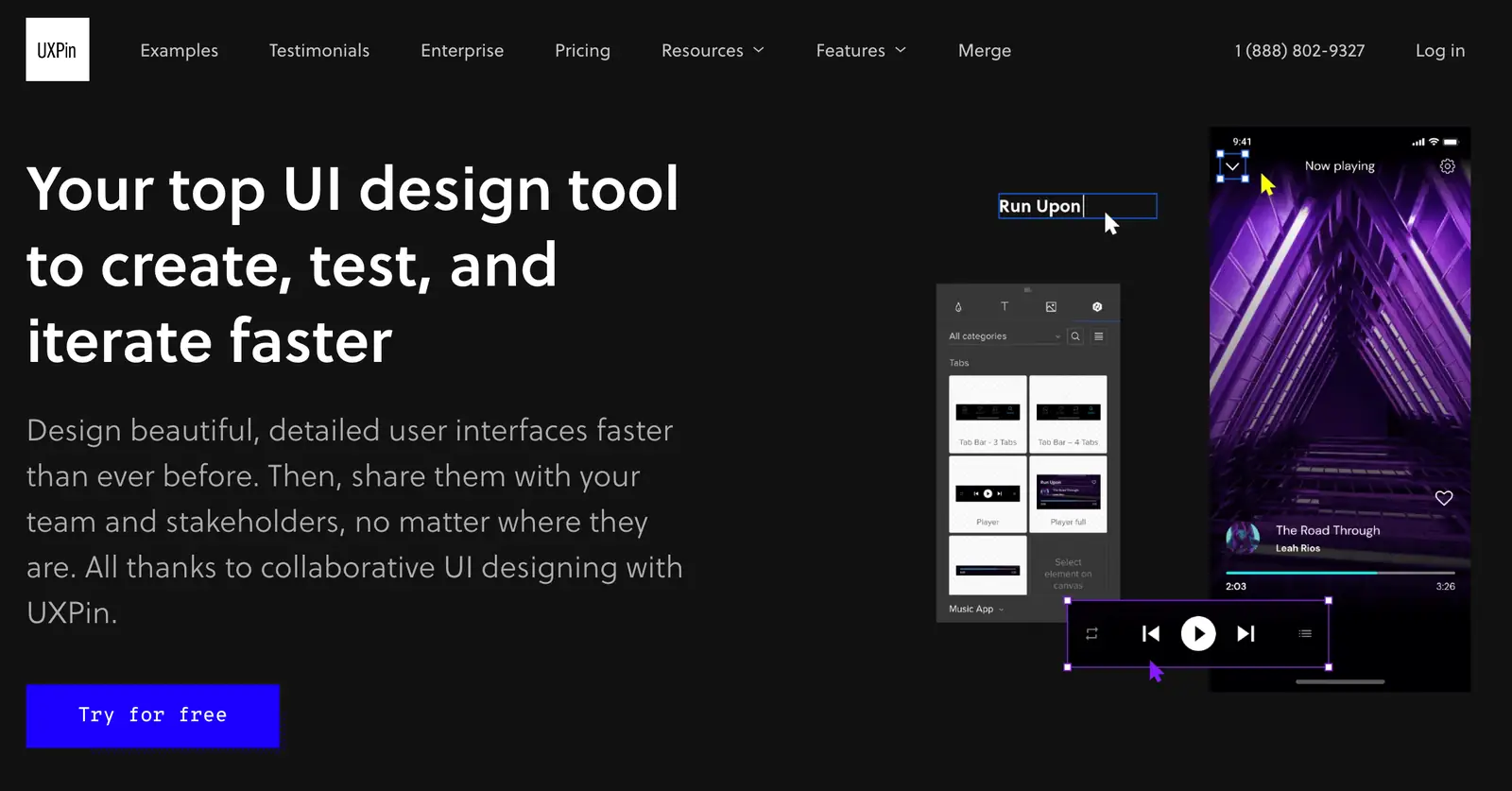
  • UXPin
  • Proto.io
  • Origami Studio
  • Adobexd
  • Justinmind
  • Craft
  • Mockplus
  • FlowMapp
  • Handoff
Ace Every Interview with Uncodemy-

Uncodemy's dedication to providing students with top-notch training and resources doesn't end with the completion of the UI/UX design course in Greater Noida. We understand that job hunting can be a challenging and time-consuming process, so we provide ongoing support to help students find and secure the right job. This includes helping students to effectively market themselves and their skills, as well as providing access to a network of industry professionals who can offer advice and mentorship.

Uncodemy

Access unparalleled learning with live sessions, recordings, assignments, and live projects led by a top-tier mentor and industry expert trainer. Elevate your skills with the best-in-class educational content.

Get a Real World Understanding Through Industry Projects

Uncodemy

We Provide EMI Facility for You

Nothing Stops you from Learning

Become an UI/UX Designer - Talk to Expert Counselor

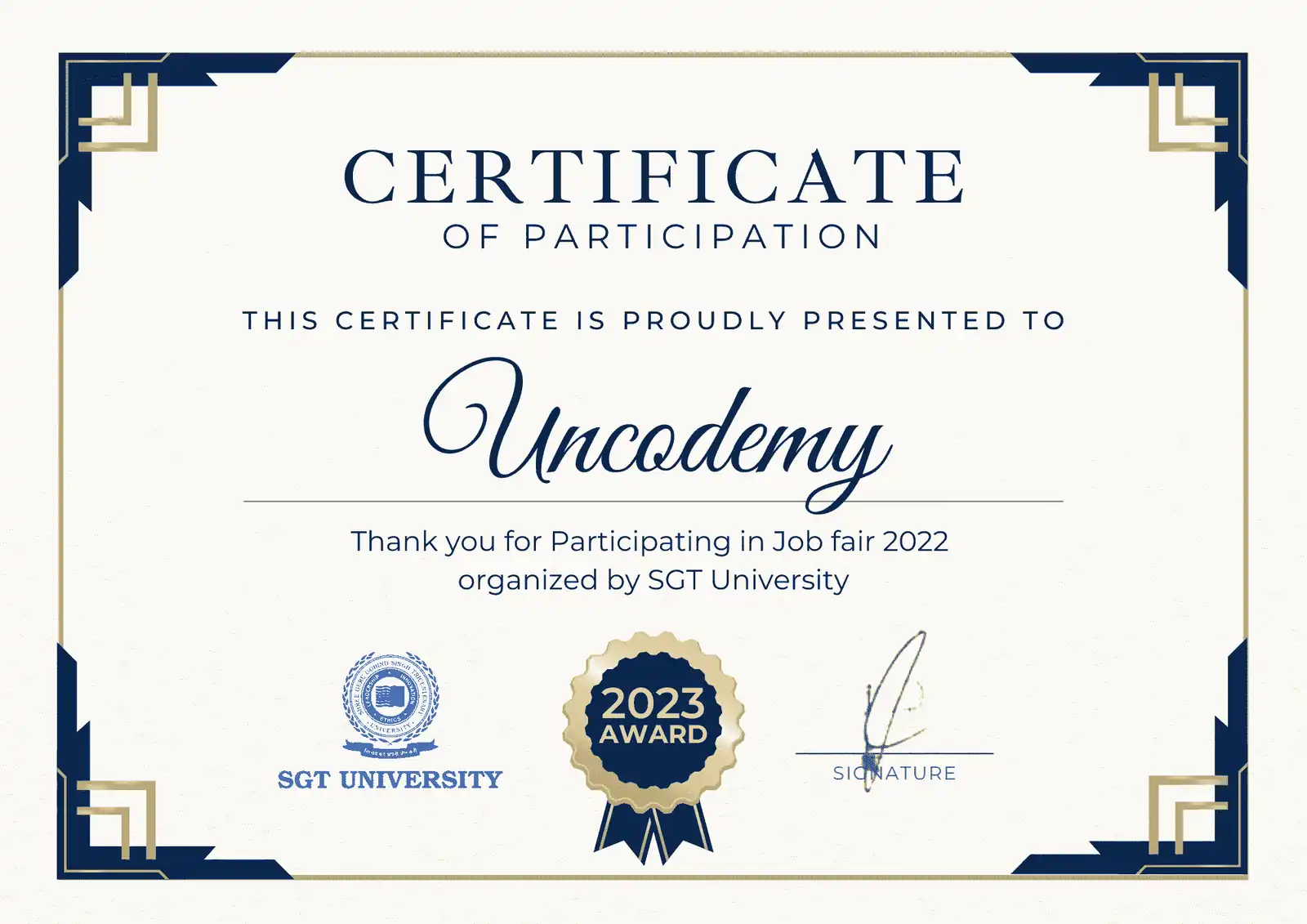
Awards

Greater Noida guide

Research-led UI/UX design for Greater Noida learners

Most beginner portfolios are full of attractive screens and almost no evidence that real people can use them. Greater Noida gives you an unusual advantage here: a city of universities, hostels and young families where finding five willing test participants takes an afternoon, not a budget. This page is built around that strength — how to run research and usability tests properly, an accessibility audit you can do as a project, how to reach the Noida classroom, and where the design jobs for this city actually are.

Evidence first

Why research is the part of UX that gets you hired

Design leads reviewing junior portfolios look for one thing above all: did this person learn something from users and change the design because of it? Screens alone do not show that. A short, honest research section does.

The course gives research a real place in the syllabus — user research, usability testing and evaluation, and accessibility are full modules out of 10 modules, not a single lecture.

Read moreRead less

For a Greater Noida learner the practical benefit is access. Students in the Knowledge Park campuses, office workers commuting to Noida, families in the residential sectors and shopkeepers in the local markets cover very different user types within a few kilometres. Use that range: a case study tested with students and with their parents is far more convincing than one tested only with batchmates.

Route and facts

Aqua Line to Sector 51, then the Blue Line to class

Uncodemy has no centre in Greater Noida; the classrooms are in Noida (Sector 1) and Delhi (Shakarpur Extension, Laxmi Nagar). The Noida one is the natural choice from here. Take the Aqua Line from your nearest station, such as Knowledge Park II or Pari Chowk, to Sector 51, walk across to Sector 52 on the Blue Line, and ride towards Dwarka to Sector 16 or 15, which are close to the Sector 1 centre.

  • Duration4 months
  • Content100+ hours of content
  • Live classes65+ live sessions
  • Fee₹35,000
  • EMIEMI options available (ask the counsellor for the monthly plan)
Read moreRead less

The interchange adds time, so learners who live near the far end of the Aqua Line often prefer the live online batch on weekdays. The tools are Figma, Adobe XD, Sketch, InVision and Marvel, and a free demo class lets you judge the teaching before you pay.

Research toolkit

Four research methods you can practise cheaply

Interviews

Five to eight conversations around one task. Ask about the last time they did it, not about what they would like in future.

Card sorting

Write menu items on paper cards and ask people to group them. It tells you how users expect your navigation to work, which feeds directly into information architecture.

Usability tests

Give a person a prototype and a task, then stay quiet and watch. Note where they hesitate, go back or give up.

Read moreRead less

Surveys are the fourth method, and the most misused. Keep them short, use them to measure how common a problem is after interviews have found it, and never treat a ten-response Google Form as proof of anything.

Always ask consent, explain how you will use the notes, and leave out names and personal details in your portfolio.

Audit project

Project: an accessibility audit of an online form

Admission, hostel and exam forms are used by thousands of students, often on phones and in a hurry, and many are hard to use. Pick a public form (or a mock-up of one) and audit it as a practice project.

  1. Contrast: check text and button colours against WCAG contrast ratios with a free plugin in Figma or a browser tool.
  2. Zoom and text size: view the form at 200% zoom and with large phone fonts; note what breaks.
  3. Keyboard only: try to complete it without a mouse and check that focus is always visible.
Read moreRead less
  1. Screen reader: run NVDA (free on Windows) or the phone's built-in reader and listen to whether labels and errors make sense.
  2. Redesign: fix the worst five issues in Figma and explain each fix in one line.

Present it as an independent audit for learning, not as work commissioned by the institution, and avoid publishing anything that looks like a security weakness.

Five-user test

Running a five-person usability test on a student budget

  • Script: a one-line introduction, three realistic tasks and two closing questions. Read it the same way to everyone.
  • Setting: a quiet corner of a library or a hostel common room is enough; use your phone to record the screen only if the participant agrees.
  • What to note: did they finish each task, roughly how long it took, and where they got stuck.
Read moreRead less

Afterwards, group your notes into the three or four problems that affected the most people and fix those first. In the portfolio, show a before-and-after for each problem. That sequence — test, prioritise, change, retest — is exactly what the usability testing module trains, and it is what interviewers ask about.

Defending research

Questions a design lead will ask about your research

Once your portfolio leans on research, interviewers will probe it. Prepare a short, specific answer to each of these from your own projects:

  • 'How did you choose your participants, and who was missing?' Admitting that you only tested with students is fine; pretending you covered everyone is not.
  • 'What surprised you?' Name one finding that changed your design, and show the screen before and after.
  • 'What would you do with more time?' A follow-up test, a larger sample, or checking analytics once the feature is live.
Read moreRead less
  • 'How do you handle a stakeholder who ignores the findings?' Talk about showing short video clips or quotes instead of a long report, and agreeing on one small change to try first.

These answers are worth rehearsing aloud in the course mock interviews. Clear, modest explanations of small studies impress more than big claims about 'deep user insights'.

Where jobs are

Design jobs for Greater Noida residents

Greater Noida itself has limited design hiring. Its industrial and electronics companies mostly buy their software, and the in-house roles that exist tend to be IT or marketing, not UX. Most openings that suit residents are in Noida — the Sector 62 area and the offices along the expressway — and in Delhi, plus remote roles with startups. Uncodemy has no hiring tie-up with any employer.

Read moreRead less
RoleUsual locationIndicative annual pay
Design internNoida agency or startupStipend, often ₹8,000–20,000 a month
Junior UI/UX designerNoida services or product company₹3–6 LPA
UX researcher or designer, 2+ yearsProduct company in Noida, Delhi or remote₹6–11 LPA

Indicative only, from general market observation and not Uncodemy data; offers vary with the company and your portfolio. There is no job guarantee — you get dedicated placement support: resume reviews, mock interviews and job-application support.

Local questions

Questions from Greater Noida learners

Can I do this alongside my B.Tech at a Knowledge Park college?
Yes, many students do it on weekends. Check exam dates against the batch schedule before you enrol.

Is UX research a job by itself?
In bigger product companies, yes, but freshers usually start as UI or UX designers and specialise later.

Read moreRead less

Will the Aqua Line trip be worth it compared with online?
For critique-heavy sessions many people find in-person useful; for regular lectures online saves time. Try both during the first weeks if your batch allows.

I live in one of the residential sectors and work from home. Is online enough?
For most people, yes. Live online classes include screen-sharing critiques, so you still get feedback on your own Figma files without the daily trip.

Is any coding required?
No coding background is needed; the course starts with the basics of UI and UX.

What certificates do I receive?
Uncodemy Certificate, Uncodemy Agile Certificate and Module Completion Certificate.

Explore

More for Greater Noida learners

Become an UI/UX Designer - Talk to Expert Counselor