



Choose the best training program according to your career.

Industrial Training
Improve the performance of your business with our innovative Industrial Training Program.
Read More →
Corporate Training
Our instructor-led training classes are designed to make you an expert.
Read More →
Summer Training
Real-life case studies are a great way to demonstrate your practical knowledge.
Read More →
Blog Session
Explore blogs, latest technologies and industry updates with practical examples.
Read More →
All Courses
Browse all available training programs and choose the right one for your career.
Read More →About Uncodemy
Know more about who we are and what we stand for.
About Us
Discover our mission to equip individuals with essential IT skills and industry expertise.
Read More →Free Resources
Learn, practice and plan your career — bilkul free.
Free Counselling
Book a free video counselling session and pick the right course for you.
Read More →Full Stack Development course syllabus at Uncodemy
Full stack development refers to the ability to work on both the web application priority (client-side) and backend (server-side). The full stack developer is the one who understands how each part of the web application works - from interactive user interfaces to servers, databases and operating APIs. This role combines the skills of the leading developers (focusing on what users see and whom they approach) and backend developers (focusing on who works behind the scenes).
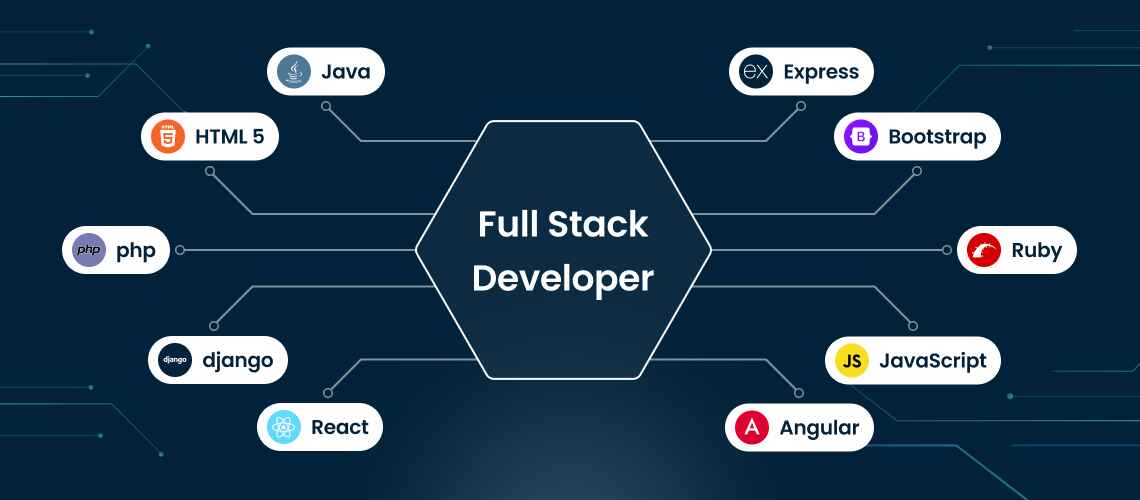
In today's fast dynamic digital world, full stack developers are very valuable because of their ability to handle their versatility and end-and-end development. They can create full applications independently, troubleshoot on tech stacks, and adapt to changing technologies quickly. With the growing demand for responsible websites, real-time applications and seamless user experiences, full stack development has become one of the most demanding and future-proof career ways in the tech industry.
What is Full Stack Development?
Full stack development is the design, development and administration process of both the Frontend parts (user interface) and backend (server, database and application logic) of a web application. A full battery developer is an expert in working with all layers of a software system, from the creation of the visual elements with which users interact on a website or application, until they manage data storage, commercial logic and the functionalities of the server side that feed the system behind the scenes.
In simpler terms, the complete development of the battery means building a complete web application from beginning to end. This includes everything from the design of easy -to -use pages using HTML, CSS and JavaScript (Frontend) to building robust systems using languages such as Node.js, Python or Java along with databases such as Mongodb or MySQL (Backend). Full -cell developers are versatile and problem -solving professionals that can develop complete solutions independently or as part of a larger development team.
Full stack Development Program by Uncodemy
The complete Uncodemy battery development program is an integral course focused on the career designed to make beginners into web developers ready for work. This program teaches students how to create complete web applications, from the creation of receptive borders to the management of robust backends. It covers all layers of modern technological batteries through a project -based practical learning experience.
Ideal for students, first -year students, professionals who work and independent workers, this program combines interactive classes live, real world projects and expert mentoring to help students dominate the practical skills necessary to prosper in the labor market of current technology.
Key features
Frontend + Backend Masterly: Learn the development of the client and server side
100% live + recorded sessions: flexible learning with access to materials
Real -time projects: Create complete applications with relevant use cases for industry
One on One Mentorship: Be guided by professionals from the main technology companies
Tool -based learning: Practical experience with git, github, netlify, heroku, vs code and more
Resume + interview support: simulated interviews, construction of curriculums and work references
Recognized industry certification: increase your curriculum with a credible course certificate
Affordable rates structure: Obtain high quality training without a expensive registration
Best topics of the Full Development Program in Uncodemy
The full battery development program at Uncodemy is designed to provide students with complete dominance over Frontend and Backend technologies. The curriculum includes essential issues that cover each stage of web development, from the design of user interfaces to the creation of safe and scalable applications on the server side. The most important and high -impact subjects are taught in the program:
1. HTML5, CSS3 and receptive design
This fundamental theme covers the construction blocks of the web. Students learn how to structure web pages with HTML5 and design them using CSS3, including techniques for building receptive designs for mobile devices with Flexbox, Grid and media consultations. The course also covers design tools such as Bootstrap and Tailwind CSS to accelerate Border Development.
2. JavaScript (ES6+)
Javascript is the central programming language of the web. This topic teaches modern characteristics of Javascript such as the is6 syntax, the Dom manipulation, the management of events, the loops, the conditions and the asynchronous programming (promises, async/Esperanza). It forms the basis to dominate frames such as React and build interactive web applications.
3. Reactjs
React is one of the most demanded Frontend Libraries. In this area, students learn to build user dynamic interfaces based on components. The themes include Hooks React, accessories and status, JSX, routing (react router), management of API form and use in React. This prepares students to build applications of a single real world page (SPA).
4. Version control with git and github
Version control is essential for changes in collaboration and monitoring code. This subject teaches how to use git for the control of versions and github for the collaboration of the project. Students learn essential commands, ramifications, mergers and extraction requests: the skills required in any software development workflow.
5. Node.js & Express.js
On the backend side, node.js and express.js allow students to build fast and scalable applications on the server side using JavaScript. This topic covers the creation of API, HTTP request management, route configuration, working with Middleware and managing the user authentication and sessions.
6. Databases - Mongodb and MySQL
Data management is crucial in web applications. This topic focuses on two popular databases:
Mongodb (NOSQL): For flexible data modeling based on documents using Mongoose.
MYSQL (SQL): For structured data management and relational database operations using consultations, unions and normalization.
7. Authentication and authorization
Security is essential for all web applications. This subject teaches how to implement safe login systems using JWT. Students learn to protect user data and restrict access based on user roles.
8. API restful development
APIs connect the border to the backend. This subject focuses on building API Restful using Express and Node.js. Students learn how to structure the API, handle CRUD operations, manage routing and guarantee the appropriate application/response with state codes and headers.
9. Implementation and basic Devops concepts
Application creation is only part of the work: placing them is equally important. This topic covers how to implement complete applications on platforms such as Netlify, Vercel, Heroku and AWS. It also includes the basic concepts of Devopops tools such as Docker, CI/CD and environmental variables.
10. Capstone Projects and real -time applications
Finally, students put their knowledge in action working in live projects in real time. These projects integrate everything from Brontend Interfaces to API and Back -End databases, and are implemented in production environments. This topic is key to building wallets and getting experience ready for work.
Each subject in the Full Development Program of the Uncodemy battery is carefully selected to ensure that students obtain end -to -end development capabilities. Whether you are creating your first application or preparing for a software developer role, these subjects feel the foundations for a versatile and future -proof technological career.
The best topics of the Full Development Program at Uncodemy
The Full Development Program of the Uncodemy battery is created to equip students with technical demand skills and real -world coding experience. The program covers a wide range of essential and advanced topics that cover both the development of Frontend and Backend, which makes students capable of building complete web applications from scratch. Below are the most shocking and relevant themes for the industry included in the course:
HTML5 and CSS3 Fundamentals
This topic is the basis of web development. Students learn how to structure content using HTML5 and design it with CSS3. Receptive design techniques, design structures used by Flexbox and the grid, and integration with modern style frames such as Bootstrap and CSS of tail are also covered, which is covering that the websites are seen and work well between the devices.
JavaScript Es6+ & Dom Handling
JavaScript is the backbone of interactive web development. This issue teaches essential programming concepts such as variables, matrices, objects, functions, loops and conditions. It also includes characteristics of ES6+ as arrow functions, destroyers and template literals. Students also dominate the document object model (DOM) so that websites are dynamic and interactive.
Reactjs and component architecture
Reactjs is one of the most important issues in modern Fronnd development. In this section, students create reusable user interface components, manage states and accessories, handle forms and work with hooks and life cycle methods. React Router is entered to create single page applications (SPA), and API integration is practiced to build data -based interfaces.
GIT, GITHUB AND VERSION CONTROL
Understanding how to manage and collaborate in the code is crucial. This topic teaches git commands, branch, fusion, confirmation stories and thrust/extraction requests. Using Github, students participate in real -time collaboration and learn to administer their professionally code repositories.
Node.js & express.js backend development
This topic changes the approach to the development of backend using node.js and the express framework. Students learn how to build API Restful, handle the routing, manage the Middleware, work with template engines such as EJS and implement the logic on the server side to handle applications and responses efficiently.
Databases: Mongodb and MySQL
The full battery developers must work with the NSQL and SQL databases. In this module, students explore Mongodb for data without scheme used by Mongoose and MySQL for structured data using SQL queries. The topics include raw operations, data modeling, relationships, unions and optimization.
Authentication and authorization
Security is a key part of modern web applications. This topic covers user authentication systems using JWT (web tokens JSON), session -based loggers, password encryption, Oauth integration (for example, Google or Facebook login) and roles based access controls to protect routes and confidential data.
API integration and rest architecture
APIs are essential to connect the border to the backend. This topic covers how to create and consume API Restful, manage end points, perform raw operations and guarantee fluid client server communication using tools such as postman and axios.
Implementation and accommodation
Knowing how to launch its application is as important as building it. On this topic, students learn how to implement Border applications on platforms such as Netlify and Vercel, and Backend Servers to Heroku, Render or AWS
Tests and purification
This issue helps students build reliable applications. Students explore unit tests, integration tests and basic purification techniques using Chrome Devtools, postman and tools such as Jest or Mocha. Understanding how to identify and fix errors is crucial for the development of the real world.
Capstone Projects & Portfolio Building
At the end of the program, students build and present full -world battery projects that combine all the concepts they have learned. These projects are a central part of their technical portfolio, which demonstrates their ability to build and implement complete applications, from the user interface to the integration of the database.
The full stack development program in Uncodemy is rich in practical issues focused on the career that allow students to become safe developers. These issues are not only aligned with the current demands of the industry, but are also taught in a practical way based on projects, which graduates with knowledge and experience.
Comparison of the best full-stack development programs
The complete development of the stack is one of the most demanded technological career races in India and throughout the world. Whether he is a beginner to learn Fronte and Backend skills or a professional who works to change career, the right course can accelerate his success. This is how the best programs are compared.
| Program | Duration | Delivery Mode | Key Highlights | Best For |
|---|---|---|---|---|
| 1. Uncodemy - Full Stack Development Program | 6–7 months | Online + offline (Delhi, Noida, Pune, Bangalore and more) |
|
First year students, university students and professional switches who want affordable, practice and list for work with guaranteed placement assistance in the IT ecosystem and start of India. |
| 2. Masai School - Stack Full Stack Development Program | 30 weeks (~ 7 months) | Online (full -time or part -time options) |
|
Motivated students who want an intensive experience of full -time coding bootcamp with zero initial rates and structured discipline. |
| 3. Newton School - Full Stack Development Course | 6–12 months (it varies at pace) | Online |
|
Students and employment applicants who want solids Stack Plus Plus CS Foundation, and prefer a first placement approach with high accountability. |
| 4. Scaler software development program - scaler academy | 9–12 months | 100% online |
|
Engineers or professionals looking for high-payment software development roles in top-level companies, with an approach to scalable back-end systems DSA +. |
Why Uncodemy Stands Out:
Project-Based Learning
More hands-on projects than comparable programs (15+ projects vs typical 5-8 in other programs)
Industry Expert Instructors
Our faculty are practicing data scientists, not just academic teachers
Career Transition Support
Dedicated placement team with 85% placement rate within 3 months
Cost Effective
Premium education at 40-60% lower cost than university-affiliated programs
General Curriculum Plan
The Uncodemy curriculum is structured to help you build full applications from scratch, using the most demanded technologies in the current labor market.
1Border Development
HTML5, CSS3 and receptive design
JavaScript Es6+, Dom Manipulation
Reactjs with hooks, accessories, status and routing
Bootstrap and CSS of tail
Best practices of UI/UX
2Versions and collaboration control
Git and Github
Ramifications, mergers, extraction requests
Collaborative Project Management
3Backend development
Node.js and express.js
REST API DEVELOPMENT
Middleware, routing and authentication
Integration with border
4Database management
Mongodb (nosql) with mushroom
MySQL (SQL) and relational data management
Crud operations, data models, binds
5Implementation and basic Devops concepts
Hosting with Netlify, Vercel and Heroku
Introduction to AWS, Docker Basics
Github environment and actions variables
6Safety and authentication
User authentication with JWT
Session login systems
Oauth and roles -based access control
7Tests and purification
Chrome Devtools, mailman
Unitary test with joke or moca
Purification techniques
8Capstone Projects & Portfolio Building
Real -time projects (electronic commerce, blogs, panels, etc.)
Complete implementation with the integration of Fronte-Backend
Building your Github portfolio for jobs
Digital Marketing Prerequisites
Digital marketing is one of the most friendly professional careers for beginners today, with minimum formal requirements. However, having some essential skills and fundamental knowledge can significantly increase your learning curve and success in this field.
In essence, digital marketing requires basic computer literacy: you should feel comfortable sailing online, using email, working with documents and navigating social media platforms. An understanding of how websites work and applications will help you understand technical tools such as Google Analytics or ads faster.
Communication skills, especially written communication, are equally important. Since digital marketing implies creating content, writing copies of advertisements, composing emails and participating online, the ability to transmit ideas clearly and persuasively is a key asset.
A good digital seller is also someone curious, creative and analytical. You do not need to be a coder or designer to start, but you do need a will to learn, explore new platforms and experiment with trends, tools and techniques. Being comfortable with the interpretation of data and having a strategic mentality will also give you an advantage, especially when optimizing campaigns or addressing specific audiences.
In summary, although strict educational history is not required, digital marketing is better pursued by people who are curious, friendly with technology, open to learning and capable of creative and analytical thinking.
Why Is Adaptability a Necessary Skill for Digital Marketing?
Adaptability is a critical skill in digital marketing because digital panorama is in a constant state of change. Platforms such as Google, Instagram, Facebook and LinkedIn often update their algorithms. The new marketing tools, AI technologies, content trends and user behaviors emerge almost every month. What worked yesterday may not work tomorrow, and that is exactly the reason why digital marketing specialists must be adaptable.
A seller who is adaptable can quickly learn and apply new tools, change strategy when performance is immersed and stay updated with the customer changing expectations. For example, when Instagram changed photos to reels, adaptable marketing specialists adopted short video content, while others were left behind. Similarly, the emergence of AI tools such as Chatgpt and automation platforms require marketing specialists to evolve their workflows and improve it regularly.
In addition, customers and employers value professionals who do not resist change, but adopt it as an opportunity to innovate and improve the results. Whether you are adjusting the orientation of advertisements, adopting a new analysis tool or responding to real -time feedback, adaptability allows digital vendors to remain agile, competitive and effective in their roles.
In essence, adaptability transforms uncertainty into opportunity, and in the dynamic world of digital marketing, that is what keeps you ahead of the curve.
What Our Learners Say
Hear from our alumni who have transformed their careers through our programs.
Conclusion
In the world of constant evolution of digital marketing, adaptability is not just a useful skill, it is a necessity. As platforms, tools, trends and audience behaviors continue to change rapidly, the ability to learn, adjust and respond proactively becomes the basis of long -term success. An adaptable digital seller can browse uncertainty with confidence, stay ahead of competitors and constantly offer innovative strategies based on results. In summary, adaptability is what converts challenges into opportunities, and that is exactly what the digital space demands every day.
Frequently Asked Questions
Find answers to common questions about our Full Stack Development Course Fees.
Q1. Why is adaptability considered the main skill in digital marketing?
A: Because digital marketing is constantly evolving: the change in platform algorithms, new tools are introduced and audience behavior frequently changes. Adaptability allows marketing specialists to respond quickly, stay relevant and continuously improve their strategies.
Q2. How can I be more adaptable as a digital seller?
A: Stay curious and open to learning. Regularly explore new tools, follow industry updates, experience new content formats and feel comfortable with tests and failure. Flexibility and disposition to evolve are key to construction adaptability.
Q3. Can I succeed in digital marketing without technical skills if I am adaptable?
A: Yes, adaptability often compensates for technical gaps. If you are willing to learn and can adapt to new technologies and methods, you can develop the necessary skills over time and still succeed in the industry.
Ready to Launch Your Full Stack Development Career?
Join thousands of students who have transformed their careers with our comprehensive Full Stack Development program. Limited seats available for the next batch.
Enroll Now