Verified by: Mr. Gangesh Gaunr, Director at Uncodemy · Last reviewed: 01 Nov 2026
Software Testing Course in Jammu
with Gen AI
Manual, Selenium, Playwright, API Testing & AI. 6 months · 165+ hours · 100+ live sessions.
Build a GitHub portfolio with a real-world authenticity-portal capstone.
Why Choose Uncodemy for Software Testing Training in Jammu?
Industry Trainers
Instructors who work on real QA projects, plus 10+ years of corporate training*.
Live Online for Jammu
Study from Gandhi Nagar, Trikuta Nagar, Bakshi Nagar, Channi Himmat, Talab Tillo or Bari Brahmana; every session is recorded.
Hands-on Projects
A GitHub portfolio built module by module, topped by the authenticity-portal capstone.
Career & Placement Assistance
Placement guidance for remote, NCR, Mohali and local QA roles. 850+ hiring partners.
Certificate
Certificate with an ID employers verify online.
Flexible Batches
Morning, midday, evening and weekend batches; 8+ new each month*.
14+Years Training Excellence
54,000+Learners Trained
850+Companies in Hiring Network
200+Corporate Associations
30+Industry Trainers & Mentors
Program Details
Sequence: manual testing, browser and API automation, then AI and Jenkins,
with GitHub commits at every stage.
Learning
165+ Hours of Learning
Program Duration
6 Months
Live Training
100+ Live Sessions
Technology Coverage
15+ Tools & Technologies
Practical Learning
Hands-on Testing Projects, Automation Frameworks & GenAI Case Studies
Program Fee
₹17,500 + 18% GST
Total Fee
₹20,650
EMI
Starting from ₹3,442/month for 6 months*
Career Support
Dedicated Career & Placement Assistance
Hiring Network
850+ Companies
Career Support Includes
Resume Building & LinkedIn Optimization, Mock Interviews & Interview Preparation, Career Guidance & Job Opportunity Assistance
Quick Facts
Course
Software Testing with Gen AI
Provider
Uncodemy Edutech Pvt. Ltd.
Mode in Jammu
Live Online (instructor-led)
Classroom Centres
Sector 1, Noida & Shakarpur Extension, Delhi
Duration
6 Months
Total Learning
165+ Hours
Live Sessions
100+
Curriculum
13 Modules
Tools
15+ Tools & Technologies
Prior Coding
Not Required
Total Fee
₹20,650 (₹17,500 + 18% GST)
Certificate
Uncodemy Software Testing Program Certificate (online verification)
Last Reviewed
01 Nov 2026
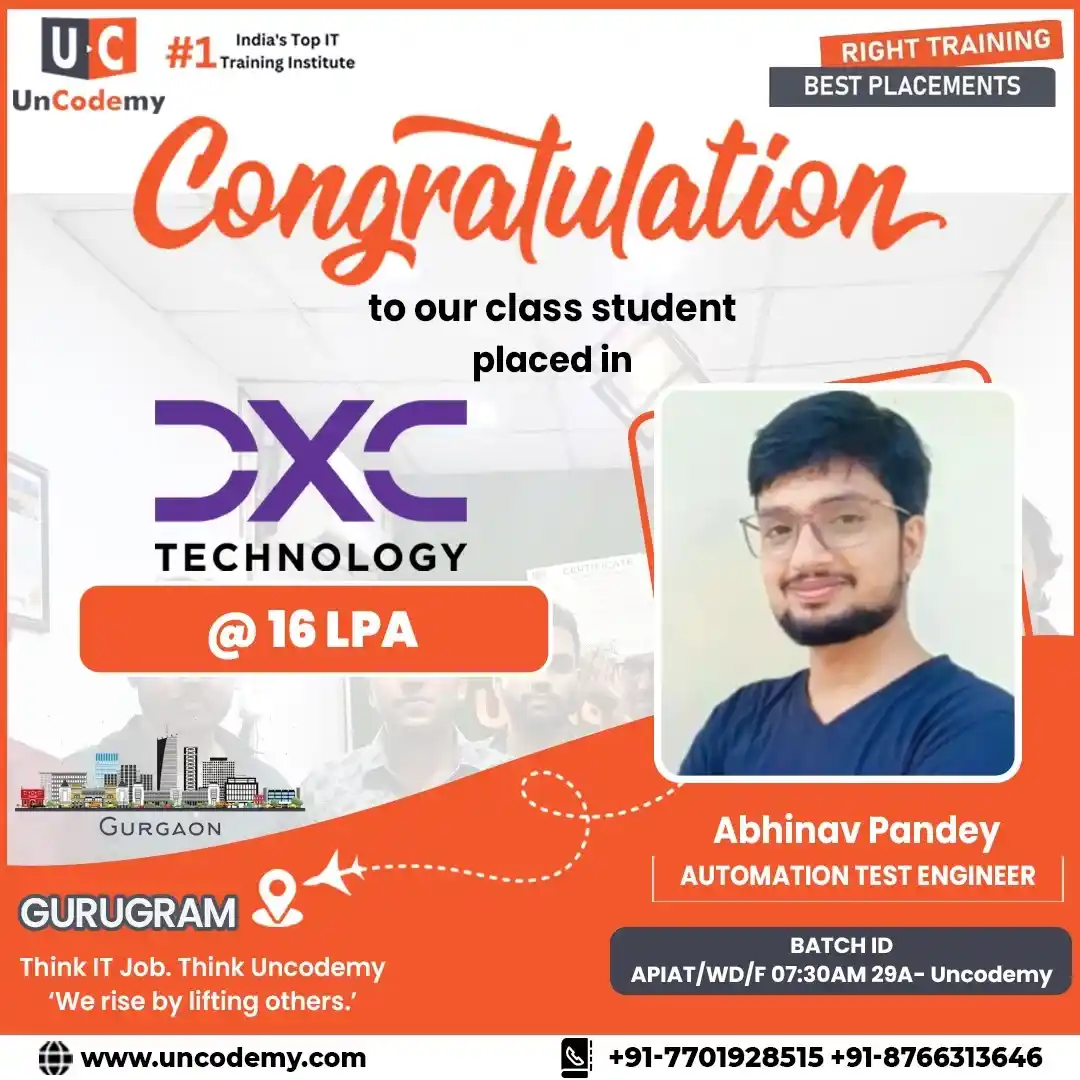
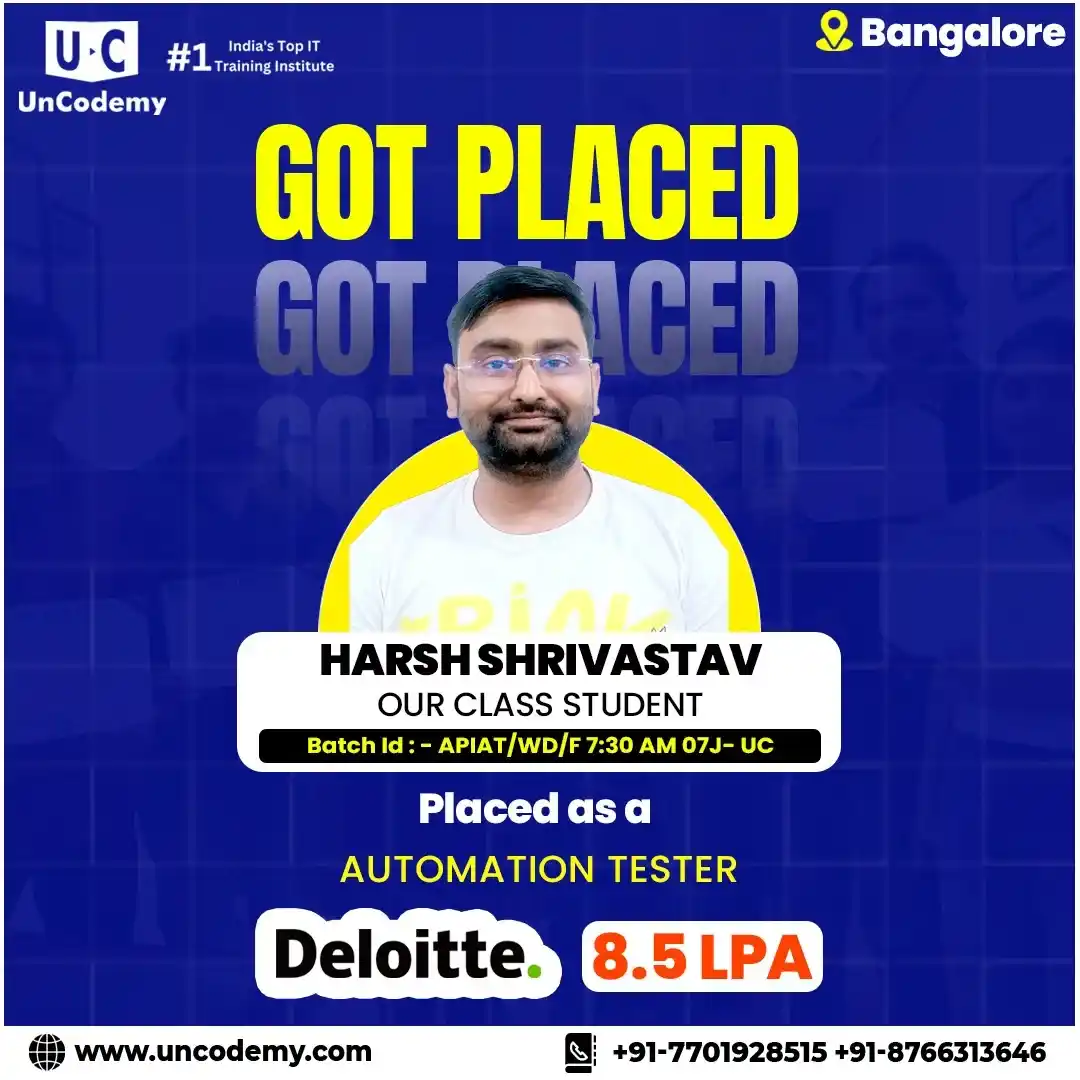
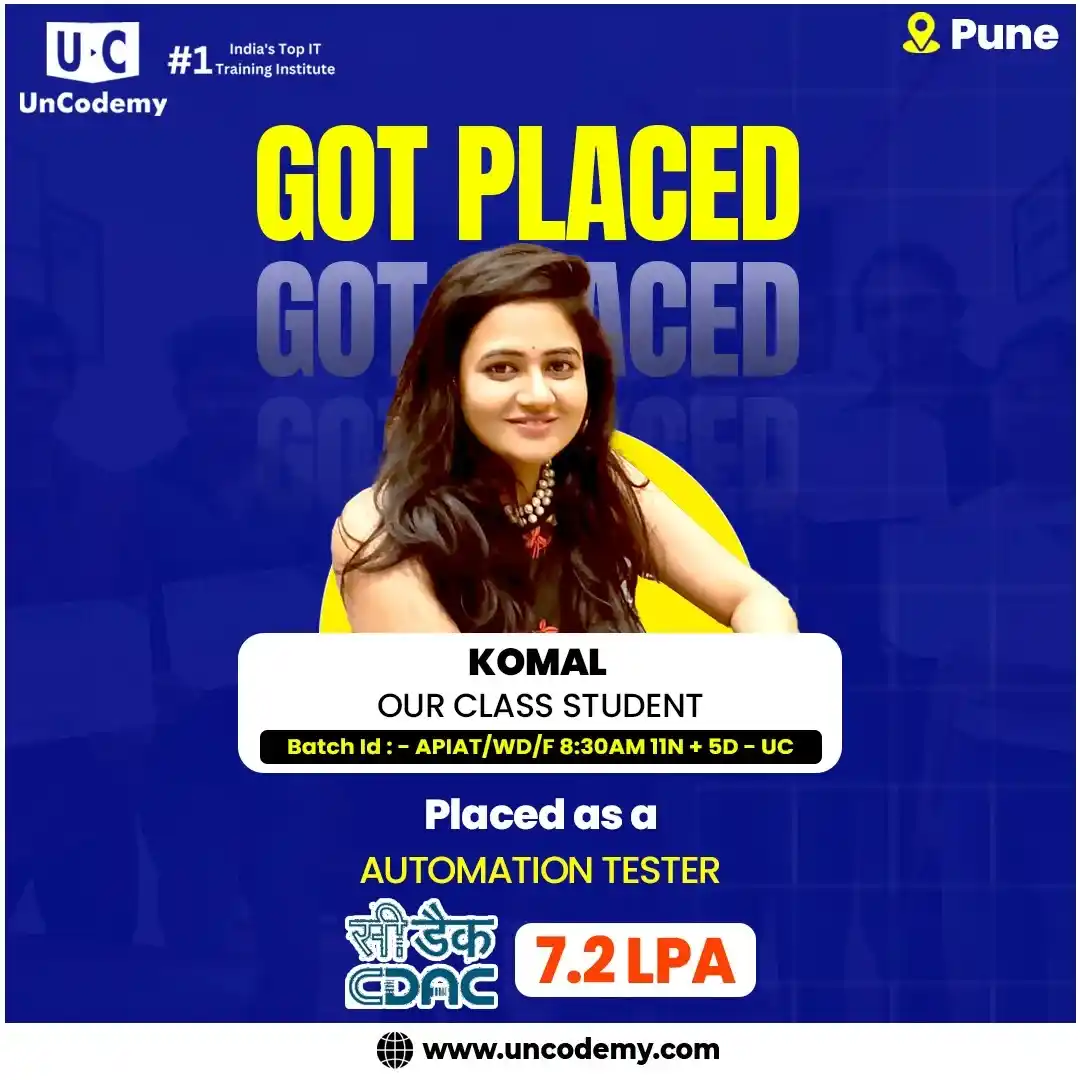
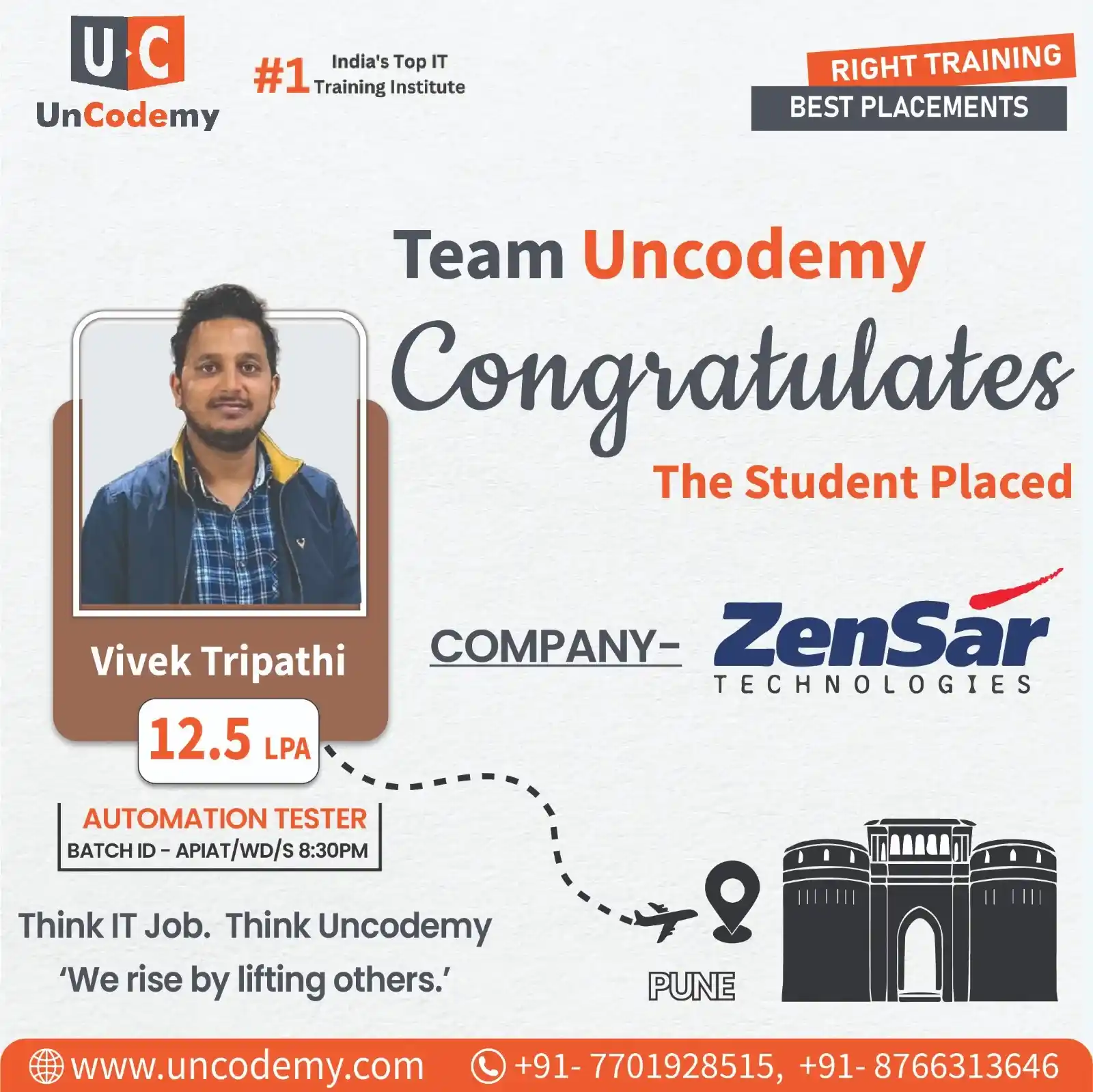
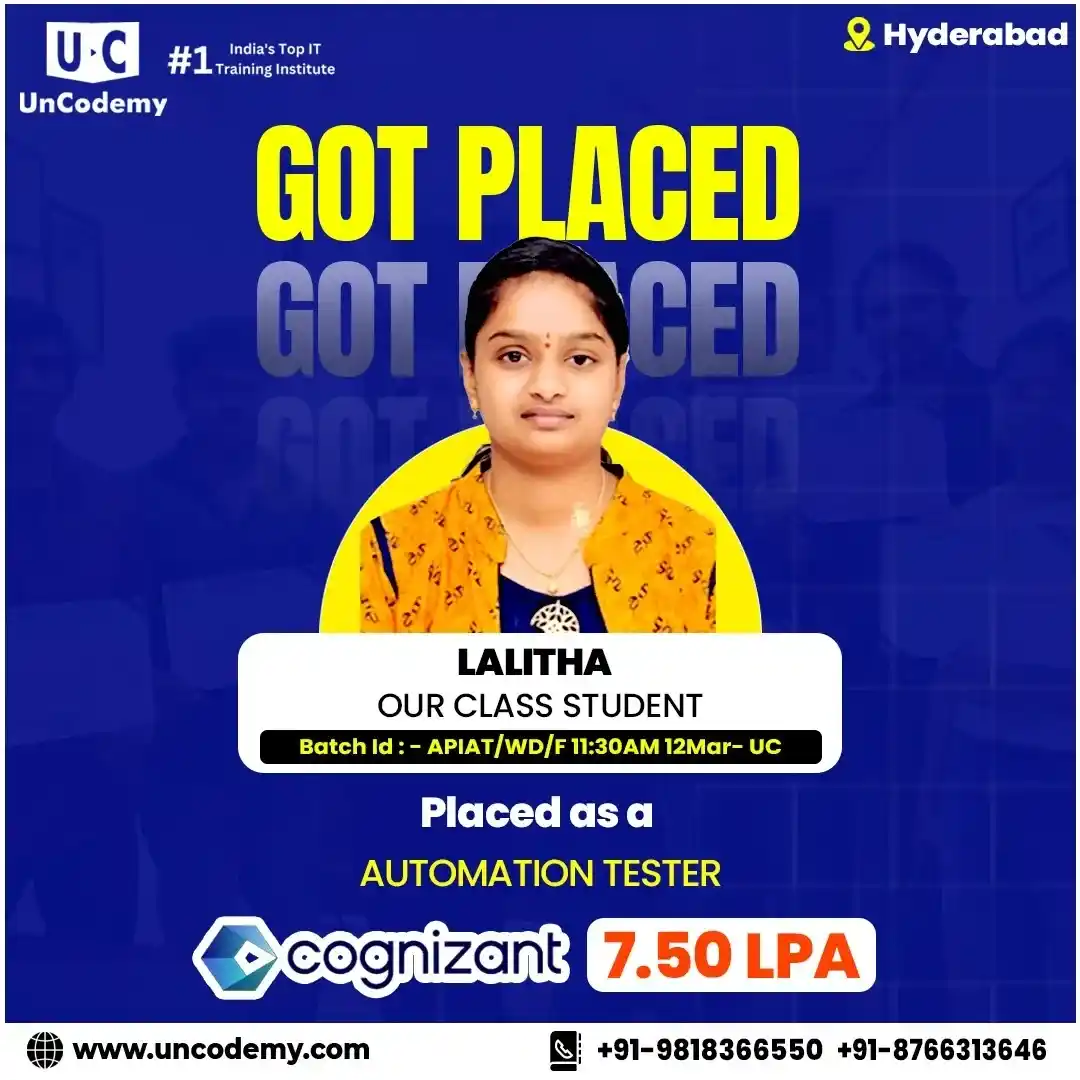
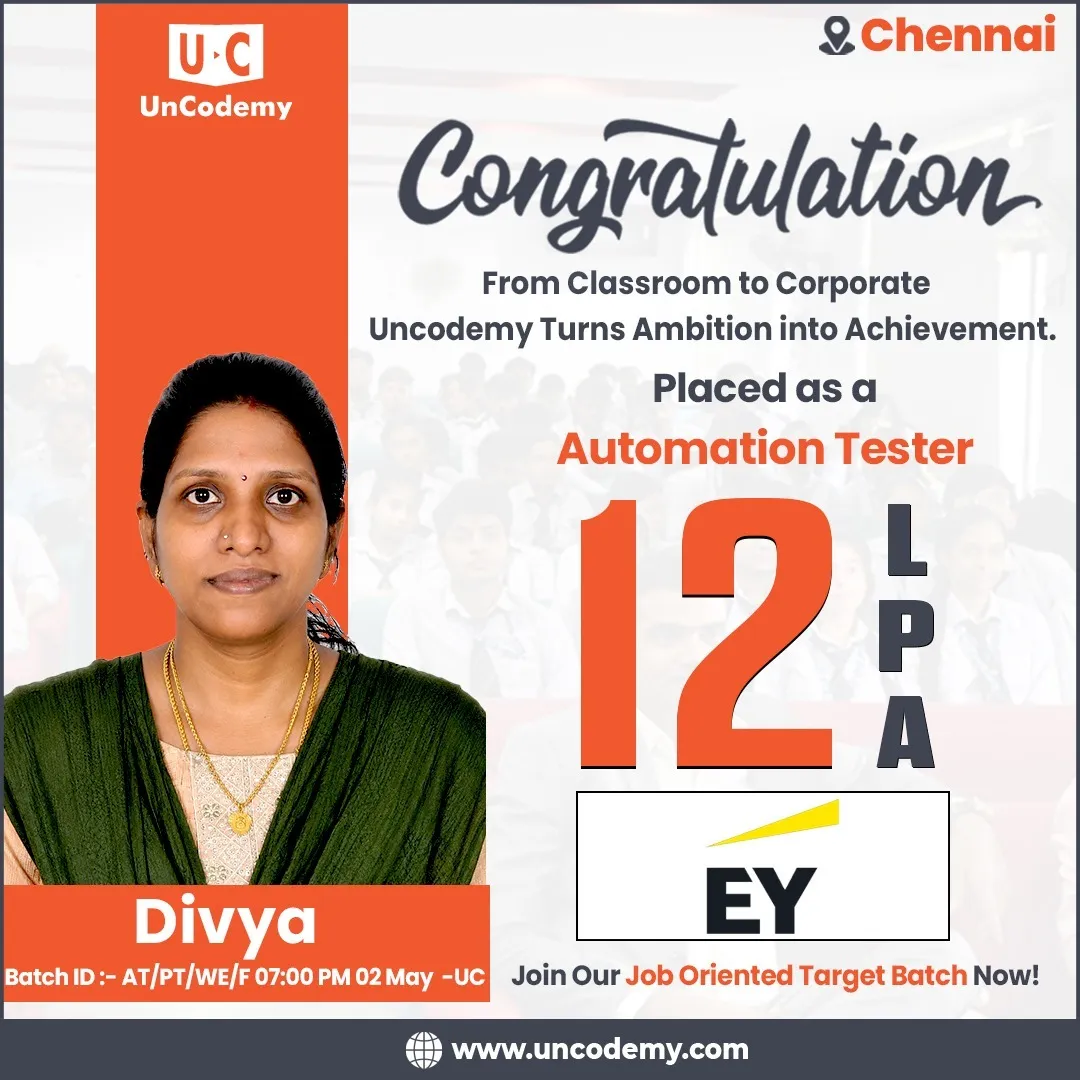
List of Placed Students Trained by Uncodemy
Graduates leave able to judge how deeply a release must be tested, confirm records with SQL, and automate tests
at both the interface and service layer. The people and firms shown in this section should come from Uncodemy's
verified placement records. Each result depends on the learner's skills, interviews, background and the role available.
Software testing is gathering evidence that a system does exactly what it should, for every user, and exposing
faults before they reach the public. Picture a craft-authenticity portal. A tester verifies that one QR tag can be
activated only once, that a scanned tag shows the right weaver and product, that a fibre report above the permitted
micron value blocks certification, that a lab cannot attach one report to more products than its batch size allows,
that a revoked artisan's tags stop validating, and that the server copes on a winter Sunday when tourists scan tags
across the city at once.
The method is steady and repeatable: decide which failures would harm artisans or buyers most, write cases a
teammate can rerun, execute them manually or with code, and when one fails capture screenshot, data and steps,
then retest after the fix. Testing is done at unit, integration, system and acceptance levels; verification portals
also need load, security and accessibility testing. Agile teams test within each sprint and run automated regression
after every change.
Types of Software Testing You Will Practise
Type
What it checks
Covered in
Functional testing
Features behave as the requirement states
Modules 1–2
Smoke & sanity testing
A new build is stable enough for deeper testing
Module 2
Regression testing
Recent changes have not broken existing features
Modules 2, 6, 7
Cross-browser testing
Consistent behaviour across Chrome, Firefox, Edge and WebKit
Modules 6–7
Database testing
Stored and returned data is correct
Module 4
API & integration testing
Services exchange data correctly
Modules 8–9
Exploratory testing
Unexpected behaviour scripts would miss
Module 2 and capstone
What Does a Software Tester (QA Engineer) Do?
With a remote team, an NCR firm or a Mohali company, a tester's week normally includes clarifying user stories with
the product owner, preparing scenarios and data, testing new builds, raising Jira bugs with proof and retesting
fixes. Automation testers also maintain Selenium or Playwright suites, extend API tests and investigate failed
Jenkins jobs. Government and tourism platforms add security and peak-traffic checks.
Manual Testing vs Automation Testing vs API Testing
Companies hiring testers from Jammu want someone who can do all three. The difference in brief:
Aspect
Manual Testing
Automation Testing
API Testing
What it checks
Features as a user sees them
Repeated UI and regression checks via scripts
Business logic and data exchange behind the UI
Main tools
Jira, test case sheets, browser dev tools
Selenium, Playwright, PyTest/TestNG
Postman, REST APIs
Coding needed
None
Moderate (Python, Java or JavaScript/TypeScript)
Low to moderate
Best for
Exploratory, usability, new features
Regression, cross-browser, CI/CD runs
Fast, stable checks of services
Indicative salary (India)
₹3–6 LPA (Manual QA Engineer)
₹4–8 LPA (Automation Test Engineer)
₹5–10 LPA (API Test Engineer)
Salary ranges are indicative India ranges and are not guaranteed placement outcomes.
Who Should Join?
Duration 6 months; 13 modules; 165+ hours; 100+ live sessions. Phase one is hand-testing and case design, phase two
brings Python or Java into Selenium, Playwright and API suites, and phase three covers generative AI, a Jenkins-run
framework and the 20-hour capstone.
Students and graduates of the University of Jammu, IIT Jammu, SMVDU, MIET, GCET and other J&K colleges.
Staff in banks, hospitals, tourism or the Bari Brahmana and Samba industrial estates who want a QA career.
Manual testers in Jammu, Mohali or remote roles who need automation and API skills.
Families in Samba, Kathua, Udhampur or Akhnoor who prefer their graduate to learn from home.
Developers wanting a solid foundation in test design, frameworks and CI.
By the End You Will Be Able To:
Turn tag-activation, fibre-limit or batch-size rules into test conditions, cases and data with boundaries and invalid inputs.
Check database records with SQL and write bug reports that anyone can reproduce.
Automate artisan, lab and buyer screens in Selenium or Playwright across browsers.
Test the portal's APIs in Postman and automate them with data from files.
Use AI tools responsibly and run everything through Jenkins with Allure reports.
Eligibility: graduates from any discipline and final-year students; no coding background required. Use a laptop with 8 GB RAM and a stable connection; keep a mobile hotspot as backup.
Upcoming Live Online Software Testing Batches for Jammu
All timings are IST. Once you have attended the free demo, pick a batch that suits university, work or family hours; missed classes are recorded.
Weekdays
Start Date
Time (IST)
Trainer
Seats Left
02 Nov 2026
07:00 AM – 08:00 AM
Mr. Rishi Raj
02 Seats
09 Nov 2026
12:30 PM – 01:30 PM
Mr. Fahim
02 Seats
16 Nov 2026
07:00 PM – 08:00 PM
Mr. Ravi Prakash
01 Seat
23 Nov 2026
08:30 PM – 09:30 PM
Mr. Satyendra Bind
02 Seats
Weekends
Start Date
Time (IST)
Trainer
Seats Left
08 Nov 2026
11:00 AM – 01:00 PM
Mr. Ravi Prakash
02 Seats
22 Nov 2026
02:00 PM – 04:00 PM
Mr. Satyendra Bind
01 Seat
Seats are limited and updated daily. 8+ new batches start every month*.
Software Testing Course Syllabus in Jammu
Inside the 165 hours sit thirteen modules, sequenced as a QA role matures: manual checks, query work, browser
scripting, service testing, AI assistance and pipelines. A lab caps each one, and in Module 13 the authenticity
portal becomes entirely yours to assure.
Module 1 begins in a Srinagar showroom. A buyer scans the tag on a genuine Pashmina from a Jammu cooperative, and the portal says it is unregistered: the system compared tag codes case-sensitively and the printer used capital letters. That case introduces the purpose of testing, the seven principles, how a tiny mismatch becomes a lost sale, how Waterfall, V-Model and Agile projects are planned, and how the STLC phases connect with unit, integration, system and acceptance testing.
Module 2 develops test design on the registration, certification and scan screens. Boundary values cover the fibre micron limit, batch sizes, tag expiry and report validity. Equivalence classes cover craft types, districts, labs, cooperatives and individual weavers. Decision tables combine lab result, artisan status and tag state; state transitions follow a tag that is printed, activated, scanned, revoked or replaced. Exploratory, smoke, sanity and regression testing follow, and each defect gets a severity and a priority.
Module 3: Agile, Scrum & Test Management 8 Hours
Module 3 is Scrum in a government-tech squad: sprint planning, daily stand-ups, a review where a handicrafts department officer sees the demo, and a retrospective, with acceptance criteria checked for each story. You set up Jira for the portal and write a test plan that prioritises tag uniqueness and certification rules.
Module 4: SQL & Database Testing 10 Hours
Module 4 teaches SQL on artisans, cooperatives, products, lab reports and tags. You define keys and constraints, then filter, sort, group, join and nest queries, either to build realistic certification data or to prove no tag was activated twice.
Module 5: Programming Fundamentals with Python or Java 15 Hours
Module 5 starts Python or Java from zero: variables, conditions, loops, functions, classes, inheritance and exceptions. Its final exercise loads artisan and product data from CSV, JSON or Excel so one test can validate an entire cooperative's register.
Module 6 uses Selenium WebDriver on the certification officer's console: locating elements by ID, CSS selector or XPath, explicit waits, alerts, frames and new windows, district and craft drop-downs and long tag tables, organised as PyTest or TestNG suites for multiple browsers.
Module 7: Playwright Automation with JavaScript/TypeScript 15 Hours
Module 7 covers TypeScript basics and Playwright: role and label locators, auto-waiting assertions, fixtures, a stored login, a lab-report service forced to fail, uploads of product photos and lab PDFs, parallel runs and debugging with traces.
Module 8: API Testing with Postman & REST APIs 12 Hours
Module 8 explores the REST APIs behind the portal: HTTP methods, endpoints, headers, status codes and JSON, tested in Postman with collections, environments, token authentication and schema checks.
Module 9: API Automation & Integration Testing 12 Hours
Module 9 turns those Postman requests into code: assertions on every response, a product ID passed through register, certify and issue-tag calls, token refresh and data from files. An integration test sends a certification request through the API, a mocked lab service and the database, and runs with the UI tests.
Module 10: GenAI for Test Case Generation & Test Data 10 Hours
Module 10: the department adds a new GI-tagged craft with its own certification rules, and you test it with Gen AI. You ask the model for scenarios, edge cases and fictional artisans, check its output for gaps and errors, and learn why real Aadhaar numbers, bank details and artisan photos must never go into public AI tools.
Module 11: AI-Assisted Automation, Debugging & Test Maintenance 12 Hours
Module 11 brings ChatGPT and GitHub Copilot into your automation: drafting tests, suggesting refactors, explaining unfamiliar code, decoding error messages and stabilising flaky locators. Every suggestion is run and understood before it is committed.
Module 12 organises your scripts into a framework with page objects, external test data, reviewed merges, Jenkins on every push and Allure reports a department officer can follow.
Module 13, the 20-hour capstone, puts you in charge of QA for the authenticity portal: test plan, execution, UI and API automation and a Jenkins job linked to GitHub. The last sessions prepare you for interviews with an updated CV and LinkedIn, a project walkthrough and mock interviews.
#
Module
Hours
Key Tools
1
Software Testing Fundamentals & SDLC/STLC
10
—
2
Manual Testing, Test Cases & Bug Reporting
12
Jira
3
Agile, Scrum & Test Management
8
Jira
4
SQL & Database Testing
10
SQL
5
Programming Fundamentals with Python or Java
15
Python, Java
6
Selenium WebDriver & Automation Fundamentals
15
Selenium, PyTest/TestNG
7
Playwright Automation with JavaScript/TypeScript
15
Playwright, JavaScript/TypeScript
8
API Testing with Postman & REST APIs
12
Postman, REST APIs
9
API Automation & Integration Testing
12
REST APIs, PyTest/TestNG
10
GenAI for Test Case Generation & Test Data
10
ChatGPT
11
AI-Assisted Automation, Debugging & Test Maintenance
12
GitHub Copilot, ChatGPT
12
Framework Design, Git, CI/CD & Test Reporting
14
Git, GitHub, Jenkins, Allure Reports
13
End-to-End Testing Project & Capstone
20
All tools
Total
165
15+ Tools & Technologies
Curriculum Reviewed by: All 13 modules have been reviewed and approved by Mr. Satyendra Bind, corporate trainer in manual, API and Selenium-Java automation testing.
Get Your Software Testing Certification in Jammu
Finish Module 13, every graded assignment and the authenticity capstone and you earn the Software Testing Program Certificate from Uncodemy. Course name, length, tools and completion month appear on it, and its ID can be confirmed in seconds at certificate.uncodemy.com.
The credential a Jammu learner earns online is identical to a Noida classroom learner's. Recruiters want something to inspect, so the capstone cases, framework, API suite and a passing Jenkins badge wait on GitHub.
Key Benefits of the Certification
Program Completion: Only granted once all six months are done.
Online Verification: Its number can be checked on the web.
Practical Proof: Your GitHub stands behind it.
Is the Course ISTQB Aligned?
Uncodemy issues this credential; ISTQB is an unrelated board that runs its own test. Certain remote and NCR hirers ask about ISTQB, and Modules 1–2 already span most of its Foundation content, so a little revision later is all it takes to attempt it.
Tools & Technologies Covered
15+ tools and technologies appear in the labs; this table gives the job of each and the module that introduces it.
Purpose
Tools
Test management & defects
Jira
Database testing
SQL
Programming
Python, Java, JavaScript/TypeScript
UI automation
Selenium, Playwright
Test runners
PyTest/TestNG
API testing
Postman, REST APIs
Version control & CI/CD
Git, GitHub, Jenkins
Reporting
Allure Reports
Generative AI
ChatGPT, GitHub Copilot
Search remote QA listings or Mohali and NCR openings and you will meet these same tool names.
Introducing Uncodemy
Uncodemy Edutech Pvt. Ltd. has offered IT training for more than 14 years and taught 54,000+ learners. Jammu learners attend the live sessions held in our Noida (Sector 1) and Delhi (Shakarpur Extension) classrooms. Our teaching follows real QA work: understand the requirement, design cases that find weaknesses, automate what repeats, and report so developers can fix quickly.
Career assistance follows the rules in our placement eligibility document, worth reading before you sign up.
Portfolio review: Repositories critiqued by a trainer until they can survive a live technical round.
Resume & LinkedIn: A results-first CV and LinkedIn that present bank, hospital, tourism or factory years as subject knowledge.
Interview preparation: Rehearsal of usual interview tasks: cases for an unseen page, SQL, defending your framework, untangling a broken API call.
Mock interviews: Trainer-run mock interviews with notes you can act on.
Opportunity sharing: Leads from 850+ partner companies across remote teams, NCR and Mohali, passed on as they open.
Continued support: Support stays on after graduation while you remain engaged; no job is promised.
How Jammu Learners Attend
Arjun works at a pharmaceutical unit in Bari Brahmana until 5 p.m., so he chose the 8:30 p.m. weekday batch. From home in Channi Himmat he joins the same live class that Noida learners attend. When his tag-reuse test failed, the trainer asked him to share his screen and walked the batch through the fix. He submits assignments on weekends. On days when the connection was weak, he watched the recording the next morning, and during a family visit to Delhi his counsellor booked him a free day in the Shakarpur classroom.
What a Typical Week Looks Like in Your Batch
Pick five weekday sessions of about an hour or two extended weekend sessions. Each class runs concept and demo, then a lab your trainer inspects, then open questions. GitHub submissions begin at Module 5, and that day's recording is posted by night.
Other Courses for Learners in Jammu
Jammu learners also join our Automation Testing course online, along with data analytics, data science, business analysis and full stack programs. To get a feel for the content, read the free manual testing syllabus or our article on how to become an automation tester.
Instructors
Each batch is led by an active QA professional from Uncodemy's 30+ mentors. Technical material is vetted by an outside reviewer, and someone beyond the faculty approves the syllabus. Trainer cards list their background.
Technology
StrategyCloud & AI
SolutionsEdTech Leadership
About
CEO & Founder of GvCloud Secure and Uncodemy with 14+ years of
professional experience building scalable web, mobile and AI-driven
solutions for clients across India, USA, UK, Canada, Australia and
Singapore.
Live projects
Leads technology strategy, scalable web and mobile solutions, AI-driven
products and EdTech initiatives across Uncodemy and GvCloud Secure.
1,200+ reviews across major platforms*. *Ratings and review counts reflect publicly available platform information and may change over time.
Software Testing Jobs & Career Scope in Jammu
Jammu learners can reach QA jobs in several ways. Remote work is the biggest: Indian and overseas companies hire testers who stay in J&K. NCR and Mohali-Chandigarh also recruit freshers for office and hybrid roles. Locally, the industrial estates at Bari Brahmana, Gangyal, Samba and Kathua, J&K Bank, AIIMS Vijaypur and other hospitals, tourism operators and e-governance projects all use software that has to be tested. Many graduates come out each year, so a fresher with working automation and API tests on GitHub stands apart.
Remote and Hybrid QA Roles for Learners in Jammu
A good share of J&K's testers work from home for companies in NCR, Bengaluru or abroad, visiting offices only occasionally. Studying in a live online batch builds the habits those teams want: video stand-ups, debugging on a shared screen, reviewed pull requests and managing your own time. Remote recruiters often look at GitHub first, and your projects will already be there.
Job Roles After This Course
Most graduates land in one of the roles below. The core skills overlap; verification and citizen-service systems add extra weight on security and data accuracy.
First titles for Jammu freshers tend to be QA Analyst, Test Engineer or Junior Automation Engineer. Around two to four years of hands-on scripting lead to Senior Automation and SDET posts; banks and e-governance teams also run security-testing specialisms.
Software Tester Salary in Jammu – Role-wise
QA salaries for Jammu learners largely follow the national bands below; remote, NCR and product roles usually pay more, and automation or API skills strengthen offers.
Role
Indicative Salary Range (India)
Entry-Level Software Tester
₹3–5 LPA
Manual QA Engineer
₹3–6 LPA
Automation Test Engineer
₹4–8 LPA
API Test Engineer
₹5–10 LPA
Playwright / Selenium Automation Engineer
₹6–12 LPA
AI Software Testing Engineer
₹6–14 LPA
Senior QA Automation Engineer
₹12–22 LPA
SDET / Quality Engineering Lead
₹15–30 LPA
Sources reviewed: Instahyre, AmbitionBox, Glassdoor, Indeed and Uncodemy placement records. Reviewed: October 2026. Read these figures as approximate all-India ranges. Experience, how well you code, who hires you and your niche move the number; Uncodemy commits to no salary or job.
Top Hiring Sectors for Software Testers in Jammu
Among our 850+ partners, Jammu learners have most often started in:
Remote-first IT teams: Indian and overseas firms hiring Jammu testers
NCR and Mohali IT companies: Office and hybrid QA roles
Manufacturing estates at Bari Brahmana, Samba, Kathua: ERP, inventory and dispatch systems
Banking and healthcare: Branch, payment and hospital software
Tourism, crafts and e-governance: Booking, verification and citizen-service portals
Frame your capstone around any of these, the authenticity portal or a Samba plant's dispatch system, and interviewers will understand it at once.
How to Become a Software Tester – Step by Step
Like the stairs to Bahu Fort, it rises one step at a time, and each one carries the next.
Learn testing fundamentals – begin with theory: how software is built and tested, the levels of testing and the test types named in job posts.
Master manual test design – sharpen design skills on apps you use daily, a train-ticket app or a wallet, by probing limits, grouping inputs and tabulating conditions, and file Jira defects a developer can act on alone.
Learn SQL – query databases until reading tables feels natural.
Pick one programming language – commit to Python or Java with daily practice; TypeScript joins later for Playwright.
Automate the UI – script key flows in Selenium, then repeat them in Playwright.
Test and automate APIs – poke every API by hand in Postman before you code it.
Use AI tools responsibly – lean on AI for speed but read every line it gives you.
Build a framework and pipeline – shape tests into page classes under Git, wire them to Jenkins and share Allure output.
Publish a portfolio and prepare – showcase the repositories, align CV and LinkedIn with them, and rehearse interviews in Dogri or Hindi before switching to English.
Commitment: half a year, two or three hours on most days.
Is Software Testing a Good Career in 2026, with AI?
It does, provided you keep upgrading. Generators can now write cases and code in moments, which squeezes jobs made purely of rote checking. What hires pay for is a tester who chooses what matters, automates selectively, digs into APIs and system links, leaves test code others can maintain and doubts AI output by habit; the program trains precisely that. Responsibility for quality stays with humans who know the users and the rules, so hand-testing is taught first.
How This Course Compares to Other Software Testing Courses in Jammu
Jammu has a few short manual testing courses around Gandhi Nagar and Residency Road, and recorded courses are widely sold online. The table compares them with this program.
Factor
This Program
Duration
6 Months
Learning hours
165+ Hours
Live sessions
100+
Tools covered
15+ Tools & Technologies
Automation
Selenium and Playwright (15 hours each)
API testing
24 hours across two modules
Gen AI
22 hours across two dedicated modules
Capstone
20-hour end-to-end project
Career support
Resume, LinkedIn, mock interviews, 850+ company hiring network
Total fee
₹20,650 (₹17,500 + 18% GST)
Is the extra cost worth it? For a refresher, a manual-only or video course is cheaper and sufficient. This program is designed for switching careers: live trainers in every lab, two automation frameworks, 24 API hours and career support that outlasts the classes. Look through the refund policy first.
Live Online vs Classroom – Which Should a Learner in Jammu Choose?
Online is the complete course for anyone in Jammu, not a lighter version. The screen shows a Noida or Delhi batch in session, and you can unmute to ask. Power cuts in January, semester exams, a trip to Katra or a wedding in Akhnoor need not cost you a lesson: recordings exist for each one. Faculty, modules, labs, certificate, career help and the ₹20,650 fee do not vary by mode. Choose an NCR seat only if you are moving south, and a later switch between modes, space permitting, keeps the six-month timeline.
Is This Course Right for You?
If you want...
Recommendation
Need a quick revision of manual basics
Any brief course
A J&K graduate deciding on QA
This program
Doing manual QA in Jammu or remotely, no scripting yet
This program, all 13 modules
More drawn to coding apps than testing them
Full Stack Development
Content with videos alone
A pre-recorded course
Frequently Asked Questions
1. What is the duration of the Software Testing course in Jammu?
Half a year: more than 100 live classes adding up to roughly 165 hours, on weekdays or at weekends.
2. What is the fee for the Software Testing course in Jammu?
The total is ₹20,650 (₹17,500 tuition plus 18% GST), exactly what a Noida classroom learner pays. Six instalments of ₹3,442* are available.
3. Is there an Uncodemy centre in Jammu?
There is no Jammu branch. Uncodemy teaches only from Sector 1, Noida and Shakarpur Extension, Delhi, and Jammu learners enter those classes live online, so faculty, syllabus and fee are unchanged.
4. Can I learn software testing without a coding background?
Yes. Graduates in arts, commerce and science from the University of Jammu, and working people with no coding background, start from zero. Programming begins in Module 5; earlier modules teach test thinking, case writing, Agile and SQL.
5. Is manual testing still in demand in 2026?
Treat manual skill as the base camp, not the summit. Entry-level QA ads from remote, NCR and Mohali employers generally ask for Selenium, Playwright or Postman as well, hence the later modules on browser automation, API scripting and AI.
6. Should I learn manual testing or automation testing first?
Manual comes first, because a script only repeats what a human has already designed.
7. Which is better to learn: Selenium or Playwright?
Fifteen hours of each. Selenium dominates older enterprise suites; Playwright is popular with young product companies. You will show both on GitHub.
8. Does the course include API testing?
Yes: 24 hours spread over two modules. Module 8 is hands-on REST work in Postman, and Module 9 converts it into automated API and integration suites with token authentication. Verification, booking and payments all run through APIs.
9. Does the course cover Generative AI in software testing?
Yes, 22 hours in total. Module 10 has AI draft scenarios and imaginary artisans that you audit; Module 11 brings ChatGPT and Copilot into coding and debugging. Final judgement is always yours.
10. Will AI replace software testers?
No. AI changes the work rather than ending it. It drafts fast, but a person who understands artisans, buyers and the rules must still judge whether a passing test really proves a tag is genuine, and approve the release.
11. Is this course ISTQB certified?
The certificate is Uncodemy's own. ISTQB Foundation covers ground similar to Modules 1–2 and is liked by some remote and NCR employers, but its exam is a separate booking.
12. What is the salary of a software tester in Jammu?
In India, QA salaries usually begin around ₹3–5 LPA, rise to ₹4–8 LPA with automation skills and reach ₹15–30 LPA for SDETs and QE leads. A local plant's IT team, a Mohali firm and a remote product company will pay differently; Uncodemy does not promise a figure.
13. Can a fresher or non-IT graduate get a software testing job in Jammu?
Yes. Remote, NCR and Mohali employers have hired freshers with BTech, BSc, BCA and BCom degrees. Interviews usually test case design for a sample screen, SQL, your automation framework and a look at your GitHub; we prepare you for each, and the employer decides.
14. What job roles can I apply for after this course?
Look for titles such as QA Trainee, Junior Test Engineer, Automation Associate or API Tester, or any role naming Selenium or Playwright. SDET usually comes two or three years in.
15. Are the classes live or recorded?
Yes, each class is taught live at a fixed hour with doubts answered then and there; the recording follows for revision.
16. Do you provide placement assistance to learners in Jammu?
Same support as NCR batches: the career cell reworks your CV and LinkedIn, holds mock interviews, coaches you and forwards openings from 850+ partners. Jobs are not guaranteed.
17. Is a free demo class available before I enrol?
Yes. A free online demo lets you watch an actual class and question the trainer; two trial classes follow under the present offer, and payment comes only if you stay.
18. Can I attend at the Noida or Delhi branch when I am in NCR?
Seats permitting, yes. One syllabus covers all modes, so a few days in Delhi can include classes at Shakarpur or Sector 1; tell your counsellor the dates.
19. Student Projects in Software Testing
Projects mirror genuine QA assignments and live in your GitHub. Reviewing them, a trainer behaves like a demanding lead: what risk did you skip, would a cloned QR code slip through, could a colleague add tests without untangling yours, is the pipeline green, and does the README get a stranger running in minutes?
Student Projects in Software Testing
Projects mirror genuine QA assignments and are maintained in the learner's GitHub portfolio. A trainer reviews each
repository like a QA lead: which risks were missed, could a copied QR code pass, can another engineer extend the tests,
does the pipeline pass, and can a new user run the project from its README?
Uncodemy
SOFTWARE TESTING
AI Bug Report Analyzer
AI-powered tool designed to analyze software bug reports, identify important
issue details, and support testers in understanding and organizing defects.
Software quality-focused project designed to support testing activities,
identify potential issues, and improve the reliability of development workflows.
Curriculum, numbers and fee on this page were cross-checked by the reviewers below, each shown with a role and the latest check date.
Course curriculum verified by Mr. Satyendra Bind
Technical content verified by Mr. Fahim
Content rechecked and verified by Mr. Rishi Raj
Fee verified by Admin Department
Placement figures sourced from internal placement records
Review counts verified against respective third-party platforms
Last reviewed: 31 October 2026
How We Maintain This Page
Course curriculum verified by Mr. Satyendra Bind. Technical content verified by Mr. Fahim. Content rechecked and verified by Mr. Rishi Raj. Fee verified by Admin Department. Placement figures sourced from internal placement records. Review counts verified against respective third-party platforms. Last reviewed: 31 October 2026
Written by: Mr. Chandra Shekhar Reviewed by: Mr. Satyendra Bind Final editorial check: Mr. Gangesh Gaunr, Director at Uncodemy
Our Training Centres & How Learners in Jammu Join
Outside these two NCR addresses Uncodemy runs no campus; whichever batch you join from Jammu is broadcast from one of them.