#1 India's Top IT Training Institute
×

About Uncodemy

Know more about who we are and what we stand for.

About Us

About Us

Discover our mission to equip individuals with essential IT skills and industry expertise.

Read More →
UnCodeMy Gallery

UnCodeMy Gallery

Explore highlights from our IT training sessions and success stories.

Read More →
Mentors

Mentors

Meet the industry experts who train and guide you through your course.

Read More →
Free Resources

Free Resources

Free tutorials, interview questions, tools and calculators to help you learn.

Explore →
×

Free Resources

Learn, practice and plan your career — bilkul free.

Tutorials

Tutorials

Step-by-step written tutorials to learn any technology at your own pace.

Read More →
Free Counselling

Free Counselling

Book a free video counselling session and pick the right course for you.

Read More →
Online Compiler

Online Compiler

Write, run and test your code online — no setup required.

Read More →
Speciality
Prof_Trained

15000+ Professionals Trained

Batch-every

3+ Batches every month

Prof_Trained

50+ Industry expert trainers

Corporate

2500+ Corporate Served

What Is SQL, Why You Should Do It From Uncodemy?

SQL (Structured Query Language) is a domain-specific programming language used for managing and manipulating relational databases. It is designed for creating, querying, updating, and deleting data in relational database management systems (RDBMS). SQL has become the standard language for relational database communication, used by database administrators, developers, and data analysts to interact with databases and extract valuable insights from data.

SQL offers several advantages:

  • Easy to learn: SQL has a simple syntax, making it relatively easy to learn, even for individuals without extensive programming experience.
  • Widely used: SQL is a widely adopted standard, supported by various popular database systems, such as MySQL, PostgreSQL, Oracle, Microsoft SQL Server, and more.
  • Flexibility: SQL can handle a variety of data operations, including data manipulation, aggregation, filtering, and sorting.
  • Integration: SQL can be integrated with other programming languages, such as Python, Java, and C++, allowing developers to incorporate database querying into their applications.

Some common SQL commands include:

  • SELECT: Retrieve data from one or more tables in a database.
  • INSERT: Add new records to a table.
  • UPDATE: Modify existing records in a table.
  • DELETE: Remove records from a table.
  • CREATE: Create a new table or database.
  • ALTER: Modify an existing table structure.
  • DROP: Delete a table or database from the system.

SQL plays a crucial role in data management and analysis and is an essential skill for many data-related professions, such as data analysts, data scientists, and database administrators.

Uncodemy's reputation as one of the premier SQL training institutes in Ghaziabad, located in Noida, India, is well-earned. The institute's partnerships with Fortune 500 companies and renowned MNCs guarantee that students are taught by the best and brightest industry experts, who not only possess expert teaching abilities, but also have the real-world experience necessary to guide students in developing the confidence and skills needed to thrive in the competitive IT industry.

Uncodemy provides a well-rounded learning experience with numerous SQL course benefits in Ghaziabad designed to help you develop the skills and confidence necessary to succeed as a SQL professional-

  • State-of-the-art facilities
  • Comprehensive resources
  • Regular webinars
  • Dedicated support
  • Flexible learning options
  • Affordable bootcamps
  • Dedicated Placement Support
  • Industry-recognized certifications
  • Expert guidance
  • Real-world projects
  • Professional experience

Curriculums for SQL Training Course in Ghaziabad

SQL Curriculum

The curriculum has been designed by faculty from IITs, and Expert Industry Professionals.

time
30+

Hours of Content

live1-removebg-preview
15+

Live Sessions

tools
2+

Tools and Software

Set the Basics Right

SQL is the domain of study that deals with vast volumes of data using modern tools and techniques to find unseen patterns, derive meaningful information, and make business decisions. For example, finance companies can use a customer's banking and bill-paying history to assess creditworthiness and loan risk.

SQL course provider of Ghaziabad called Uncodemy offers a curriculum that contains following courses to strengthen your skill in SQL-

SQL

  • Introduction to Databases
  • How to create a Database instance on Cloud?
  • Provision a Cloud hosted Database instance.
  • What is SQL?
  • Thinking About Your Data
  • Relational vs. Transactional Models ER Diagram
  • CREATE Table Statement and DROP tables
  • UPDATE and DELETE Statements
  • Retrieving Data with a SELECT Statement
  • Creating Temporary Tables
  • Adding Comments to SQL
  • Basics of Filtering with SQL
  • Advanced Filtering: IN, OR, and NOT
  • Using Wildcards in SQL
  • Sorting with ORDER BY
  • Math Operations
  • Aggregate Functions
  • Grouping Data with SQL
  • Using Subqueries
  • Subquery Best Practices and Considerations
  • Joining Tables
  • Cartesian (Cross) Joins
  • Inner Joins
  • Aliases and Self Joins
  • Advanced Joins: Left, Right, and Full Outer Joins
  • Unions
  • Working with Text Strings
  • Working with Date and Time Strings
  • Date and Time Strings Examples
  • Case Statements
  • Views
  • Data Governance and Profiling
  • Using SQL for Data Science
  • How to access databases using Python?
  • Writing code using DB-API
  • Connecting to a database using DB API
  • Create Database Credentials
  • Connecting to a database instance
  • Creating tables, loading, inserting, data and querying data
  • Analysing data with Python
Get cosmopolitan certifications with Uncodemy

Uncodemy's collaborations with respected industry partners enable the institute to offer students an exceptional opportunity to learn from some of the most distinguished trainers in the SQL field. Uncodemy awards an Uncodemy Certificate, an Uncodemy Agile Certificate and a Module Completion Certificate on completing the course.

Tools and Technologies covered
  • imageexcelExcel
  • imagetablueTableau
  • Power-BI-SymbolPower-Bi
  • imageggplotggplot
  • imagejupitorJupyter
  • imagenumpyNumpy
  • imagepythonPython
  • imagepandasPandas
  • imageseabornSeaborn
  • imagelockerLooker
  • Matplotlib-logoMatplotlib
  • imagepycharmPyCharm
  • imagegoogleColabGoogle Colab
  • imageanacondaAnaconda
  • imagenltkNLTK
  • imagescikitlernScikit-learn
  • imagesqlSQL
  • imageMySqlMySql
  • imagepostgersqlPostgreSQL
  • imagemlML
  • imagedeeplDeep Learning
  • imagenlpNLP
How Uncodemy Helps Every Student Acing Their Interview-

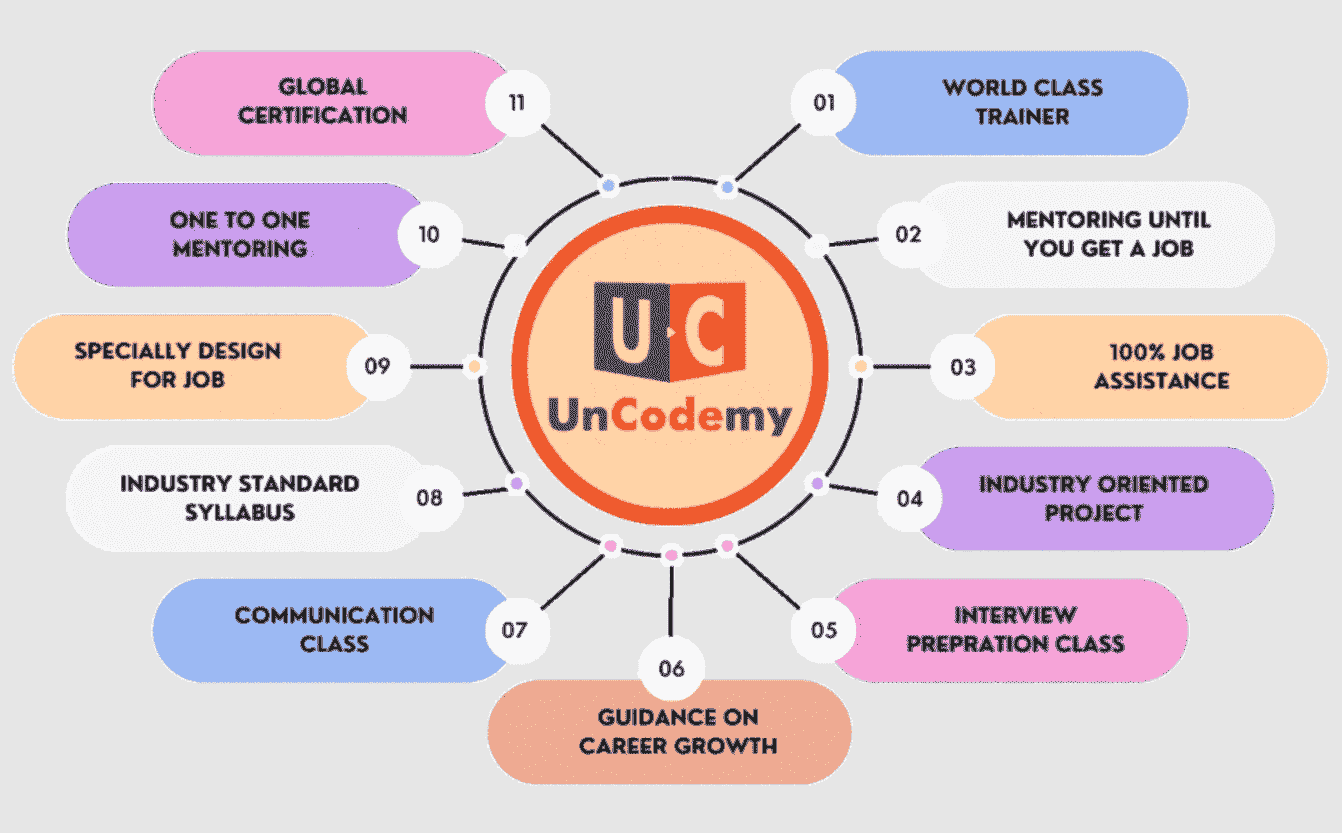
In addition to exceptional SQL training in Ghaziabad, Uncodemy supports students in their job search by offering :

animate
Uncodemy

Access unparalleled learning with live sessions, recordings, assignments, and live projects led by a top-tier mentor and industry expert trainer. Elevate your skills with the best-in-class educational content.

Young-male-holding-laptop-408w
Uncodemy

We Provide EMI Facility for You

Nothing Stops you from Learning

Young-male-holding-laptop-408w

Become a SQL Expert - Talk to Expert Counselor

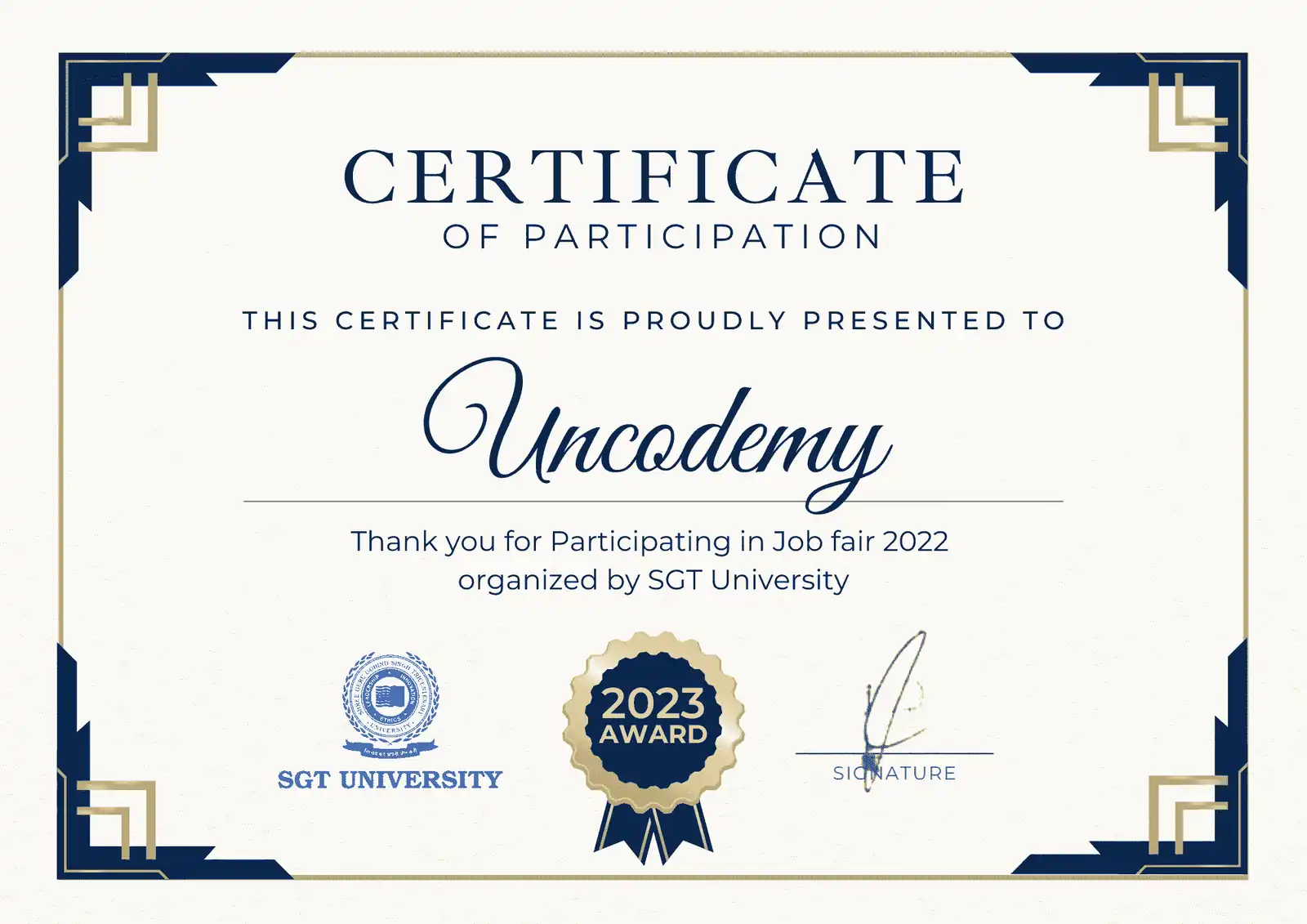
Awards
c3
c4
Ghaziabad guide

Learning SQL from Ghaziabad: an easy commute and a lot of order data

Ghaziabad is one of the few cities in this list where the classroom is genuinely close. Vaishali and Kaushambi sit on the same Blue Line branch as the Laxmi Nagar centre, so a weekday class is a realistic option for many people here. The other half of the story is work: warehouses along the Delhi–Meerut corridor, the Sahibabad industrial area, distributors and e-commerce back offices all generate order and shipment data that someone has to query. This page covers both.

Classroom access

Which Ghaziabad localities can reach the Delhi classroom easily

Uncodemy's two classrooms are in Noida (Sector 1) and Delhi (Shakarpur Extension, Laxmi Nagar). For Ghaziabad, the Laxmi Nagar one is the natural choice:

  • Vaishali, Kaushambi, Indirapuram (west side), Vasundhara: board the Blue Line at Vaishali or Kaushambi towards Dwarka; Laxmi Nagar is a handful of stops away with no change of line.
  • Mohan Nagar, Shaheed Nagar, Raj Bagh and the Red Line belt: one change is needed, so the trip takes noticeably longer.
Read moreRead less
  • Raj Nagar Extension, Crossings Republik, Loni and Modinagar side: there is road travel before any metro station, and peak-hour traffic on NH-9 and the Meerut road is unpredictable. Live online is usually more sensible from here.

The online batch has the same trainer and exercises as the classroom. Many Ghaziabad learners start in class for the first week to get comfortable, then decide — ask the counsellor whether a batch allows that. You can also sit a free demo session before choosing.

Order data

What SQL looks like in Ghaziabad's warehouses and back offices

Logistics, distribution and online-retail operations all revolve around the same few tables: orders, order lines, shipments, returns and customers. The questions asked of them are repetitive, which makes them perfect for SQL.

Operations

Orders created yesterday that have not been picked; shipments past their promised date; return rate by product category. Mostly filtering, date logic and GROUP BY.

Finance and billing

Delivered orders that were never invoiced, or invoices without a delivery record — a LEFT JOIN with a NULL check, done in seconds.

Customer support

Repeat complaints from the same customer or pin code, found with GROUP BY and HAVING, then labelled by severity with CASE.

Read moreRead less

None of this needs advanced database skills. It needs clean basics, a habit of checking row counts, and the patience to read a table structure before writing a query — all of which the course drills.

Four weeks

How a Ghaziabad learner can pace the course

The course runs for about a month across 5 curriculum blocks. A realistic rhythm for someone working full time:

  1. Week 1: database basics, creating tables, SELECT, temporary tables and comments. Practise every evening for 30 minutes on the cloud-hosted instance.
  2. Week 2: filtering with IN, OR, NOT and wildcards, ORDER BY, maths operations, aggregate functions and grouping. Rebuild a report you already make at work.
  3. Week 3: subqueries and every kind of join, plus UNION. This is the week most people find hardest; do the join exercises twice.
  4. Week 4: text and date strings, CASE, views, data governance and profiling, and finally connecting from Python with DB-API.
Read moreRead less
  • Durationabout a month
  • Content30+ hours of content
  • Live classes15+ live sessions
  • Fee₹8000
  • EMIEMI options available (ask the counsellor for the monthly plan)
Students

For engineering students in Ghaziabad's AKTU colleges

Ghaziabad has a large cluster of engineering and management colleges affiliated to AKTU, including ABES Engineering College, KIET Group of Institutions and Ajay Kumar Garg Engineering College. DBMS is a core subject there, but the exam rewards definitions and normal forms; placement tests and interviews reward writing correct queries quickly.

Read moreRead less

If you are in your third or final year, the useful part of this course is repetition: writing dozens of joins, aggregations and subqueries until they are automatic. The DB-API block also gives you a small bridge between your Python or Java coursework and a real database, which comes up in developer interviews at the IT-services companies in nearby Noida. Practise with SQL interview questions for freshers.

Developers

Why the Python part matters for developers

The last block — accessing databases from Python with DB-API — is short, but it covers the parts junior developers often get wrong: creating credentials, opening a connection, creating and loading tables from code, and querying results back into Python.

Read moreRead less

If you are a developer or tester at a company in Noida or East Delhi, this is the piece that turns SQL from something you run in a console into something your scripts use. It is an introduction, not an ORM or backend course; if you need SQLAlchemy, Django models or performance tuning, plan to learn them separately.

Industry side

SQL in Sahibabad and Meerut Road factories

Not every Ghaziabad learner works in logistics. The Sahibabad industrial area and the units along Meerut Road and Loni Road run ERPs and accounting systems too, and their MIS and stores staff face the same daily export-and-paste routine.

Read moreRead less

For them the useful course topics are aggregation by item and date, joins between purchase orders and receipts, and views that save a standard stock or consumption query. Most factory staff will not get direct database access on day one; the realistic path is to show a manager one report that used to take an hour and now takes a query, and ask for read-only access on that basis.

Pay

Indicative pay for SQL-heavy roles reachable from Ghaziabad

RoleUsual locationIndicative range
Operations / MIS analystGhaziabad warehouses, distributors₹2.5–4.5 LPA
Junior data analystNoida, East Delhi₹3.5–6 LPA
Associate software engineer (SQL + Python/Java)Noida IT services₹3.5–7 LPA
Reporting / BI analyst (3+ years)Noida, Gurugram₹6–12 LPA
Read moreRead less

Indicative only. Actual offers vary a lot with the company, your degree and your interview, and SQL alone rarely decides a salary — Excel, a BI tool or a programming language usually comes with it.

Portfolio

A returns-and-delivery dataset you can build at home

Recreate a small slice of an online-retail operation: products, orders, shipments with promised and actual delivery dates, and returns with a reason code. A few hundred rows typed or generated in a spreadsheet are plenty.

Read moreRead less

Then answer five questions a warehouse manager in Sahibabad or Loni would actually ask: which pin codes miss delivery dates most, which categories come back most often and why, what share of returns arrive within a week, which couriers have the slowest average, and which customers return more than they keep. Save each query with a one-line note on the business question. That folder says more in an interview than a certificate on its own, and it is entirely your own work.

One more habit worth building with this dataset: before trusting any total, run a quick count of rows in each table and compare it with what the joined result returns. Warehouse data is full of split shipments and partial returns, and a total that is twice the real figure usually means a join multiplied rows without you noticing.

Gaps

What this short course leaves for later

Being honest about scope helps you plan. The syllabus does not cover window functions, CTEs, stored procedures, triggers, indexing or query tuning, and it does not teach a specific product such as Oracle or SQL Server administration.

Read moreRead less

For an analyst job, add window functions and CTEs after the course. For a developer job, add indexing and transactions. For reporting, pair SQL with a BI tool — the Power BI course for Ghaziabad is the usual next step.

Explore

More for Ghaziabad learners

Frequently Asked Questions

There is no centre inside Ghaziabad. The closest is the Delhi classroom in Laxmi Nagar, which is on the same Blue Line branch as Vaishali and Kaushambi. The full list is Noida (Sector 1) and Delhi (Shakarpur Extension, Laxmi Nagar); live online batches are also available.

It is ₹8000 for learners from any city. About instalments: EMI options available (ask the counsellor for the monthly plan).

The course takes about a month, with 30+ hours of content and 15+ live sessions, split into 5 curriculum blocks: data retrieval, filtering and aggregation, subqueries and joins, text/date handling with CASE and views, and Python database access.

Online is usually better from Raj Nagar Extension, because there is a road trip before you reach a metro station and evening traffic is unpredictable. People living near Vaishali or Kaushambi stations find the classroom easier.

It helps with the SQL part of technical tests and interviews — joins, grouping, subqueries and NULL handling. It does not cover aptitude or data-structure coding, which you should prepare for separately.

No coding experience is needed to enrol; basic computer skills are enough, and queries are built up step by step.

The course uses a cloud-hosted database instance for practice and Python's DB-API for connecting from code. Standard SQL learned this way transfers to MySQL, PostgreSQL and SQL Server with small syntax differences.

No. You get resume reviews, mock interviews and job-application support (placement assistance, not a job guarantee). Interviews and offers depend on you and on the employers you apply to.

Become a SQL Expert- Talk to Expert Counselor