#1 India's Top IT Training Institute
×

About Uncodemy

Know more about who we are and what we stand for.

About Us

About Us

Discover our mission to equip individuals with essential IT skills and industry expertise.

Read More →
UnCodeMy Gallery

UnCodeMy Gallery

Explore highlights from our IT training sessions and success stories.

Read More →
Mentors

Mentors

Meet the industry experts who train and guide you through your course.

Read More →
Free Resources

Free Resources

Free tutorials, interview questions, tools and calculators to help you learn.

Explore →
×

Free Resources

Learn, practice and plan your career — bilkul free.

Tutorials

Tutorials

Step-by-step written tutorials to learn any technology at your own pace.

Read More →
Free Counselling

Free Counselling

Book a free video counselling session and pick the right course for you.

Read More →
Online Compiler

Online Compiler

Write, run and test your code online — no setup required.

Read More →
Speciality
Prof_Trained

15000+ Professionals Trained

Batch-every

3+ Batches every month

Prof_Trained

50+ Industry expert trainers

Corporate

2500+ Corporate Served

What Is SQL, Why You Should Do It From Uncodemy?

SQL (Structured Query Language) is a domain-specific programming language used for managing and manipulating relational databases. It is designed for creating, querying, updating, and deleting data in relational database management systems (RDBMS). SQL has become the standard language for relational database communication, used by database administrators, developers, and data analysts to interact with databases and extract valuable insights from data.

SQL offers several advantages:

  • Easy to learn: SQL has a simple syntax, making it relatively easy to learn, even for individuals without extensive programming experience.
  • Widely used: SQL is a widely adopted standard, supported by various popular database systems, such as MySQL, PostgreSQL, Oracle, Microsoft SQL Server, and more.
  • Flexibility: SQL can handle a variety of data operations, including data manipulation, aggregation, filtering, and sorting.
  • Integration: SQL can be integrated with other programming languages, such as Python, Java, and C++, allowing developers to incorporate database querying into their applications.

Some common SQL commands include:

  • SELECT: Retrieve data from one or more tables in a database.
  • INSERT: Add new records to a table.
  • UPDATE: Modify existing records in a table.
  • DELETE: Remove records from a table.
  • CREATE: Create a new table or database.
  • ALTER: Modify an existing table structure.
  • DROP: Delete a table or database from the system.

SQL plays a crucial role in data management and analysis and is an essential skill for many data-related professions, such as data analysts, data scientists, and database administrators.

Uncodemy's reputation as one of the premier SQL training institutes in Faridabad, located in Noida, India, is well-earned. The institute's partnerships with Fortune 500 companies and renowned MNCs guarantee that students are taught by the best and brightest industry experts, who not only possess expert teaching abilities, but also have the real-world experience necessary to guide students in developing the confidence and skills needed to thrive in the competitive IT industry.

Uncodemy provides a well-rounded learning experience with numerous SQL course benefits in Faridabad designed to help you develop the skills and confidence necessary to succeed as a SQL professional-

  • State-of-the-art facilities
  • Comprehensive resources
  • Regular webinars
  • Dedicated support
  • Flexible learning options
  • Affordable bootcamps
  • Dedicated Placement Support
  • Industry-recognized certifications
  • Expert guidance
  • Real-world projects
  • Professional experience

Curriculums for SQL Training Course in Faridabad

SQL Curriculum

The curriculum has been designed by faculty from IITs, and Expert Industry Professionals.

time
30+

Hours of Content

live1-removebg-preview
15+

Live Sessions

tools
2+

Tools and Software

Set the Basics Right

SQL is the domain of study that deals with vast volumes of data using modern tools and techniques to find unseen patterns, derive meaningful information, and make business decisions. For example, finance companies can use a customer's banking and bill-paying history to assess creditworthiness and loan risk.

SQL course provider of Faridabad called Uncodemy offers a curriculum that contains following courses to strengthen your skill in SQL-

SQL

  • Introduction to Databases
  • How to create a Database instance on Cloud?
  • Provision a Cloud hosted Database instance.
  • What is SQL?
  • Thinking About Your Data
  • Relational vs. Transactional Models ER Diagram
  • CREATE Table Statement and DROP tables
  • UPDATE and DELETE Statements
  • Retrieving Data with a SELECT Statement
  • Creating Temporary Tables
  • Adding Comments to SQL
  • Basics of Filtering with SQL
  • Advanced Filtering: IN, OR, and NOT
  • Using Wildcards in SQL
  • Sorting with ORDER BY
  • Math Operations
  • Aggregate Functions
  • Grouping Data with SQL
  • Using Subqueries
  • Subquery Best Practices and Considerations
  • Joining Tables
  • Cartesian (Cross) Joins
  • Inner Joins
  • Aliases and Self Joins
  • Advanced Joins: Left, Right, and Full Outer Joins
  • Unions
  • Working with Text Strings
  • Working with Date and Time Strings
  • Date and Time Strings Examples
  • Case Statements
  • Views
  • Data Governance and Profiling
  • Using SQL for Data Science
  • How to access databases using Python?
  • Writing code using DB-API
  • Connecting to a database using DB API
  • Create Database Credentials
  • Connecting to a database instance
  • Creating tables, loading, inserting, data and querying data
  • Analysing data with Python
Get cosmopolitan certifications with Uncodemy

Uncodemy's collaborations with respected industry partners enable the institute to offer students an exceptional opportunity to learn from some of the most distinguished trainers in the SQL field. Uncodemy awards an Uncodemy Certificate, an Uncodemy Agile Certificate and a Module Completion Certificate on completing the course.

Tools and Technologies covered
  • imageexcelExcel
  • imagetablueTableau
  • Power-BI-SymbolPower-Bi
  • imageggplotggplot
  • imagejupitorJupyter
  • imagenumpyNumpy
  • imagepythonPython
  • imagepandasPandas
  • imageseabornSeaborn
  • imagelockerLooker
  • Matplotlib-logoMatplotlib
  • imagepycharmPyCharm
  • imagegoogleColabGoogle Colab
  • imageanacondaAnaconda
  • imagenltkNLTK
  • imagescikitlernScikit-learn
  • imagesqlSQL
  • imageMySqlMySql
  • imagepostgersqlPostgreSQL
  • imagemlML
  • imagedeeplDeep Learning
  • imagenlpNLP
How Uncodemy Helps Every Student Acing Their Interview-

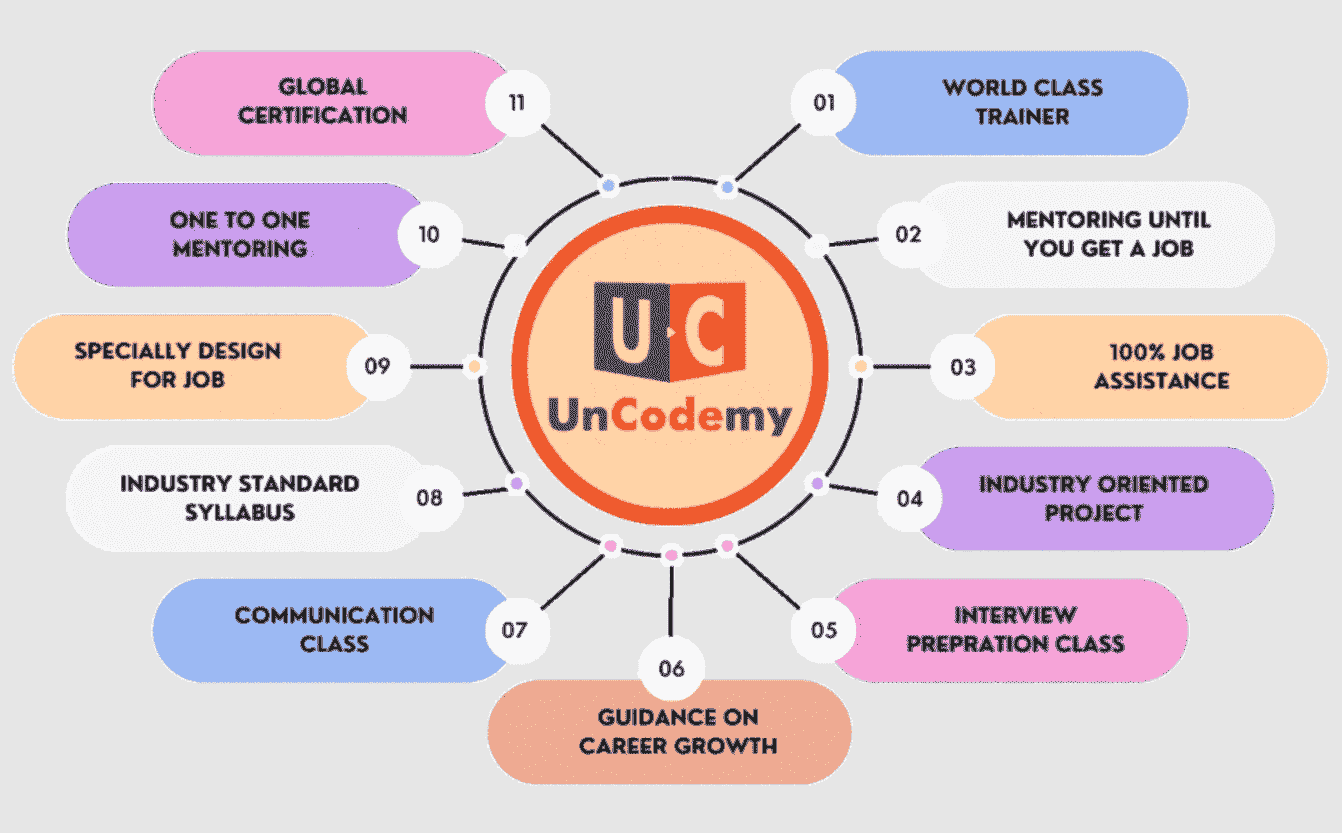
In addition to exceptional SQL training in Faridabad, Uncodemy supports students in their job search by offering :

animate
Uncodemy

Access unparalleled learning with live sessions, recordings, assignments, and live projects led by a top-tier mentor and industry expert trainer. Elevate your skills with the best-in-class educational content.

Young-male-holding-laptop-408w
Uncodemy

We Provide EMI Facility for You

Nothing Stops you from Learning

Young-male-holding-laptop-408w

Become a SQL Expert - Talk to Expert Counselor

Awards
c3
c4
Faridabad guide

SQL in Faridabad: getting reports straight out of the ERP

Faridabad runs on manufacturing: auto components, tractors and farm machinery, construction equipment, electricals and the hundreds of small vendors that supply them. Almost every one of those businesses keeps its orders, stock, production and dispatch in an ERP or accounting system that sits on a relational database. This page looks at SQL from that angle — what a Faridabad MIS, ERP or accounts person can do with it, what the course covers and what it does not, and how to attend from here without wasting hours on the road.

Why SQL here

The Faridabad problem SQL solves: data stuck in ERP exports

In a typical plant office in the Sector 24, 25 or 58 industrial areas, someone downloads a sales register, a stock statement and a production report from the ERP every morning, pastes them into Excel and spends an hour matching them up. The data already sits in database tables. A person who can write a query that joins orders to dispatches and filters by date gets the same answer in minutes, and gets it the same way every day.

Read moreRead less

That is the practical case for SQL in this city. It is less about becoming a database developer and more about being the person in the MIS, ERP support or costing team who can pull clean numbers without waiting for the IT vendor. Large Faridabad-based manufacturers such as Escorts Kubota and JCB India (Ballabhgarh) run big ERP set-ups; most smaller vendors use mid-size ERPs or accounting software with SQL databases underneath. Uncodemy has no hiring tie-up with any of these companies — they are named only to describe the kind of data you would be working with.

Many companies give MIS staff read-only database access or a reporting tool rather than direct table access. Ask your IT team what is allowed before you run anything against a live ERP.

Course blocks

What the five blocks mean for plant and vendor data

The course is organised as 5 curriculum blocks. Here is how each one maps to work you would recognise in a Faridabad company:

  1. Creating, selecting and retrieving data — tables, keys and SELECT. You build a small item master and a customer list so the idea of rows and columns stops being abstract.
  2. Filtering, sorting and calculating — WHERE, IN, wildcards, ORDER BY, SUM and COUNT with GROUP BY. This is where “dispatch quantity by customer for last week” becomes one query.
  3. Subqueries and joins — inner, left, right and full outer joins, self joins and UNION. Joining purchase orders to goods receipts to find short supplies is a classic join exercise.
  4. Modifying and analysing — text and date functions, CASE, views, plus data governance and profiling. CASE is how you label shipments as on-time or late; a view is how you save that logic for the whole team.
  5. Python with DB-API — connecting to a database from Python, loading data and querying it, so a repeating report can run as a script.
Read moreRead less

Be clear about the limits: the syllabus does not list window functions, CTEs, stored procedures, indexing or any specific ERP such as SAP. The practice database is a cloud-hosted instance, not your company's system.

Getting there

Classroom in Delhi or Noida, or live online from Faridabad?

Uncodemy has no Faridabad centre. Classrooms are in Noida (Sector 1) and Delhi (Shakarpur Extension, Laxmi Nagar). Both are reachable by metro from Faridabad's Violet Line stations, but neither is close.

  • Laxmi Nagar: Violet Line north to Mandi House, then the Blue Line towards Vaishali. From the Old Faridabad or NHPC Chowk end this is a long ride; from Ballabhgarh it is longer still.
  • Noida Sector 1: change at Kalkaji Mandir to the Magenta Line, ride to Botanical Garden, then take the Blue Line two stops back to Sector 16 or Sector 15.
  • Live online: the same trainer and the same exercises, without the commute. This is what most working people on factory shifts choose, because a weekday evening class after a 9-to-6 shift plus travel rarely holds up for long.
Read moreRead less

Whichever mode you pick, you can attend a free demo session first to see the pace. SQL practice needs very little hardware — a basic laptop and a stable connection are enough.

  • Durationabout a month
  • Content30+ hours of content
  • Live classes15+ live sessions
  • Fee₹8000
  • EMIEMI options available (ask the counsellor for the monthly plan)
Who signs up

Who in Faridabad usually needs this

MIS and ERP staff

People who already prepare daily and monthly reports in Excel and want to pull the data themselves. SQL is the next step after VLOOKUP and pivots.

Engineers on the shop floor

Diploma and B.Tech production, quality and planning engineers who want rejection, downtime and output numbers without asking someone else.

Students

Computer and IT students from colleges such as J.C. Bose University (YMCA) and Manav Rachna, who studied DBMS theory but need hands-on query practice before interviews.

Read moreRead less

Commerce graduates working in accounts also join. If you already know how an invoice, a GRN and a credit note relate to each other, you will find join logic easier than most beginners do — the business meaning is already in your head.

Practice idea

A practice project built on a Faridabad-style parts business

Pick a scenario you know: a small auto-parts vendor supplying several vehicle makers. Build four tables — parts, customers, dispatches and quality rejections — and fill them with a few hundred made-up rows.

  • Dispatch quantity and value per customer per week (GROUP BY with SUM).
  • Parts that were dispatched but never invoiced (LEFT JOIN where the right side is NULL).
  • Rejection rate per part, labelled high, medium or low with CASE.
  • Late deliveries, using date arithmetic against a promised date.
Read moreRead less

Then wrap the weekly report in a short Python script using DB-API so it writes a CSV you could mail to a manager. Keep the queries and the script in a GitHub repository with a readme explaining the business question behind each query — interviewers respond far better to “here is the problem I solved” than to a list of commands.

Jobs and pay

Where SQL work sits for Faridabad learners — and indicative pay

Inside Faridabad, most SQL use is part of a wider role: MIS executive, ERP support, costing or supply-chain analyst. Dedicated SQL developer and data-analyst jobs are fewer locally; many Faridabad residents find them in Okhla, Jasola and Nehru Place in South Delhi, or in Gurugram, which are a manageable daily commute.

RoleWhere it is commonIndicative range
MIS executive (Excel + SQL)Faridabad plants and vendors₹2.4–4.5 LPA
ERP / application supportManufacturers, ERP partners₹3–6 LPA
Junior data / reporting analystSouth Delhi, Gurugram₹3.5–6.5 LPA
SQL developer (2–4 years)IT services, product firms₹5–10 LPA
Read moreRead less

These are broad, indicative ranges, not a promise. Offers depend on the employer, your other skills (Excel, Power BI, domain knowledge) and the interview. Check current listings before you negotiate.

Interviews

What SQL rounds ask, and what to practise beyond the course

MIS and analyst interviews in manufacturing usually test practical things: a join between two tables, GROUP BY with HAVING, handling NULLs, finding duplicates, and turning a written business question into a query. These are covered in the course.

Read moreRead less

Analyst roles in Delhi and Gurugram often add window functions (ROW_NUMBER, RANK, running totals) and CTEs, which are not in this syllabus — plan a week of extra practice on them once the course ends. Use SQL questions for data analysts and the joins question sheet to test yourself.

Explore

More for Faridabad learners

Frequently Asked Questions

No. There is no Uncodemy centre in Faridabad. You can travel to the classrooms in Noida (Sector 1) and Delhi (Shakarpur Extension, Laxmi Nagar), or join the live online batch, which most Faridabad learners do because of the travel time.

The listed fee is ₹8000, the same for every city. On payment options: EMI options available (ask the counsellor for the monthly plan).

It takes about a month, with 30+ hours of content and 15+ live sessions. The 5 curriculum blocks cover SELECT and table basics, filtering and aggregation, subqueries and joins, text/date functions with CASE and views, and accessing databases from Python.

No. The course teaches standard SQL on a practice database. The same query skills apply to most ERP databases, but table names and access rules differ by system, so you will still learn your own ERP's structure at work.

Only if it is online. Travelling to Laxmi Nagar or Noida after a shift and getting back to Faridabad takes too long for most people. A weekend or evening online batch is the practical choice; ask the counsellor which slots are open.

No coding experience is needed to enrol; basic computer skills are enough, and queries are built up step by step. The Python part at the end is introductory and focused only on connecting to a database.

Yes. MIS, planning, costing and quality teams all report from ERP data, and someone who can query it directly saves the team a lot of manual Excel work. It also makes a later move into analyst roles in Delhi or Gurugram easier.

No. Uncodemy offers resume reviews, mock interviews and job-application support (placement assistance, not a job guarantee). Getting hired depends on your interviews and the roles you apply for.

Become a SQL Expert- Talk to Expert Counselor