#1 India's Top IT Training Institute
×

About Uncodemy

Know more about who we are and what we stand for.

About Us

About Us

Discover our mission to equip individuals with essential IT skills and industry expertise.

Read More →
UnCodeMy Gallery

UnCodeMy Gallery

Explore highlights from our IT training sessions and success stories.

Read More →
Mentors

Mentors

Meet the industry experts who train and guide you through your course.

Read More →
Free Resources

Free Resources

Free tutorials, interview questions, tools and calculators to help you learn.

Explore →
×

Free Resources

Learn, practice and plan your career — bilkul free.

Tutorials

Tutorials

Step-by-step written tutorials to learn any technology at your own pace.

Read More →
Free Counselling

Free Counselling

Book a free video counselling session and pick the right course for you.

Read More →
Online Compiler

Online Compiler

Write, run and test your code online — no setup required.

Read More →
Speciality
Prof_Trained

15000+ Professionals Trained

Batch-every

3+ Batches every month

Prof_Trained

50+ Industry expert trainers

Corporate

2500+ Corporate Served

What Is SQL, Why You Should Do It From Uncodemy?

SQL (Structured Query Language) is a domain-specific programming language used for managing and manipulating relational databases. It is designed for creating, querying, updating, and deleting data in relational database management systems (RDBMS). SQL has become the standard language for relational database communication, used by database administrators, developers, and data analysts to interact with databases and extract valuable insights from data.

SQL offers several advantages:

  • Easy to learn: SQL has a simple syntax, making it relatively easy to learn, even for individuals without extensive programming experience.
  • Widely used: SQL is a widely adopted standard, supported by various popular database systems, such as MySQL, PostgreSQL, Oracle, Microsoft SQL Server, and more.
  • Flexibility: SQL can handle a variety of data operations, including data manipulation, aggregation, filtering, and sorting.
  • Integration: SQL can be integrated with other programming languages, such as Python, Java, and C++, allowing developers to incorporate database querying into their applications.

Some common SQL commands include:

  • SELECT: Retrieve data from one or more tables in a database.
  • INSERT: Add new records to a table.
  • UPDATE: Modify existing records in a table.
  • DELETE: Remove records from a table.
  • CREATE: Create a new table or database.
  • ALTER: Modify an existing table structure.
  • DROP: Delete a table or database from the system.

SQL plays a crucial role in data management and analysis and is an essential skill for many data-related professions, such as data analysts, data scientists, and database administrators.

Uncodemy's reputation as one of the premier SQL training institutes in Gurgaon, located in Noida, India, is well-earned. The institute's partnerships with Fortune 500 companies and renowned MNCs guarantee that students are taught by the best and brightest industry experts, who not only possess expert teaching abilities, but also have the real-world experience necessary to guide students in developing the confidence and skills needed to thrive in the competitive IT industry.

Uncodemy provides a well-rounded learning experience with numerous SQL course benefits in Gurgaon designed to help you develop the skills and confidence necessary to succeed as a SQL professional-

  • State-of-the-art facilities
  • Comprehensive resources
  • Regular webinars
  • Dedicated support
  • Flexible learning options
  • Affordable bootcamps
  • Dedicated Placement Support
  • Industry-recognized certifications
  • Expert guidance
  • Real-world projects
  • Professional experience

Curriculums for SQL Training Course in Gurgaon

SQL Curriculum

The curriculum has been designed by faculty from IITs, and Expert Industry Professionals.

time
30+

Hours of Content

live1-removebg-preview
15+

Live Sessions

tools
2+

Tools and Software

Set the Basics Right

SQL is the domain of study that deals with vast volumes of data using modern tools and techniques to find unseen patterns, derive meaningful information, and make business decisions. For example, finance companies can use a customer's banking and bill-paying history to assess creditworthiness and loan risk.

SQL course provider of Gurgaon called Uncodemy offers a curriculum that contains following courses to strengthen your skill in SQL-

SQL

  • Introduction to Databases
  • How to create a Database instance on Cloud?
  • Provision a Cloud hosted Database instance.
  • What is SQL?
  • Thinking About Your Data
  • Relational vs. Transactional Models ER Diagram
  • CREATE Table Statement and DROP tables
  • UPDATE and DELETE Statements
  • Retrieving Data with a SELECT Statement
  • Creating Temporary Tables
  • Adding Comments to SQL
  • Basics of Filtering with SQL
  • Advanced Filtering: IN, OR, and NOT
  • Using Wildcards in SQL
  • Sorting with ORDER BY
  • Math Operations
  • Aggregate Functions
  • Grouping Data with SQL
  • Using Subqueries
  • Subquery Best Practices and Considerations
  • Joining Tables
  • Cartesian (Cross) Joins
  • Inner Joins
  • Aliases and Self Joins
  • Advanced Joins: Left, Right, and Full Outer Joins
  • Unions
  • Working with Text Strings
  • Working with Date and Time Strings
  • Date and Time Strings Examples
  • Case Statements
  • Views
  • Data Governance and Profiling
  • Using SQL for Data Science
  • How to access databases using Python?
  • Writing code using DB-API
  • Connecting to a database using DB API
  • Create Database Credentials
  • Connecting to a database instance
  • Creating tables, loading, inserting, data and querying data
  • Analysing data with Python
Get cosmopolitan certifications with Uncodemy

Uncodemy's collaborations with respected industry partners enable the institute to offer students an exceptional opportunity to learn from some of the most distinguished trainers in the SQL field. Uncodemy awards an Uncodemy Certificate, an Uncodemy Agile Certificate and a Module Completion Certificate on completing the course.

Tools and Technologies covered
  • imageexcelExcel
  • imagetablueTableau
  • Power-BI-SymbolPower-Bi
  • imageggplotggplot
  • imagejupitorJupyter
  • imagenumpyNumpy
  • imagepythonPython
  • imagepandasPandas
  • imageseabornSeaborn
  • imagelockerLooker
  • Matplotlib-logoMatplotlib
  • imagepycharmPyCharm
  • imagegoogleColabGoogle Colab
  • imageanacondaAnaconda
  • imagenltkNLTK
  • imagescikitlernScikit-learn
  • imagesqlSQL
  • imageMySqlMySql
  • imagepostgersqlPostgreSQL
  • imagemlML
  • imagedeeplDeep Learning
  • imagenlpNLP
How Uncodemy Helps Every Student Acing Their Interview-

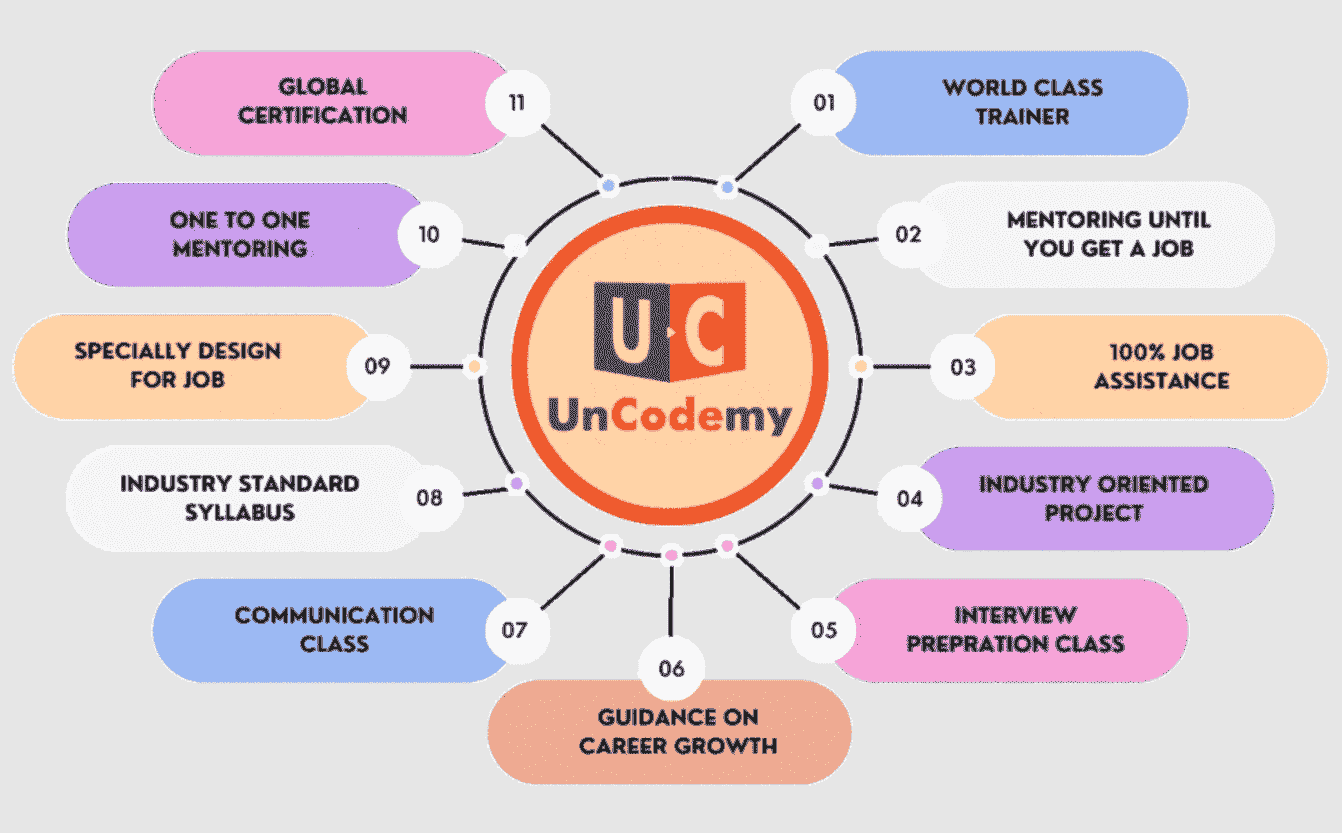
In addition to exceptional SQL training in Gurgaon, Uncodemy supports students in their job search by offering :

animate
Uncodemy

Access unparalleled learning with live sessions, recordings, assignments, and live projects led by a top-tier mentor and industry expert trainer. Elevate your skills with the best-in-class educational content.

Young-male-holding-laptop-408w
Uncodemy

We Provide EMI Facility for You

Nothing Stops you from Learning

Young-male-holding-laptop-408w

Become a SQL Expert - Talk to Expert Counselor

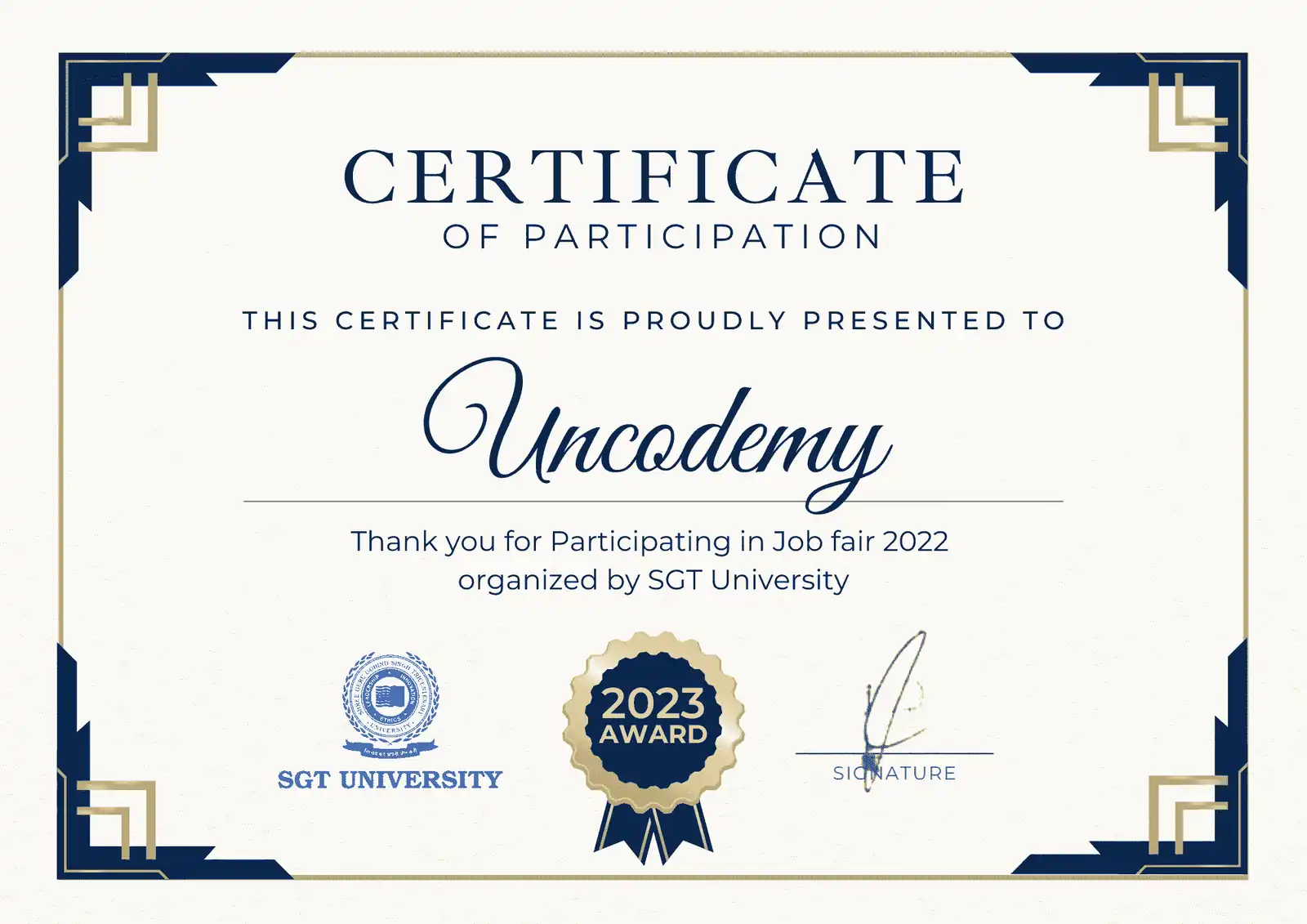
Awards
c3
c4
Gurgaon guide

SQL for Gurgaon professionals who already live in spreadsheets

In Gurgaon (Gurugram), SQL is rarely someone's first skill. The people who ask about it are usually already working — in a bank's operations hub, a consulting firm, a global capability centre or an online business around Cyber City, Udyog Vihar or Golf Course Road — and have hit the limit of what Excel exports and dashboards can do. This page is written for that reader: what this short course gives you, where it stops, and how to fit it around a Gurgaon work week.

Fit check

Is this course the right level for you?

Good fit

You pull reports from a BI tool or a data team, you are comfortable with pivots and lookups, and you want to query the source tables yourself. You have never written a join, or you have copied queries without fully understanding them.

Partial fit

You already write simple SELECT and GROUP BY queries. The first two blocks will be revision; the joins, CASE, views and Python blocks will still add something.

Poor fit

You already use window functions, CTEs and query plans at work. This course is foundation level; look for advanced or data-engineering material instead.

Read moreRead less

Being honest at the a free demo session about where you are saves you time and money. Tell the trainer what you do at work and which queries you struggle with.

At work

Where SQL shows up in Gurgaon analyst jobs

  • Banking and card operations: reconciling transactions between two systems, finding duplicates, tracking disputes by status and age. Joins, GROUP BY and date logic do most of the work.
  • Consulting and research: cleaning client data before modelling, profiling columns for missing or odd values, building consistent extracts. The data governance and profiling topics in the fourth block are relevant here.
Read moreRead less
  • GCC and shared-services reporting: recurring weekly and monthly packs built from the same tables. Saving the logic as a view, then scheduling a small Python script with DB-API, removes hours of copy-paste.
  • Online businesses: funnel, order and campaign numbers for marketing and product teams, usually from a warehouse that a data team maintains.

These examples describe common kinds of work in Gurgaon. Uncodemy has no hiring tie-up with Gurgaon employers.

Scope

What the course covers — and what Gurgaon interviews add on top

The syllabus has 5 curriculum blocks: retrieving data and creating tables; filtering, sorting, aggregates and grouping; subqueries, every join type and unions; text and date strings, CASE, views, data governance and profiling; and accessing databases from Python with DB-API. That is a solid foundation.

Read moreRead less

Analyst interviews at Gurgaon's larger employers usually go further. Expect window functions (ROW_NUMBER, RANK, LAG, running totals), CTEs, and questions like month-on-month growth or first purchase per customer. None of these are in the syllabus, so plan two extra weeks of self-study after the course. The Gurgaon SQL interview questions and BI developer SQL questions are good drills.

Attending

Commute or online from Gurgaon

Uncodemy has no Gurgaon classroom; the centres are in Noida (Sector 1) and Delhi (Shakarpur Extension, Laxmi Nagar). From Gurgaon both mean the Yellow Line to Rajiv Chowk and then the Blue Line — east to Laxmi Nagar, or towards Noida for Sector 15/16. Door to door this is well over an hour each way for most people, more from Sohna Road or New Gurgaon.

Read moreRead less

For working professionals this usually settles it: live online, ideally a weekend or late-evening slot. The session is live with the same trainer as the classroom, so you can still ask questions mid-class. Keep your office laptop out of it if your company restricts installing software; the practice database is cloud-hosted, so a personal laptop with a browser and a stable connection is enough.

  • Durationabout a month
  • Content30+ hours of content
  • Live classes15+ live sessions
  • Fee₹8000
  • EMIEMI options available (ask the counsellor for the monthly plan)
Use your data

Practise on a problem from your own job

The fastest way to make the course stick is to rebuild one report you already produce. You cannot use company data outside work, so recreate its shape with made-up rows instead.

  1. Write down the report's columns and where each number comes from.
  2. Design two or three tables that would hold that raw data, and fill them with sample rows.
  3. Write the query that produces the report, step by step: filter, join, group, then CASE for any labels.
  4. Save it as a view and call it from a short Python script that writes a CSV.
Read moreRead less

Done properly, this becomes your portfolio piece and the story you tell in interviews: what the manual process was, how the query replaced it, and what you checked to trust the numbers.

Traps

Four mistakes that make an analyst's numbers wrong

Reporting errors in Gurgaon offices are rarely syntax errors — the query runs, and the number is quietly wrong. These are the ones worth learning to spot during the course:

  • Join fan-out: joining orders to order lines and then summing the order amount counts each order once per line. Always check row counts before and after a join.
  • NULLs in calculations: AVG ignores NULLs and COUNT(column) skips them, so “average resolution time” can look better than it is.
Read moreRead less
  • Date boundaries: a filter that ends on the last day of the month may miss records stamped later that day if the column holds a time as well as a date.
  • Duplicates from the source: the same customer typed twice with different spacing. The text-string functions in the fourth block are how you find and clean these.

Managers trust the analyst who explains why a number changed, not only the one who produces it fastest.

Pay

Indicative pay for SQL-using roles in Gurgaon

RoleTypical experienceIndicative range
Reporting / MIS analyst1–3 years₹4–7 LPA
Data or business analyst2–5 years₹6–12 LPA
BI developer3–6 years₹8–15 LPA
Senior analyst / analytics lead6+ years₹14–25 LPA
Read moreRead less

Indicative ranges only. Gurgaon pay varies widely between captives, consulting firms and startups, and SQL is one of several skills that set it. Check current postings before relying on any figure.

Weekly plan

Fitting the course into a Gurgaon work week

Long office hours and travel on NH-48 or the Rapid Metro leave little room on weekdays. A plan that working learners here tend to manage:

Read moreRead less
  • Weekend classes for new topics, when you can concentrate.
  • Two short weekday sessions of 30–40 minutes to redo the weekend's exercises from memory, without looking at the solutions.
  • One work question a week rewritten as a query on your sample data — the habit that turns the course into a skill you actually use.
Next step

What to add after SQL

Most Gurgaon analyst roles combine SQL with a reporting tool and some scripting. After this course, the usual order is a BI tool first, then Python for automation.

Read moreRead less

Options in the same city: the Power BI course for Gurgaon, the Tableau course if your team uses it, and the data analytics course if you want a longer, broader programme.

Explore

More for Gurgaon learners

Frequently Asked Questions

No. Classrooms are in Noida (Sector 1) and Delhi (Shakarpur Extension, Laxmi Nagar). Gurgaon learners can travel there by metro, but most working professionals join the live online batch.

₹8000, with no separate city pricing. For instalments: EMI options available (ask the counsellor for the monthly plan).

about a month, with 30+ hours of content and 15+ live sessions. It covers SELECT and table creation, filtering and aggregation, subqueries and joins, CASE, views, text/date functions, data profiling and Python database access.

A weekend or late-evening online batch. Travelling to Laxmi Nagar or Noida after office hours is not practical from Cyber City. Ask the counsellor for the current online slots.

It covers the foundations those interviews start with. Window functions and CTEs, which many Gurgaon interviews also ask, are not in the syllabus, so practise them separately.

No coding experience is needed to enrol; basic computer skills are enough, and queries are built up step by step. Python appears only in the final block, for connecting to a database.

The SQL is standard and transfers to most systems, but only query company data where your employer allows it and through the access they give you. Practise on the course's cloud database and on sample data you create.

No. Uncodemy provides resume reviews, mock interviews and job-application support (placement assistance, not a job guarantee).

Become a SQL Expert- Talk to Expert Counselor